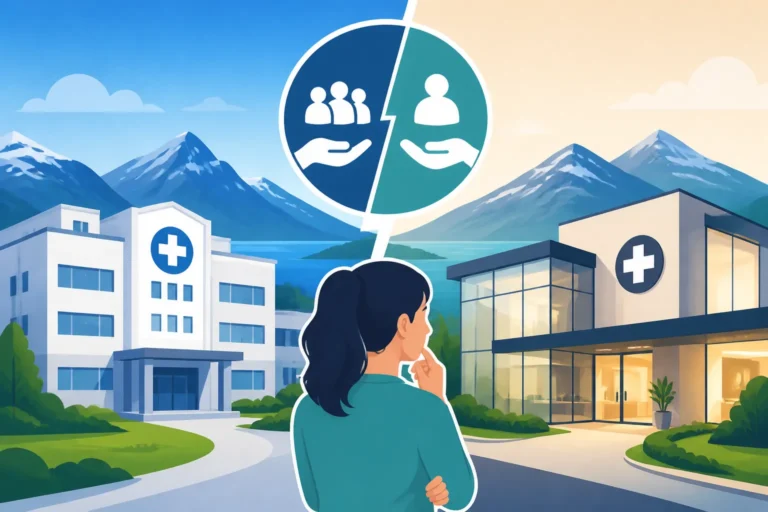
Mental Health in Norway: Accessing Therapy and Psychiatric Care
Finding yourself staring at a grey wall in a rainy Oslo apartment, feeling an overwhelming sense of isolation despite the beautiful fjords outside, is a specific kind of expat loneliness that many of us know all too well. I remember my first winter in Bergen, when the lack of sunlight began to feel like a physical weight, and I realized I couldn't just "tough it out" anymore. This guide is designed to help you navigate the complexities of accessing mental health support in Norway, from your first conversation with a GP to understanding the differences between public and private psychiatric care.
The Reality of the Norwegian Mental Health System
When you move to Norway, you are often told that the healthcare system is a world-class safety net. While this is true in many respects, the mental health sector operates under a specific set of priorities that can feel frustratingly slow for those used to immediate, on-demand private care. The system is built on a "stepped care" model, meaning you are initially offered the least intensive intervention that is expected to be effective. This often starts with your GP or municipal-level services before moving toward specialized psychiatric care.
The most important thing to understand is that the system differentiates between "mild-to-moderate" and "severe" mental health issues. If you are struggling with moderate anxiety or depression, you will likely be managed by your local municipality’s mental health team. If your condition is deemed severe or complex, you will be referred to the specialist health service. This distinction is vital because it determines how long you will wait and which professionals you will see. For many expats, understanding the foundational Healthcare in Norway for Expats: How the System Works (2027) is the first step in managing these expectations.
Another realistic hurdle is the language barrier. While most Norwegian psychologists and psychiatrists speak excellent English, the administration, referral letters, and some group therapy sessions might be conducted in Norwegian. This can add a layer of stress to an already difficult situation. However, you have a legal right to an interpreter if you cannot communicate effectively with your provider. Don't be afraid to ask for this early in the process to ensure your symptoms aren't being "lost in translation."
Finally, there is the issue of waiting times. For non-urgent referrals, waiting for a spot at a District Psychiatric Center (DPS) can take several months. This is why many expats choose to look into Private Health Insurance in Norway: Is It Worth the Extra Cost? or use international providers like Cigna Global to bypass the public queues. During my first year, I found that having that extra layer of coverage provided a significant peace of mind when the public wait times were quoted at twenty weeks.
The Gateway: Navigating the Fastlege Scheme
Your journey into the mental health system almost always begins with your GP, known here as a Fastlege. In Norway, the Fastlege acts as the gatekeeper to all specialized medical services. You cannot simply call a public psychiatrist and book an appointment; you must have a formal referral. If you haven't done so yet, your priority should be How to Register for a Fastlege (GP) on Helsenorge to ensure you have a designated doctor who knows your medical history.
When you sit down with your Fastlege, be prepared to be very direct about your mental state. Norwegians value stoicism, but the doctor's office is the one place where you should set that aside. Many expats downplay their symptoms out of a desire to be a "good patient," only to have their referral rejected because it didn't sound urgent enough. Use specific examples of how your mental health is affecting your daily life, your ability to work, and your relationships. This is also when you would discuss Getting Sick Notes (Sykemelding) from Your GP for Work if you need time off to recover.
If your Fastlege agrees that you need specialized help, they will send an electronic referral to the Regional Health Authority. This referral is then "triaged" by a specialist who decides if you have a right to "Necessary Health Care" (nødvendig helsehjelp). If they approve the referral, they will set a maximum date by which you must receive an appointment. If you are struggling with job-related stress, you might also find that your GP refers you to Burnout and Work Stress: Sick Leave Protections in Norway as part of a holistic recovery plan.
For those who are tech-savvy, it is highly recommended to learn How to Book a Doctor’s Appointment Online Using BankID. Most clinics use portals like Helsenorge or Besøklegen, which allow you to describe your needs in writing before you even arrive. This can be a huge relief if you find it difficult to talk about your mental health face-to-face without getting overwhelmed.
Specialized Care: The District Psychiatric Center (DPS)
If your referral is accepted, you will most likely be assigned to a District Psychiatric Center, or DPS. These are the hubs of specialized mental health care in Norway. A DPS usually consists of various outpatient clinics, including general psychiatric units, trauma teams, and psychosis teams. Unlike a private therapist’s office, a DPS is a multidisciplinary environment where you might see a psychologist, a psychiatrist, and a psychiatric nurse as part of your treatment plan.
The treatment at a DPS is generally time-limited and goal-oriented. They are not looking to provide "talk therapy" for years on end; rather, they aim to give you the tools to manage your condition so you can return to municipal-level care. You will likely be asked to fill out various psychometric tests and questionnaires at the start to establish a baseline. It’s a very clinical process, which can feel a bit cold if you were expecting a more "holistic" approach, but it is the backbone of the Norwegian public system.
One of the great benefits of the public system is the cost-capping mechanism. Every visit to a DPS contributes to your annual User Fees (Egenandel) for Doctor Visits Before Reaching Frikort Status. Once you reach the spending limit for the year, you receive an exemption card, and all further treatments within the public system are free. This is a life-saver for those dealing with chronic conditions that require frequent sessions.
Wait times for a DPS can vary wildly depending on where you live. If you are in a major city like Oslo or Bergen, the queues are notoriously long. However, Norway has a policy called "Fritt behandlingsvalg" (Free Choice of Treatment), which allows you to Choose Which Public Hospital Performs Your Surgery or, in this case, which DPS provides your outpatient care. You can check the waiting times for different centers across the country on the Helsenorge website and ask your GP to send the referral to a center with a shorter queue, even if it's a bit further away.
Private Therapy: Bypassing the Wait
For many expats, the months-long wait for public care is simply not an option, especially when dealing with acute anxiety or a life transition. This is where private therapy comes in. In Norway, there is a thriving private market for psychologists and therapists. The main advantage is speed; you can often get an appointment within a week. The downside, of course, is the cost, which typically ranges from 1,200 NOK to 1,800 NOK per 45-minute session.
Finding a therapist who understands the expat experience can be a game-changer. I personally spent months trying to explain my "relocation stress" to a public provider who had never lived outside of Vestland, only to find a private therapist who specialized in Finding an English-Speaking Therapist in Private Practice. These specialists often understand the nuances of "identity loss" and the specific pressures of the Norwegian workplace. If you have international coverage like Cigna Global, many of these private costs can be reimbursed, making it a much more sustainable option.
Another modern alternative is the rise of video-based therapy. Platforms like Dr.Dropin or Kry have made it incredibly easy to talk to a psychologist from your living room. This is particularly useful if you live in a more remote part of Norway where local options are limited. For those who are traveling or haven't fully integrated into the Folketrygden yet, services like SafetyWing offer specialized support that can bridge the gap between your home country's care and the Norwegian system.
It is worth noting that private psychologists in Norway cannot always issue the same types of formal "blue prescriptions" or long-term sick leave as a psychiatrist or a GP. If your treatment requires medication, you will still need to coordinate with your Fastlege. You can read more about how medication is handled in our guide on Pharmacies and Prescriptions in Norway: White vs Blue Slips.
Specialized Mental Health Pathways
Norway has specific pathways for certain conditions that bypass the general DPS queue. For example, if you suspect you have ADHD, the process involves a very specific diagnostic protocol. Because ADHD medication is a controlled substance in Norway, the system is quite rigorous. You will likely need to provide school records from your childhood or have an interview with a parent to prove the symptoms existed before age 12. You can find the full breakdown in our article on Getting ADHD Medication in Norway: Diagnostic Proof Required.
Eating disorders are another area where Norway has dedicated specialist teams. If you or a family member is struggling with an eating disorder, the referral usually goes to a specialized unit rather than a general psychiatric clinic. These units offer both inpatient and outpatient care and are known for their intensive family-based therapy models. More information can be found at Eating Disorder Clinics in Norway: Pathways to Specialized Care.
For those dealing with severe, long-term illness, the system provides more robust support. This might include "hjemmesykepleie" (home nursing) or dedicated social workers who help with the administrative side of living with a disability. If your mental health is significantly impacting your ability to function long-term, you may eventually need to look into Disability Benefit (Uføretrygd): Taxation Rules for Long-Term Illness, though this is generally a last resort after all treatment options have been exhausted.
| Access Point | Typical Wait Time | Cost | Referral Needed? |
|---|---|---|---|
| Fastlege (GP) | 1-5 Days | ~160-300 NOK | No |
| Municipal Mental Health | 2-6 Weeks | Free | No (Self-referral) |
| Public DPS (Specialist) | 12-24 Weeks | User Fees (up to Frikort) | Yes (via GP) |
| Private Psychologist | 1-7 Days | 1,200 – 1,800 NOK | No |
| Emergency (Legevakt) | Instant | ~300-500 NOK | No |
Emergency and Crisis Support
If you are in an immediate crisis, you should not wait for a GP appointment or a DPS referral. Norway has a robust emergency psychiatric system. The first point of contact for urgent but non-life-threatening issues is the Legevakt (Emergency Room). Every municipality has a Legevakt, and many larger cities have a dedicated "Psykiatrisk Legevakt" (Psychiatric Emergency Room). You can call the national out-of-hours number, 116 117, to be directed to your nearest clinic.
In a life-threatening emergency, such as a suicide attempt or severe self-harm, call 113 immediately. The emergency operators speak English and will dispatch an ambulance or a crisis team. It’s a common fear among expats that calling an ambulance will result in a massive bill, but you can rest easy knowing that Is Calling an Ambulance (113) Free in Norway?—the answer is yes, emergency transport is covered by the state.
There are also several excellent helplines that offer support in English. The Kirkens SOS and Mental Helse helplines are available 24/7. These services are staffed by trained volunteers who can offer a listening ear when things feel hopeless. Using Crisis Hotlines and Mental Health Support in English is often the first step toward getting through a difficult night before you can see a professional the next day.
For those who have experienced trauma or domestic violence, there are "Krisesenter" (Crisis Centers) located throughout Norway. These centers provide safe housing and counseling for individuals and families. They are free of charge and do not require a referral from a doctor. Their locations are kept confidential for safety reasons, but you can find their contact information through the police or the local municipality website.
Cultural Aspects and Seasonal Affective Disorder (SAD)
One cannot discuss mental health in Norway without addressing the "elephant in the room": the weather. The Norwegian winter, with its "mørketid" (dark season), can be a massive shock to the system. It’s not just the cold; it’s the lack of Vitamin D and the disruption of your circadian rhythm. Many expats find that they suffer from Coping with Seasonal Affective Disorder (SAD) in the Norwegian Winter.
Norwegians have developed cultural coping mechanisms like "koselig" (coziness) and "friluftsliv" (outdoor life), but these don't always come naturally to newcomers. When you’re feeling depressed, the last thing you want to do is put on three layers of wool and go for a hike in the sleet. However, your GP might actually prescribe "physical activity" as part of your treatment. Don't dismiss this; the link between light, movement, and mental health is taken very seriously here.
Light therapy is a common treatment for SAD in Norway. Many workplaces have light therapy lamps in common areas, and you can buy them for your home. Combining this with Vitamin D Guidelines for Expats Surviving the Dark Season is essential. Most Norwegians start taking "Tran" (cod liver oil) or Vitamin D supplements in the months that contain the letter 'R' (September through April). If you are feeling particularly sluggish, ask your GP for a blood test to check your levels.
Finally, there is the cultural concept of "Janteloven"—the idea that you shouldn't think you are better than anyone else. While this creates a very egalitarian society, it can also lead to a culture where people are hesitant to talk about their struggles or stand out. For expats from more "expressive" cultures, the perceived emotional distance of Norwegians can feel like rejection. Understanding these social nuances is a key part of maintaining your mental well-being while Learning to Cross-Country Ski as an Adult Foreigner or trying to make local friends.
Practical Tips for Navigating the System
Navigating the Norwegian bureaucracy while you are mentally unwell is a Herculean task. My biggest piece of advice is to keep a "log" of your interactions. Write down the dates you saw your GP, when the referral was sent, and any reference numbers you are given. If you don't hear back from the DPS within the timeframe promised in your "rights" letter, call them. In Norway, the "squeaky wheel gets the grease," and politely checking on your status can sometimes move things along.
If you find that your current Fastlege isn't taking your mental health seriously, remember that you have the right to change doctors twice a year. You can do this easily on Helsenorge. Check Changing Your Fastlege: Rules and Waiting Lists in Norway to see who has open spots in your area. Sometimes, a fresh perspective from a different doctor is all it takes to get the referral you need.
For those with private insurance like SafetyWing, make sure you understand exactly what is covered before you start sessions. Some policies require you to pay upfront and claim back, while others have direct billing arrangements with specific clinics. Having your insurance paperwork organized in a dedicated folder will save you a lot of stress later on.
Lastly, don't neglect the community. There are many expat groups on Facebook and Discord dedicated to living in Norway. While they aren't a substitute for professional help, they are excellent resources for finding English-Speaking Doctors and Specialists in Oslo or other cities. Sometimes, just knowing that someone else has successfully navigated the "system" is enough to give you the strength to keep going.
Summary: Your Mental Health Checklist
To make this less overwhelming, follow these steps in order if you feel your mental health is declining:
- Register your address: Ensure you are in the Folkeregister and have a D-number or Fødselsnummer.
- Get a Fastlege: Assign yourself a GP via Helsenorge immediately.
- Book an initial consult: Be honest and specific about your symptoms.
- Check your insurance: See if Cigna Global or SafetyWing can cover private therapy to avoid public queues.
- Monitor your Helsenorge: Watch for digital letters regarding your referral status and "right to care" dates.
- Supplements: Start Vitamin D and Omega-3s before the dark season hits.
- Emergency numbers: Save 116 117 (Legevakt) and 113 (Emergency) in your phone.
Living in Norway is a beautiful adventure, but the "Land of the Midnight Sun" also has long nights. Prioritizing your mental health isn't a sign of failure in your expat journey; it's the most important tool you have for making this country truly feel like home.
Disclaimer
This article is for informational purposes only and does not constitute professional medical advice, diagnosis, or treatment. Always seek the advice of your physician or other qualified health provider with any questions you may have regarding a medical or mental health condition. If you are in an immediate crisis, please contact the Norwegian emergency services at 113 or the mental health helpline at 116 123.