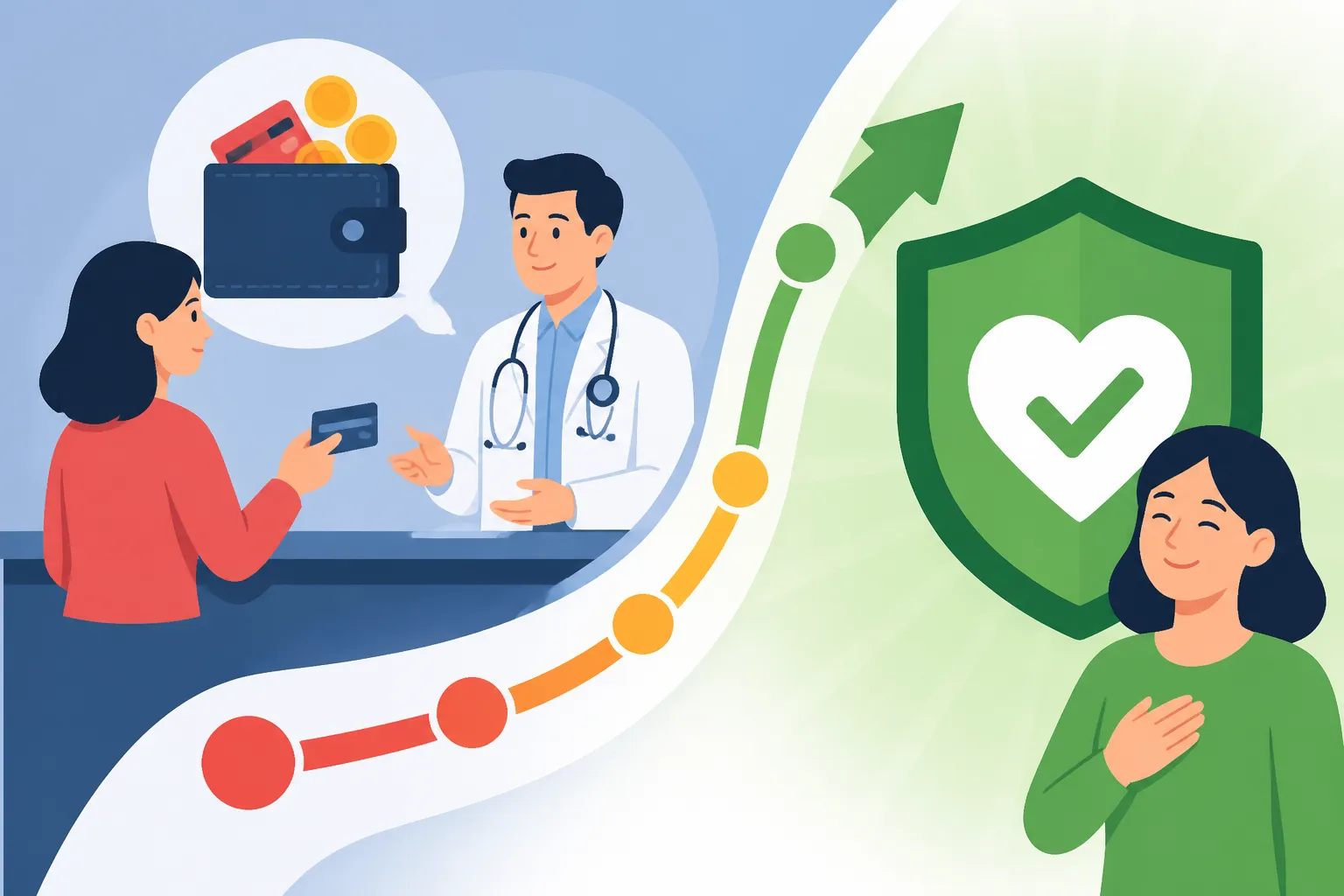
User Fees (Egenandel) for Doctor Visits Before Reaching Frikort Status
You walk into a sleek, modern doctor’s office in Oslo, expecting the legendary "free" Nordic healthcare, only to be handed an invoice for 212 kroner before you have even seen the nurse. I remember my first winter in Bergen, staring at a small paper slip for a blood test and wondering if I had somehow opted out of the national insurance system by mistake. This guide breaks down exactly how user fees work, what you will pay during your first few months, and the mechanics of reaching the coveted exemption status.
Understanding the Norwegian Public Healthcare Payment Model
The biggest misconception most of us have when moving to Norway is that the system is entirely free at the point of use. In reality, Norway operates on a co-payment model where the state heavily subsidizes your care, but you are responsible for a small portion of the cost, known as the "Egenandel." This continues until you hit a specific annual spending limit, at which point the government steps in to cover 100% of the costs for the remainder of the calendar year.
What is Egenandel and Why Does it Exist
The user fee, or Egenandel, is a fixed amount set by the government each year that patients must pay for consultations, laboratory tests, and certain medications. Think of it as a deductible that applies to every single interaction you have with the public health system. Whether it is a quick chat with your GP or a specialized scan at a hospital, a small fee is almost always attached. This system is designed to prevent the over-utilization of resources while keeping the individual financial burden relatively low compared to private-pay systems.
When I first arrived, I found it frustrating to pay for a five-minute conversation, but once you realize that this fee covers the infrastructure, the staff, and the subsequent follow-up, it becomes more palatable. It is important to note that these fees are standardized. You won't pay more in Stavanger than you would in Tromsø for the same public service. For a deeper look at the administrative side of this, you might want to read about Healthcare in Norway for Expats: How the System Works (2027) to see how these fees fit into the larger tax-funded picture.
How Your National Insurance Coverage Impacts Costs
To access these subsidized rates, you must be a member of the National Insurance Scheme (Folketrygden). Most expats become members automatically the moment they are legally employed and registered in the National Registry. However, if you are here on a shorter stay or are still waiting for your paperwork to clear, you might find yourself in a gray area where you are charged "full price" rather than the subsidized Egenandel. This is a massive jump in cost; a 300 NOK consultation can easily turn into 1,500 NOK if your insurance status isn't confirmed.
During this transition period, many expats find that having a bridge policy from a provider like SafetyWing is a lifesaver. It covers those unexpected gaps before the Norwegian state recognizes your right to subsidized care. You can find more details on the entry requirements in our guide on Folketrygden Basics: Who is Covered by the National Insurance Scheme. Membership is what keeps your out-of-pocket costs predictable and ensures your spending is tracked toward the annual limit.
The Role of Helfo in Managing Your Payments
Helfo is the administrative body that keeps the ledger of your life in Norway. Every time you pay an Egenandel at a clinic that has a state contract, that payment is digitally reported to Helfo. You don't need to save paper receipts or mail in envelopes of documentation—the system is remarkably automated. As an expat, this was one of the few administrative things that actually felt "easy" once I had my BankID set up.
Helfo tracks these payments against your personal ID number. Once the total sum of your eligible user fees reaches the annual threshold, Helfo automatically triggers the issuance of your Frikort. If you are curious about how to monitor this progress, you should check out How to Check Your Frikort Status on the Helsenorge App. It is oddly satisfying to watch that progress bar move toward the limit, knowing that once it hits the top, your healthcare is effectively "free" for the rest of the year.
Breakdown of Common User Fees in 2026
The rates for user fees are adjusted every year in the national budget. For 2026, the fees remain relatively stable, but they can still catch you off guard if you aren't prepared. It is helpful to categorize these into the most common medical encounters you will have as a resident.
Visiting Your Fastlege (GP)
Your primary point of contact will be your assigned GP. A standard consultation during regular office hours usually costs between 160 and 210 NOK. If the doctor needs to take blood samples, perform a minor procedure like a stitch, or use specific medical equipment, an additional small fee (often around 60-100 NOK) is added to the bill. One thing that caught me out early on was the "invoice fee." If you don't pay via the terminal at the clinic and ask for a bill to be sent to your phone or mailbox, you will be charged an extra 50-70 NOK just for the administrative cost of the invoice.
If you find yourself needing a doctor outside of regular hours, you will head to the Legevakten. Fees here are higher, reflecting the emergency nature of the service. You can expect to pay closer to 350-400 NOK for an evening or weekend visit. For more on how to manage these appointments, see our guide on The Fastlege Scheme: Navigating Norway’s GP System. It is always cheaper to wait for your regular GP if the issue is not urgent.
Specialist Referrals and Outpatient Care
When your GP decides that your "weird knee pain" needs an expert eye, they will give you a referral. Seeing a specialist in the public system carries a higher Egenandel than a GP visit, usually ranging from 350 to 400 NOK per consultation. This applies to everything from dermatologists to cardiologists, provided they are part of the public reimbursement scheme. If you choose to see a private specialist without a referral, none of that money will count toward your Frikort, and the costs will be significantly higher.
This is where many expats choose to supplement their public coverage. For those who want to skip the waiting lists for specialists, a policy with Cigna Global can provide access to private clinics while still allowing you to maintain your place in the public system for chronic issues. Understanding the difference between these two paths is essential, and we have a full breakdown in Public vs Private Healthcare in Norway: A Complete Guide.
Lab Tests, X-rays, and Diagnostic Imaging
Diagnostic work is a separate line item on your bill. If your GP sends you to a laboratory for blood work or to a radiology center for an X-ray or MRI, you will pay a user fee for each of these services. Typically, an X-ray or ultrasound in the public system costs around 270-300 NOK. These costs are capped, so even if you need multiple views or complex imaging, you won't be charged thousands of kroner, provided it is medically necessary and referred by a doctor.
| Service Type | Estimated User Fee (2026) | Counts Toward Frikort? |
|---|---|---|
| GP Consultation (Daytime) | 170 – 220 NOK | Yes |
| GP Consultation (Evening/Legevakt) | 350 – 450 NOK | Yes |
| Specialist Consultation | 375 – 425 NOK | Yes |
| X-ray / Ultrasound / MRI | 280 – 310 NOK | Yes |
| Blood Tests / Lab Work | 60 – 110 NOK | Yes |
| Private Clinic (No Referral) | 1,200 – 2,500 NOK | No |
The Road to the Frikort Exemption Card
The Frikort is the "golden ticket" of the Norwegian healthcare system. It is a digital status that informs all healthcare providers that you have reached the maximum out-of-pocket limit for the year and should no longer be charged for eligible services.
The 2026 Annual Expenditure Limit
For 2026, the limit is set at approximately 3,165 NOK. This might seem like a lot if you are healthy, but for anyone managing a chronic condition, it is a threshold that is often reached by March or April. Every time you pay for a GP visit, a specialist, or a subsidized prescription, that amount is subtracted from this 3,165 NOK total.
It is important to manage your expectations: only "eligible" fees count. This means that if you spend 5,000 NOK on dental work, your Frikort balance won't move an inch because most dental care is not part of the exemption scheme. For a full list of what is included, refer to Understanding the Frikort: The 2026 Healthcare Exemption Card Limit. Once you hit the limit, Helfo will send you a notification (usually via Altinn or Helsenorge) confirming your status.
Automated Tracking vs. Manual Claims
In the vast majority of cases, the tracking is 100% automated. When you pay at a doctor's office, the payment terminal is linked to your Fødselsnummer. However, there are times when the system misses a beat. Perhaps you visited a specialist who still uses an older billing system, or you had to pay for medical equipment that should have been covered. In these rare cases, you can manually upload your receipts to Helsenorge to have them credited to your account.
It is highly advisable to keep a digital folder of your medical receipts for the first year, just in case. If you have recently moved and only have a D-Number, the tracking can sometimes be less reliable than for those with a permanent number. You can read more about these specific hurdles in Healthcare Rights for D-Number Holders: Exclusions and Alternatives.
What Happens After You Reach the Limit?
Once you have your Frikort, the experience of going to the doctor changes. You walk in, have your consultation, and when you go to the payment machine, it simply tells you that your balance is 0 NOK. It is a fantastic feeling, especially if you require frequent physical therapy or expensive "blue slip" medications.
However, remember that the Frikort resets every year on January 1st. I learned this the hard way when I went for a checkup in the first week of January, expecting a free visit, only to be reminded that the new year’s quota had begun. For those who want more detail on the transition, Healthcare Budgeting: The Frikort Exemption Card and User Fees provides a great roadmap for year-end planning.
Services and Scenarios That Don't Count Toward the Frikort
One of the most common points of frustration for foreigners in Norway is paying for a medical service and realizing it didn't count toward their Frikort. There are several categories of healthcare that sit outside this system.
Private Healthcare Providers and Non-Contract Specialists
If you decide to skip the public queue and book an appointment at a private clinic like Aleris or Dr.Dropin, you are paying for convenience. These clinics often do not have a reimbursement agreement with the state for all their services. While a GP visit at Dr.Dropin is very convenient, the fee you pay there will usually not be registered by Helfo as a user fee.
If you have a complex medical history and prefer the continuity of private care, this is where a robust international plan becomes essential. Brands like Cigna Global are specifically designed for expats who want the option of private treatment without worrying about the Frikort limits. You can find out more about the pros and cons in Do I Need Private Health Insurance if I Live in Norway?.
Medical Certificates and Non-Essential Services
Any service that is not strictly "treatment-related" is generally excluded from the Frikort. This includes:
- Medical certificates for driving licenses.
- Sick notes for work (though the consultation itself may count).
- Vaccinations for international travel.
- Cosmetic procedures.
I remember needing a physical for a specific work permit and being shocked that the 800 NOK fee didn't count toward my limit. It is a "service," not "care," in the eyes of the Norwegian state. For more on the paperwork side of things, check out Getting Sick Notes (Sykemelding) from Your GP for Work.
Dental Care and Adult Dental Fees
Dental care is the biggest "gotcha" in Norway. For adults over the age of 24, dental care is almost entirely private and out-of-pocket. These costs never count toward the Frikort limit. If you have a dental emergency on a Saturday night, you will be paying a premium, and that money is essentially gone from your budget.
Because dental care is so expensive here, many expats treat it as a separate financial category altogether. We have a detailed guide on Dental Care in Norway: Costs, Subsidies, and Finding a Dentist that explains the rare exceptions where you might get a refund (such as for certain chronic diseases or maxillofacial surgery).
Financial Strategies for New Expats
Navigating the first year in Norway requires a bit of financial footwork. You are likely dealing with moving costs, deposits, and the higher-than-average cost of living, so medical fees can feel like an added burden.
Budgeting for the Initial Out-of-Pocket Phase
Until you hit that 3,165 NOK limit, you should treat every doctor's visit as a 300-500 NOK expense. For a family of two adults, that is over 6,000 NOK in potential out-of-pocket costs before the safety net kicks in. It is wise to keep a "health buffer" in your Norwegian bank account specifically for these fees.
Newcomers often find the first few months the most expensive because they are often catching up on prescriptions or checkups that were delayed during the move. If you are still waiting for your Norwegian ID, services like SafetyWing can offer a financial cushion for acute medical needs, ensuring you aren't paying thousands of kroner out-of-pocket for an emergency room visit. See our First 30 Days Health Checklist: GP, Frikort, and Pharmacies for more tips on setting up your medical life.
When to Consider Private Health Insurance
Private insurance in Norway isn't about avoiding the cost of a GP—it is about avoiding the wait for a specialist or surgery. While the public system is excellent for life-threatening issues, the wait for a non-urgent specialist can be several months. If your employer doesn't provide health insurance (bevisstgjøring), you might want to look into an individual plan.
A plan from Cigna Global can be particularly useful if you frequently travel outside of Norway, as the Frikort only applies to treatments within the Norwegian borders. If you get sick while visiting family back home or on vacation, the Norwegian public system won't help you with the bills there. To understand the nuances of coverage, read Private Health Insurance in Norway: Is It Worth the Extra Cost?.
Managing Invoices and Avoiding Debt Collection (Inkasso)
The Norwegian "Inkasso" (debt collection) system is notoriously aggressive. If you miss a 200 NOK doctor's bill, it can quickly spiral into a 1,000 NOK debt within a matter of weeks. Most clinics use third-party billing services like Convene or Melin Collectors. These companies send invoices via SMS or to your digital mailbox (Digipost/Eboks).
Always check your phone after a doctor’s visit. For more advice on avoiding these financial traps, check out Dealing with Debt Collection (Inkasso): Strict Norwegian Late Fees.
Special Considerations for Families and Visitors
The rules change slightly depending on who is seeking care. The system is designed to be particularly generous toward vulnerable groups.
User Fees for Children and Adolescents
If you are moving to Norway with kids, here is some great news: children under the age of 16 do not pay user fees. Their consultations, lab tests, and "blue slip" medications are entirely free. This was a massive relief for me when my daughter needed a series of specialist appointments for her allergies.
Teenagers and young adults between 19 and 24 also receive significant subsidies for dental care, though they aren't entirely free. For a breakdown of how this works, see Dental Subsidies for Young Adults (19-28): How the 25% Rate Works. Generally, the burden for families is much lower than for single adults.
Pregnancy-Related Medical Costs
Pregnancy is another area where the user fee rules are suspended. All routine prenatal care, including GP visits, midwife consultations, and the 18-week ultrasound, are free of charge. You do not pay an Egenandel for any medical issue directly related to your pregnancy.
This is part of Norway's commitment to maternal health. However, if you see the doctor for something unrelated to the pregnancy—say, a sore throat—you will still be charged the standard user fee. For more on what to expect, visit Maternity Care in Norway: Prenatal Appointments, Scans, and Midwives.
Healthcare Costs for D-Number Holders and Tourists
If you are in Norway on a tourist visa or are a digital nomad with only a D-Number, you are generally not entitled to the subsidized Egenandel unless you are from an EU/EEA country with a valid EHIC card. Without that, you are considered a "private patient" and will be billed the full cost of care.
This is the most critical time to have travel or expat insurance like SafetyWing. A single night in a Norwegian hospital as a private patient can cost upwards of 20,000 NOK. We detail the specifics of navigating this in Tourist Medical Care: What Happens if You Get Sick in Norway?.
Disclaimer
The information provided in this guide is for educational and informational purposes only. While we strive to provide the most accurate and up-to-date details regarding the Norwegian healthcare system as of 2026, rules and fees can change. This content does not constitute professional medical or financial advice. Always consult with the official Helsenorge or Helfo websites, or speak with a qualified medical professional or insurance advisor regarding your specific situation and rights in Norway.