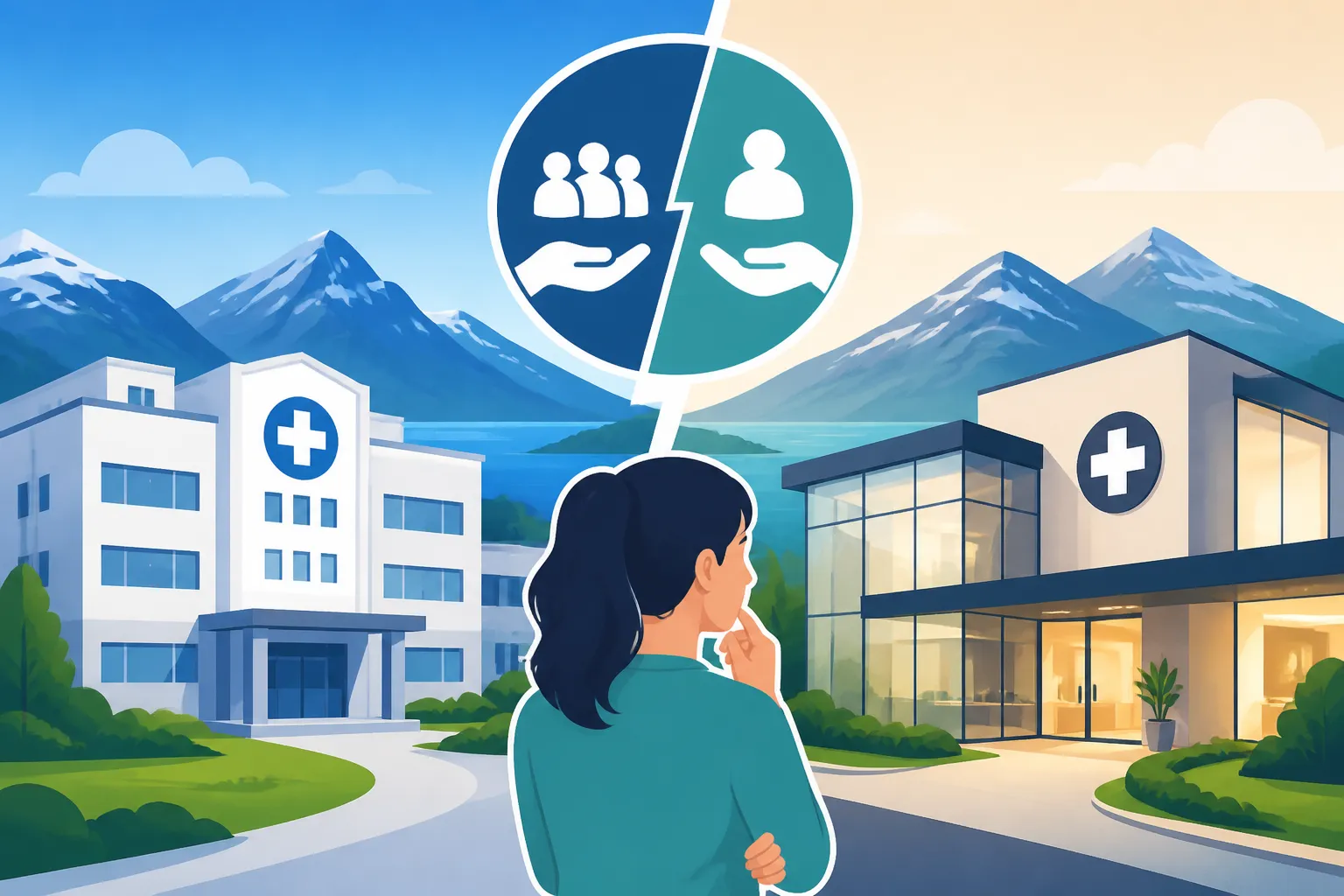
Public vs Private Healthcare in Norway: A Complete Guide
Getting sick in a foreign country is stressful enough, but realizing you cannot even book a basic check-up because you are stuck in the "D-number limbo" is a special kind of frustration. When I first moved to Oslo, I spent three weeks trying to treat a chest infection with over-the-counter tea because I didn't understand that my European insurance wasn't enough to get me into the local GP's office. This guide is here to untangle the knot of the Norwegian healthcare system, explaining exactly how the public and private sectors differ so you don't have to learn the hard way.
Understanding the Public Healthcare Foundation: Folketrygden
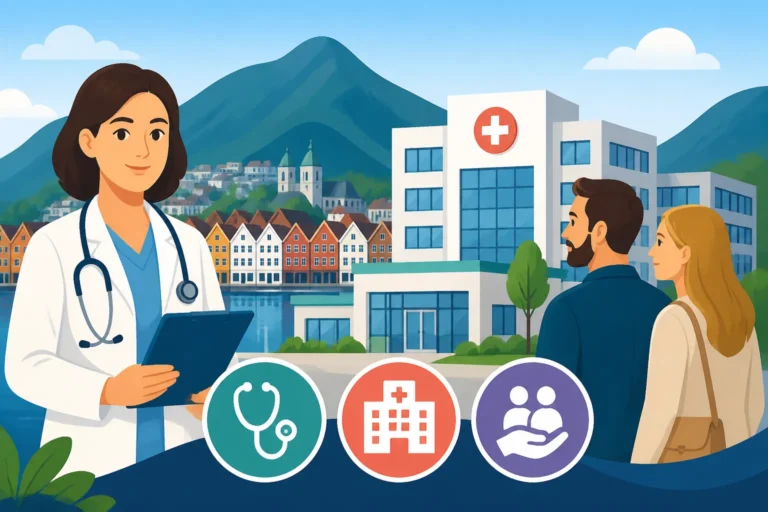
The public healthcare system in Norway is built on the principle of universal access, meaning that regardless of your income, you are entitled to high-quality medical care. This system is funded primarily through your taxes and managed by the state. Once you are legally resident and have received your Norwegian personal number (fødselsnummer), you are automatically enrolled in the National Insurance Scheme, known as Folketrygden. This is the "social contract" of Norway: you contribute a portion of your salary, and in return, the state ensures you won't go bankrupt if you require a heart transplant or long-term cancer treatment.
However, being "covered" by the public system does not mean every single interaction is free of charge. For many expats coming from countries with entirely socialized medicine or, conversely, highly privatized systems, the Norwegian middle ground can be confusing. You will still pay "user fees" (egenandel) for most consultations and prescriptions until you hit a specific annual cap. The system is designed to prevent frivolous use of resources while protecting those with chronic or serious conditions. You can read more about the core mechanics in Healthcare in Norway for Expats: How the System Works (2027).
The beauty of the public system lies in its equity. If you are involved in a serious accident on the streets of Bergen or fall ill in the far reaches of the north, the public hospitals will provide world-class care without asking for a credit card upfront. The public system handles all emergency care, complex surgeries, and long-term chronic disease management. For a deep dive into the legalities of who is in and who is out, check out Folketrygden Basics: Who is Covered by the National Insurance Scheme.
The Gatekeeper: Your Fastlege (GP)
In the public system, everything starts with your Fastlege. This is your primary care physician who acts as the gatekeeper to the rest of the medical world. You cannot simply call a dermatologist or a cardiologist and book an appointment in the public sector; you must first be evaluated by your GP, who will then issue a referral if they deem it medically necessary. This is often where the first point of friction occurs for foreigners who are used to "on-demand" specialist care.
Finding a GP with an open spot can be a challenge, especially in high-density areas like Oslo or Stavanger. When you first get your personal number, you are assigned one, but you have the right to change your doctor twice a year. The process is handled through the Helsenorge portal, which requires a BankID to access. If you find yourself in a city where every good doctor is "full," you might have to settle for a clinic further away until a spot opens up. We have a detailed tutorial on How to Register for a Fastlege (GP) on Helsenorge that walks you through the interface.
The relationship with your Fastlege is meant to be long-term. They hold your medical records and coordinate your care across different parts of the system. However, the "gatekeeper" model means you might have to advocate strongly for yourself if you feel a specialist is needed. Norwegian doctors tend to be conservative with testing and referrals, often favoring a "wait and see" approach for minor ailments. For more on managing this relationship, see The Fastlege Scheme: Navigating Norway’s GP System.
Public Specialist Care and Referrals
Once your GP has issued a referral, you enter the world of public specialist care. This includes everything from physical therapy to psychiatric evaluations and orthopedic surgery. The public system uses a "patient choice" model (Fritt behandlingsvalg), allowing you to choose which public hospital or private clinic with a public contract will handle your treatment. This is a powerful tool because waiting times can vary significantly between a hospital in Oslo and one in a smaller town like Lillehammer.
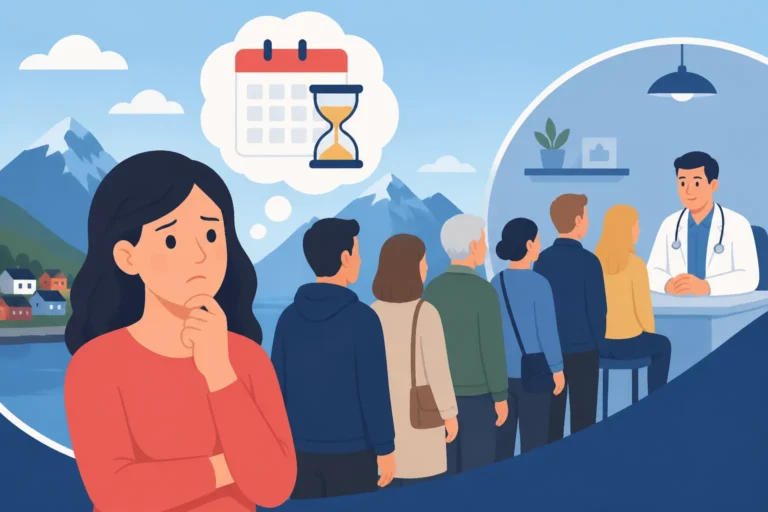
The downside is the wait. For non-urgent procedures, such as a routine knee surgery or a non-emergency skin screening, the waiting list can stretch into several months. The state monitors these waiting times, and you can actually check the current estimated waits on national databases. While the care you receive is excellent once you are in the room, the journey to get there can be agonizing if you are in pain or anxious about a diagnosis. You can explore how these timelines work in Specialist Referrals in Norway: How the Waiting Times Work.
If your condition is urgent, the system moves much faster. "Urgent" is defined by medical necessity, not personal preference. This distinction is often a source of cultural clash for expats. In Norway, if you aren't in immediate danger, you are expected to wait your turn. This is one of the primary reasons people begin looking toward the private sector. For those navigating complex paths, Norwegian Hospitals: Inpatient Care, Outpatient Care, and Patient Choice provides a breakdown of how different facilities operate.
The Cost of Public Care: User Fees and the Frikort
A common myth among newcomers is that Norwegian healthcare is "free." In reality, it is subsidized. For every visit to your GP, for every lab test, and for many medications, you will pay a small out-of-pocket fee. These fees are regulated by the government and are generally affordable—usually between 160 and 350 NOK for a standard consultation. However, these small amounts can add up if you have a child who gets sick frequently or if you are managing a recurring injury.
The government protects residents from high costs through the "Frikort" or exemption card system. Once you have paid a certain total amount in user fees within a calendar year, you are issued an exemption card, and all further public medical care for the rest of that year is free. For 2026, this limit is set at a level that most people with a chronic condition will hit by spring or summer. It is a brilliant safety net that ensures no one is truly priced out of care.
The system is almost entirely automated. When you pay a fee at a doctor's office or a pharmacy for a subsidized "blue" prescription, the amount is automatically logged against your personal number. Once you hit the threshold, Helsenorge sends you a notification, and your status is updated in the system. You don't usually need to apply for it, though there are some nuances regarding what counts toward the total. For the latest figures, see Understanding the Frikort: The 2026 Healthcare Exemption Card Limit.
What the Frikort Covers and What It Doesn't
It is vital to understand that the Frikort only applies to "approved" public medical expenses. This includes your GP, public specialists, public psychologists, and "blue" prescriptions (medications for chronic illnesses). It does not cover dental care for adults over 24, "white" prescriptions (temporary medications like antibiotics or birth control for some age groups), or cosmetic procedures.
Many expats are shocked when they go to the dentist and receive a bill for 2,000 NOK for a simple cleaning. In Norway, dental health is treated separately from general health for adults, and you must pay 100% of the cost unless you have a specific medical condition that qualifies for a subsidy. This is a major gap in the public system that often necessitates private budgeting. You can read more about these out-of-pocket expenses in User Fees (Egenandel) for Doctor Visits Before Reaching Frikort Status.
| Service Category | Public Sector (with Personal Number) | Private Sector (Out of Pocket) |
|---|---|---|
| GP Consultation | ~160 – 250 NOK (counts toward Frikort) | 700 – 1,500 NOK |
| Specialist Visit | ~375 NOK (requires referral) | 1,500 – 3,000 NOK (no referral) |
| Emergency (Legevakt) | ~200 – 400 NOK (triage based) | N/A (Private ERs are rare) |
| Standard MRI/CT | ~250 NOK (Wait: 4-12 weeks) | 2,500 – 5,000 NOK (Wait: 1-2 days) |
| Adult Dental Exam | 100% Self-Paid | 100% Self-Paid |
| Hospital Stay | 0 NOK (Full coverage) | 10,000+ NOK per day (Rare) |
The Private Healthcare Alternative: Speed and Convenience
Over the last decade, the private healthcare sector in Norway has exploded. While the public system remains the backbone of society, private clinics like Volvat, Aleris, and Dr.Dropin have become staples for those who value time and convenience over cost savings. The private sector operates entirely outside the referral system. If you want to see a dermatologist tomorrow because you are worried about a mole, you can simply book an appointment online and pay the full market price.
For many expats, private care is the only way to maintain the "on-demand" medical experience they had in their home countries. In a private clinic, you are the customer, and the service reflects that. The waiting rooms are often more modern, the appointments are longer, and the wait times for diagnostics like MRIs or blood tests are measured in hours or days rather than weeks. This is especially useful for those who cannot afford to take significant time off work to wait for a public appointment that might be scheduled at an inconvenient time.
Using private clinics does not "disqualify" you from the public system. Many people use a hybrid approach: they see a private GP for a quick prescription or a minor issue but rely on the public hospital for surgery or major illness. This flexibility is a hallmark of modern Norwegian life. For a deeper look at the specific facilities available in the capital, check Finding English-Speaking Doctors and Specialists in Oslo.
Private Digital Health and Video Consultations
The rise of digital health has changed the game for foreigners in Norway, particularly those who have not yet secured their BankID. Apps like Kry and Dr.Dropin allow you to book video consultations with doctors who speak perfect English. These services are invaluable for getting a quick sick note (sykemelding) for work or renewing a basic prescription. While these services are private and cost more than a public GP, the ease of use—often with appointments available within 30 minutes—is a major draw.
Digital providers have filled a massive gap for the "temporary" expat. If you are in Norway on a shorter contract and haven't yet been assigned a Fastlege, these private digital options are often your only choice for non-emergency care. They provide a level of accessibility that the bureaucratic public system sometimes lacks. To understand how to handle work-related illness through these apps, see Getting Sick Notes (Sykemelding) from Your GP for Work.
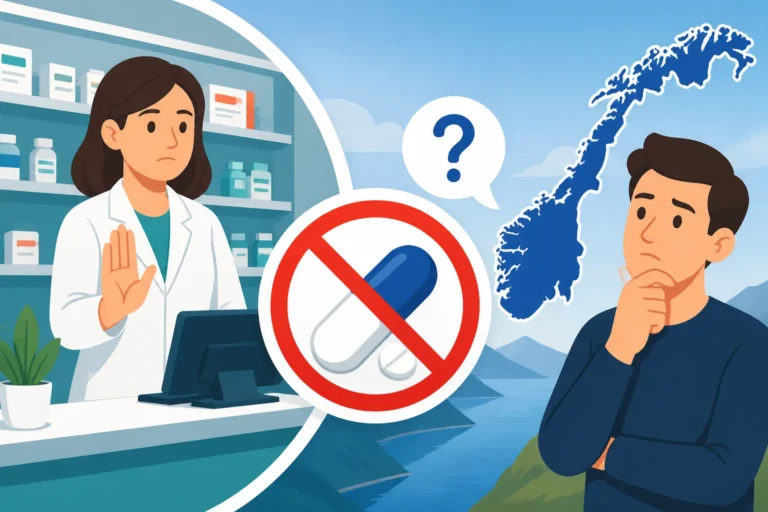
However, it is important to note that even private doctors in Norway are bound by strict national guidelines regarding certain medications. You cannot simply "buy" a prescription for strong painkillers or ADHD medication from a private clinic without a rigorous, often multi-step diagnostic process that mirrors the public requirements. For those bringing existing treatments from abroad, Bringing Medication into Norway: Customs Rules and Schengen Certificates is an essential read to avoid legal headaches.
The Trade-off: What Private Care Doesn't Do
It is a common misconception that private healthcare in Norway is a "complete" alternative to the public system. It is not. Private hospitals in Norway generally do not handle emergency medicine. If you have a heart attack, an ambulance will take you to a public hospital (like Ullevål in Oslo or Haukeland in Bergen), not a private clinic. The private sector focuses on elective procedures, diagnostics, and "minor" health issues.
Furthermore, if you require highly specialized, life-saving treatment for a rare disease, the public system is actually where you want to be. The best medical equipment and the most specialized surgeons are almost always employed by the public university hospitals. Private care is about skipping the queue for routine things; public care is about saving your life when things go wrong. For more on emergency protocols, see Emergency Medical Care in Norway: 113, Legevakten, and Hospitals.
Private Health Insurance in Norway: Is It Worth It?
With such a robust public system, why do over 700,000 people in Norway have private health insurance? Most of these policies are provided by employers as a perk to ensure their staff can return to work quickly after an injury. If a software engineer needs a minor surgery that has a three-month wait in the public system, the insurance company will pay for them to have that surgery in a private clinic within a week.
As an individual expat, you might consider taking out your own policy. Companies like Cigna Global offer comprehensive plans that provide international portability, which is perfect if you split your time between Norway and your home country. These plans often cover things the public system ignores, such as private dental care or more extensive mental health support. If you are a digital nomad or a frequent traveler, a provider like SafetyWing is often more appropriate, offering a mix of travel and medical coverage that bridges the gap until you are fully integrated into the Norwegian system.
Before buying, you should evaluate your specific needs. Are you generally healthy and just need a safety net? The public system is likely enough. Do you have a history of sports injuries and want to ensure you always have access to a physiotherapist? Private insurance might be a lifesaver. We weigh the pros and cons in detail in Do I Need Private Health Insurance if I Live in Norway?.
Corporate vs. Individual Policies
If you are negotiating a job offer in Norway, it is worth asking if the company provides private health insurance (helseforsikring). In many sectors, this is now a standard part of the "benefits package." These corporate policies usually cover the cost of private specialists, some physical therapy, and faster diagnostic imaging. It is a taxable benefit, but the peace of mind it provides—knowing you can bypass the public queues—is often worth the small tax hit.
Individual policies are also available from local providers like If, Gjensidige, or DNB. These are often cheaper than expats expect because they only need to cover the "gap" between public and private care, rather than the full cost of major hospital stays. However, for those who want a "premium" experience with English-speaking support and global coverage, international insurers like Cigna Global remain the gold standard.
If you are here as a student or on a shorter visa, your access to these local private policies might be limited. In these cases, maintaining international coverage is not just a luxury—it's a necessity. Without a fødselsnummer, you may find that local private insurers won't even process your application. This is where SafetyWing shines, providing coverage based on a subscription model that doesn't require a Norwegian ID to start. You can see more about these specific hurdles in Healthcare Rights for D-Number Holders: Exclusions and Alternatives.
Specialized Care: Dental, Vision, and Mental Health
One of the biggest shocks for newcomers is how the public vs. private divide shifts when it comes to "non-essential" health. In Norway, your eyes and your teeth are mostly your own financial responsibility once you turn 18 (with some exceptions for the 19-24 age group). This is where the private market dominates entirely. You do not go to a public doctor for an eye exam or a cavity; you go to a private optician or dentist and pay the market rate.
The mental health system is a mix. There is a public route through your GP (referral to a District Psychiatric Center, or DPS), but the waiting lists are notoriously long for anything that isn't a crisis. Consequently, many expats choose to pay for private psychologists out of pocket. A private session in Oslo or Bergen can cost anywhere from 1,200 to 2,500 NOK. For those needing long-term support, this can be a significant financial burden. Check Mental Health in Norway: Accessing Therapy and Psychiatric Care for a realistic look at your options.
Dental Care: The Great Expat Expense
Norway's public dental system is excellent—if you are a child. For everyone else, it’s a purely private affair. You can find dental clinics on every street corner in the major cities, and the quality of care is world-class, but the prices reflect the high cost of labor in Norway. A simple check-up with X-rays will likely cost you over 1,000 NOK. If you need a root canal or a crown, be prepared for a bill that runs into the tens of thousands.
There are some subsidies for young adults (aged 19 to 24), who pay only 25% of the public rates for dental care. Beyond that, unless you have a specific disease like periodontitis or a rare medical condition, you are on your own. Many expats actually wait until they go home for the holidays to see a dentist in their home country because it is so much cheaper. For more details on finding a provider, see Dental Care in Norway: Costs, Subsidies, and Finding a Dentist.
Vision and Optometry
Vision care is almost exclusively private. If you need glasses or contact lenses, you visit a chain like Brilleland or Specsavers. The optometrists are highly trained and can perform health checks on your eyes, but you pay for the exam and the hardware yourself. If you have a serious eye disease, your optometrist will refer you back into the public system to see an ophthalmologist at a hospital, where the standard user fees apply.
Expats should be aware that private health insurance policies (both local and international like Cigna Global) often have specific add-ons for vision and dental. If you know you have poor eyesight or frequent dental issues, these riders are worth every penny. You can find out more about the distinctions between types of eye doctors in Eye Exams in Norway: Opticians vs Ophthalmologists Explained.
Navigating the System without a Personal Number
One of the most stressful experiences is being in Norway with only a D-number (a temporary identification number) or no number at all while waiting for your paperwork to clear. Legally, you still have the right to "necessary" healthcare, but practically, the system isn't built for you. You won't have a Fastlege, and you won't be able to use the Helsenorge portal to book appointments or see your records.
In this scenario, you have two choices: use the public out-of-hours service (Legevakt) for urgent issues or use private clinics for everything else. The Legevakt will treat you, but you will pay a higher "non-resident" fee if you cannot prove you are part of the National Insurance Scheme. This is why having insurance from a provider like SafetyWing is so critical during your first few months. They handle the claims so you don't have to navigate the Norwegian bureaucracy while you have a fever.
Even private clinics like Dr.Dropin sometimes struggle with patients who don't have a personal number, as their booking systems are often tied to BankID. However, most major private clinics in Oslo and Bergen have workarounds for foreigners. You will likely have to call them on the phone rather than booking online. For a checklist of what to do when you first arrive, see First 30 Days Health Checklist: GP, Frikort, and Pharmacies.
The Role of the Legevakt (Emergency Room)
If you are sick outside of regular office hours and it’s not life-threatening, you don't go to the hospital; you go to the Legevakt. Every municipality has one. In Oslo, the main Legevakt at Storgata is a legendary place of long waits and efficient triage. You cannot "choose" to use the Legevakt because it’s faster; they will prioritize patients based on severity. If you show up with a sore throat, you will wait behind everyone with a broken bone or a high fever.
The Legevakt is part of the public system, so the fees are regulated, but it is much more expensive than a regular GP visit. It is a vital resource for expats who don't yet have a doctor, but it should be used sparingly. Always call the national medical helpline at 116 117 before going; they can often give you advice over the phone or tell you exactly when to come in to minimize your wait. Learn more in Legevakten (116 117): When and How to Use the Out-of-Hours Service.
Comparing Public and Private: A Realistic Summary
Deciding between public and private care in Norway isn't about which is "better"—it's about which tool is right for the job. The public system is your safety net for the big stuff: childbirth, cancer, emergency surgery, and chronic disease. It is remarkably cheap for the level of care you receive, and the Frikort system ensures that you are never financially ruined by illness.
The private system is your tool for efficiency. It’s for the times when you need a prescription before a flight, when you want a second opinion on a sports injury, or when you simply cannot wait three months for a dermatologist. Most expats find that a hybrid approach works best: use the Fastlege for your primary needs, but keep a private clinic's number in your phone for the "I need this solved today" moments.
If you are coming from a country like the US, the Norwegian public system will feel like a miracle of affordability. If you are coming from the UK, the "user fee" system might feel like an annoying extra step. Regardless of your background, understanding the nuances of the public vs. private divide is the first step toward feeling at home in Norway. For those just starting their journey, I highly recommend reading Healthcare in Norway for Expats: How the System Works (2027) to get the full picture of what to expect in the year ahead.
Disclaimer
The information provided in this guide is for educational and informational purposes only and does not constitute professional medical or legal advice. While every effort has been made to ensure the accuracy of the information regarding the Norwegian healthcare system as of 2026, rules and regulations are subject to change. Always consult with official government sources such as Helsenorge or UDI, or speak with a qualified medical professional for specific health concerns.