Maternity Care in Norway: Prenatal Appointments, Scans, and Midwives
Navigating a pregnancy in a foreign country can feel like trying to read a map in the dark, especially when you are faced with a system that prioritizes a "natural" approach you might not be used to. I remember sitting in my living room in Oslo with a positive test in hand, feeling a mix of joy and absolute terror because I had no idea who to call first. This guide solves that confusion by detailing exactly what to expect from your first prenatal appointment to your final ultrasound.
The Foundation of Maternity Care in Norway
The Norwegian maternity system, known as svangerskapsoppfølging, is built on the principle of decentralized, midwife-led care that is accessible to everyone regardless of income. If you are a resident and a member of the National Insurance Scheme, this care is entirely free. The system is designed to be low-intervention for healthy pregnancies, which can sometimes be a culture shock for expats coming from more medicalized systems in the US or Southern Europe.
The Philosophy of Public Care
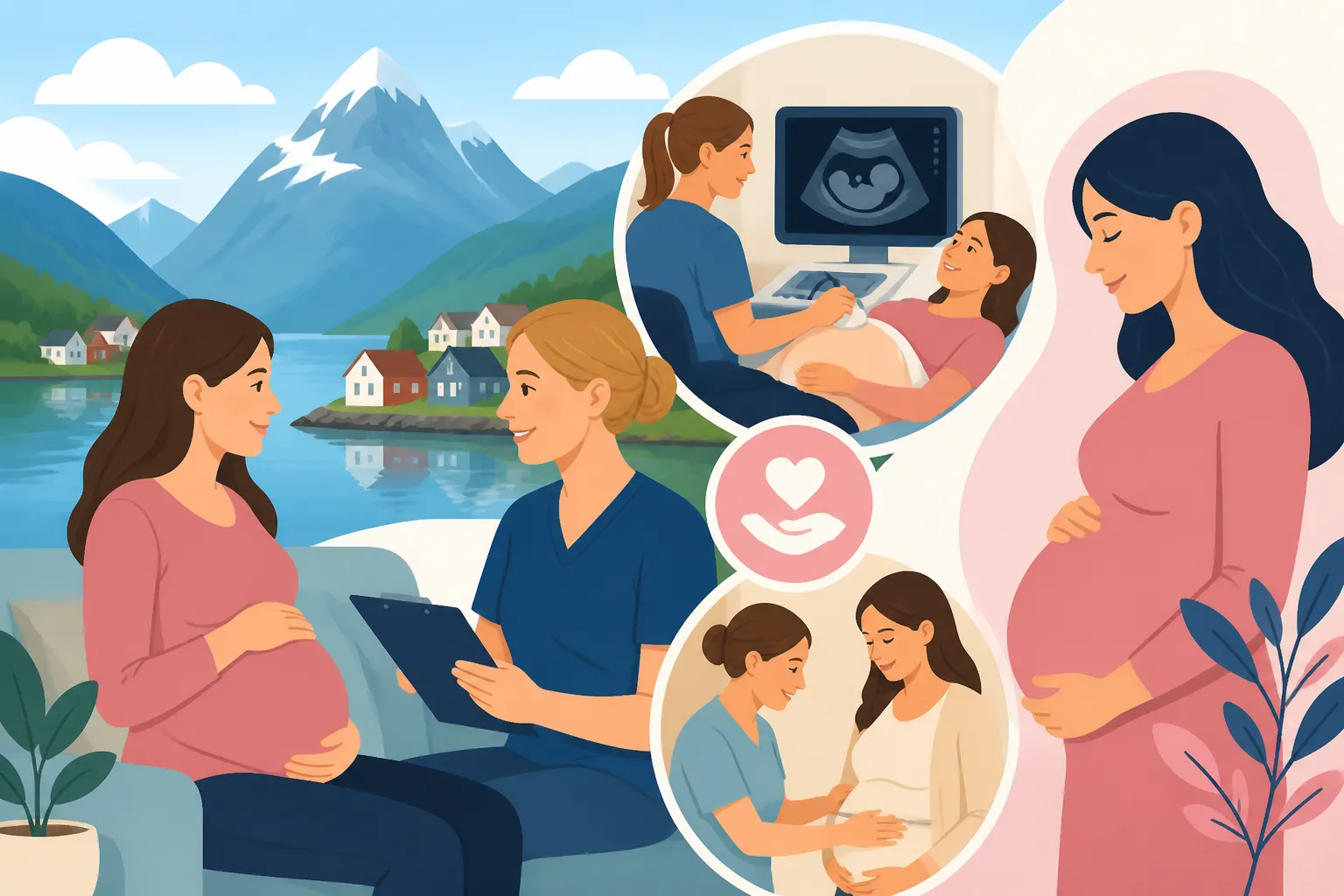
In Norway, pregnancy is viewed as a natural life event rather than a medical condition. This means that if your pregnancy is progressing normally, you will likely see a midwife (jordmor) far more often than a doctor. The focus is on the well-being of both the mother and the child, with a heavy emphasis on mental health and preparation for parenthood. Most expats find this approach incredibly calming once they get used to the slower pace, though it requires a shift in expectations if you are used to monthly ultrasounds.
You will spend most of your time at your local Helsestasjon (health clinic). These clinics are the heart of the community and provide a one-stop-shop for everything from blood tests to breastfeeding support. Understanding the Folketrygden Basics: Who is Covered by the National Insurance Scheme is essential here, as your rights to this free care stem directly from your membership in this system.
Public vs Private Options for Expats
While the public system is excellent, some expats prefer the continuity and frequency of private care. In the public system, you might not see the same midwife every time, and you generally only receive one "official" ultrasound at week 18. Private clinics like Volvat or Aleris offer "package" deals for pregnant women, including early scans and more frequent check-ups with an obstetrician.
If you are a digital nomad or on a temporary contract, you might be looking at Private Health Insurance in Norway: Is It Worth the Extra Cost? to bridge the gap. For those with international coverage from providers like Cigna Global, you may have the option to access these private specialists with lower out-of-pocket costs. However, even if you go private for your check-ups, almost everyone in Norway gives birth in a public hospital, as they hold the highest level of emergency expertise and equipment.
The Role of the Helsekort for Gravide
One of the most important physical items you will receive is the Helsekort for gravide. This is a large, double-sided blue paper form that acts as your portable medical record. Unlike many countries where records are digitized and hidden behind hospital portals, Norway expects you to carry this paper card to every single appointment, including any trips to the emergency room or the Legevakten (116 117): When and How to Use the Out-of-Hours Service.
The card tracks your weight, blood pressure, symphysis-fundal height (the growth of your uterus), and baby’s heart rate. It also contains the results of all your blood tests. It might feel a bit old-school to carry a piece of paper, but it ensures that any doctor or midwife you see—whether in Bergen, Tromsø, or Oslo—has the exact same information. Always keep it in your handbag; it is your passport to care.
Starting Your Journey: The First Appointment
The first step in your Norwegian pregnancy journey usually happens between week 8 and week 12. Many expats feel anxious waiting this long, but unless you have a history of complications or are experiencing pain or bleeding, the system generally won't see you earlier. This is the time to ensure you are properly registered within The Fastlege Scheme: Navigating Norway’s GP System.
Booking Your First Consultation
Your first appointment is usually with your Fastlege (GP). During this visit, the doctor will confirm the pregnancy (though often they just take your word for it if you’ve had a positive home test) and begin the heavy lifting of paperwork. They will order a suite of blood tests to check your iron levels, blood type, and screen for diseases like HIV, Hepatitis B, and Syphilis.
This is also the moment where you must decide if you want to follow your care through your GP, a midwife at the Helsestasjon, or a mix of both. Most women choose the midwife for the majority of visits because they have more time to talk through the emotional and physical changes of pregnancy. If you find your current GP isn't a good fit for this journey, you can look into Changing Your Fastlege: Rules and Waiting Lists in Norway to find someone more empathetic to your needs.
The Application for a Birth Place
One of the most unique aspects of the first appointment is the application for a birth place (søknad om fødeplass). In Norway, you don't just show up at the nearest hospital when you're in labor; you are assigned a spot based on your location and your health needs. Your doctor will send this application during your first visit.
If you live in a major city like Oslo, you might have a preference between Ullevål, Rikshospitalet, or Akershus (Ahus). Your doctor will list your preferences, but the hospital makes the final call based on capacity. You can learn more about how these facilities differ in our guide on Norwegian Hospitals: Inpatient Care, Outpatient Care, and Patient Choice. Getting your application in early is key, especially for popular hospitals with specialized natural birthing units like Føderiket.
Blood Tests and Initial Screenings
During this first visit, you will likely be handed a stack of laboratory forms. Norway screens for several things automatically. If you are over the age of 35, or if there are other risk factors, you will be offered an early ultrasound and a NIPT (Non-Invasive Prenatal Test). For women under 35, these are generally not covered by the public system unless there is a medical reason, though the laws have recently shifted to make these more accessible.
If you find yourself needing more frequent monitoring due to a pre-existing condition, make sure your GP is aware so they can set up Specialist Referrals in Norway: How the Waiting Times Work. This ensures you are seen by an obstetrician at the hospital's outpatient clinic rather than just the midwife at the local health center.
Routine Prenatal Appointments and Scans
The schedule of care in Norway is standardized across the country. Following the first visit, you will typically have appointments at week 24, 28, 32, 36, 38, and 40. This can feel quite infrequent to those used to bi-weekly visits, but the Norwegian philosophy is that less is more when everything is going well.
The Routine Check-up Schedule
At each routine appointment, whether with a midwife or GP, the process is fairly similar. You will provide a urine sample (bring this from home in a sterile container bought at the pharmacy), have your blood pressure checked, and your weight recorded. The midwife will use a wooden Fetoscope or a handheld Doppler to listen to the baby's heartbeat.
One specific test that catches many expats off guard is the Glucose Tolerance Test (Glukosebelastning), usually performed around week 24-28. If your BMI is over a certain threshold or you meet other criteria, you'll be asked to fast, drink a very sugary lemon-flavored liquid at the lab, and wait for two hours to have your blood drawn. It’s a long morning, so bring a book and maybe some headphones. For more on how to manage these specific health requirements, see Family Health in Norway: Pregnancy, Childbirth, and Pediatric Care.
The 18-Week Anatomy Scan
The "Big Scan" usually happens at your assigned birth hospital around week 18 or 19. This is typically the only ultrasound provided by the public system. It is a detailed anatomy scan where the sonographer checks the baby's heart, brain, spine, and limbs, as well as the position of the placenta.
In Norway, this scan is a medical procedure, not a photo op. While most sonographers are lovely and will give you a few printed pictures (sometimes for a small fee of 50-100 NOK), their primary goal is diagnostic. They will also confirm your due date (termin), which is the date the Norwegian system will use for all legal and medical purposes, including when your Maternity Pay and Leave: How Your Health Impacts Foreldrepenger begins.
Additional Scans and Private Alternatives
If you are anxious and want to see the baby more often, you will need to go private. Many expats choose to have a "dating scan" at week 8-12 or a 3D/4D scan at week 28. These are not medically necessary in the eyes of the Norwegian state, so they are not covered by the User Fees (Egenandel) for Doctor Visits Before Reaching Frikort Status.
Prices for private scans usually range from 1,200 NOK to 2,500 NOK. If you are using a travel-specific plan like SafetyWing while waiting for your residency to process, check if they cover complications, though routine private elective scans are rarely covered by standard travel insurance. For those who want more regular contact with an OB-GYN, exploring Private Health Insurance in Norway: Is It Worth the Extra Cost? might be a path to consider for peace of mind.
| Appointment | Typical Week | Primary Provider | Purpose |
|---|---|---|---|
| First Consultation | 8 – 12 | GP / Midwife | Blood tests, Helsekort, Hospital Application |
| Anatomy Scan | 18 – 19 | Hospital Sonographer | Detailed check of baby's anatomy, Confirm due date |
| Routine Check | 24 | Midwife / GP | Glucose test (if needed), symphysis-fundal growth |
| Routine Check | 28 | Midwife | Blood pressure, fetal movement, Rhesus check |
| Routine Check | 32 | Midwife | General well-being, birth plan discussion |
| Routine Check | 36 | Midwife | Position of the baby (head down?) |
| Routine Check | 38 | Midwife / GP | Preparation for labor |
| Term Check | 40 | Midwife | Final checks before potential induction |
Roles of Healthcare Providers: Midwives vs. Doctors
The dynamic between midwives and doctors in Norway is one of mutual respect, but the midwife is undoubtedly the lead protagonist in the maternity story. Understanding this hierarchy is vital for managing your expectations and ensuring you feel heard.
The Role of the Jordmor (Midwife)
In Norway, a Jordmor is a highly trained specialist. They are not just "nurses who help with babies"; they are independent practitioners who can handle normal pregnancies and births on their own authority. Your midwife at the Helsestasjon will be your primary point of contact for questions about diet, exercise, breastfeeding, and emotional changes.
The beauty of seeing a midwife is the time they afford you. A typical GP appointment is 15-20 minutes, whereas a midwife appointment is often 45-60 minutes. They focus heavily on the Mental Health in Norway: Accessing Therapy and Psychiatric Care aspect of pregnancy, screening for prenatal depression and helping you prepare for the massive life shift of parenthood. They also run birth preparation classes (fødselsforberedende kurs), often in English for the expat community.
When the Doctor Steps In
Your GP or a hospital obstetrician only becomes the primary lead if the pregnancy becomes "high risk." This includes conditions like twin pregnancies, gestational diabetes, pre-eclampsia, or pre-existing chronic illnesses. If you have a complex medical history, your care will be managed through the hospital’s outpatient clinic (svangerskapspoliklinikk).
In these cases, you will still see your local midwife for the "social" and "emotional" side of care, but the medical decisions will be made by specialists. If you are managing a condition like Type 1 Diabetes or heart disease, you should read up on Managing Chronic Illness in Norway: Diabetes, Asthma, and Heart Disease to see how the system coordinates between your specialists and your maternity team.
Navigating Specialist Referrals
If your midwife detects something unusual—such as the baby being in a breech position or a sudden rise in your blood pressure—they will immediately coordinate with the hospital. You don't have to "find" a specialist yourself. The Norwegian system is highly integrated. They will call the hospital, send your digital records, and tell you exactly where to go. This seamless transition is one of the strengths of the public system, ensuring that Emergency Medical Care in Norway: 113, Legevakten, and Hospitals is always available if the situation changes from routine to urgent.
Navigating the Administrative Side: Logistics and Rights
Beyond the medical check-ups, there is a fair amount of "Norwegian-ing" you need to do to ensure your pregnancy journey is smooth. This involves everything from digital ID to understanding your rights in the workplace.
Communication and Language
Almost all healthcare professionals in Norway speak excellent English. However, the medical terminology can sometimes be confusing, and the Helsekort is written in Norwegian. Don't be afraid to ask your midwife to explain things in simpler terms. If you are not comfortable in English or Norwegian, you have a legal right to a translator. You can learn more about this in our guide on Medical Interpreters in Norway: How to Request One for Free.
Most of your communication will happen through the Helsenorge portal. You will receive letters about your ultrasound appointments and laboratory results here. To access this, you absolutely need a BankID. If you are still waiting on yours, it’s worth reading BankID Explained: Norway's Digital Identity System and Expat Challenges to understand the workarounds, as without it, you may have to rely on physical mail which can be slow.
Choosing Your Birth Experience
While you are assigned a hospital, you have a lot of say in the type of birth you want within that facility. Most Norwegian hospitals have "natural" sections (like the Føderiket or MIRA units) where the focus is on water births and minimal intervention, and "medical" sections for those who want an epidural or have high-risk factors.
During your week 32 or 36 appointment, your midwife will encourage you to write a "Birth Wish List" (Fødebrev). This is a letter to the midwives at the hospital explaining your fears, your hopes for pain relief, and who you want in the room with you. This is a great time to research Giving Birth in a Norwegian Hospital: Pain Relief and Postpartum Stays so you know what options like "pudendal block" or "nitrous oxide" (laughing gas) are actually like in a Norwegian context.
Workplace Rights and Sick Leave
Norway has some of the strongest protections for pregnant workers in the world. If you find that the "pregnancy brain" or physical exhaustion is making it impossible to do your job, your GP can issue a Sykemelding (sick leave) specifically for pregnancy-related issues. This is very common in Norway and is not frowned upon.
You are also entitled to paid time off for all your prenatal appointments. Your employer cannot ask you to "make up the hours" or take it as vacation time. If your job involves heavy lifting or chemicals, your employer is legally required to adapt your workspace or find you alternative duties. For a deeper dive into these protections, check Employment Rights in Norway: The Working Environment Act Explained.
Costs and Insurance Considerations for Expats
One of the greatest reliefs for expats in Norway is that pregnancy doesn't result in a massive hospital bill. However, "free" doesn't always mean there are zero costs, and it's important to know where your money will go.
Is it Really Free?
Yes, for members of the National Insurance Scheme, all consultations with a midwife or GP regarding the pregnancy are free. You do not pay the standard egenandel (user fee). This also applies to the birth itself and the stay at the hospital or "Patient Hotel" afterwards.
However, there are small costs. You may have to pay for the physical equipment used in some tests (like a sugar drink for the glucose test) or for copies of ultrasound photos. Most importantly, medications are not always free. While "Blue Prescriptions" cover chronic illnesses, many pregnancy supplements and medications are "White Prescriptions," meaning you pay out of pocket. For more detail, see Pharmacies and Prescriptions in Norway: White vs Blue Slips.
The Frikort and Pregnancy
Because pregnancy appointments are free, they do not count towards your Understanding the Frikort: The 2026 Healthcare Exemption Card Limit. This is important to remember if you are seeing the doctor for other things—like a sore throat or a skin rash—during your pregnancy. Those non-pregnancy visits will still require a user fee until you hit the annual cap. You can easily monitor this via the How to Check Your Frikort Status on the Helsenorge App guide.
Supplemental Coverage for Expats
If you are a newcomer and haven't yet been processed into the National Insurance Scheme (which can take months if you are waiting for a D-number or personal number), you might be in a vulnerable spot. This is where contextual brands like SafetyWing or Cigna Global come into play.
SafetyWing is often used by digital nomads for emergency coverage, though you must check their specific terms regarding maternity, as most travel-focused plans require a "waiting period" before they cover pregnancy. Cigna Global offers more robust international plans that can cover private maternity care, which is a lifesaver if you are not yet eligible for Folketrygden Basics: Who is Covered by the National Insurance Scheme. Once you are fully registered in the Norwegian system, these private plans often become "nice-to-haves" rather than "must-haves," providing quicker access to specialists or private rooms.
Final Preparation: The Last Few Weeks
As you approach your due date, the focus shifts to the logistics of the "Big Day" and the immediate aftermath. The Norwegian system doesn't just drop you once the baby is born; it transitions you into the pediatric care system.
The Term Check and Induction Rules
If you reach week 40 and there’s no sign of the baby, you will have a "Term Check" at the hospital. Norway has strict rules about how long they will let a pregnancy go past the due date. Usually, by week 41 or 42, they will schedule an induction. They monitor the amniotic fluid and the baby’s heart rate closely during this time.
This period can be incredibly stressful for expats, as different countries have very different induction protocols. Talk to your midwife about what to expect. They will explain the different methods used, from "balloon catheters" to hormonal gels. Having this conversation early helps reduce anxiety. You might also want to look into Healthcare Budgeting: The Frikort Exemption Card and User Fees to ensure you have no lingering administrative tasks before the "baby fog" sets in.
Postpartum Support and the Helsestasjon
Once you leave the hospital, the care shifts to the Helsestasjon: Norway’s Free Child Health Clinics and Vaccination Program. Within the first few days of being home, a midwife or a public health nurse (Helsesykepleier) will actually come to your house for a home visit. They check the baby's weight and see how you are doing with recovery and breastfeeding.
This home visit is a wonderful Norwegian tradition that helps catch any issues like jaundice or postpartum depression early. From that point on, you will take the baby to the clinic for regular check-ups. The transition is seamless, and you’ll find that the same building where you went for your prenatal check-ups is now the place where you’ll meet other new parents. It’s the perfect way to start building your "village" in a new country.
Disclaimer
The information provided in this guide is for educational and informational purposes only and does not constitute medical advice. Healthcare regulations and procedures in Norway can change. Always consult with a qualified healthcare professional, such as your GP or midwife, regarding your specific medical needs and pregnancy. For official legal and residency-related healthcare rights, please refer to the Norwegian Directorate of Health (Helsedirektoratet) or Helsenorge.