Emergency Room Waiting Times: Triage Rules at Norwegian Hospitals
You are sitting in a plastic chair at 2 AM, holding a throbbing wrist, while three people who arrived after you are whisked away by nurses into the inner sanctum of the clinic. I remember my first night at the Oslo Legevakt, feeling completely invisible and increasingly frustrated as the hours ticked by. This guide explains exactly how Norwegian triage works so you can navigate the wait without the stress of feeling forgotten.
The First Hurdle Understanding Legevakten vs. Sykehus
The most common mistake expats make in Norway is rushing straight to the emergency department of a major hospital for a non-life-threatening injury. In many countries, the "ER" is a single destination. In Norway, the system is strictly bifurcated. For almost everything that isn't a literal life-or-death situation, your destination is the Legevakten (the municipal acute care clinic), not the Sykehus (the hospital).
When you arrive at a Legevakt, you aren't just walking into a doctor’s office; you are entering a highly regulated gateway to the rest of the medical system. If you show up at a hospital ER with a deep cut or a suspected broken ankle, they will often politely, but firmly, redirect you to the local Legevakt. This is because Norwegian hospitals focus their ER resources on "Red" level emergencies—think cardiac arrest, major trauma, or severe respiratory distress. Understanding Emergency Medical Care in Norway: 113, Legevakten, and Hospitals is the first step in ensuring you don't waste time traveling to the wrong facility.
Before you even leave your house, the system encourages you to call the national out-of-hours number, 116 117. This connects you to a nurse who performs a "phone triage." They will ask about your symptoms and tell you if you should stay home, wait for your GP the next morning, or come into the clinic immediately. In some smaller municipalities, you cannot even enter the clinic without calling first. If you are a visitor or a digital nomad using a plan like SafetyWing, this phone call is often your first documented "medical event," which can be helpful for later claims. Mastering the Legevakten (116 117): When and How to Use the Out-of-Hours Service protocol is essential for anyone living outside the major city centers.
Decoding the Triage Color System at Norwegian Hospitals
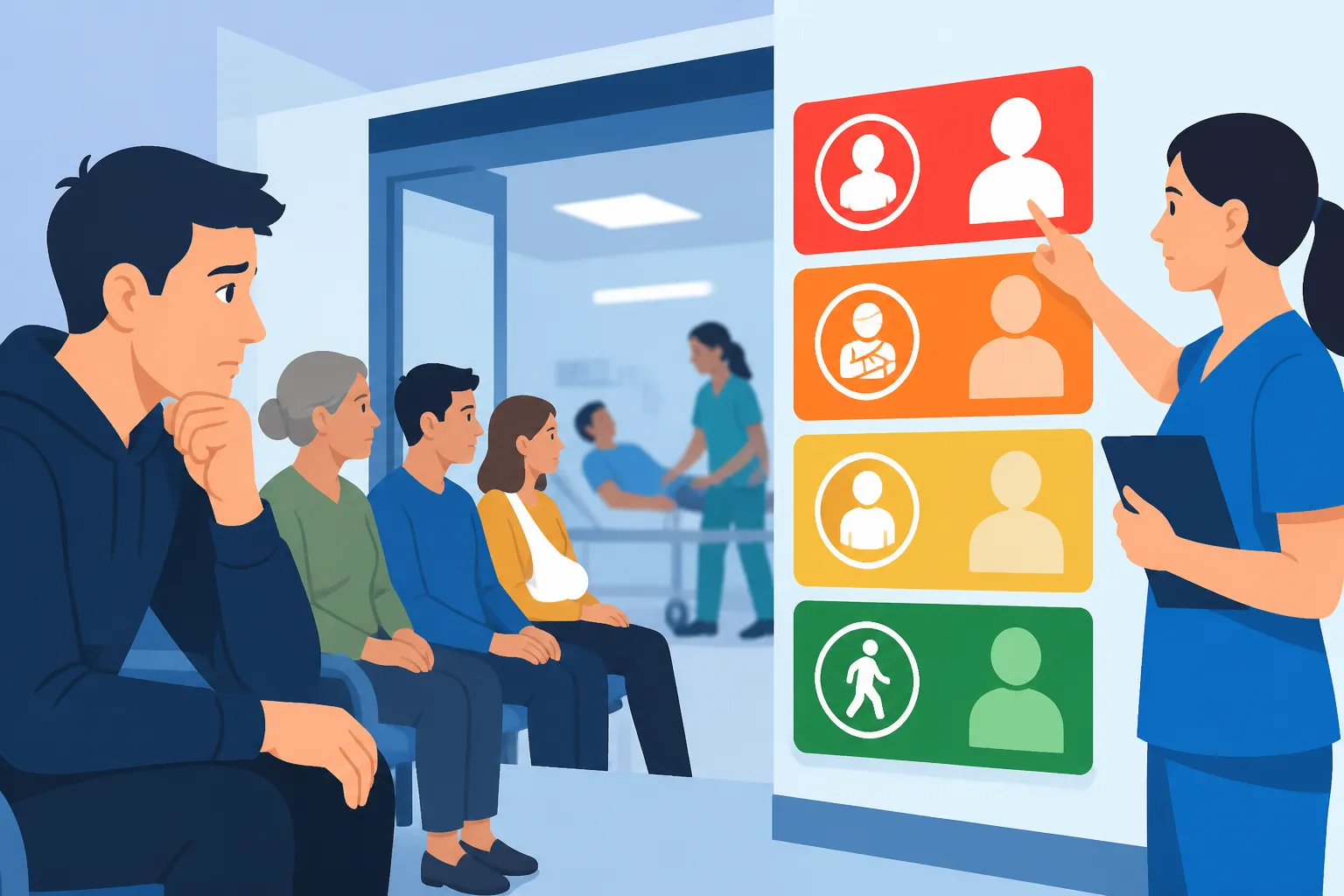
Once you step through the doors of a Norwegian emergency facility, the "First-In, First-Out" rule ceases to exist. Norway uses a standardized triage system, often based on the Manchester Triage Scale, designed to sort patients by clinical urgency rather than the time of arrival. This is the source of the "waiting room mystery" where some people seem to skip the line.
When you first check in at the "luke" (the reception window), a triage nurse will perform a rapid assessment. They look at your vital signs, the mechanism of your injury, and your level of pain. Based on this, you are assigned a color code. This code determines your maximum wait time and your priority relative to everyone else in the room. If a "Yellow" patient arrives two hours after a "Green" patient, the Yellow patient will still be seen first.
| Triage Color | Priority Level | Typical Condition Examples | Target Time to Physician |
|---|---|---|---|
| Red | Resuscitation | Cardiac arrest, unconsciousness, severe airway obstruction. | Immediate |
| Orange | Emergency | Chest pain, severe breathing difficulties, major burns. | Within 10–15 minutes |
| Yellow | Urgent | Moderate abdominal pain, high fever with lethargy, suspected fractures. | Within 60 minutes |
| Green | Standard | Minor cuts requiring stitches, sprains, persistent ear infections. | 2–4 hours (can be much longer) |
| Blue | Non-Urgent | Prescription refills, long-standing minor rashes, sick note requests. | 4+ hours or redirect to GP |
It is important to realize that the "Target Time" is an ideal, not a guarantee. On a Friday night in a city like Oslo or Bergen, the "Green" queue can stretch to six or eight hours if there is a spike in "Orange" or "Yellow" cases. If you find yourself waiting in a crowded room, remember that the system is designed to be a safety net. If you are waiting, it is actually a "good" sign—it means the medical professionals have determined your life is not in immediate danger. For those who prefer to avoid these public queues for non-emergencies, a Public vs Private Healthcare in Norway: A Complete Guide can help you decide if private clinics are a better fit for your lifestyle.
Navigating the Physical Wait and Managing Expectations
The atmosphere in a Norwegian Legevakt is usually one of quiet, stoic efficiency. You won't find much "customer service" in the traditional sense; the focus is entirely on clinical throughput. This can feel cold or dismissive if you are used to a more attentive healthcare culture. However, the nurses are constantly monitoring the room. If your condition worsens while you are sitting there—if you feel faint, your pain intensifies, or you start vomiting—you must approach the triage window again. They will reassess your color code immediately.
Language barriers can add a layer of anxiety to the wait. While almost all medical staff in Norway speak excellent English, the stress of an injury can make communication difficult. You can generally expect English Language Support at Legevakten: What to Expect to be high, but don't be afraid to ask for clarification if a nurse uses a Norwegian medical term you don't recognize. If you find the communication totally blocked, remember that you have a legal right to a translator, though this is usually reserved for complex consultations rather than the initial triage. You can read more about Medical Interpreters in Norway: How to Request One for Free to understand your rights in this area.
While you wait, keep in mind that the Legevakt is a high-cost resource. In Norway’s socialized system, the goal is to move stable patients back to their Fastlege (General Practitioner) as soon as possible. The Legevakt will treat the acute problem—they will stitch the wound or set the bone—but they rarely provide long-term follow-up. They will send a report to your GP, and you will be expected to book your own follow-up appointment. If you haven't yet secured a local doctor, learning How to Register for a Fastlege (GP) on Helsenorge should be your next priority after you leave the clinic.
Financial Realities and Documentation Requirements
Even though the system is public, it is not "free" at the point of service for most adults. Every visit to the Legevakt incurs an egenandel (user fee). This fee covers the consultation, but you may be billed extra for bandages, crutches, or specific medications used during the visit. If you have a Norwegian national identity number, these costs are automatically registered toward your annual "Frikort" limit. Once you spend a certain amount in a calendar year, the rest of your public healthcare is free. You can track this through Healthcare Budgeting: The Frikort Exemption Card and User Fees.
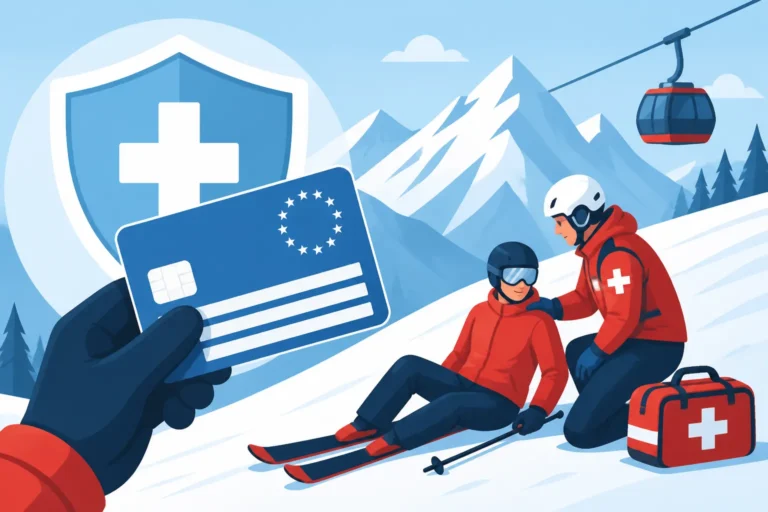
For expats who have not yet transitioned into the National Insurance Scheme, or for tourists, the financial side is different. If you are from the EU/EEA, you must present your European Health Insurance Card (EHIC). Without this, or if you are from outside the EU, you will likely be asked to pay the full cost of the visit upfront. This is where having a robust private policy like Cigna Global becomes invaluable, as they can handle the larger "unsubsidized" bills that occur when you aren't yet fully covered by the Norwegian state.
Make sure to keep every receipt and medical report provided. If you are using EHIC and GHIC in Norway: Using European Health Insurance, the billing process is usually streamlined, but for those on travel insurance, the clinic will provide a "Journal" (medical notes). This document is your evidence for insurance claims. Even for residents, knowing the breakdown of User Fees (Egenandel) for Doctor Visits Before Reaching Frikort Status helps you avoid "sticker shock" when the invoice arrives in your digital mailbox a few weeks later.
Finally, if you are a tourist who has had an accident on the slopes or a hiking trail, the triage rules remain the same. The system does not prioritize residents over visitors; it prioritizes the sickest person. If you are visiting and find yourself in need of help, our guide on Tourist Medical Care: What Happens if You Get Sick in Norway? provides a step-by-step checklist for navigating the paperwork while you recover.
When the Situation is Dire Calling 113
Triage starts the moment you interact with the medical system, and sometimes that happens before you reach the hospital. If you are witnessing a life-threatening emergency, do not drive to the Legevakt. Call 113. The operators are trained to perform "dispatch triage," deciding whether to send a standard ambulance, a rapid-response vehicle, or even a helicopter.
The paramedics who arrive will begin the triage process on-site. They have the authority to bypass the Legevakt entirely and take you straight to the "Red" zone of a university hospital. Understanding the threshold for Calling 113: Ambulance Services and Life-Threatening Emergencies is a vital piece of knowledge for any expat. It is always better to call and be told to go to the Legevakt than to wait in a plastic chair with a condition that required an immediate ICU admission.
Disclaimer
This article is for informational purposes only and does not constitute professional medical or legal advice. Healthcare regulations and triage protocols in Norway may change. Always contact 116 117 for non-emergency medical guidance or 113 for life-threatening emergencies. Please consult with the Norwegian Health Directorate (Helsedirektoratet) or your insurance provider for specific coverage and residency-related healthcare queries.