Understanding the Frikort: The 2026 Healthcare Exemption Card Limit
Walking into a Norwegian pharmacy and being told you still owe money after paying your taxes for months is a confusing rite of passage for many. I vividly remember the frustration of my first winter in Oslo, trying to understand why my "free" healthcare was costing me hundreds of kroner in co-pays. This guide explains exactly how the Frikort system works to cap your annual medical spending.
What is the Frikort and How Does it Protect You
The Norwegian healthcare system operates on a principle of shared responsibility. While the government subsidizes the vast majority of medical costs, residents are expected to pay a small portion out of pocket for most services. This out-of-pocket amount is known as the "egenandel," or user fee. However, the government recognizes that for those with chronic illnesses or frequent medical needs, these small fees can quickly become a significant financial burden. This is where the healthcare exemption card, or Frikort, comes into play.
The Frikort is essentially a safety net that sets a maximum limit on how much any individual has to pay in user fees within a single calendar year. Once you have paid a certain amount in approved fees, the state covers the rest of your expenses for the remainder of that year. It is a system designed to ensure that no one is priced out of essential medical care, regardless of their health status.
The Concept of Universal Coverage vs User Fees
Many expats arrive in Norway under the impression that the system is entirely free at the point of service. In reality, Norway utilizes a co-payment model for GP visits, specialists, and many laboratory tests. For example, The Fastlege Scheme: Navigating Norway’s GP System requires you to pay a set fee for every consultation until you hit the expenditure ceiling. This often surprises those coming from countries with entirely free systems or those who rely on private insurance to cover every penny.
The philosophy behind this is to prevent the over-utilization of public resources while still keeping the costs low enough to be accessible for the average worker. For most, paying 200 or 300 NOK for a doctor’s visit is manageable. However, for an expat navigating Healthcare Budgeting: The Frikort Exemption Card and User Fees, it is vital to understand that these small costs are the only things that count toward your Frikort progress. If you choose to go outside the public system, those costs vanish into the void of your personal bank account without contributing to your state-protected limit.
Who is Eligible for the Frikort
Eligibility for the Frikort is tied directly to your membership in the National Insurance Scheme (Folketrygden). If you are legally living and working in Norway, you are typically a member from your first day of employment. This includes both Norwegian citizens and expats with a valid residence permit. However, there are nuances for those on shorter stays.
If you are a temporary worker, you should investigate Healthcare Rights for D-Number Holders: Exclusions and Alternatives. Generally, if you have a D-number but are paying taxes and are considered a member of the social security system, your user fees will still be tracked toward a Frikort. It is a common misconception that only those with a permanent personal number (fødselsnummer) get this protection. As long as you are paying the "egenandel" at a public clinic that reports to Helfo, you are in the system.
Automatic Registration vs Manual Tracking
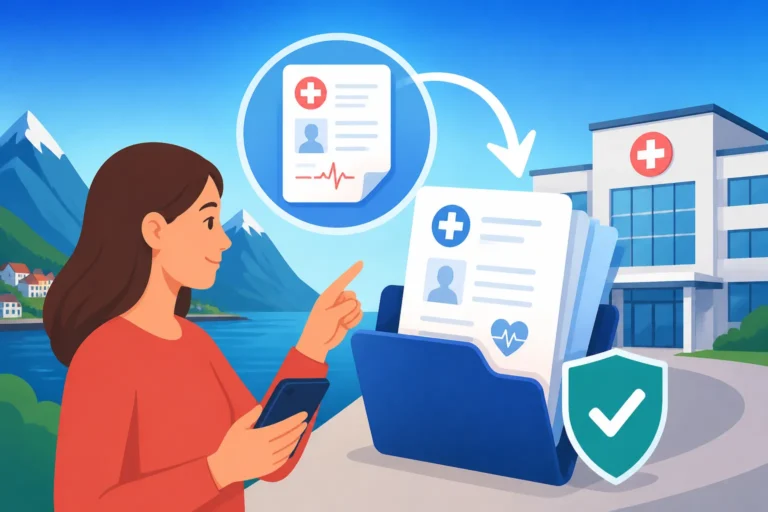
In the "old days," you had to save every paper receipt from the doctor and mail them to a government office to prove you had spent enough to get your exemption. Thankfully, that era is over. The system is now almost entirely automated. When you visit a GP, a public hospital, or a laboratory, the clinic sends a digital report of your user fee to Helfo, the Norwegian Health Economics Administration.
Once the system sees that your total fees have crossed the 2026 threshold, your Frikort is issued automatically. You don’t need to "apply" for it. However, it is wise to keep an eye on your status. There can be delays in reporting, especially from smaller clinics or specialists. You can monitor your progress by Navigating the Helsenorge App in English: A Step-by-Step Translation to ensure every crown you spend is being counted. If you find yourself in a situation where you are waiting for residency papers or are between jobs, products like SafetyWing can provide a temporary buffer, though these private payments won't count toward your eventual Frikort limit.
The 2026 Frikort Limit Costs and Calculations
Every year, the Norwegian Parliament (Stortinget) sets a new limit for the Frikort. This limit usually increases slightly each year to keep pace with inflation and the rising costs of medical technology. For 2026, the limit is designed to remain affordable while reflecting the current economic climate. Understanding this specific number is the key to planning your annual medical budget.
When you start your year on January 1st, your "counter" resets to zero. This is often a shock to expats who have been enjoying free care for the last six months of the previous year. You will once again have to pay User Fees (Egenandel) for Doctor Visits Before Reaching Frikort Status until you reach the new ceiling.
The Current Expenditure Ceiling
For the 2026 calendar year, the expenditure ceiling is approximately 3,277 NOK. While this number is subject to final legislative adjustments, it represents the maximum amount you will pay for approved public health services in a year. Once your total "egenandel" hits this mark, Helfo will issue your digital exemption card, usually within three weeks of the final payment that pushed you over the limit.
It is helpful to view this 3,277 NOK not as a "cost," but as a "deductible" for your state insurance. If you have a chronic condition that requires monthly visits to a specialist or regular blood work, you might hit this limit as early as March or April. For a healthy individual, you might never reach it at all. If you accidentally pay a user fee after you have already reached the limit, the system is designed to refund you automatically, though this can sometimes take several weeks to process back into your registered bank account.
What Counts Toward the Limit
Not every medical expense in Norway counts toward the Frikort. Only "approved" user fees are tracked. These typically include:
- Consultations with a GP (Fastlege) or at an out-of-hours clinic (Legevakten).
- Consultations with psychologists or psychiatrists within the public system.
- Consultations with specialists if you have a referral.
- X-rays, ultrasounds, and laboratory tests (blood work) at approved facilities.
- Subsidized medications under the Blue Prescriptions (Blå Resept): Subsidized Medication for Chronic Illness scheme.
- Travel expenses for medical treatment (pasientreiser) in certain specific cases.
It is important to note that for medications, only the co-payment on a "blue" prescription counts. If you are prescribed something on a "white" prescription, the full cost comes out of your pocket and does not move the needle toward your Frikort. This is a common point of confusion for expats dealing with White Prescriptions (Hvit Resept): Paying Out-of-Pocket for Medicine, as some very expensive drugs are still categorized as white prescriptions depending on the diagnosis.
What Does Not Count Toward the Limit
This is the section where most expats get caught out. The Frikort is specifically for the public health system. If you decide that the waiting list for a public specialist is too long and you book a private appointment at a clinic like Volvat or Dr.Dropin, none of that money counts toward your Frikort. You are paying for speed and convenience, and the state does not credit that toward your social security cap.
Furthermore, most dental care for adults is excluded. Unless you have a specific rare medical condition, you will be paying full price for your checkups. I learned this the hard way when a root canal cost me 8,000 NOK, none of which applied to my Frikort. Similarly, cosmetic procedures, alternative medicine, and over-the-counter medications from the supermarket do not count. While some people use Private Health Insurance in Norway: Is It Worth the Extra Cost? to cover these gaps, those insurance premiums themselves are also excluded from the Frikort calculation.
| Service Category | Typical User Fee (2026) | Counts Toward Frikort? |
|---|---|---|
| GP Consultation | 170 – 300 NOK | Yes |
| Specialist (Referral) | 390 – 450 NOK | Yes |
| Blue Prescription (max per fill) | 520 NOK | Yes |
| Laboratory / Blood Tests | 60 – 120 NOK | Yes |
| Private GP (No Referral) | 1,200 – 2,500 NOK | No |
| Adult Dental Cleaning | 1,100 – 1,800 NOK | No |
| Physiotherapy (with referral) | Variable rates | Yes |
Tracking Your Progress on Helsenorge
In Norway, your digital life is centered around a portal called Helsenorge. This is the heartbeat of the healthcare system. It is where you find your medical records, change your doctor, and—crucially—track your Frikort status. If you are living here, getting comfortable with this portal is not optional; it is essential for survival.
The challenge for many of us is that while the site has some English translations, much of the deep administrative data remains in Norwegian. Understanding the terminology used for your spending is vital so you can catch errors before they cost you money.
Navigating the Helsenorge App in English
The Helsenorge app is available on both iOS and Android, and it is the most convenient way to check your status while standing at a pharmacy counter. To see your Frikort progress, look for the section labeled "Frikort og opptjening" (Exemption card and earnings). Here, you will see a progress bar showing how much of the 3,277 NOK you have already paid.
If you are still struggling with the language, you should check out our guide on Navigating the Helsenorge App in English: A Step-by-Step Translation. One tip I always give newcomers: use the browser version of Helsenorge in Google Chrome and use the "Translate to English" feature. It handles the medical and administrative Norwegian much better than you might expect, allowing you to see the dates and amounts of every user fee reported by your doctor.
Is the Frikort Issued Automatically or Do I Have to Apply?
I want to reiterate this because it’s the question I get asked most often by new arrivals: You do not need to apply. The system is designed to be proactive. Once the database at Helfo registers that your total "approved" user fees have reached the limit, the system triggers the creation of your digital card.
You will typically receive a notification in your digital mailbox (like Digipost or Altinn) or directly within Helsenorge. Once you have the card, it is linked to your national ID number. When you go to the doctor or the pharmacy, they will see in their system that you have "Frikort status," and they won't charge you a user fee. However, always carry your digital version on your phone just in case a system is down. It's also worth noting that for those who haven't yet integrated into the system, perhaps because they are on a seeker visa, having Cigna Global can ensure you have coverage while the Norwegian wheels of bureaucracy turn.
How to Check Your Frikort Status on the Helsenorge App
When you log into the app using BankID, your Frikort status is usually displayed on the main dashboard if you have already earned it. If you haven't, you need to click through to the "Health Services" menu. The data is updated as clinics report your visits.
If you notice a visit is missing, don't panic. Clinics often batch-report their fees at the end of the week or even the end of the month. If it has been more than three weeks and your payment still isn't showing up, you can contact Helfo directly. I’ve had to do this once when a specialist's office had a glitch in their software; Helfo was surprisingly helpful and corrected the "earnings" bar once I provided a copy of my receipt.
Managing Costs Before Reaching the Limit
The first few months of the year can be expensive, especially if you have multiple family members all trying to reach their individual limits. In Norway, every person has their own Frikort limit. Children under the age of 16 are exempt from most user fees, but once they hit 16, they start their own "counter" toward the 3,277 NOK limit.
Strategizing your medical spending in the first quarter is a common tactic among veteran expats. If you know you need a specific test or a non-urgent specialist visit, doing it early in the year means those costs contribute to your Frikort sooner, giving you more months of "free" care later in the year.
User Fees for Doctor Visits
Until you hit the limit, you will pay at every turn. A standard GP visit during the day usually costs around 170-250 NOK, but if you require materials (like bandages or a pregnancy test), the price goes up. If you need to visit the Legevakten (116 117): When and How to Use the Out-of-Hours Service, the user fee is significantly higher, often around 350-500 NOK depending on the time of day and the complexity of the visit.
Keep in mind that these fees are mandatory. If you forget your wallet, the clinic will send you an invoice, but they will add a "fakturagebyr" (invoice fee) which is usually around 50-70 NOK. That extra invoice fee does not count toward your Frikort. To avoid wasting money, it is wise to pay at the automated kiosks (Betalingsautomat) before you leave the clinic.
Blue Prescriptions and Subsidized Medication
For many expats with long-term health needs, the biggest contributor to the Frikort is medication. Blue Prescriptions (Blå Resept): Subsidized Medication for Chronic Illness are for medications that you need for at least three months of the year. When you have a blue prescription, you only pay 39% of the cost of the medicine, capped at a maximum of 520 NOK per three-month supply.
This 520 NOK cap is a lifesaver. If your medicine actually costs 10,000 NOK, you still only pay 520 NOK. And that 520 NOK counts toward your 3,277 NOK Frikort limit. Once you hit the limit, your blue prescription medications become completely free for the rest of the year. This is a massive benefit for those managing conditions like diabetes, asthma, or high blood pressure.
Budgeting for the Initial Out-of-Pocket Period
When planning your move or your yearly budget, I recommend setting aside at least 4,000 NOK per adult in an "emergency medical fund." This covers your Frikort limit plus a little extra for things like White Prescriptions (Hvit Resept): Paying Out-of-Pocket for Medicine or an emergency dental visit.
If you find yourself struggling to pay the user fees before reaching the limit, talk to your GP. While the fees are standardized, there are sometimes social support mechanisms through NAV for those in extreme financial hardship. However, for most working expats, the expectation is that you manage these initial costs as part of your standard cost of living. For those who want more extensive coverage or avoid the public waiting lists entirely, exploring Public vs Private Healthcare in Norway: A Complete Guide can help you decide if a supplementary policy from a provider like Cigna Global is a better fit for your family's needs.
Healthcare Rights and Exclusions
While the Frikort is a powerful tool, it isn't a magic wand that covers everything. There are specific rights you have as a resident, but there are also clear boundaries where the Norwegian state expects you to take full financial responsibility. Understanding these exclusions prevents "bill shock" when you visit a specialist or need physical therapy.
The system is also quite strict about who is providing the care. The Frikort only recognizes "HPR-registered" providers who have an agreement with the municipal or regional health authorities.
Healthcare Rights for D-Number Holders
If you are in Norway on a shorter contract and have a D-number, you might feel like you are in a healthcare limbo. The good news is that if you are paying into the Norwegian social security system through your taxes, you have the same right to a Frikort as anyone with a permanent ID number.
However, the administrative side can be slower. Your user fees might not show up on Helsenorge as quickly, and you might need to keep manual receipts for a few months just in case. If you are a student or a digital nomad not yet fully integrated into the system, SafetyWing is often a favorite because it bridges the gap while you wait for your official residency status to be processed and your "Frikort counter" to begin in earnest.
Specialist Referrals and Waiting Times
To get a consultation that counts toward your Frikort, you generally need a referral from your GP. This is a cornerstone of the system. If you bypass your GP and go straight to a specialist, you will likely end up at a private clinic paying out of pocket, and that money won't help you reach your exemption limit.
Once you have a referral, you are part of the public waiting list. You should understand Specialist Referrals in Norway: How the Waiting Times Work because the wait can be several months for non-urgent issues. During this wait, you don't pay anything. You only pay the user fee once the appointment actually happens. If the wait is too long, some expats choose to use Private Health Insurance in Norway: Is It Worth the Extra Cost? to jump the queue, but again, that is a separate financial track from the Frikort system.
Physical Therapy and Helfo Coverage
Physiotherapy is another area where the Frikort rules changed significantly a few years ago. Previously, there was a separate "Frikort 2" for physical therapy, but now everything is consolidated into one single limit. This is much simpler for patients.
However, not every physiotherapist is covered. To have your physiotherapy sessions count toward your Frikort, the therapist must have a "driftstilskudd" (operating grant) from the municipality. If you go to a therapist without this grant, you will pay the full private rate, and none of it will count toward your 3,277 NOK limit. Always ask "Har du avtale med kommunen?" (Do you have an agreement with the municipality?) before booking your first session.
Specialist Care and the Frikort System
When your health needs go beyond the GP, the Frikort continues to track your expenses through the world of specialists, hospitals, and outpatient clinics. This is where the savings truly start to add up, as specialist fees are higher than GP fees.
If you are undergoing surgery or long-term treatment, the Frikort ensures that your costs don't spiral out of control. Most hospital stays in Norway are free (including food and medication while you are admitted), but outpatient consultations before and after the surgery will incur user fees until your card is issued.
Mental Health and the Exemption Card
Mental health care is fully integrated into the Frikort system. If you are referred by your GP to a District Psychiatric Center (DPS) or a private psychiatrist with a public agreement, your co-payments will count toward your annual limit. This is vital for those seeking long-term therapy, as weekly sessions would otherwise become prohibitively expensive.
Finding the right support can be a journey, and I recommend looking into Mental Health in Norway: Accessing Therapy and Psychiatric Care to understand the pathways. The Frikort ensures that once you find a public provider, your financial commitment is capped. For those who prefer immediate access to English-speaking therapists outside the public system, private insurance like Cigna Global can be a useful alternative, though it won't contribute to your state Frikort.
Lab Tests and Imaging
Every time you get a blood test at a hospital or an X-ray at a clinic like Unilabs (with a public referral), you will pay a small "egenandel." These are usually the smallest fees, but they add up. Because they are reported digitally, they often push people over the Frikort limit without them even realizing it.
If you are managing a chronic condition, you might find yourself getting blood work done every few weeks. Make sure the lab has your correct ID number so the fees are attributed to your account. By mid-year, many expats find that these small charges have quietly built up their "earnings" bar on Helsenorge, leading to a pleasant surprise when their Frikort finally arrives in the mail.
Summary of the Frikort Workflow
To ensure you are using the system correctly, follow these steps:
- Check your status: Log into Helsenorge early in January to see the new limit.
- Pay at the Kiosk: Always pay your user fees at the clinic to avoid extra invoice charges.
- Use Blue Prescriptions: Ensure your long-term meds are on the "Blå Resept" scheme.
- Stay Public: Remember that private clinics without public agreements do not count.
- Monitor the Bar: Watch your progress on the Helsenorge app.
- Enjoy the "Free" Period: Once the card is issued, keep it on your phone and stop paying user fees for the rest of the year.
Disclaimer
This guide is for informational purposes only and reflects the Norwegian healthcare regulations and projected limits for 2026. Healthcare laws and "egenandel" rates are subject to change by the Norwegian government. Always consult the official Helsenorge.no website or speak with your Fastlege for the most current information regarding your specific medical situation and eligibility. External insurance providers like SafetyWing and Cigna Global are private entities and are not affiliated with the Norwegian National Insurance Scheme.