Giving Birth in a Norwegian Hospital: Pain Relief and Postpartum Stays
Navigating the prospect of giving birth in a foreign country can feel like trying to solve a puzzle where the instructions are written in a language you only half-understand. When I was pregnant with my first child in Oslo, I spent weeks obsessing over whether I’d be able to communicate my need for an epidural or if I’d be forced into a "natural" birth I wasn't ready for. This guide breaks down exactly what happens during a Norwegian hospital birth, from the types of pain relief available to the unique experience of the maternity hotel.
The Norwegian Maternity System: What to Expect Before the Big Day
Norway’s approach to childbirth is deeply rooted in the belief that pregnancy is a natural process rather than a medical emergency. This philosophy colors everything from your first prenatal checkup to the moment you leave the hospital. For many expats, this can feel a bit "hands-off" initially, but the system is designed to provide high-quality, evidence-based care that prioritizes the health of both the mother and the baby without unnecessary interventions.
Registration and Hospital Choice
In Norway, you don’t typically "choose" your hospital in the way you might in the US or some private systems. Usually, your GP (Fastlege) or your midwife (Jordmor) will apply for a birth place for you around week 12 to 16 of your pregnancy. If you are living in a major city like Oslo, you might be assigned to Ullevål, Rikshospitalet, or Akershus University Hospital (Ahus). While you can state a preference, the final decision often comes down to capacity and your specific medical needs.
For those who have lived here long enough, you know that the Maternity Care in Norway: Prenatal Appointments, Scans, and Midwives process is the foundation of your birth experience. It is during these appointments that your birth plan is discussed. However, it is important to remember that a "birth plan" in Norway is often viewed more as a "birth wish list." The midwives will do their best to honor your requests, but they will always prioritize medical safety. If you are an expat covered by Folketrygden Basics: Who is Covered by the National Insurance Scheme, the entire process, including the hospital stay, is free of charge.
The Role of the Jordmor (Midwife)
The midwife is the central figure in your birth story in Norway. Unlike some systems where an OB-GYN is present for the entire labor, in Norway, you will likely only see a doctor if there are complications or if you require an intervention like a C-section or a vacuum extraction. The midwives are highly trained professionals who handle the vast majority of births independently. They are experts in coaching you through labor, monitoring the baby’s vitals, and performing the delivery.
One thing that surprised me—and many of my expat friends—is the shift-change reality. If your labor is long, you might go through two or three different midwives. While this can feel disruptive, the handover process is incredibly thorough. Each midwife will read your notes and pick up exactly where the last one left off. If you feel more comfortable having a consistent point of contact or want a higher level of personalized service, some expats look into Private Health Insurance in Norway: Is It Worth the Extra Cost? to see if private clinics or additional doula services might be an option, though the public system remains the standard for almost everyone.
Arriving at the Hospital: The Intake Process and Facilities
When the contractions finally start getting closer together, the adrenaline kicks in, and the "plan" suddenly feels very real. In Norway, you are encouraged to stay home as long as possible during the early stages of labor. This can be nerve-wracking for first-time parents, but it’s part of the strategy to avoid "failure to progress" interventions that often happen when someone is admitted too early.
When to Call the Fødeavdeling
Before you head to the hospital, you must call the fødeavdeling (maternity ward) or the fødemottak (emergency maternity intake). You’ll speak with a midwife who will ask about the frequency and duration of your contractions, whether your water has broken, and if you’ve felt the baby moving normally. They are the gatekeepers; if they feel you are still in early labor, they will kindly but firmly suggest you take a paracetamol, a warm bath, and try to rest at home for a few more hours.
Once you are told to come in, you’ll head to the intake area where a midwife will perform an initial assessment. This usually involves a CTG (cardiotocography) to monitor the baby’s heart rate and your contractions, as well as a physical exam to check cervical dilation. If you are at least 3-4 centimeters dilated and in active labor, you’ll be moved to a delivery room. If not, you might be sent for a walk around the hospital grounds or even sent back home if you live nearby. This "wait and see" approach can be frustrating, especially if you're in pain, but it's meant to ensure that you are truly in active labor before being admitted to a bed.
Delivery Rooms and Ward Atmosphere
Norwegian delivery rooms are generally private and designed to be as "homey" as a hospital room can be. You won't find a sterile, bright-white environment in most modern hospitals like the new Vestre Viken or the wards at St. Olavs in Trondheim. Many rooms have dimmable lights, birthing balls, and even large tubs if you’ve expressed a desire for a water birth.
The atmosphere is typically calm and quiet. The midwife will check on you periodically but often leaves you and your partner alone to labor in peace if everything is progressing normally. This level of autonomy is a hallmark of Healthcare in Norway for Expats: How the System Works (2027), where patient comfort and physiological labor are highly respected. However, don't be afraid to use the call button if you need help or if the pain is becoming unmanageable. They expect you to advocate for yourself.
Pain Relief Options in Norway: From Natural to Medical
This is often the biggest area of concern for expats. Coming from a culture where an epidural might be offered the moment you walk through the door, the Norwegian approach can feel like a "tough it out" culture. While it’s true that Norway encourages natural pain management, medical relief is absolutely available—you just have to know how to ask for it and understand the timing.
Non-Medical Pain Relief (Water, Acupuncture, TENS)
Norwegian midwives are experts in non-pharmacological pain relief. You will almost certainly be offered a warm bath or shower first. Water is highly regarded here for its ability to help the body relax and manage the intensity of contractions. Many hospitals have specialized tubs specifically for laboring mothers.
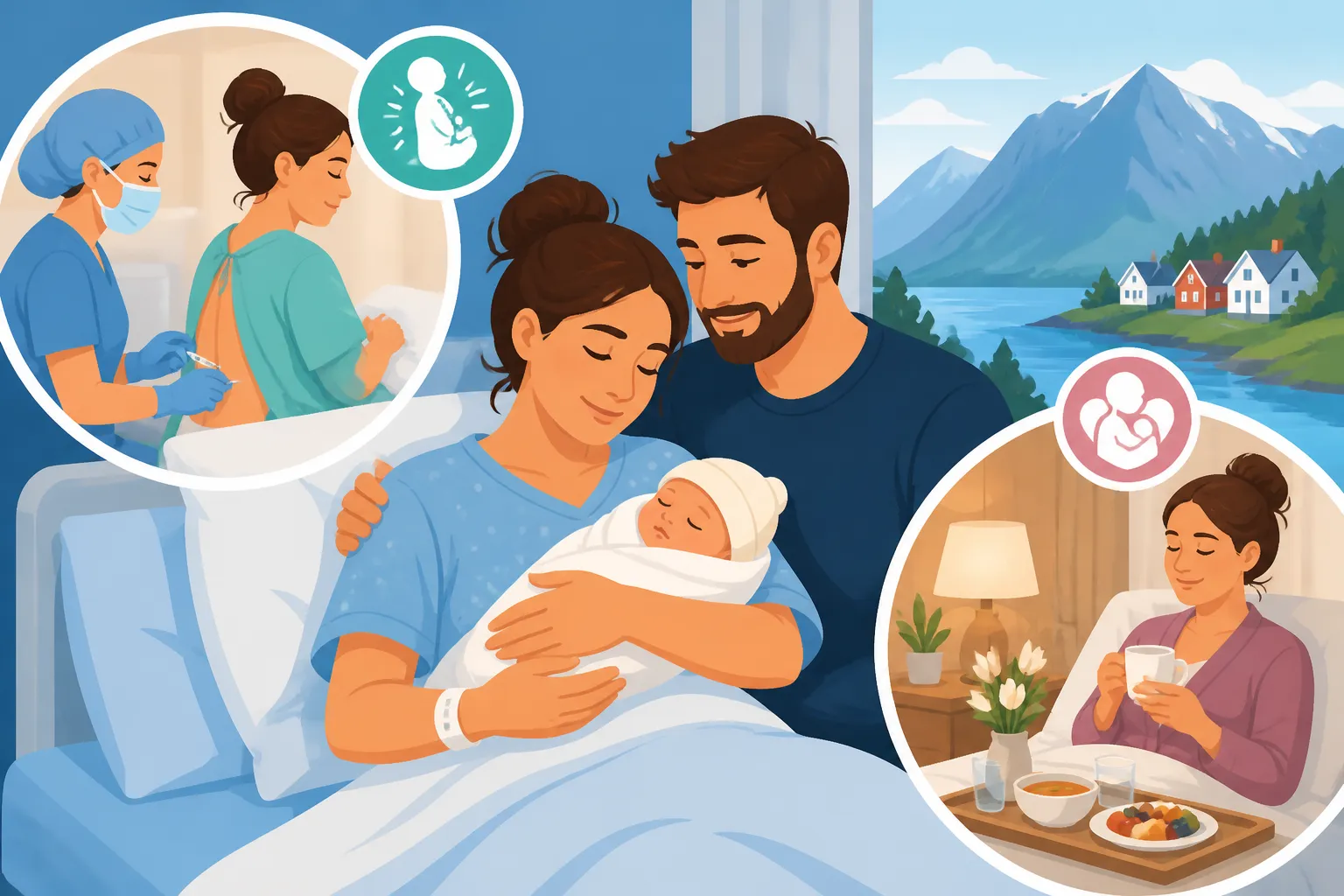
Acupuncture is also surprisingly common in Norwegian delivery wards. Many midwives are trained in basic acupuncture points to help with relaxation or to stimulate labor. While some expats find this a bit "woo-woo," others swear by it for taking the edge off. Sterile water injections (often called "bee stings") are another local favorite. These involve injecting small amounts of sterile water under the skin of the lower back to distract the nerves from labor pain. Be warned: they sting intensely for about 30 seconds, but they can provide relief for an hour or more without any systemic side effects for the baby.
Medical Interventions (Epidurals, Nitrous Oxide, Spinal)
If the natural methods aren't cutting it, you can move up the "pain ladder." Nitrous oxide (laughing gas or lystgass) is a staple in Norwegian hospitals, though its availability can vary by hospital due to ventilation requirements. It doesn't take away the pain, but it helps you breathe through the peaks of contractions and provides a bit of a "head buzz" that makes the experience more manageable.
Then there is the epidural. In Norway, you can absolutely have an epidural, but the timing is crucial. They generally won't give one if you are less than 3-4 cm dilated (to avoid slowing down labor) or if you are already 9-10 cm dilated (because it won't have time to take effect before the pushing stage). You will need to wait for an anesthesiologist to become available, which can take anywhere from 15 minutes to an hour depending on what else is happening in the hospital. If you know you want an epidural, communicate this early. While the system is public, some expats who are not yet fully integrated into the National Insurance scheme use providers like Cigna Global to ensure they have coverage for all aspects of their care, though in an emergency, Norwegian hospitals treat everyone first and ask questions later.
| Pain Relief Method | Availability | Best For… |
|---|---|---|
| Warm Water/Bath | High | Early to Active Labor relaxation |
| Acupuncture | Moderate | Relaxation and natural stimulation |
| Nitrous Oxide | Variable | Breathing through peaks of contractions |
| Epidural | High (if requested) | Intense active labor pain management |
| Spinal Block | High | Planned or emergency C-sections |
| Sterile Water Papules | High | Lower back labor pain (back labor) |
Postpartum Stays: Life in the Barselavdeling and Barselhotell
Once the baby is born and the initial "golden hour" of skin-to-skin contact is over, you will be moved to the postpartum area. Norway has a unique two-tier system for postpartum care: the barselavdeling (ward) and the barselhotell (maternity hotel).
The Postpartum Ward (Barselavdeling)
The ward is where you will stay if you had a complicated birth, a C-section, or if the baby needs extra monitoring. In the ward, you have 24-hour access to midwives and nurses. This sounds ideal, but the downside is that you may have to share a room with another mother and baby. In many Norwegian hospitals, partners are not allowed to stay overnight in the shared wards, which can be a huge emotional hurdle for expats who expect their partner to be there for every diaper change and midnight cry.
During my time in the ward, the focus was heavily on breastfeeding. The nurses will come in frequently to check your "latch" and offer advice. While this support is invaluable, it can also feel a bit overwhelming if you are exhausted. If you are a digital nomad or on a shorter-term stay, having a plan through a provider like SafetyWing can offer some peace of mind regarding medical logistics, but the day-to-day care in the ward is handled entirely by the hospital staff according to national standards.
The Maternity Hotel (Barselhotell) Experience
If your birth was uncomplicated and both you and the baby are healthy, you will likely be moved to the barselhotell. This is exactly what it sounds like—a hotel attached to the hospital. Major hospitals like Ullevål and Haukeland have these. Here, you get a private room with a regular bed (not a hospital bed), a TV, and a private bathroom. Most importantly, your partner can stay with you for a daily fee (usually around 300-500 NOK, including meals).
The maternity hotel is designed to foster independence. There are midwives on duty at a central desk whom you can call or visit, but they won't "check-in" on you every hour like they do in the ward. You are responsible for changing, bathing, and feeding the baby. For many expats, this is a wonderful way to bond as a new family unit in a quiet, private space. However, it can feel a bit "sink or swim" if you are a first-time parent. Don't be afraid to walk down to the midwife station at 3:00 AM if you're struggling with breastfeeding or if the baby won't stop crying—that's what they are there for.
Practicalities and Costs for Expats
The financial aspect of giving birth in Norway is one of the few things that is relatively stress-free, provided you are properly registered. The Norwegian social safety net is incredibly robust when it comes to family health.
Coverage under Folketrygden
If you are a legal resident and a member of the National Insurance Scheme, you pay nothing for your hospital stay. This includes the delivery, all medications (including that precious epidural), your meals, and your stay in the ward or hotel. The only thing you will likely pay for is your partner’s stay and meals at the maternity hotel.
If you are a D-number holder or still waiting for your residency to be finalized, you should check your status with Helfo. In most cases, if you are working and paying taxes, you are covered. For those traveling or on temporary assignments, SafetyWing can be a useful bridge for unexpected medical needs before the official residency kicks in, but pregnancy and birth are usually handled through the public system once you are in the "system."
Private Insurance and Secondary Options
There are very few "private" maternity hospitals in Norway. Even if you have the most expensive policy from Cigna Global, you will likely still give birth in a public hospital because that is where the specialized equipment and neonatal intensive care units (NICUs) are located. What private insurance can sometimes offer is faster access to specialists during your pregnancy or coverage for private scans and physical therapy after the birth.
In Norway, the public system is considered the "gold standard" for acute care. This can be a shift in mindset for those from countries where private care is synonymous with "better" care. Here, the richest person in Norway and a newly arrived expat will likely give birth in the same hospital, attended by the same quality of midwives. This egalitarianism is a core part of the Norwegian identity.
Preparing Your Paperwork and Essential Checklist
As the due date approaches, you'll want to make sure your administrative house is in order. Norway loves its digital systems, and most things are handled through the Helsenorge portal.
Registering the Birth and Name
When the baby is born, the hospital will automatically notify the National Registry (Folkeregisteret). You don't need to do anything at the hospital to "register" the birth. A few weeks later, you will receive a notification (usually via Altinn or your digital mailbox) asking you to register the baby's name.
Once the name is registered, the baby will be issued a National Identity Number (fødselsnummer). This number is the key to everything—from getting a passport to opening a bank account for the baby. If you are an expat, you will also need to contact your home country’s embassy to report a "Consular Report of Birth Abroad" to ensure your baby gets their second citizenship and passport. This is a separate process from the Norwegian registration.
Postpartum Home Visits and Helsestasjon
One of the best parts of the Norwegian system is the follow-up. A few days after you get home, a midwife or nurse from your local Helsestasjon: Norway’s Free Child Health Clinics and Vaccination Program will call you to schedule a home visit. They come to your house, weigh the baby on a portable scale, and check how you are recovering physically and mentally.
This is your time to ask all the "dumb" questions about sleep, umbilical cord care, and Postpartum Home Visits: What the Helsestasjon Nurse Checks. After the initial home visit, you will have regular appointments at the clinic for the Childhood Vaccine Schedule in Norway: What Parents Must Know and developmental milestones. This continuity of care ensures that no mother or baby "falls through the cracks" after leaving the hospital. If you are worried about your career during this time, remember that the system is built to support you, and you should read up on Maternity Pay and Leave: How Your Health Impacts Foreldrepenger to understand your rights as a working parent in Norway.
Health and Medical Disclaimer
The information provided in this guide is for educational and informational purposes only and is not intended as medical advice. Healthcare regulations and hospital policies in Norway are subject to change. Always consult with your Fastlege (GP), midwife, or a qualified medical professional regarding your specific pregnancy, birth plan, and medical needs. If you are in labor or experiencing a medical emergency, call 113 immediately.