Melatonin in Norway: Is it Prescription Only or OTC?
If you have spent even one winter in Oslo or Tromsø, you know the absolute havoc the "dark season" wreaks on your circadian rhythm. I remember my first November in Norway, staring at the ceiling at 3:00 AM because my body didn't understand why the sun had vanished at 2:30 PM. This guide solves the confusion around accessing melatonin in Norway, explaining exactly what you can buy over the counter and when you need a doctor's help.
The Melatonin Shift: From Prescription-Only to Supermarket Shelves
For decades, Norway held a very strict line on melatonin. Unlike in the United States or Canada, where you can buy massive 10mg jars of gummies at any corner store, Norway classified it strictly as a medicinal product. If you wanted even a tiny dose, you had to navigate The Fastlege Scheme: Navigating Norway’s GP System just to get a slip of paper.
Fortunately, the regulations shifted significantly in recent years. The Norwegian Medical Agency (Statens legemiddelverk) reclassified low-dose melatonin, allowing it to be sold without a prescription. This was a massive win for the expat community, many of whom were tired of "smuggling" bottles in their suitcases after trips home. However, the "Norwegian way" of regulation is still very much in play. While it is now available over the counter (OTC), there are strict limits on the dosage and how it is marketed.
In Norway, melatonin is no longer just a "medicine" but can be sold as a "food supplement" provided it meets specific criteria. This change was largely driven by the recognition that many residents were struggling with sleep during the mørketid (dark time) and that low-dose melatonin has a high safety profile. If you are a digital nomad passing through and using SafetyWing for your travel coverage, you might find this OTC access a relief, as it avoids the need to find a local clinic for a minor sleep aid.
The 1mg Limit: What You Can Actually Buy Without a Doctor
The most critical piece of information you need is the "1mg rule." In Norway, any melatonin product sold without a prescription cannot exceed a daily dose of 1mg. If you are used to the 3mg, 5mg, or even 10mg doses common in North America, this will feel incredibly low.
You will find these 1mg supplements in various forms, including tablets, sprays, and films that dissolve on the tongue. Even though they are low-dose, they are effective for many people trying to reset their internal clock after a flight or during the shift in seasons. I personally found that the 1mg sprays available at local pharmacies were enough to take the edge off my "winter insomnia" without leaving me groggy the next morning.
Why the Limit Exists: The Norwegian Medical Agency's View
The Norwegian authorities are notoriously cautious regarding supplements. The logic behind the 1mg limit is twofold. First, they want to ensure that people with chronic, underlying sleep disorders seek professional medical advice rather than self-medicating with high doses. Second, they believe that melatonin should be used to "signal" sleep to the brain rather than act as a heavy sedative.
By keeping the OTC dose low, the government ensures that if you truly need a higher dose, you will have to consult a professional. This is part of the broader philosophy of Healthcare in Norway for Expats: How the System Works (2027), which emphasizes GP-led care for long-term health management. If you find that 1mg does nothing for you, it is a signal to the system that your sleep issues might require a more clinical approach.
Navigating the Pharmacy vs. the Grocery Store
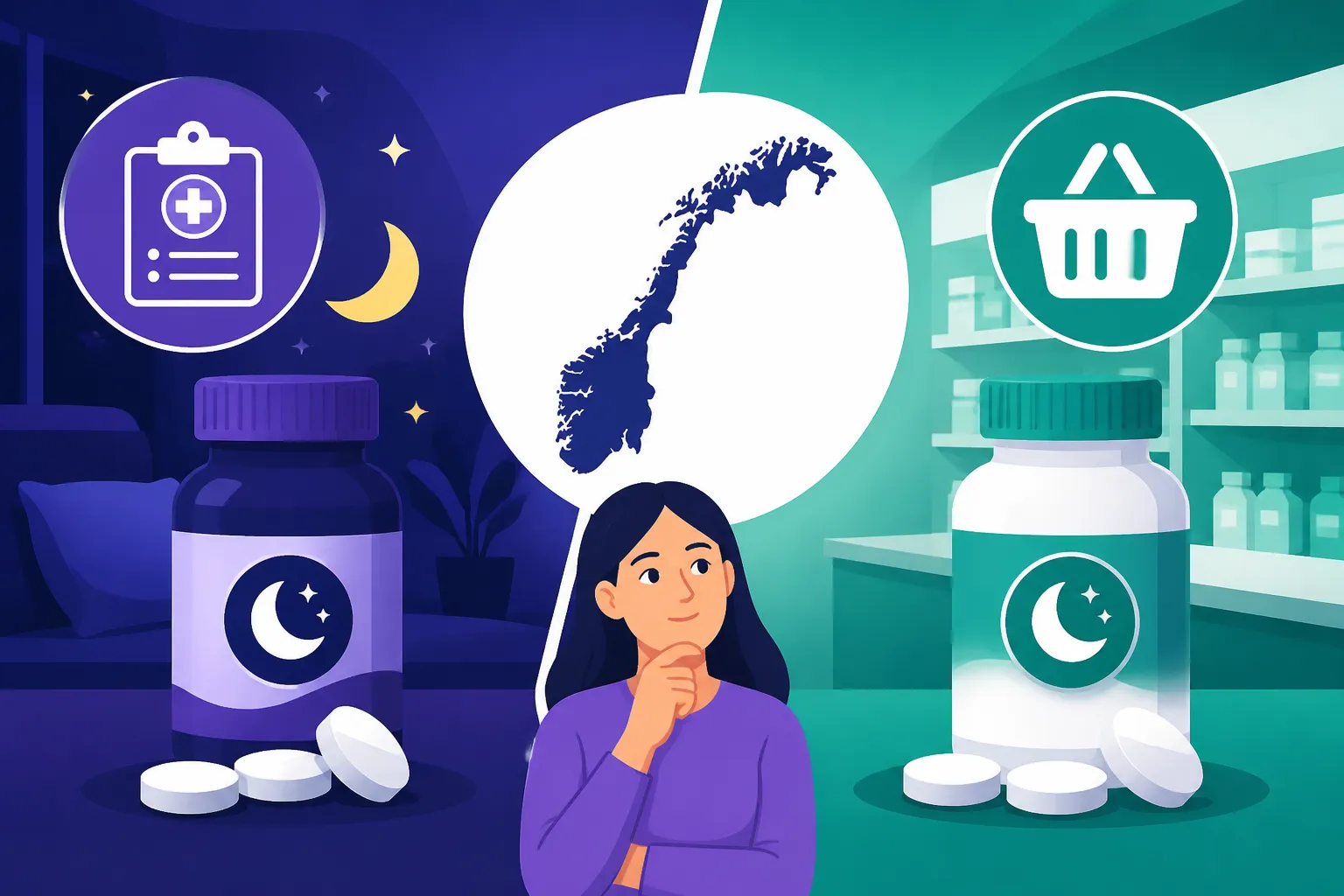
One of the most confusing things for newcomers is where to actually find melatonin. Because it is now a supplement, you aren't restricted to just the pharmacy (Apotek). You can find it in the health food aisles of larger grocery stores like Meny or Coop Mega, and even in some dedicated health stores like Sunkost or Life.
However, the variety is still quite limited compared to other countries. Most of what you see will be "Melatonin" branded as a simple sleep aid, often combined with herbs like valerian root or chamomile. If you are looking for a specific brand you used back home, you are likely out of luck. Norwegian retailers tend to stick to local or European brands that comply strictly with the Norwegian labelling laws.
| Location | Typical Availability | Dosage Forms |
|---|---|---|
| Apotek 1 / Vitusapotek | High | Tablets, Sprays, Liquid |
| Meny / Coop Mega | Medium | Tablets, Gummies |
| Sunkost / Life | High | Herbal Blends, Sprays |
| Rema 1000 / Kiwi | Low | Basic Tablets (if any) |
Over-the-Counter OTC Brands and Pricing
When you walk into an Apotek 1, you will usually see brands like "Nycoplus" or "Berocca" nearby, but the melatonin is often kept in a specific "Sleep/Rest" (Søvn/Hvile) section. Expect to pay anywhere from 150 NOK to 300 NOK for a month's supply. This is significantly more expensive than in the US, but it is the price of convenience in a highly regulated market.
It is also worth noting that Over-the-Counter (OTC) Drugs in Norway: What You Can Buy in Supermarkets lists melatonin as a common item, but the selection in a Kiwi or Rema 1000 is often pathetic. If you are serious about finding a good quality 1mg spray, stick to the pharmacies or specialized health shops in the bigger malls like Oslo City or Lagunen in Bergen.
Buying Melatonin Online: Use Caution
You might be tempted to order a higher-dose bottle from an international site like iHerb or Amazon. Be extremely careful. Norwegian Customs (Toll) are incredibly efficient and very strict. If they intercept a package containing melatonin that exceeds the 1mg limit or is not clearly labeled as a supplement for personal use, they will seize it.
Many expats have reported receiving a stern letter from the authorities instead of their vitamins. Not only do you lose the money you spent, but you can also be flagged for importing "unauthorized medicinal products." If you are living here long-term and have Cigna Global for your international health insurance, check if they offer mail-order pharmacy services that are pre-cleared for Norway, though usually, it's safer to stick to local Norwegian web-shops like Farmasiet.no.
When You Need a Prescription: Blå vs. Hvit Resept
If 1mg isn't cutting it, or if you have a diagnosed condition like Delayed Sleep Phase Disorder (DSPD), you will need to step up to the prescription level. In Norway, higher doses of melatonin (like 2mg or 3mg) and time-release versions (like Circadin) are classified as prescription drugs.
To get these, you must use How to Book a Doctor’s Appointment Online Using BankID and speak with your Fastlege. Be prepared to explain your sleep history. Norwegian doctors are generally hesitant to prescribe sleep aids and will often suggest "sleep hygiene" (no screens, cold rooms, etc.) before reaching for the prescription pad. However, they are quite understanding of the impact the "Dark Season" has on foreigners.
Understanding Prescription Types for Melatonin
Once your doctor agrees that you need a higher dose, they will issue a prescription. It is vital to understand the difference between the two types of slips you might receive. For more detail on this, you can read Pharmacies and Prescriptions in Norway: White vs Blue Slips.
- Hvit Resept (White Prescription): This is the most common for melatonin. It means you pay the full price for the medication yourself. It does not count towards your annual healthcare cap (Frikort).
- Blå Resept (Blue Prescription): This is for chronic conditions. If you have a long-term sleep disorder, the government may subsidize the cost. In this case, you only pay a small co-pay until you reach your annual limit.
Booking an Appointment with Your GP for Sleep Issues
When you go to your GP, don't just ask for "melatonin." Explain the symptoms: "I cannot fall asleep until 4 AM," or "I wake up every two hours because of the lack of daylight." This helps the doctor understand that you are struggling with Coping with Seasonal Affective Disorder (SAD) in the Norwegian Winter rather than just looking for a "quick fix."
If you are new to the country and haven't been assigned a GP yet, you might find yourself in a bit of a limbo. You can use private clinics like Dr. Dropin or Kry for a faster consultation, though these will cost more out-of-pocket. For those with Cigna Global, these private consultations are often covered, making the process much smoother than waiting weeks for a public appointment.
Bringing Melatonin into Norway: Customs and Legalities
Can you just pack a 5mg bottle from home in your suitcase? The technical answer is: it depends on where you are coming from.
If you are arriving from an EEA country (like Germany, France, or Sweden), you are generally allowed to bring in a personal supply of "medicines" for up to one year of use, provided you can prove they are for you. If you are coming from outside the EEA (like the US, UK, or Australia), the limit is strictly a three-month supply.
The Supplement vs. Medicine Classification Trap
The problem arises in how the item is labeled. If your US-bought bottle says "Dietary Supplement" but contains 5mg of Melatonin, Norwegian Customs might still classify it as a "Medicine" because of the dosage. For a deep dive into these rules, see Bringing Medication into Norway: Customs Rules and Schengen Certificates.
To avoid a headache at the airport:
- Keep the melatonin in its original packaging.
- Bring a copy of your prescription if the dose is higher than 1mg.
- Never try to hide it; if asked, declare it as a personal sleep aid.
Surviving the Mørketid: Beyond Melatonin
Melatonin is a fantastic tool, but it is only one piece of the puzzle for surviving the Norwegian winter. If you rely solely on a pill to fix your sleep, you are missing out on the cultural and lifestyle adjustments that make living here bearable.
Most Norwegians focus heavily on Vitamin D Guidelines for Expats Surviving the Dark Season. Because we get zero UVB rays from the sun between October and March, your body stops producing Vitamin D, which is a precursor to many mood and sleep-regulating hormones. Taking a daily "tran" (cod liver oil) or a high-strength Vitamin D supplement is non-negotiable.
Light Therapy and Morning Routines
Another key strategy is the use of a "Lysterapi" (light therapy) lamp. Sitting in front of a 10,000-lux lamp for 20 minutes every morning can do more for your sleep-wake cycle than any supplement. It signals to your brain that the day has started, helping to suppress melatonin production during the day so it can build up naturally at night.
I also highly recommend "morgenbad" (morning swims) if you are near the coast or a fjord, or simply getting outside between 11:00 AM and 1:00 PM when what little light exists is at its peak. The combination of fresh air, light, and low-dose melatonin is the "holy trinity" of sleep survival in the Nordics.
Embracing "Kos" to Lower Stress
Finally, don't underestimate the power of the Norwegian concept of "kos" (coziness). Lighting candles, using heavy wool blankets, and dimming the lights in the evening helps your body prepare for rest. If you are stressed about your visa or work—perhaps because you are still figuring out Healthcare in Norway for Expats: How the System Works (2027)—that stress will keep you awake regardless of how much melatonin you take. Using a comprehensive insurance plan like SafetyWing can at least take the financial stress of medical emergencies off your plate, allowing you to focus on getting that precious sleep.
Disclaimer
This article is for informational purposes only and does not constitute medical or legal advice. Regulations regarding supplements and medications in Norway can change frequently. Always consult with a qualified healthcare professional or the Norwegian Medical Agency (Statens legemiddelverk) before starting any new supplement or importing medication. For legalities regarding customs, please refer to the official Tolletaten website.