Blood Donation in Norway: Eligibility Rules for Foreign Nationals
Navigating the Norwegian healthcare system is a journey of its own, but nothing feels quite as specific as trying to give back through blood donation. I remember the first time I walked into the donor center in Oslo, heart full of altruism, only to be turned away because I hadn't yet lived in the country for six consecutive months. This guide solves the confusion around residency requirements, language barriers, and the strict health criteria that dictate who can and cannot donate blood in Norway.
Understanding the Norwegian Blood Donation Culture
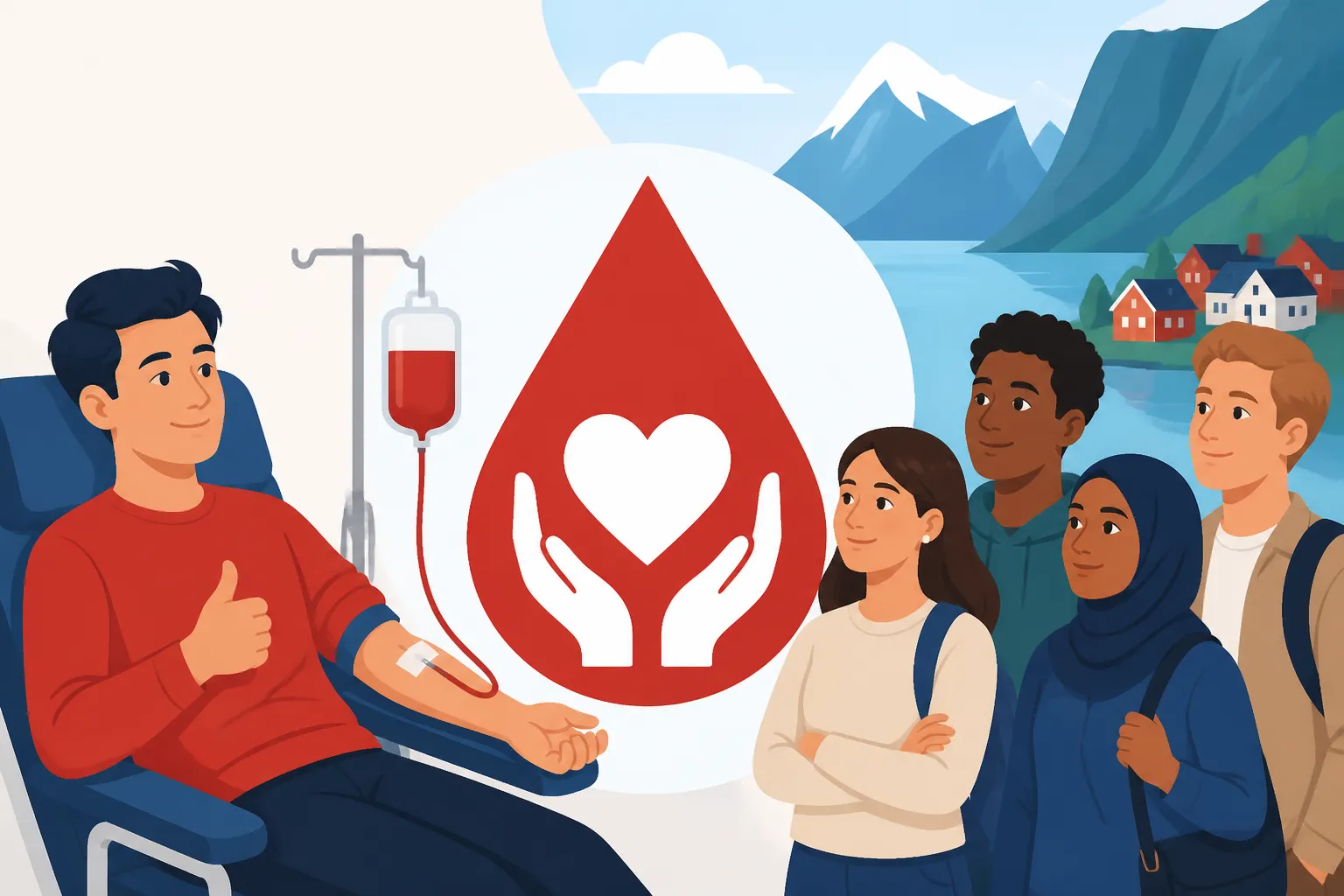
In Norway, donating blood is viewed as a high civic duty, coordinated through the national organization known as Giblod. Traditionally, the system relies on a steady stream of volunteers to maintain the national supply, which is critical for everything from routine surgeries to emergency trauma care. As an expat, you might be surprised to find that the experience is quite social; many donor centers, or Blodbanken, offer a spread of sandwiches, coffee, and the famous Norwegian "skolebolle" after your session.
However, because Norway has a small population and a very high standard for blood safety, the screening process is incredibly rigorous. It isn't just about whether you are healthy; it is about where you have been, what you have eaten, and even how well you can read a Norwegian questionnaire. If you are already settled and looking into Healthcare in Norway for Expats: How the System Works (2027), adding blood donation to your list of "local" activities is a great way to integrate, provided you meet the criteria.
The Role of Blodbanken and Giblod
The term you will hear most often is Blodbanken (The Blood Bank). Most major hospitals, such as Ullevål in Oslo, Haukeland in Bergen, or St. Olavs in Trondheim, have their own dedicated donor centers. Giblod.no is the central portal where you register. It’s important to realize that while the Red Cross is involved in recruitment and awareness, the actual collection and processing of blood are handled by the public health trusts.
If you are currently covered by a comprehensive plan like Cigna Global, you might be used to private medical settings, but blood donation in Norway is strictly a public-sector affair. This ensures that the blood supply remains a non-commercial, altruistic resource for everyone in the country.
The Six Month Residency Requirement
The most common hurdle for new arrivals is the residency rule. You cannot donate blood until you have lived in Norway for at least six months. This isn't just a random bureaucratic delay; it’s a quarantine period of sorts. The health authorities want to ensure that any "traveler's bugs" or incubation periods for tropical diseases have passed before you enter the donor pool.
This rule applies regardless of where you moved from. Even if you moved from a neighboring Nordic country, the six-month clock starts the day you register your move with the Folkeregisteret. If you are still waiting on your permanent ID number, you might find the process even more stalled. Understanding the D-Number vs Fødselsnummer: How It Affects Your Banking Options can actually give you a hint at how your ID status affects your medical registrations as well.
Why the National Registry Matters
When you sign up at Giblod, they will ask for your Fødselsnummer (11-digit national identity number). This is linked to your medical history in Norway. If you are still on a D-number, some blood banks may ask you to wait until you have a permanent number, as it makes tracking long-term health data much easier for the system.
If you have recently moved and are still navigating the First 30 Days Health Checklist: GP, Frikort, and Pharmacies, you should put blood donation on your "month seven" calendar. It gives you time to get your Norwegian language skills up to par as well.
The Language Barrier in Blood Donation
One of the most frequent points of frustration for expats is the language requirement. To donate blood in Norway, you must be able to read, understand, and answer a detailed health questionnaire in Norwegian. You must also be able to communicate clearly with the staff without the help of a translator.
The reason for this is safety and legal liability. The staff must be 100% certain that you understand the risks and that your answers about your medical history are accurate. Using an interpreter—even a friend or spouse—is generally not allowed because the information you provide is confidential and must be given directly.
Achieving the Necessary Proficiency
While there isn't a formal test like the Norskprøven required to walk into a Blodbanken, you should ideally have a B1 level of proficiency. If you can't comfortably discuss your medical history or read a four-page form about infectious diseases, the staff will politely ask you to return when your Norwegian is stronger.
If you are currently Learning Norwegian for Work: Norskprøven and Language Courses, think of the blood bank questionnaire as a practical exam. It’s a great way to see if you can handle "official" Norwegian in a high-stakes environment.
Travel History and Geographic Restrictions
Norway is particularly cautious about diseases that are endemic in other parts of the world. Your travel history will be scrutinized every time you donate. If you have recently traveled outside of Western Europe or North America, you will likely face a "karantene" (quarantine) period ranging from four weeks to six months.
For those who travel frequently for work or leisure, this can be a major roadblock. If you are using a digital nomad setup or traveling often and relying on SafetyWing for your international medical coverage, you need to keep a meticulous log of where you have been.
Malaria and Tropical Diseases
If you have visited a country where Malaria is prevalent, you will generally be barred from donating for six months after your return. If you grew up in a Malaria-endemic area, you might face a permanent deferral or a requirement for specialized antibody testing that not all local blood banks can perform.
Similarly, there are restrictions related to the West Nile Virus, which often affects travelers returning from parts of the USA, Southern Europe, and the Middle East during the summer months. Usually, this results in a four-week deferral from the time you landed back in Norway.
The UK and Mad Cow Disease (BSE) Deferral
For expats from the United Kingdom, Ireland, or France, there is a specific rule that often catches people off guard: the "Mad Cow Disease" (vCJD) restriction. For many years, anyone who lived in the UK for a cumulative period of more than six months between 1980 and 1996 was permanently banned from donating blood in Norway.
Recent Changes in Policy
There is good news on this front. In recent years, Norway, following the lead of several other European nations, has reconsidered these bans. Many people who were previously excluded are now eligible to donate. However, the rules are still being updated across different regional health trusts.
If you fall into this category, it is worth contacting your local Norwegian Hospitals: Inpatient Care, Outpatient Care, and Patient Choice donor center to ask for the current status of the vCJD deferral. Even if you have a top-tier private plan through Cigna Global, the blood bank's internal safety protocols are what will ultimately decide your eligibility.
Lifestyle and Health Disqualifiers
Beyond your origin and travel, your daily life in Norway plays a role in your eligibility. Norway maintains strict rules regarding tattoos, piercings, and sexual health to prevent the spread of blood-borne illnesses like Hepatitis and HIV.
Tattoos and Piercings
If you get a new tattoo or a piercing (including ear piercings), you must wait six months before you can donate blood again. This also applies to permanent makeup and microblading. The blood bank needs to ensure that no infections were introduced during the procedure, even if you went to a high-end, sterile studio in downtown Oslo.
Sexual Health and Partnerships
Norway has specific deferral periods for new sexual partners. Generally, if you have a new partner, you must wait six months before donating. There are also specific regulations for men who have sex with men (MSM). While the rules have become more inclusive recently, there is still a six-month deferral period following sexual contact between men. These rules are frequently debated and updated, so checking the latest version of the form at Giblod.no is essential.
| Condition/Activity | Deferral Period | Notes |
|---|---|---|
| New Residence in Norway | 6 Months | Must be registered in Folkeregisteret |
| New Tattoo or Piercing | 6 Months | Includes microblading and acupuncture |
| Travel to Malaria Area | 6 Months | Can be longer if you lived there |
| Antibiotics Course | 2 Weeks | Must be fully recovered from illness |
| New Sexual Partner | 6 Months | Applies to all new partnerships |
| Pregnancy | 12 Months | Starts after the date of birth |
| Dental Work | 1-7 Days | Depends on the invasiveness of the procedure |
Medications and Chronic Conditions
If you are managing a chronic condition, your eligibility will depend on the specific diagnosis and the medications you are taking. For instance, most people with well-controlled high blood pressure can donate, but those on insulin for diabetes usually cannot.
Common Medications
If you have a seasonal infection and are taking antibiotics, you must wait at least two weeks after your last dose and ensure you are completely symptom-free. For those using Pharmacies and Prescriptions in Norway: White vs Blue Slips, it is a good idea to bring the name of your medication to the blood bank so the doctor on-site can verify it against their "red list."
If you are a frequent traveler using SafetyWing and happen to pick up a minor ailment abroad, be sure to document any treatment you received. The blood bank will need to know the specific compounds you were treated with to determine your waiting period.
The Practicalities: Your First Appointment
Once you’ve cleared the six-month residency and feel confident in your Norwegian, the process of registering is straightforward but requires some patience. You start by filling out the digital form on Giblod.no.
The Initial Screening
Your first visit isn't actually for a full donation. It’s an enrollment interview. They will take a few vials of blood to test your iron levels, blood type, and screen for infectious diseases. You will sit down with a nurse or a technician to go over your questionnaire. This is where they verify your ID. You will need your passport or a Norwegian bank card with a photo. If you are still figuring out your digital life, check out BankID Explained: Norway's Digital Identity System and Expat Challenges to ensure you have the right identification ready.
The Donation Day
If your tests come back clear, you will be invited to make your first real donation a few weeks later. On the day of your appointment:
- Hydrate: Drink plenty of water the day before and the morning of.
- Eat: Never donate on an empty stomach. A heavy breakfast or lunch is recommended.
- Rest: Don't plan a heavy workout at the gym or a mountain hike immediately after your appointment.
The actual donation takes about 10 to 15 minutes, but you should set aside an hour for the whole process, including the mandatory 15-minute rest period afterward where you eat your "dugnad" snacks.
What If You Are Rejected?
It is very common for expats to be "deferred" rather than permanently banned. Don't take it personally. The rules are designed to protect the most vulnerable people in society—those receiving the blood. If you are told you can't donate because of a recent trip or a specific medication, ask the nurse for a "karantene" end date.
If you are ineligible to donate blood but still want to help, you can look into being a bone marrow donor or simply helping the Red Cross with their recruitment drives. Even if your blood can't be used, your support of the Public vs Private Healthcare in Norway: A Complete Guide system is always valued.
If your rejection was due to a health issue you weren't aware of, like low hemoglobin, this is a good prompt to visit your GP. You can learn more about The Fastlege Scheme: Navigating Norway’s GP System to find out how to follow up on any health markers the blood bank might have flagged.
Final Thoughts for Potential Donors
Donating blood in Norway is a rewarding way to feel like part of the community. It’s a quiet, consistent act of service that keeps the country’s hospitals running. While the rules for foreigners are strict—especially regarding the six-month residency and the Norwegian language requirement—they are there for a reason.
Once you are past the initial hurdles, you’ll find that the "Blodbanken" is one of the friendliest places in the Norwegian healthcare system. Just remember to keep your ID handy, your Norwegian dictionary ready, and your travel log updated.
Healthcare Disclaimer
This guide is for informational purposes only and does not constitute medical advice. Eligibility rules for blood donation in Norway are subject to change by the Norwegian Directorate of Health and individual health trusts. Always consult with the staff at your local Blodbanken or visit Giblod.no for the most current requirements and to discuss your specific health situation.