Paracetamol and Ibuprofen: Supermarket vs Pharmacy Rules in Norway
Finding yourself with a pounding headache on a Sunday in Norway only to realize your local supermarket is closed and the nearest pharmacy is a thirty-minute drive away is a rite of passage for most expats. I remember my first winter in Trondheim, shivering with a fever at 9 PM, assuming I could just grab some Ibuprofen at the local kiosk like I did back home, only to be met with locked cabinets and confusing regulations. This guide breaks down exactly where you can buy Paracetamol and Ibuprofen, the strict quantity limits you will face, and the specific rules that separate a quick supermarket run from a professional pharmacy consultation.
Where to Buy Painkillers in Norway: The Two Main Channels
In Norway, the sale of over-the-counter (OTC) medication is strictly regulated by the Norwegian Medical Products Agency. You cannot simply pick up a 100-pack of extra-strength painkillers from a shelf. Instead, the system is split into two distinct tiers: pharmacies (Apotek) and the LUA system (Legemidler Utenom Apotek), which allows certain non-pharmacy outlets to sell a limited selection of medicines. Understanding the difference between these two will save you time and prevent unnecessary trips to the Legevakten (116 117): When and How to Use the Out-of-Hours Service when you really just need a basic painkiller.
Professional Pharmacies (Apotek)
The most reliable place to find medication is a licensed pharmacy. Major chains like Apotek 1, Vitusapotek, and Boots Apotek are ubiquitous in city centers and shopping malls. Pharmacies have the broadest selection of medications and, crucially, the staff are trained pharmacists who can provide actual medical advice. If you are unsure if Ibuprofen will interact with other medications you are taking, the pharmacy is the only place where you can get a professional answer.
When you walk into a Norwegian pharmacy, you will find a self-service area for some items, but most Paracetamol and Ibuprofen are kept in a specific OTC section or behind the counter. For those who are newly arrived, checking off items on your First 30 Days Health Checklist: GP, Frikort, and Pharmacies should include locating your nearest 24-hour pharmacy, especially if you live in a larger city like Oslo or Bergen.
Supermarkets and Gas Stations (LUA Outlets)
Since 2003, Norway has allowed the sale of a very restricted list of medicines in supermarkets like Kiwi, Rema 1000, and Meny, as well as in some gas stations like Circle K and kiosks like Narvesen. This is known as the LUA scheme. However, do not expect to find these items on an open shelf next to the toothpaste. By law, these medications must be kept out of reach of the public, usually in a locked cabinet behind the cashier or a specialized vending machine.
To buy Paracetamol at a supermarket, you must ask the cashier directly. They will often have to unlock a small drawer or retrieve the packet from a secure area. It is important to note that supermarket staff are not healthcare professionals; they are legally prohibited from giving you medical advice. If you ask them "How many of these can I take with my blood pressure meds?", they are required to tell you to consult a pharmacist or your doctor. For digital nomads using a service like SafetyWing, having access to quick OTC meds is a life-saver, but for complex issues, you should always seek a professional.
Online Pharmacies and Delivery
Norway has embraced digital healthcare, and online pharmacies like Farmasiet and the digital storefronts of the major chains have become incredibly popular. You can order Paracetamol and Ibuprofen online and have them delivered to your door or a local pickup point. This is often the most cost-effective way to buy, as online prices are frequently lower than in-store prices.
However, the same quantity restrictions apply online as they do in person. You cannot bypass the law by ordering ten packs of Ibux at once. If you are managing a chronic condition and find yourself buying OTC meds frequently, it might be worth discussing Blue Prescriptions (Blå Resept): Subsidized Medication for Chronic Illness with your doctor to see if a prescription-strength version would be more appropriate and affordable in the long run.
Strict Rules and Legal Restrictions on OTC Purchases
Norway takes a "minimum necessary dose" approach to public health. The goal is to prevent accidental overdoses and liver damage by making it difficult to stockpile large quantities of Paracetamol and Ibuprofen. As an expat, these rules might feel paternalistic or frustrating, but they are deeply ingrained in how Healthcare in Norway for Expats: How the System Works (2027) operates.
The 18-Year Age Limit and ID Requirements
To purchase any medication in Norway, including basic painkillers, you must be at least 18 years old. This applies to both pharmacies and supermarkets. Do not be surprised if you are asked for identification, even if you clearly look over 18. The fines for retailers who sell to minors are significant, so cashiers are generally very strict.
If you are a parent and need medicine for your child, such as liquid Paracet or suppositories, you can buy these at a pharmacy. Some supermarkets also carry liquid versions, but the selection is often hit-or-miss. For international residents, having a valid ID or even your BankID Explained: Norway's Digital Identity System and Expat Challenges handy is useful, though a physical passport or European ID card is the standard for in-person purchases.
Quantity Limits per Transaction
The most common frustration for foreigners is the "one pack rule." Legally, a retail outlet under the LUA scheme (supermarkets and kiosks) can only sell you one pack of Paracetamol and one pack of Ibuprofen per transaction. If you try to buy two boxes of Paracet at Kiwi, the POS system will literally block the sale, and the cashier will be forced to take one back.
Pharmacies have slightly more flexibility if they provide professional counseling, but even then, they generally stick to the one-pack limit for OTC strengths. This is designed to ensure that if someone needs a large volume of painkillers, they are forced to see a doctor and potentially enter The Fastlege Scheme: Navigating Norway’s GP System to investigate the underlying cause of the pain rather than self-medicating indefinitely.
Dosage and Strength Regulations
The strength of OTC medication in Norway is also capped. For Paracetamol (commonly branded as Paracet), the standard OTC dose is 500mg tablets, usually sold in packs of 20. For Ibuprofen (commonly branded as Ibux), the standard dose is 200mg or 400mg, sold in packs of 20.
If you are used to buying 1000mg Paracetamol or 800mg Ibuprofen over-the-counter in your home country, you will not find them here. Anything stronger requires a prescription from your GP. If you find that the standard OTC doses aren't working, you may need a referral to a specialist, which you can learn about in our guide on Specialist Referrals in Norway: How the Waiting Times Work. For those with comprehensive private coverage through Cigna Global, you might find that seeing a private GP is a faster route to getting a prescription for higher-strength pain relief.
Brand Names and Pricing: Paracet vs. Ibux
Navigating the medicine cabinet in a Norwegian store requires a bit of local vocabulary. While the chemical names remain the same, the branding is very specific. Most Norwegians refer to painkillers by their brand names rather than the active ingredients. If you ask for "Acetaminophen," you might get a blank stare; ask for "Paracet," and everyone knows what you mean.
Common Brands and Generic Alternatives
The two titans of the Norwegian painkiller market are Paracet (Paracetamol) and Ibux (Ibuprofen). These are produced by Weifa and are the most recognizable boxes in the cabinet. However, in recent years, generic alternatives have become much more common. You will often see "Paracetamol Teva" or "Ibuprofen Orifarm" sitting alongside the big brands.
Generics are chemically identical and significantly cheaper. In a pharmacy, the staff is legally obligated to ask if you want the "cheapest alternative" (den billigste varianten). Always say yes. The price difference can be as much as 30-40 NOK per pack. If you are an expat on a budget, these small savings add up, especially since these costs do not count toward your Healthcare Budgeting: The Frikort Exemption Card and User Fees until you have a prescription.
Pricing Comparison: Supermarket vs. Pharmacy
Pricing for OTC meds is not fixed in Norway. Supermarkets often use Paracetamol as a "loss leader," keeping prices low to get you into the store. A pack of 20 Paracet at Rema 1000 might cost 40 NOK, while the same pack at a high-street pharmacy could be 65 NOK.
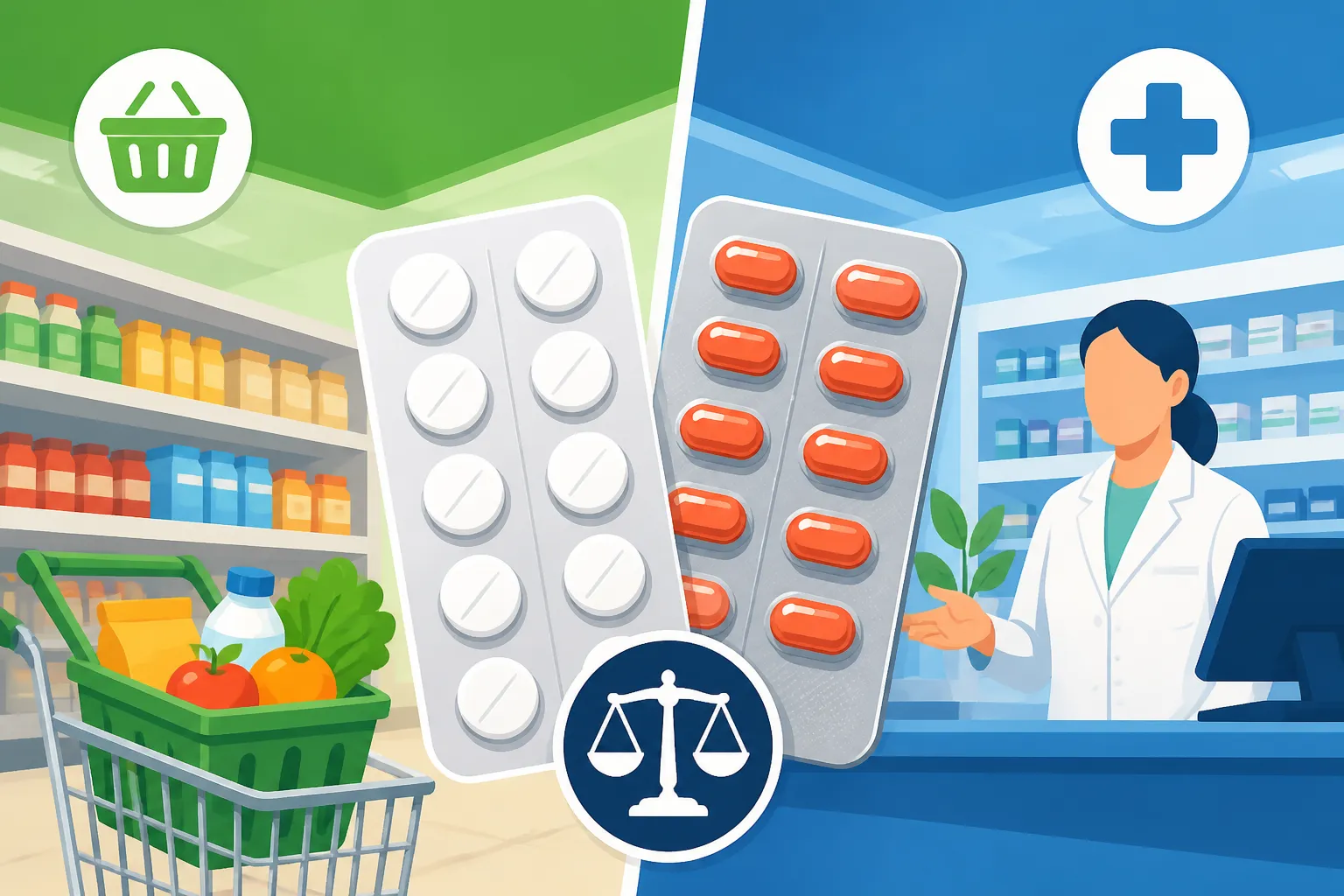
| Feature | Supermarket (LUA) | Pharmacy (Apotek) |
|---|---|---|
| Availability | Behind the counter/Cashier | Open shelves and counter |
| Selection | Very limited (1-2 brands) | Broad (Multiple brands/generics) |
| Advice | None (Legally prohibited) | Professional Pharmacists |
| Price | Usually lower | Usually higher |
| Quantity Limit | Strictly one pack | Usually one pack |
| Operating Hours | Follows store hours (Closed Sundays) | Varying (Vaktapotek available) |
When You Need a Prescription
If you have a chronic condition, such as back pain or migraines, relying on OTC packs is both expensive and inefficient. Once a doctor prescribes these medications, they may fall under White Prescriptions (Hvit Resept): Paying Out-of-Pocket for Medicine, or if the condition is long-term, a Blue Prescription. This allows you to buy larger quantities—sometimes 100 tablets at a time—and the cost may eventually be covered once you hit the annual cap for the Understanding the Frikort: The 2026 Healthcare Exemption Card Limit. Expats with Cigna Global coverage often find that their private insurance helps reimburse these costs even before the government cap is met.
Sunday Emergencies and Late-Night Access
One of the biggest culture shocks for newcomers is the "Sunday shutdown." Most supermarkets and regular pharmacies are closed on Sundays and public holidays (røde dager). If you wake up with a toothache on a Sunday morning, your options are limited, but they do exist.
Finding a Vaktapotek (Emergency Pharmacy)
In larger cities, there is always at least one "Vaktapotek" (duty pharmacy) that remains open 24/7 or has extended hours on Sundays. In Oslo, the pharmacy at Jernbanetorget (the central station) is famously open 24 hours a day, 365 days a year. Be prepared for a "vaktgebyr" (service fee)—an extra charge added to your purchase during late-night or holiday hours.
If you are outside the major cities, finding an open pharmacy on a Sunday can be a challenge. Some smaller towns have a rotation system where one pharmacy in the region stays open. You can usually find this information posted on the door of any closed pharmacy or by checking the website of the major chains. For travelers and expats still finding their feet, having SafetyWing insurance provides peace of mind for medical emergencies, but for simple painkillers, you'll need to know where the local vaktapotek is.
When Painkillers Aren't Enough
If you are in so much pain that OTC Paracetamol and Ibuprofen aren't helping, you should not wait for the pharmacy to open. Norway has a robust emergency system. For non-life-threatening but urgent issues, you should call 116 117 to reach the local Legevakt. They can assess your situation over the phone and tell you if you need to come in for a stronger injection or a prescription.
In cases of severe trauma, chest pain, or difficulty breathing, skip the pharmacy and the Legevakt entirely. Calling 113: Ambulance Services and Life-Threatening Emergencies is the only correct course of action. It is better to be safe and use the public emergency services than to try and self-medicate through a serious medical event. For many, the transition to Public vs Private Healthcare in Norway: A Complete Guide can be confusing, but in an emergency, the public system is world-class and accessible to everyone.
Stocking Your Home Medicine Cabinet
The best advice I can give any new expat is to keep a "survival kit" at home. Do not wait until you are sick to buy Paracetamol. Given the Over-the-Counter (OTC) Drugs in Norway: What You Can Buy in Supermarkets restrictions and the Sunday closures, always keep one unopened pack of both Paracet and Ibux in your cupboard.
This simple habit prevents the "Sunday scramble" and ensures that you can manage a sudden fever or headache without having to navigate bus schedules or emergency fees. If you are moving to a remote area, perhaps for work in the north, this is even more critical, as the distance to a vaktapotek could be several hours. Being prepared is the first step to thriving in the Norwegian climate and healthcare system.
Important Disclaimer
The information provided in this guide is for informational purposes only and does not constitute professional medical or legal advice. Regulations regarding medication and healthcare in Norway are subject to change. Always consult with a licensed healthcare professional, such as a pharmacist or your Fastlege, before starting any new medication. In case of a medical emergency, call 113 immediately. For up-to-date information on specific medications, refer to the Norwegian Medical Products Agency (Direktoratet for medisinske produkter).