Helsestasjon: Norway’s Free Child Health Clinics and Vaccination Program
Navigating medical forms when you are sleep-deprived and haven't fully mastered Norwegian grammar is a special kind of stress every expat parent knows. When my first child was born in Oslo, I remember staring at a letter from the local clinic, terrified I had missed a mandatory deadline because I couldn't translate the terminology. This guide explains how the Norwegian Helsestasjon system works, detailing the free health services and vaccination programs available to ensure your family thrives in its new home.
Understanding the Role of the Helsestasjon in Norwegian Society
The Helsestasjon (Child Health Clinic) is the cornerstone of the Norwegian welfare state’s commitment to the next generation. Unlike many countries where you might take a healthy baby to a private pediatrician for routine checks, in Norway, the public Helsestasjon handles almost all preventive care for children from birth until they start school at age six. It is a multidisciplinary hub where nurses, midwives, doctors, and sometimes even physiotherapists work together to monitor your child’s growth and development.
One of the most important things to realize is that the Helsestasjon is not for sick children. If your child has a fever, a weird rash that looks infected, or an earache, you do not go here. Instead, you must navigate The Fastlege Scheme: Navigating Norway’s GP System to book an appointment with your family doctor. The Helsestasjon is strictly for "wellness" visits, vaccinations, and parental support. This distinction is often the first hurdle for expats who are used to a "one-stop-shop" pediatrician model.
The service is entirely free of charge for anyone living in Norway. This applies regardless of whether you have a full national identity number or are still waiting on your paperwork. Because the Norwegian government views child health as a public good, they make the barrier to entry as low as possible. In my experience, the nurses at these clinics are some of the most patient people you will meet, often speaking excellent English and helping you navigate the early months of parenthood with a calm, "everything is normal" Norwegian attitude.
Public Health vs Your Fastlege
It can be confusing to know who to call when. Think of the Helsestasjon as your partner in development. They track height and weight, administer the Childhood Vaccine Schedule in Norway: What Parents Must Know, and check if your child is hitting motor milestones like crawling or walking. They are the experts on "normal."
Your Fastlege, or General Practitioner, is your partner in illness. If your child needs a prescription for antibiotics or a referral to a specialist for a chronic issue, the GP handles that. However, the two systems do communicate. If a nurse at the Helsestasjon notices a heart murmur during a routine check, they will coordinate with your GP or the local hospital to ensure a follow-up. This integrated approach is part of what makes Healthcare in Norway for Expats: How the System Works (2027) so effective, though it requires a bit of getting used to.
Eligibility and Universal Access
Every child residing in Norway has a right to use the Helsestasjon. This includes children of asylum seekers, expats on temporary work visas, and those who haven't yet received their permanent birth number. If you are in a transitional phase—perhaps moving on a digital nomad setup—you might find that SafetyWing provides the necessary gap coverage for other medical needs, but the Helsestasjon will still welcome your child for their basic checkups.
When you move to a new municipality (kommune), your child’s records should technically follow them, but the "system" isn't always perfect. It is wise to keep a physical or digital copy of your child's vaccination card from your home country. When you first register, the nurse will manually enter these into the Norwegian system, ensuring that the Norwegian Childhood Immunization Program picks up exactly where your previous country left off.
The Standard Appointment Schedule: From Birth to Age Five
The Norwegian system follows a very specific "program" of checkups. These are designed to catch developmental delays early and to provide a consistent touchpoint for parents who may be feeling isolated. For expats, these appointments are often a lifeline—a chance to ask questions about everything from vitamin D drops (a Norwegian obsession) to how to dress a baby for -10°C weather.
Typically, the first contact happens just days after you come home from the hospital. A nurse will often offer a home visit, which is a wonderful, low-pressure way to start the relationship. They aren't there to judge your messy living room; they are there to weigh the baby and make sure breastfeeding or formula feeding is going smoothly. You can read more about what to expect during this initial phase in our guide on Postpartum Home Visits: What the Helsestasjon Nurse Checks.
The First Six Months: Rapid Growth and Support
Between birth and six months, you will visit the Helsestasjon frequently. There are milestones at 6 weeks, 3 months, 4 months, and 5 months. The 6-week check is particularly significant because it usually involves the clinic’s doctor. They perform a full physical exam, checking the baby's hips, eyes, and heart.
Expats often find the 4-month group session particularly interesting. Norway often organizes "Barselgrupper" (parent groups) based on your child's age and your neighborhood. These groups meet at the Helsestasjon, and the nurse facilitates a discussion on a specific topic, like sleep or starting solid foods. It is a fantastic way to meet local parents and other expats in your area, helping to bridge the social gap that many feel when moving to a new country.
From Six Months to One Year
Once the baby hits the half-year mark, the appointments spread out slightly. You’ll have checks at 6 months, 8 months, 10 months, and the big one-year finale. At the one-year mark, the focus shifts heavily toward motor skills and language acquisition. Are they pointing? Are they making eye contact? Do they have a few words or sounds?
The one-year appointment is also a great time to discuss Family Health in Norway: Pregnancy, Childbirth, and Pediatric Care as you might be thinking about the transition to daycare (Barnehage). The nurses are very familiar with the local daycare system and can offer advice on the health requirements for starting school.
The Toddler Years: Age Two to Five
After the first birthday, the visits become much less frequent. Usually, there is a check at 2 years and another "heavyweight" appointment at 4 years. The 4-year-old check is quite comprehensive; it includes a vision test and a more formal assessment of language and social development. This is to ensure that any child who needs extra support—perhaps a speech therapist or an educational psychologist—gets that help before they enter the formal school system at age six.
| Age | Primary Focus | Professionals Involved |
|---|---|---|
| 0-10 Days | Home Visit, Feeding Support, Weight | Health Nurse |
| 6 Weeks | Full Physical Exam, Hips, Eyes | Doctor & Nurse |
| 3 Months | First Major Vaccinations | Nurse |
| 6 Months | Introduction to Solids, Motor Skills | Nurse & Doctor |
| 1 Year | Language Development, Walking | Nurse |
| 2 Years | Social Development, Communication | Nurse |
| 4 Years | Vision Test, School Readiness | Nurse & Doctor |
The Norwegian Childhood Immunization Program
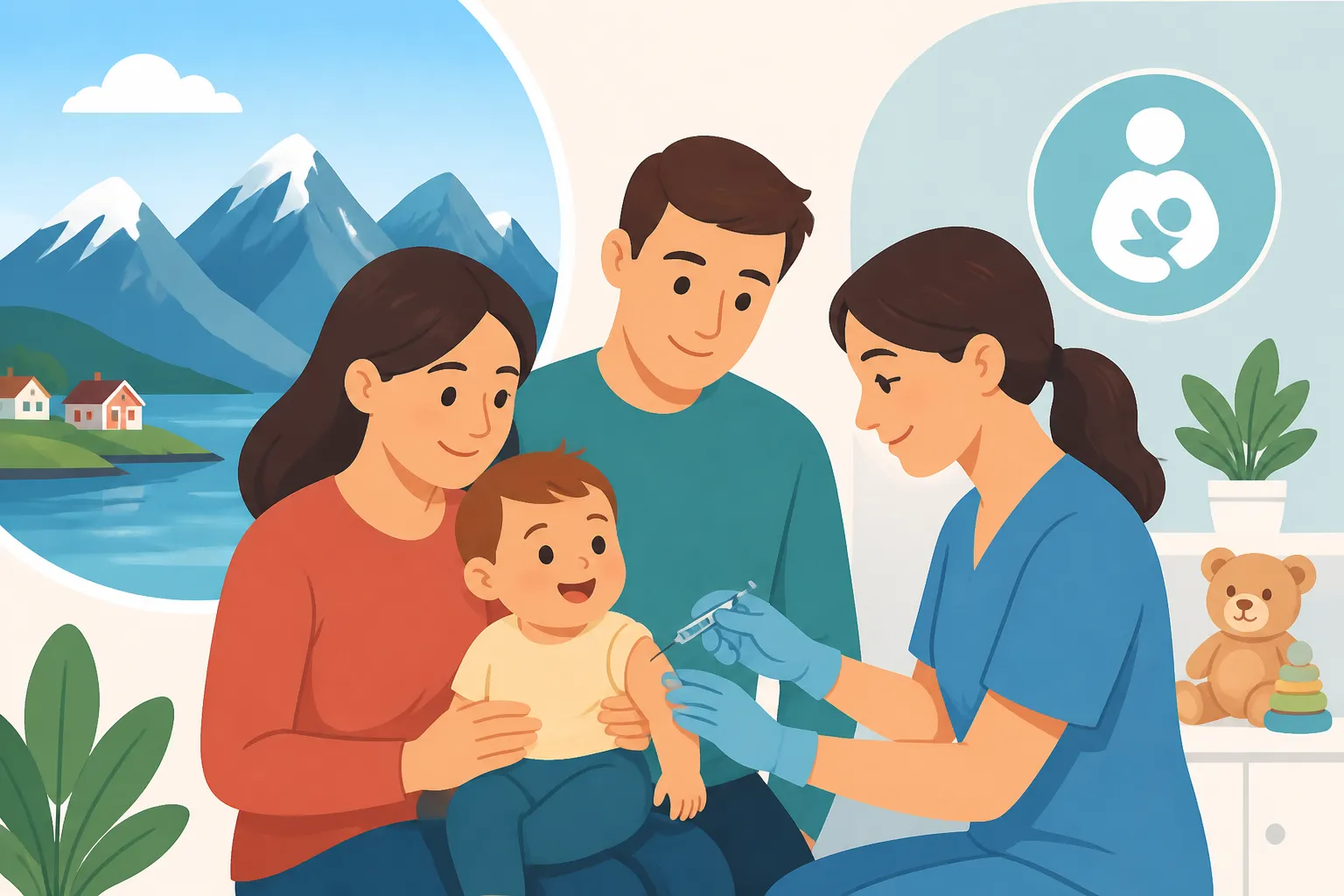
The vaccination program in Norway is voluntary but has an incredibly high uptake rate. Most parents choose to follow the state's recommended schedule because it is evidence-based and designed to protect the entire community. For an expat, the biggest surprise might be the lack of "fuss." In some countries, vaccines are treated like a major medical event; in Norway, the nurse administers them quickly, offers a bit of comfort, and you are usually out the door in 20 minutes.
The vaccines are administered at the Helsestasjon and are recorded in a national database called SYSVAK. This is incredibly helpful because you can always log into Helsenorge to see your child's records, which is essential if you ever move or need to prove vaccination status for international travel. For those who travel frequently or have families across borders, having a comprehensive plan like Cigna Global can provide additional peace of mind, though the basic vaccines are always covered by the Norwegian state.
What Vaccines are Included?
The program covers all the standard protections you would expect: Rotavirus, Diphtheria, Tetanus, Whooping Cough, Polio, Hib infection, Pneumococcal disease, and the MMR (Measles, Mumps, Rubella) vaccine. In recent years, the HPV vaccine has also been added to the program for older children (usually administered through the school health service).
If you are coming from a country with a different schedule—for example, if your home country vaccinates against Tuberculosis or Chickenpox as standard—you should discuss this with the nurse. Norway does not routinely vaccinate against Chickenpox, as the health authorities currently view it as a standard childhood illness, though you can choose to pay for the vaccine privately through your GP or a private clinic like Dr.Dropin.
Handling Vaccine Hesitancy and Questions
The nurses at the Helsestasjon are trained to discuss vaccines without judgment. If you have concerns about side effects or the timing of the shots, they will sit with you and explain the Norwegian Institute of Public Health (FHI) guidelines. They understand that different cultures have different perspectives on medicine.
One thing I appreciated was the "wait and see" area. After the 3-month and 5-month shots, they ask you to stay in the waiting room for 20 minutes just to ensure there are no immediate allergic reactions. It’s a small detail, but it speaks to the thoroughness of Emergency Medical Care in Norway: 113, Legevakten, and Hospitals and how preventive care is handled.
Beyond Medical Care: Support for Parents
The "Station" in Helsestasjon is there for a reason—it’s meant to be a base of operations for parents. Moving to Norway as a parent can be isolating, especially during the dark winter months. The Helsestasjon provides services that go far beyond weighing babies and giving shots.
Breastfeeding and Nutritional Guidance
Norway has one of the highest breastfeeding rates in the world, and the Helsestasjon is the primary engine behind this. They have specialized breastfeeding consultants who can help with everything from latch issues to mastitis. However, they are also practical. If you are using formula, they will guide you on the brands available in Norwegian supermarkets and the local regulations regarding water safety (the tap water is excellent here, so no need for bottled water!).
As your child grows, they provide guidance on the transition to "fast føde" (solid food). You will learn about the importance of "tran" (cod liver oil), which is given to almost every Norwegian baby to ensure they get enough Vitamin D during the months when the sun doesn't shine. It’s a quirky part of the culture, but something the Helsestasjon takes very seriously.
Postpartum Mental Health and the "Baby Blues"
One of the most valuable aspects of the Helsestasjon for expats is the focus on parental mental health. The nurses are trained to look for signs of postpartum depression or anxiety, which can be exacerbated by the lack of a local support network. During your appointments, the nurse will often ask, "How are you doing?" and they genuinely want to know.
If you are struggling, they can refer you to a psychologist or a "psykisk helsearbeider" (mental health worker) in the municipality. This is often a much faster route to support than trying to find a private therapist on your own. For more on this, see Mental Health in Norway: Accessing Therapy and Psychiatric Care. Knowing that this support is part of the free public package is a huge relief when you're feeling the weight of "expat burnout."
Open Helsestasjon and Parent Groups
Many municipalities offer an "Åpen Helsestasjon" (Open Clinic). This is a drop-in service where you can come to weigh your baby or ask a quick question without an appointment. It also functions as a playgroup. For an expat parent, this is "Ground Zero" for making friends. You’ll meet people from all over the world, as well as locals who are also looking for a community.
The parent groups organized by the clinic are equally vital. In my group, we were a mix of Norwegians, an American, and a couple from Poland. We ended up meeting every Wednesday for a year, navigating the ups and downs of parenthood together. This social integration is a hidden benefit of the Public vs Private Healthcare in Norway: A Complete Guide—the public system actually helps you build a life here.
Practicalities: Registration and Logistics for Expats
So, how do you actually get into the system? If you give birth in a Norwegian hospital, the hospital will automatically notify the Helsestasjon in the district where you live. You will usually receive a phone call or a letter in the mail within a few days of coming home.
However, if you move to Norway with a young child, you need to be proactive. You should contact the "Bydel" (district) or "Kommune" (municipality) office and tell them you have moved to the area and have a child under six. They will then assign you to a specific clinic based on your address.
Navigating the D-Number and Fødselsnummer
While the service is free for everyone, having your identity number makes everything easier. It allows the clinic to pull up your records on Helsenorge and ensures that your child is properly registered in the national system. If you only have a D-number, you may face slight administrative delays, but you cannot be denied service. For a deeper look at these hurdles, check out Healthcare Rights for D-Number Holders: Exclusions and Alternatives.
If you are still waiting for your ID number, don't let that stop you from visiting the clinic. Bring your passport and any residency papers from the UDI. The staff are used to dealing with the bureaucracy of immigration and will usually find a way to get you into the schedule.
Language Support and Interpreters
One of the best-kept secrets of the Norwegian health system is the right to a free interpreter. If you are not confident in your Norwegian or English, you can request an interpreter when you book your appointment. The Helsestasjon will pay for a professional interpreter to be present, either in person or via video link.
This is particularly important for the doctor appointments (6 weeks and 1 year) where complex medical terms might be used. Never feel like you are being a burden by asking for one; it is a legal right designed to ensure patient safety and clear communication.
Comparing Public Care with Private Alternatives
While the public Helsestasjon is excellent, some expats choose to supplement this care with private insurance or clinics. Why would you do this if the public system is free? Usually, it comes down to speed and specialized access.
If you want to see a specific specialist—like a pediatric dermatologist or an allergist—without waiting for a referral from your Fastlege, private clinics like Volvat or Aleris are the way to go. These are expensive, which is why many expats maintain a policy with Cigna Global to cover such out-of-pocket costs.
However, even the most affluent families in Norway typically use the public Helsestasjon for their routine vaccinations and growth checks. The reason is simple: the quality of the nurses and the standardized care is so high that there is very little "upgrade" available in the private sector for these specific services. The public system is the gold standard for pediatric preventive care here.
When to Consider Private Options
- Speed: If the waiting list for a non-urgent referral (like a minor skin condition) is several months.
- Convenience: If you want an appointment outside of standard working hours (8:00 AM – 3:30 PM).
- Continuity: If you want to see the exact same doctor every single time, which isn't always guaranteed in the public system.
For most families, a hybrid approach works best: use the free, high-quality public Helsestasjon for everything they offer, and keep Private Health Insurance in Norway: Is It Worth the Extra Cost? for the rare times you need to bypass a waiting list for a specialist.
Final Thoughts for New Parents in Norway
Moving to a new country with a child is a monumental task. The Norwegian Helsestasjon is designed to be your safety net. It is a place where you can be "just a parent" rather than an "expat" or a "migrant." My best advice is to show up to every appointment, join the parent groups even if you feel shy, and don't be afraid to ask "stupid" questions.
Whether it's about the best wool leggings for a toddler or how to handle the 4-month sleep regression, the nurses have seen it all. They are your best resource for integrating into the Norwegian way of life. By the time your child is five and ready for school, you’ll likely find that the Helsestasjon wasn't just a medical clinic—it was the place where you learned how to be a family in Norway.
Disclaimer
This guide is for informational purposes only and does not constitute professional medical advice. Always consult with a qualified healthcare provider regarding the health of your child. While every effort is made to keep this information up to date, Norwegian health regulations and municipal practices can change; please verify specific details with your local Helsestasjon or the Norwegian Institute of Public Health (FHI).