What Medical Services Are Not Covered by the Norwegian Frikort?
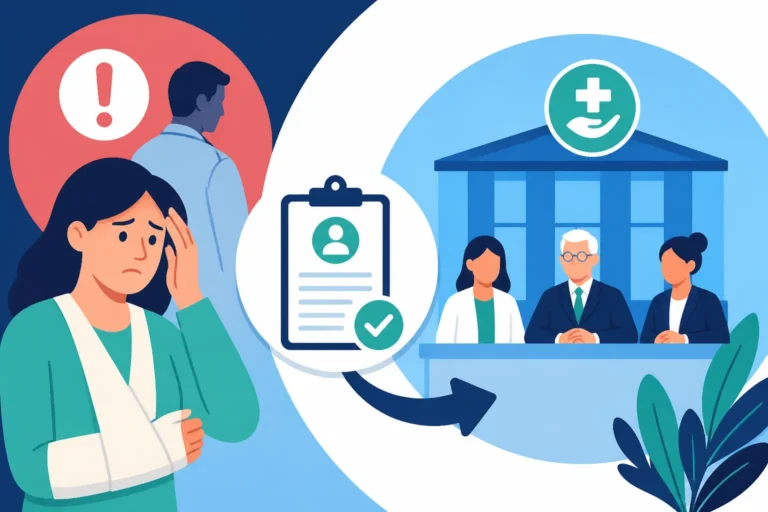
You finally hit your annual spending cap, the Helsenorge app flashes a digital green checkmark, and you think you are home free for the rest of the year. I remember the sheer relief I felt during my second year in Oslo when I finally reached that limit, assuming every medical cost would now be zero. This guide solves the confusion around the "fine print" of the Norwegian healthcare system by detailing exactly which services remain outside the Frikort’s reach.
The Frikort Fundamentals and the Landscape
The Norwegian Frikort, or exemption card, is an automated system designed to protect residents from high out-of-pocket medical expenses. Once you have paid a certain amount in "user fees" (egenandel) within a calendar year, you are granted an exemption for the remainder of that year. For those navigating Healthcare Budgeting: The Frikort Exemption Card and User Fees, understanding this threshold is the first step toward financial predictability.
In 2026, the threshold sits at a level that most people with chronic conditions or regular specialist visits will hit by mid-year. The beauty of the system is that you no longer need to collect physical receipts and mail them to a government office; the Helfo system tracks your payments automatically via your Fødselsnummer. However, the system is not a "blank check" for all things health-related. It only covers specific types of public health services and subsidized medications.
Many expats arrive with the assumption that Norway’s "universal healthcare" means "entirely free healthcare." In reality, it is a co-pay system. Even when you reach the exemption limit, certain sectors of the medical world operate entirely independently of the Frikort. If you are still waiting for your residence permit to be finalized, you might even find yourself looking at Healthcare Rights for D-Number Holders: Exclusions and Alternatives to see how your status impacts your path to an exemption card.
The Private Healthcare Divide
One of the most common traps for foreigners in Norway is the distinction between public and private healthcare providers. The Frikort is strictly a public-sector tool. If you choose to bypass the public waiting lists by booking an appointment at a private clinic like Volvat or Aleris, your Frikort is essentially invisible. These clinics do not operate under the same pricing structure as the National Insurance Scheme.
In my experience, the frustration usually peaks when you realize that even a "referral" does not always mean the Frikort applies. If your Fastlege (GP) refers you to a specialist who does not have a "driftstilskudd" (a municipal operating grant), you are responsible for the full private fee. For those who prioritize speed and want to avoid the public queues, providers like Cigna Global offer international plans that cover these private costs, which the Norwegian state simply will not. Understanding Public vs Private Healthcare in Norway: A Complete Guide is essential before you book that "convenient" same-day appointment online.
Furthermore, many digital-first clinics that have popped up in major cities like Bergen and Stavanger operate on a purely private basis. While they are fantastic for getting a quick prescription or a video consultation, they rarely count toward your Frikort total, nor do they respect the Frikort once you have earned it. If you are a digital nomad or a short-term worker, you might rely on SafetyWing for your initial coverage, but once you are integrated into the Norwegian system, you must learn to distinguish between a "Fastlege" and a "Private Physician."
Dental Care The Great Exemption
If there is one thing that shocks expats more than the price of a beer in Aker Brygge, it is the cost of a root canal. For the vast majority of adults in Norway, dental care is 100% private and 0% covered by the Frikort. When you walk into a dentist's office, your exemption card might as well be a library card; it has no transactional value there.
There are very specific exceptions to this rule, such as for patients with rare medical conditions, certain types of gum disease (periodontitis), or maxillofacial injuries. However, for your standard check-up, cleaning, or filling, you are paying out of pocket. I learned this the hard way when a chipped tooth resulted in a bill that eclipsed my monthly grocery budget. You can read more about the nuances in Dental Care in Norway: Costs, Subsidies, and Finding a Dentist.
The Norwegian system prioritizes children and young adults for dental subsidies. Children under 18 receive free care, and those aged 19 to 24 (and sometimes up to 26 depending on the latest 2026 legislative updates) receive significant discounts. But for the average working expat, dental health is a separate financial pillar. This is why many residents choose to supplement their public coverage with private insurance from Cigna Global to handle major dental emergencies that the Frikort ignores.
White Prescriptions vs Blue Prescriptions
The pharmacy counter is another place where the Frikort can be selectively "blind." In Norway, prescriptions are categorized by the color of the metaphorical "slip" (though it is all digital now). A "Blue Prescription" (Blå resept) is for chronic illnesses where the state covers a large portion of the cost. Once you have your Frikort, these medications become free at the point of service.
However, "White Prescriptions" (Hvit resept) are a different story. These are typically for short-term illnesses, lifestyle medications, or drugs that the state has deemed not "essential" enough for a subsidy. Examples often include antibiotics for a one-off infection, birth control for certain age groups, or travel-related medications. Even if you have reached your Frikort limit for the year, you will still pay the full price for a white prescription.
This distinction is a major component of Pharmacies and Prescriptions in Norway: White vs Blue Slips. Many people get to the front of the queue at Apotek 1, thinking they’ll pay zero for their hay fever meds, only to be told the Frikort doesn't apply because the medication is on a white slip. If you are managing a long-term condition, it is vital to discuss with your doctor whether you qualify for Blue Prescriptions (Blå Resept): Subsidized Medication for Chronic Illness.
Administrative and Certificate Fees
The Frikort covers the medical act of seeing a doctor, but it does not cover the administrative paperwork that often comes with it. If you need a medical certificate for your employer, a health check for your driver’s license, or documentation for an insurance claim, the doctor will charge a separate fee for this service. This is considered an administrative task rather than a "necessary medical treatment."
For instance, when you are Getting Sick Notes (Sykemelding) from Your GP for Work, the consultation itself might be covered by the Frikort, but if you require additional stamped documentation for travel cancellations or sports participation, expect an invoice. These fees are usually relatively small—ranging from 200 to 500 NOK—but they can be annoying when you expect your Frikort to handle everything.
Additionally, "materials" are often excluded. If your doctor uses a specific type of expensive bandage, a specialized brace, or performs a procedure that requires significant disposable equipment, you may be billed a "materials fee." This fee does not count toward your Frikort total, and the Frikort does not exempt you from paying it once you have reached the cap. It’s a minor detail that can make your "free" visit cost 150 NOK.
Wellness, Prevention, and Alternative Medicine
Norway has a very pragmatic approach to healthcare: they pay for what is medically necessary to keep you functional and alive. Anything falling under the umbrella of "wellness" or "alternative medicine" is usually your responsibility. This includes services like chiropractic care (to a large extent), acupuncture, and massage therapy. While some chiropractors have a limited reimbursement agreement with Helfo, it is rarely a full "Frikort" experience.
Preventive measures also have a mixed relationship with the Frikort. For example, travel vaccinations are almost never covered. If you are planning a trip to Southeast Asia and need a battery of shots, you will pay the clinic fee and the vaccine cost out of pocket. This is true even if you have a Frikort. For those moving around frequently, SafetyWing can be a helpful bridge for travel-related health needs, but for the local shots, you're on your own.
Furthermore, nutritional supplements and over-the-counter vitamins are never covered. Even if your doctor tells you that you are severely deficient in Vitamin D—a common issue during the Norwegian winter—you will be buying those supplements at the supermarket or pharmacy at full price. Navigating Vitamin D Guidelines for Expats Surviving the Dark Season is a part of life here, but it’s a cost you must budget for regardless of your health status.
| Service Category | Frikort Coverage | Typical Out-of-Pocket Cost (approx.) |
|---|---|---|
| GP (Fastlege) Consultation | Covered (after cap) | 160 – 210 NOK (before cap) |
| Public Specialist (with referral) | Covered (after cap) | 350 – 400 NOK (before cap) |
| Private Specialist (no referral) | Not Covered | 1,500 – 3,000 NOK |
| Standard Dental (Adult) | Not Covered | 1,000 – 5,000+ NOK |
| Blue Prescription Meds | Covered (after cap) | 39% of cost (max 520 NOK) |
| White Prescription Meds | Not Covered | Full Market Price |
| Medical Certificates | Not Covered | 200 – 600 NOK |
| Travel Vaccinations | Not Covered | 500 – 1,500 NOK |
Navigating the Grey Areas of Medical Equipment
When it comes to medical equipment—things like CPAP machines, wheelchairs, or hearing aids—the system moves away from the Frikort and into the realm of the "NAV Assistive Technology Centers" (Hjelpemiddelsentral). These items are not "user fees" that contribute to your Frikort. Instead, they are often loaned or granted based on long-term need.
If you need a temporary crutch or a simple wrist brace from the pharmacy, you will likely pay for it yourself. However, if you have a permanent disability, the National Insurance Scheme (Folketrygden) covers much of the cost of heavy equipment. The confusion for expats often arises when they try to "claim" the cost of a knee brace they bought at an orthopedic shop against their Frikort. It simply doesn't work that way.
The Frikort is specifically for clinical services and subsidized medications. It is not a general health-spending account. For those managing complex needs, it is often worth looking into private supplements like Cigna Global to cover the "extras" that NAV might deem non-essential or that fall outside the very narrow definitions of the public subsidy lists.
Understanding Referral Chains and Waiting Times
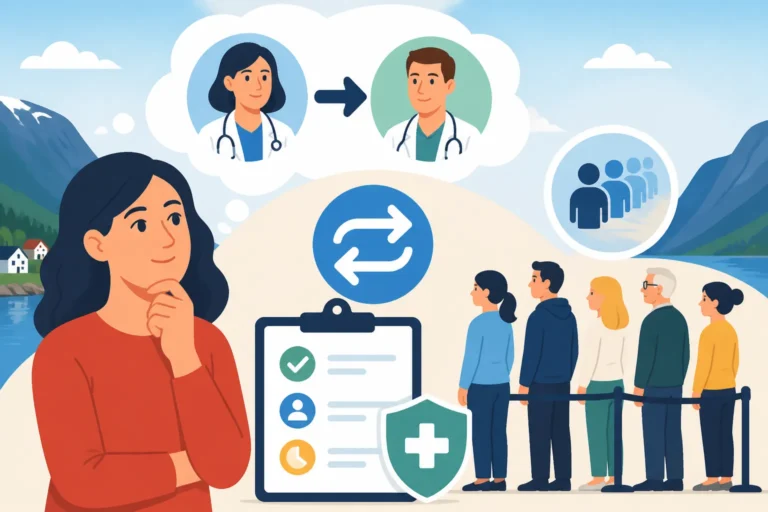
A common frustration I hear from fellow expats is the "Referral Trap." You go to your The Fastlege Scheme: Navigating Norway’s GP System, pay your user fee, and get a referral. You then find out the public waiting list for that specialist is four months long. If you decide you can't wait and book a private specialist instead, your Frikort immediately becomes useless for that entire treatment path.
This is where the choice between the public system and private insurance becomes a lifestyle decision. If you have the Frikort, your public specialist visits will be free, but you are at the mercy of the "Fritt Behandlingsvalg" (Patient Choice) system and its associated waiting times. If you go private, you pay, but you are seen next Tuesday.
Many expats use SafetyWing for their initial months to ensure they have some form of private "safety net" while they are still figuring out how the local GP system works. Once you are settled, the Frikort becomes a great way to handle your routine health needs, provided you are willing to play by the public system's rules and timelines.
Summary of Exclusions
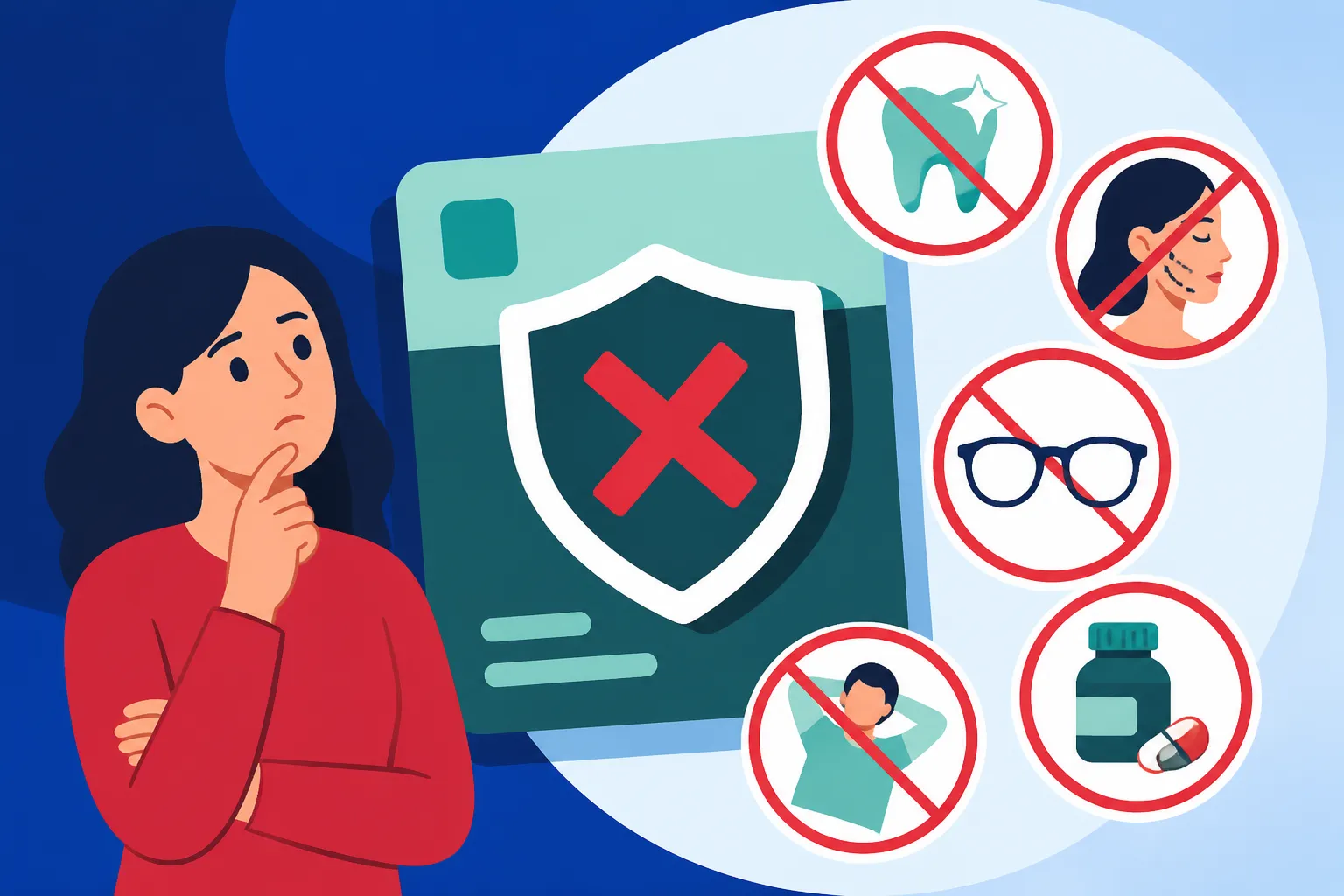
To stay financially healthy in Norway, you must remember that the Frikort has boundaries. It is a shield against the high costs of essential, public-sector medical treatment, but it is not a "get out of jail free" card for all health-related spending.
The primary exclusions remain:
- Anything "Private" without a municipal contract.
- The vast majority of adult Dental Care.
- "White Slip" medications (non-chronic/non-subsidized).
- Administrative fees, stamps, and medical certificates.
- Wellness, alternative therapies, and travel medicine.
- Vitamins and over-the-counter supplies.
By keeping these categories in mind, you can avoid the "invoice shock" that many of us experienced in our early years. Living in Norway is about embracing the system’s strengths—like the excellent emergency care and chronic disease management—while being realistic about the areas where you are expected to be self-sufficient.
Disclaimer
This article is for informational purposes only and based on personal experience and current 2026 healthcare guidelines in Norway. Healthcare laws and Frikort thresholds are subject to change by the Norwegian government. Always consult the official Helsenorge website or your Fastlege for specific medical and financial advice regarding your situation.