Bringing Supplements to Norway: Why Melatonin Can Get Confiscated
Moving to Norway involves a mountain of paperwork, but many expats are blindsided when their harmless bottle of sleep aids is seized at the border. I remember my first winter in Oslo, trying to import a bulk jar of melatonin only to receive a stern letter from Customs instead of my package. This guide clarifies Norway’s strict supplement regulations so you don't lose money or face legal headaches.
Understanding Norways Stance on Supplements and Medicine
When you first arrive in Norway, you might be surprised to find that the local health food store (Helsekost) looks quite different from what you are used to in the US, UK, or even elsewhere in Europe. Norway operates on a very strict precautionary principle. The Norwegian Medical Products Agency (Direktoratet for medisinske produkter, formerly Legemiddelverket) has a massive influence over what is classified as a "food supplement" and what is classified as a "medicine."
In many countries, a supplement is anything that isn't a drug. In Norway, if a substance has a physiological effect on the body, it often falls under the medicinal category. This includes many high-dose vitamins and herbal extracts that you can buy over the counter at any corner store in London or New York. If you are planning your move, it is wise to consult a First 30 Days Health Checklist: GP, Frikort, and Pharmacies to see how these regulations fit into your wider transition.
The frustration for us expats usually stems from the "Medicine List." This is a legal document that lists substances that are automatically considered medicines regardless of the dosage. However, even if a substance isn't on that list, if the label makes "medical claims" (like "cures insomnia" or "reduces inflammation"), it can be flagged as an illegal import of medicine. This is why your friendly bottle of turmeric or ashwagandha might suddenly become a legal liability at the Gardermoen airport customs desk.
The Melatonin Mystery: Is it a Supplement or a Drug
Melatonin is the ultimate "gotcha" for newcomers. For decades, melatonin was strictly prescription-only in Norway. It was treated with the same level of scrutiny as a mild sedative. A few years ago, the rules softened slightly, allowing for very low doses (usually up to 1mg) to be sold over the counter in pharmacies and even some supermarkets. You can learn more about this in our guide on Over-the-Counter (OTC) Drugs in Norway: What You Can Buy in Supermarkets.
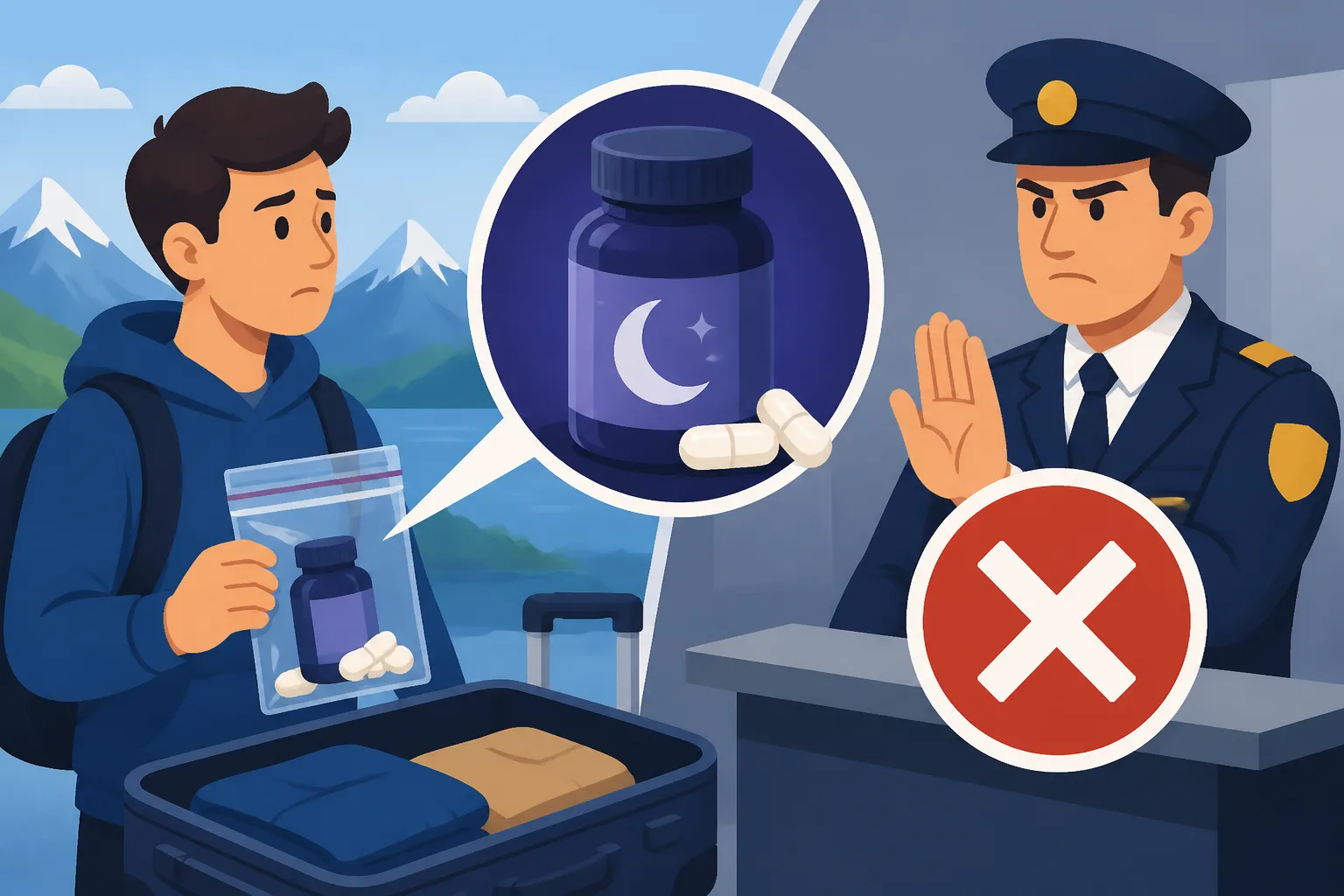
However, the change in local sales rules did not lead to a "free-for-all" for imports. If you try to mail-order a bottle of 5mg or 10mg melatonin from a site like iHerb or Amazon US, it will almost certainly be intercepted. Because the dosage exceeds what is approved for OTC sale in Norway, it is classified as a medicinal product. Importing medicines by mail from countries outside the EEA (European Economic Area) is strictly prohibited for private individuals.
Dozens of expats have thought they were being savvy by ordering a three-month supply online, only to find that Tolletaten (Customs) seized the package and destroyed the contents. Even worse, you often have to pay a processing fee for the privilege of having your supplements confiscated. If you are struggling with sleep due to the dark winters, you might want to look into Coping with Seasonal Affective Disorder (SAD) in the Norwegian Winter for alternative strategies that don't involve risky imports.
Rules for Bringing Supplements from Abroad
The rules for supplements change dramatically depending on whether you are carrying them in your suitcase or having them shipped to your door. This is where most people get confused. If you are moving here and have these items in your checked luggage, you have a bit more leeway, but there are still hard limits you must respect to avoid fines.
Traveling with Supplements in Your Luggage
When you physically cross the border, you are generally allowed to bring a "reasonable amount" of supplements and medicines for personal use. If you are coming from an EEA country, you can usually bring up to a one-year supply, provided you can prove they are for you. If you are coming from outside the EEA (like the USA, Canada, or Australia), the limit is strictly a three-month supply.
You must be able to show that the products are legally purchased and intended for your own health. If you have high-dose supplements that are classified as medicines in Norway, it is highly recommended to bring a doctor’s note or a copy of your prescription. This is especially true for anything that might look suspicious to a customs agent who isn't familiar with international brands. For a deeper dive into carrying larger quantities, read Bringing Medication into Norway: Customs Rules and Schengen Certificates.
Shipping Supplements via Mail
This is the danger zone. The Norwegian government is incredibly protective of the domestic pharmaceutical market and public health. When you ship supplements to Norway:
- From outside the EEA: You are forbidden from importing any "medicines." Since many high-dose vitamins are classified as medicines here, they will be seized.
- From inside the EEA: You can import a three-month supply of "medicines," but they must be for personal use, and you must be able to document that they were legally acquired in the country of origin.
For example, if you are a fan of high-dose Vitamin D, you should check the Vitamin D Guidelines for Expats Surviving the Dark Season to see if the local versions will suffice. Buying locally is almost always safer than risking a mail-order seizure. During these transitions, having international health coverage like Cigna Global can help if you need to consult a specialist about transitioning your supplement regimen to Norwegian-approved alternatives.
Common Supplements That Trigger Customs Inspections
It isn't just melatonin that gets flagged. There are several categories of supplements that are "red flags" for Norwegian Customs. Being aware of these can save you a lot of money in lost shipments and customs duties.
- Vitamin D: In Norway, very high doses of Vitamin D (exceeding certain international units) can be viewed as a therapeutic medicine rather than a supplement. While we need it during the Mørketid, importing 10,000 IU capsules might cause trouble.
- Nootropics: Anything marketed as a "brain booster" often contains herbal ingredients like Ginkgo Biloba or Bacopa Monnieri. In Norway, some of these herbs are on the restricted list and require a prescription.
- Pre-Workout and Fitness Supplements: Many US-made pre-workout powders contain stimulants or ingredients that are banned or restricted in the EEA. If the label contains something the customs officer doesn't recognize, they will often default to seizing it for testing.
- CBD Products: Even if the THC content is 0%, CBD is often treated as a medicinal product in Norway. Unless you have a specific prescription and are following the strict import rules for medicine, do not try to mail CBD oil to your Norwegian address.
| Supplement Type | Source (EEA) | Source (Non-EEA) | Personal Luggage Limit |
|---|---|---|---|
| Low-dose Vitamins | Allowed | Allowed | 1 Year (EEA) / 3 Months (Non-EEA) |
| Melatonin (>1mg) | Medicine (Restricted) | Banned by mail | Must have prescription |
| Herbal Extracts | Check "Medicine List" | Often Seized | Personal Use (Small amount) |
| Prescription Drugs | 1 Year supply | 3 Month supply | Documentation Required |
How to Legally Buy Supplements Within Norway
Once you have settled in and realized that your favorite brand from back home is a no-go for imports, you’ll need to find local alternatives. The good news is that the Norwegian pharmacy system is excellent, though it might feel a bit more clinical than what you're used to. You can find many details on this in Pharmacies and Prescriptions in Norway: White vs Blue Slips.
Navigating Pharmacies and Health Food Stores
In Norway, you have "Apotek" (Pharmacies) like Apotek 1, Vitusapotek, or Boots. This is where you should buy your melatonin and high-dose vitamins. Because these are regulated, you can be 100% sure that what is on the shelf is legal and safe according to Norwegian standards. If you need a higher dose of something than what is available on the shelf, you will need to speak to your Fastlege. If you haven't set one up yet, check How to Register for a Fastlege (GP) on Helsenorge.
The health food stores (like Sunkost or Life) carry supplements that are strictly classified as "food supplements." This means the dosages are generally lower, and the ingredients are well-vetted. While it might be more expensive than buying in bulk from overseas, it saves you the headache of Posten Customs Clearance Fees: Receiving Packages from Outside Europe which can often exceed the value of the items themselves.
Using Online Domestic Retailers
If you prefer the convenience of online shopping, stick to Norwegian websites ending in ".no". Sites like Farmasiet or BliVakker stock many international brands that have already been cleared for sale in the Norwegian market. This is the only way to guarantee that your package won't be held up by Tolletaten. For digital nomads or those on short-term stays, using a service like SafetyWing can provide the necessary medical support if you run out of a supplement that is actually a required medication for your health.
What to Do if Your Package is Seized
If you do make the mistake of ordering restricted supplements, the process is fairly predictable but frustrating. First, you will see a status update on your tracking that says "Held in Customs" or "Under Processing." A few days later, you will receive a physical letter from Tolletaten or Posten.
The letter will usually state that the package contains "suspected medicinal products" that are not permitted for import. You will typically be given a few days to provide documentation, such as a Norwegian prescription, to prove you are allowed to receive the item. If you cannot provide this—which is almost always the case for self-ordered supplements—the item will either be sent back to the sender (at your expense) or, more likely, destroyed.
Do not try to argue with the customs officers about the "unfairness" of the rules compared to your home country. They are simply following the strict guidelines set by the Ministry of Health. Instead, use this as a learning experience and focus on finding a local equivalent. If you are feeling frustrated by these hurdles, remember that Mental Health in Norway: Accessing Therapy and Psychiatric Care is available if the stress of the move is getting to you.
Final Tips for Expats Navigating Norwegian Health Standards
Surviving the administrative quirks of Norway is a rite of passage. When it comes to your health and supplements, the best strategy is always transparency and local sourcing. If you are moving here with a chronic condition, make sure you understand Managing Chronic Illness in Norway: Diabetes, Asthma, and Heart Disease and how your specific supplements might be treated as part of your treatment plan.
- Check the label: If it says "extra strength" or "maximum potency," it’s a candidate for confiscation.
- Bring a 3-month supply in your suitcase: This is the safest way to bridge the gap while you find local suppliers.
- Get a Fastlege early: They can write "White Prescriptions" for higher-dose vitamins that you can't get off the shelf.
- Beware of "Duty-Free" traps: Just because it's sold in a duty-free shop at an international airport doesn't mean it’s legal to bring into Norway in large quantities.
- Use local experts: Ask the pharmacist at Apotek 1 for a "Norwegian equivalent" of your favorite supplement. They are usually highly trained and speak excellent English.
While the rules seem "over-the-top" at first, they are part of a system that keeps the quality of healthcare and products in Norway exceptionally high. Whether you are covered by the public system or use Private Health Insurance in Norway: Is It Worth the Extra Cost?, you will eventually find a rhythm that works for your health needs without needing to smuggle in bottles of melatonin. For those here on shorter assignments, SafetyWing is a solid choice to handle any medical emergencies while you navigate these local pharmaceutical waters, and for long-term residents, Cigna Global offers that extra layer of international consistency.
Disclaimer
The information provided in this guide is for informational purposes only and does not constitute legal or medical advice. Regulations regarding the import of supplements and medicines in Norway are subject to change by the Norwegian Medical Products Agency and Tolletaten. Always check the latest official government guidelines before traveling or shipping items. Every effort has been made to ensure accuracy as of 2026, but individual cases may vary based on customs interpretations.