Managing Type 1 Diabetes in Norway: Insulin and Pump Access
Moving to Norway with Type 1 Diabetes can feel like a logistical nightmare when you are staring at your last vial of insulin and a D-number that has not arrived yet. I remember the sheer panic of my first month in Oslo, wondering if the local pharmacy would even recognize my foreign prescription or if I would be stuck paying thousands of kroner out of pocket. This guide solves the confusion by breaking down exactly how to secure insulin, sensors, and pumps within the Norwegian system so you never have to worry about a supply gap.
Transitioning Your Diabetes Care to the Norwegian System
The moment you land in Norway, your primary goal is to move from your "home country" supplies to the Norwegian public system. Norway has an incredibly robust healthcare infrastructure, but it is also a gatekept system. You cannot simply walk into a specialist's office and demand a new insulin pump. Everything starts with the National Insurance Scheme. Understanding Folketrygden Basics: Who is Covered by the National Insurance Scheme is your first step to ensuring your costs are covered. Once you are a member, usually by virtue of working or living here legally, you are entitled to subsidized care.
However, there is often a "gap" period. If you are waiting for your residency paperwork to clear, you might find yourself in a grey zone. During this time, having a plan like SafetyWing can be a literal lifesaver for emergency medical needs while you wait for your official registration. Many expats struggle because they assumed the system would be "instant." In reality, it can take weeks to get your first appointment. You should bring at least a three-month supply of all medications and hardware from home to bridge this administrative gap.
Once you have your ID number, you need to understand Healthcare in Norway for Expats: How the System Works (2027). The system is divided between primary care (your GP) and specialist care (the hospital-based endocrinologists). While your GP handles your general health, they actually have limited power over your diabetes technology. They can prescribe your insulin and test strips, but they cannot authorize a new CGM or pump. That requires a referral to a hospital's "Diabetespoliklinikk."
The Role of the Fastlege and the Blue Prescription System
Your journey begins at the doctor's office. In Norway, your GP is called a Fastlege. Navigating The Fastlege Scheme: Navigating Norway’s GP System is essential because this doctor is your advocate. At your first appointment, bring your medical records from home, a summary of your recent HbA1c results, and a list of the specific insulin brands you use. Most major brands like NovoRapid, Fiasp, Humalog, and Tresiba are readily available in Norway.
The financial magic word in Norway is Blå Resept. Most Type 1 Diabetes supplies fall under Blue Prescriptions (Blå Resept): Subsidized Medication for Chronic Illness. This means you only pay a small fraction of the cost, known as an egenandel (user fee). These fees are capped annually. Once you spend a certain amount, you receive a "frikort," and everything for the rest of the year is free. You can track this easily by Understanding the Frikort: The 2026 Healthcare Exemption Card Limit. It is an incredibly generous system compared to the US or even parts of the UK, but the paperwork must be done correctly by your doctor.
If you find yourself needing care before your Fastlege is assigned, you might have to visit the Legevakten (116 117): When and How to Use the Out-of-Hours Service. However, be warned: the Legevakt is for emergencies. They will give you enough insulin to survive the weekend, but they will not set up a long-term management plan for you. For those who prefer a more concierge-style transition or want to skip the public waiting lists for an initial consultation, Cigna Global can provide private coverage that allows you to see private endocrinologists in cities like Oslo or Bergen much faster than the public system might allow.
Accessing Insulin Pumps and Continuous Glucose Monitors (CGM)
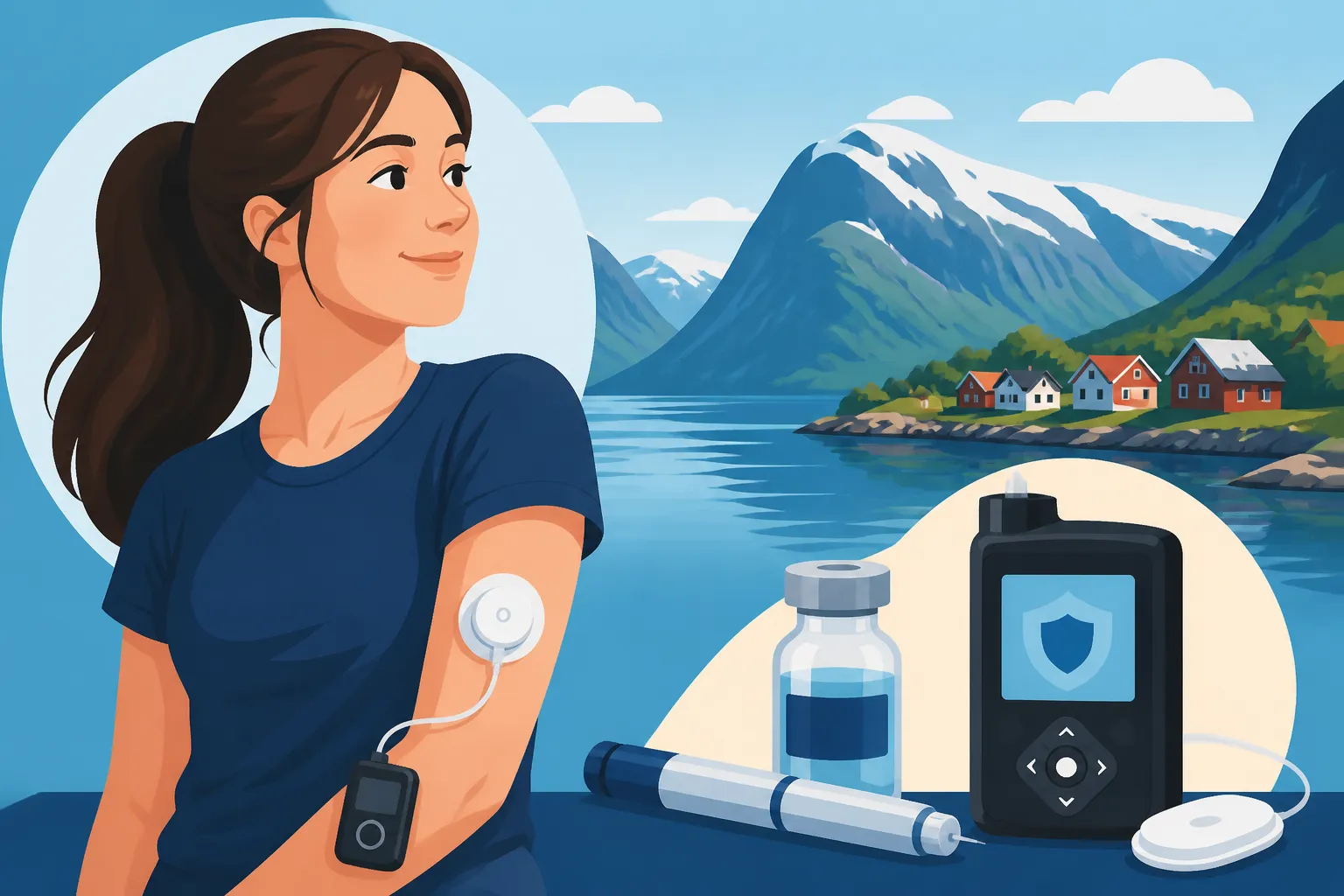
This is where the Norwegian system differs from many others. In Norway, insulin pumps and CGMs (sensors) are not considered "prescriptions" that you pick up at a pharmacy. Instead, they are classified as "medical aids" (Behandlingshjelpemidler). They are owned by the hospital trust, and you "borrow" them for free. You do not pay a single krone for your Dexcom sensors or your Omnipod pods, provided you are under the care of a hospital specialist.
To get into this system, your Fastlege must send a referral to the endocrinology department of your local hospital. Be prepared for a wait. Understanding Specialist Referrals in Norway: How the Waiting Times Work will help manage your expectations. In the major cities, the wait can be several months. Once you are "in," the hospital will set you up with a delivery service—usually through a company like Mediq or directly from the hospital pharmacy—that ships your supplies to your door or a local pickup point every three months.
The technology available in Norway is world-class. The standard offerings include:
- Sensors: Dexcom G6 and G7, FreeStyle Libre 2 and 3, and Medtronic Guardian.
- Pumps: Omnipod 5, Tandem t:slim X2 (with Control-IQ), and Medtronic 780G.
- DIY Looping: While not officially "supported" by the hospitals, the Norwegian diabetes community is very active in the DIY space, and many doctors are familiar with it, though they cannot officially prescribe the hardware for it.
If you are a temporary resident or a digital nomad, you might not qualify for the "medical aids" program immediately. This is another scenario where SafetyWing can be useful for covering unexpected complications, though they, like most travel-focused insurers, generally do not cover the routine costs of expensive pump supplies. For long-term expats who want the security of knowing they can access the latest tech without waiting for the Norwegian "tender" (the process where the government decides which brands to buy for the next few years), Cigna Global offers international plans that can sometimes bridge these gaps.
Understanding Costs and the Healthcare Exemption Card
One of the best parts of living in Norway with Type 1 Diabetes is the financial predictability. Unlike systems where you might have high deductibles or "donut holes" in coverage, Norway operates on a flat-fee system until you hit your limit. You will pay for your GP visits and your blue prescription insulin until you reach the annual cap.
| Item | Estimated Cost (Pre-Frikort) | Source |
|---|---|---|
| GP Consultation | ~NOK 160 – 250 | Fastlege Office |
| Blue Prescription Insulin | Max NOK 520 per 3-month supply | Pharmacy |
| Insulin Pump & Sensors | NOK 0 | Hospital (Behandlingshjelpemidler) |
| Blood Glucose Meter Strips | Subsidized on Blue Prescription | Pharmacy |
| Specialist Appointment | ~NOK 350 – 400 | Hospital Outpatient |
Once you have spent roughly NOK 3,100 (the 2026 limit), you will automatically be issued a frikort. From that moment on, all your insulin, doctor's visits, and specialist consultations are free for the remainder of the calendar year. You should keep an eye on your status; you can learn How to Check Your Frikort Status on the Helsenorge App to see how close you are to the limit.
It is important to note that if you choose to use a brand of insulin that is not on the government’s preferred list, you may be required to pay the price difference or use White Prescriptions (Hvit Resept): Paying Out-of-Pocket for Medicine. Your doctor usually has to provide a medical justification (like a severe allergy to a specific preservative) to get a non-standard brand covered under the blue prescription scheme.
Practical Daily Life and Pharmacy Logistics
Managing your supplies in Norway is highly digitized. Most prescriptions are "e-resept" (electronic prescriptions). When your doctor renews your insulin, it simply "appears" in a national database. You can walk into any pharmacy—Vitusapotek, Apotek 1, or Boot’s—show your ID, and they will pull up your active prescriptions. Knowing Pharmacies and Prescriptions in Norway: White vs Blue Slips is vital for knowing what to ask for at the counter.
If you run out of a prescription, you don't necessarily need to call the doctor's office and wait on hold. Most people use the Helsenorge app. This app is the central hub for your health life in Norway. I highly recommend Navigating the Helsenorge App in English: A Step-by-Step Translation because the English version can sometimes be limited, and you will need to navigate the "Renew Prescription" (Forny resept) section frequently.
For those who travel frequently or spend winters in warmer climates (a popular choice for expats!), remember that your Blue Prescription is generally only valid in Norway. If you are traveling within Europe, make sure you have your EHIC and GHIC in Norway: Using European Health Insurance card. This allows you to access emergency care in the EU at local rates, but it won't necessarily cover a three-month stash of insulin to take to Spain.
Finally, consider the environmental factors of Norway. The cold can be brutal on insulin and pump batteries. If you are out hiking in the winter, always keep your pump under your base layer (the "ullundertøy" or wool layers Norwegians love) to keep it warm. If you are a tourist or a new arrival who gets caught in the cold without supplies, check Tourist Medical Care: What Happens if You Get Sick in Norway? for immediate steps.
Managing Work and Diabetes
Norway has some of the strongest worker protections in the world, which is a huge relief for those with chronic illnesses. If you have a bad night with low blood sugar and cannot make it to work, you can use an "egenmelding" (self-certification of illness). This allows you to stay home for up to three days without a doctor's note in most companies. If you need longer, your Fastlege can issue a "sykemelding" (sick note).
Most Norwegian employers are very understanding of the need for medical appointments. It is common to leave for an hour or two for a hospital checkup without being penalized. You are also entitled to a safe working environment, which includes the right to take breaks to test your sugar or treat a low. The culture of "Friluftsliv" (outdoor life) also means many of your colleagues will be active; don't be surprised if your endocrinologist encourages you to take up cross-country skiing as part of your management plan!
If you are here on a specific visa, like a skilled worker permit, your right to healthcare is tied to your legal residency. If you are between jobs, you should check Navigating Health Insurance for Unemployed Expats in Norway to ensure your diabetes care remains subsidized during your transition. Companies like Cigna Global can also offer peace of mind during these professional shifts by ensuring your coverage isn't strictly tied to a single employer's local plan.
Medical Disclaimer
The information provided in this article is for informational purposes only and does not constitute medical advice, diagnosis, or treatment. Healthcare regulations in Norway, including the "frikort" limits and available medical technologies, are subject to change. Always consult with a qualified healthcare professional in Norway, such as a Fastlege or a hospital specialist, regarding your specific medical condition and treatment plan. Neither the author nor this website is responsible for any actions taken based on the contents of this guide.