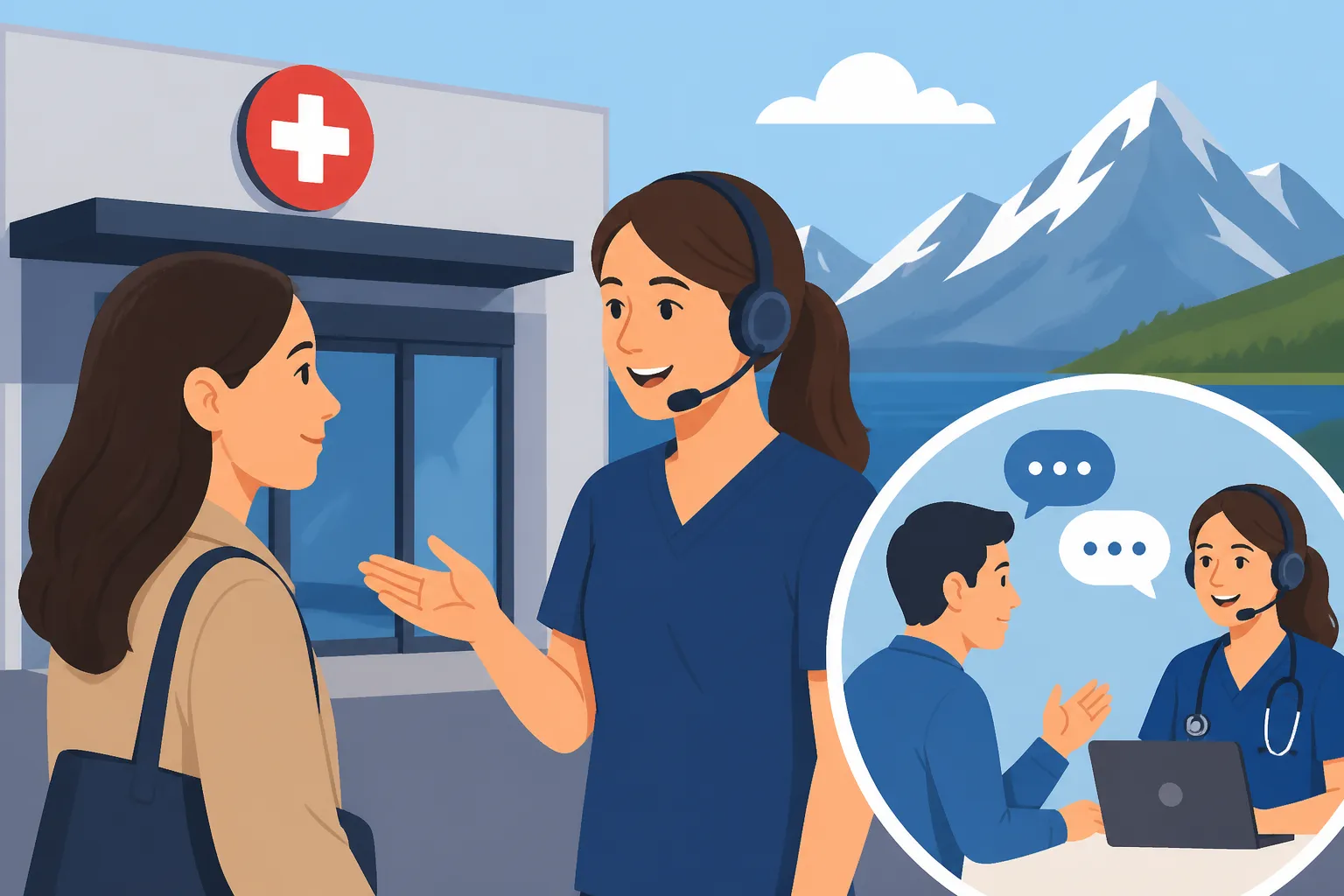
English Language Support at Legevakten: What to Expect
Waking up at 3:00 AM with a spiking fever or a suspicious injury is terrifying when you are thousands of miles from home. I remember my first midnight dash to the local clinic in Oslo, clutching my throat and frantically trying to Google the Norwegian translation for "strep throat" while shivering in the dark. This guide solves the mystery of what happens when you need urgent care and whether you can actually communicate your pain in English at the Legevakten.
Understanding Legevakten: The Gateway to Urgent Care in Norway
The Norwegian healthcare system is highly organized, but for a newcomer, it can feel like a labyrinth. The Legevakten is the "out-of-hours" municipal emergency clinic. It is designed to handle injuries and illnesses that occur outside the normal operating hours of your primary doctor and cannot wait until the next morning. It is not the same as a hospital emergency room for life-threatening traumas, but rather a bridge between your GP and the hospital.
One of the most common anxieties for expats is the language barrier. You might be able to order a kaffe latte in Norsk, but explaining the nuances of an internal ache is a different story. The good news is that Norway consistently ranks as one of the top countries in the world for English proficiency as a second language. Almost every medical professional you encounter will have a high level of English, though the administrative process still follows Norwegian protocols.
The 116 117 Number: Your First Step
Before you even put on your boots, you are expected to call the national out-of-hours number: 116 117. This connects you to the nearest Legevakten based on your GPS location. I’ve found that even on the phone, the operators are incredibly patient. When you call, simply state, "I am an English speaker, can we speak English?" and they will almost always switch immediately.
The operator will perform a "telephone triage." They will ask about your symptoms to determine if you need to come in immediately, if you can wait until morning for The Fastlege Scheme: Navigating Norway’s GP System, or if they should send an ambulance. If your situation is critical, they will bypass the clinic and direct you toward Calling 113: Ambulance Services and Life-Threatening Emergencies.
Triage and Priority Levels
Once you arrive at the Legevakten, you don't just see a doctor in the order you arrived. Norway uses a color-coded triage system (usually based on the Manchester Triage Scale). If you arrive with a broken wrist but someone else comes in with difficulty breathing, they will go first. This is where Emergency Room Waiting Times: Triage Rules at Norwegian Hospitals becomes a reality.
Staff will assess you quickly upon arrival. In my experience, the triage nurses are the ones who might be the most "efficient" (read: blunt), but they are highly trained to spot red flags. If your English is shaky due to pain or stress, don't worry—they are used to seeing people at their worst.
Language Support and Communication Expectations
The standard of English among Norwegian doctors is exceptionally high. Most medical textbooks used in Norwegian universities are in English, and many doctors have studied or practiced abroad. You can expect a high level of nuance in your conversation with the physician. However, the supporting staff—receptionists or security—might have varying levels of fluency depending on the city.
In larger hubs like Oslo or Bergen, finding English-Speaking Doctors and Specialists in Oslo is the norm. In more remote areas, the English might be slightly more functional than fluent, but it is rarely a barrier to receiving safe care.
When You Need a Professional Interpreter
If your English is not your first language, or if you are helping a family member who speaks neither English nor Norwegian, you have a legal right to a medical interpreter. This is a free service provided by the Norwegian state for medical consultations. You should mention the need for an interpreter when you call 116 117 so they can attempt to book a digital or telephonic interpreter in advance.
Relying on a family member to translate is actually discouraged by many clinics because medical terminology is specific and sensitive. Using a professional ensures that nothing is lost in translation, especially when discussing complex histories or medications. This is part of the broader Medical Interpreters in Norway: How to Request One for Free framework designed to ensure patient safety.
Communicating Symptoms Effectively
Even with fluent doctors, being prepared helps. Write down a timeline of your symptoms before you arrive. Use simple descriptors: "stabbing pain," "dull ache," "constant," or "intermittent." If you are using a travel insurance policy like SafetyWing, keep your digital ID card ready on your phone. SafetyWing is particularly popular among the digital nomad crowd in Norway because it handles these unexpected "urgent but not life-threatening" visits quite well without the need for a Norwegian birth number.
Documentation and the "Paperwork" Reality
When you walk through those sliding doors, the first thing they will ask for is your ID. For most expats, this means your residence card or your passport. If you have a D-number or a Fødselsnummer, the system will pull up your records instantly. If you are a tourist or a new arrival without a social security number, the check-in process takes a few minutes longer.
Insurance and Payment at Legevakten
Norway's healthcare is not "free" at the point of service for adults; it is subsidized. You will be expected to pay a user fee (egenandel). If you are a member of the National Insurance Scheme, this fee counts toward your annual limit for the Healthcare Budgeting: The Frikort Exemption Card and User Fees.
If you are not yet a member of the local system, you may be asked to pay the full cost upfront. This is where having comprehensive coverage like Cigna Global is a lifesaver. Cigna Global is often the go-to for corporate expats who want a higher level of service and the ability to reclaim costs that fall outside the standard public subsidies. At the Legevakten, they will provide you with a detailed receipt in Norwegian, which you can then submit to your insurance provider.
Managing Expectations as a Foreigner
One thing that surprises many expats is the "wait and see" approach often taken by Norwegian doctors. In many cultures, you expect a prescription for every visit. In Norway, if you have a viral infection, the doctor will likely tell you to go home, take paracetamol, and drink water. This isn't because they aren't taking you seriously; it's a core philosophy of avoiding over-medication.
| Service Type | Recommended Contact | Expected English Level | Purpose |
|---|---|---|---|
| Emergency | Call 113 | Very High | Life-threatening situations, accidents. |
| Urgent Care | Call 116 117 | High | Sickness/injury that cannot wait for a GP. |
| GP (Fastlege) | Book via Helsenorge | High | Chronic issues, referrals, non-urgent care. |
| Pharmacy | Visit in-person | High | Medication, minor health advice, OTC drugs. |
What Happens After the Visit?
The Legevakten is not designed for follow-up care. Once the immediate crisis is managed, their job is done. They will send a summary of your visit to your registered GP (Fastlege) electronically. If you don't have a GP yet, you should ask for a printed copy of your medical notes (epikrise) before you leave.
Prescriptions and Medications
If the doctor prescribes medication, it will be an "e-resept" (electronic prescription). You can pick this up at any pharmacy (Apotek) in Norway by showing your ID. If you are confused about how to take your medicine, pharmacies are excellent resources. You can learn more about the difference between subsidized and out-of-pocket medications in our guide on Pharmacies and Prescriptions in Norway: White vs Blue Slips.
If you are a tourist or on a short-term visa, ensure the doctor knows you might not be in the national database. They can issue a "paper" prescription (which is still printed, but not tied to a Norwegian ID number) that you can carry to the pharmacy.
Navigating the Financial Side of Urgent Care
Don't let the fear of a massive bill keep you from the Legevakten. Compared to the US or even parts of the UK, the costs are relatively transparent. If you have your EHIC and GHIC in Norway: Using European Health Insurance card as an EU citizen, you will only pay the subsidized rate. For others, the "tourist rate" is higher but still regulated.
Keep in mind that the User Fees (Egenandel) for Doctor Visits Before Reaching Frikort Status only apply to those who are members of the Folketrygden. If you are using Cigna Global or SafetyWing, you are essentially a private patient in a public system, and you will likely pay at the reception desk via debit or credit card before or after your consultation.
Practical Tips for Your Legevakten Visit
- Call First: Never just "show up" unless it is a physical trauma like a deep cut or a broken bone. Calling 116 117 saves you hours of waiting in a plastic chair.
- Bring Your Passport: Even if you have a residence card, sometimes the system needs your passport details to create a temporary "emergency ID" for billing.
- Charge Your Phone: You might be there for a while. Triage means the "least sick" wait the longest.
- Download Helsenorge: If you have BankID, the Helsenorge app is where your prescriptions and lab results will appear. It’s mostly in Norwegian, but you can use our guide on Navigating the Helsenorge App in English: A Step-by-Step Translation to help you move through the menus.
- Be Honest About Pain: Norwegians can be stoic. If you are in significant pain, don't downplay it. Use a scale of 1 to 10.
Living in Norway is an adventure, but the health system has its own rhythm. The doctors are highly skilled, the English support is top-tier, and the care is evidence-based. Whether you are covered by Private Health Insurance in Norway: Is It Worth the Extra Cost? or strictly relying on the public system, you will be looked after. The most important thing is to stay calm, speak clearly, and remember that every person in that building is there to help you get back on your feet.
Disclaimer
This article is for informational purposes only and does not constitute professional medical or legal advice. While every effort is made to ensure the information is accurate as of 2026, healthcare regulations in Norway can change. Always consult with a qualified healthcare provider or the official UDI/Helsenorge websites for specific medical or immigration concerns. In a life-threatening emergency, always dial 113 immediately.