STD Testing in Norway: Anonymous and Free Clinics for Expats
Navigating sexual health services in a new country can feel incredibly vulnerable, especially when you are still figuring out how to pronounce the street names or how the medical system handles your private data. I remember standing outside a clinic in Oslo years ago, clutching my temporary ID paper and wondering if I’d have to pay a fortune just for a routine check-up. This guide solves that uncertainty by detailing exactly where to find free, anonymous STD testing in Norway and how to navigate the process as an expat.
The Reality of Sexual Health Services in Norway
Norway takes a very proactive, "public health first" approach to sexual health. Unlike many other countries where you might face steep laboratory fees or awkward questioning at a general practitioner's office, the Norwegian system is designed to remove as many barriers as possible. This is particularly true for what the government classifies as "allmennfarlige smittsomme sykdommer" (diseases dangerous to the public health), which includes Chlamydia, Gonorrhea, Syphilis, and HIV.
For these specific conditions, testing and treatment are legally mandated to be free for everyone residing in the country, regardless of your insurance status or whether you have a permanent residence permit yet. This even applies to those who are still waiting for their National Insurance status to be finalized. If you are worried about your coverage during this transitional period, it is worth looking into Folketrygden Basics: Who is Covered by the National Insurance Scheme to understand where you stand. While the public system is robust, many expats also carry supplemental coverage from providers like Cigna Global to ensure they have access to private specialists if the public waiting times for non-urgent matters become an issue.
The "no-shame" culture in Norway is something you will notice immediately. Health professionals here are generally very direct and non-judgmental. They view STD testing as a routine part of adult maintenance, much like a dental check-up. You won't find the same level of social stigma in a Norwegian clinic that you might encounter elsewhere, which makes the process of Finding English-Speaking Doctors and Specialists in Oslo or other major cities much less stressful.
Where to Get Tested: Key Clinics and Facilities
Depending on where you live and your age, you have several options for testing. Norway utilizes "low-threshold" (lavterskel) services, which means they are designed for easy access without a prior referral.
Olafiaklinikken in Oslo
If you are in the capital, Olafiaklinikken is the gold standard for sexual health. Located in the city center (Grensen 13), it is a specialized clinic for sexually transmitted infections. They offer both walk-in services and pre-booked appointments. For expats, this is often the most comfortable choice because the staff is highly accustomed to dealing with international patients and the complexities of different ID numbers.
They provide testing, treatment, and counseling. If you are concerned about your privacy, they are very professional about data handling. Even if you are still using a D-number, you can receive care here. For more on how ID numbers impact your medical journey, see Healthcare Rights for D-Number Holders: Exclusions and Alternatives.
Sex og Samfunn
Located at Trondheimsveien 2 in Oslo, Sex og Samfunn is Norway’s largest center for sexual and reproductive health and rights. While they primarily focus on young adults (usually up to age 25 or 30 depending on the service), they are an incredible resource for contraception and testing. Their atmosphere is modern, welcoming, and very expat-friendly.
Local Municipal Clinics (Helsestasjon for Ungdom)
In almost every municipality (kommune), there is a Helsestasjon for ungdom (Health clinic for youth). These are typically free for anyone under 20 or 25. If you are an international student, this will be your primary resource. If you are older, you will likely be directed to your GP or a specialist clinic like Olafiaklinikken.
Your Fastlege (General Practitioner)
Once you are registered in the National Registry, you will be assigned a The Fastlege Scheme: Navigating Norway’s GP System. Your GP can perform all standard STD tests. The consultation itself might involve a small co-payment (egenandel) unless you have reached your Healthcare Budgeting: The Frikort Exemption Card and User Fees limit, but the laboratory analysis for the STDs mentioned earlier remains free.
| Facility Type | Best For | Cost | Appointment Needed? |
|---|---|---|---|
| Olafiaklinikken | All adults in Oslo | Free (for most tests) | Walk-in or Booked |
| Sex og Samfunn | Young adults/Contraception | Free/Low cost | Yes |
| Fastlege (GP) | Routine checks/Long-term care | Small co-pay for visit | Yes |
| Dr.Dropin (Private) | Speed and convenience | Fixed price (approx. 600-1200 NOK) | Yes |
| Legevakten | Acute symptoms/Emergency | Co-pay applies | Walk-in |
The Testing Process: What to Expect
When you arrive at a clinic like Olafiaklinikken, you will usually start by filling out a digital or paper form. This form asks about the reason for your visit and which tests you require.
Anonymous Testing and Privacy
In Norway, "anonymous" testing has a specific legal definition. While you can often request to be tested without using your full name in certain outreach programs (like those for HIV), most clinical testing requires a national ID number (Fødselsnummer or D-number) to ensure that results are correctly attributed and that you can be contacted for treatment.
However, the privacy protections are immense. Your employer has no right to see these records, and they are not shared with the UDI (Immigration) during residence permit renewals. If you are worried about the digital trail, you can learn Navigating the Helsenorge App in English: A Step-by-Step Translation to see how your records are stored and who has access to them.
Sample Collection
For most people, the testing involves:
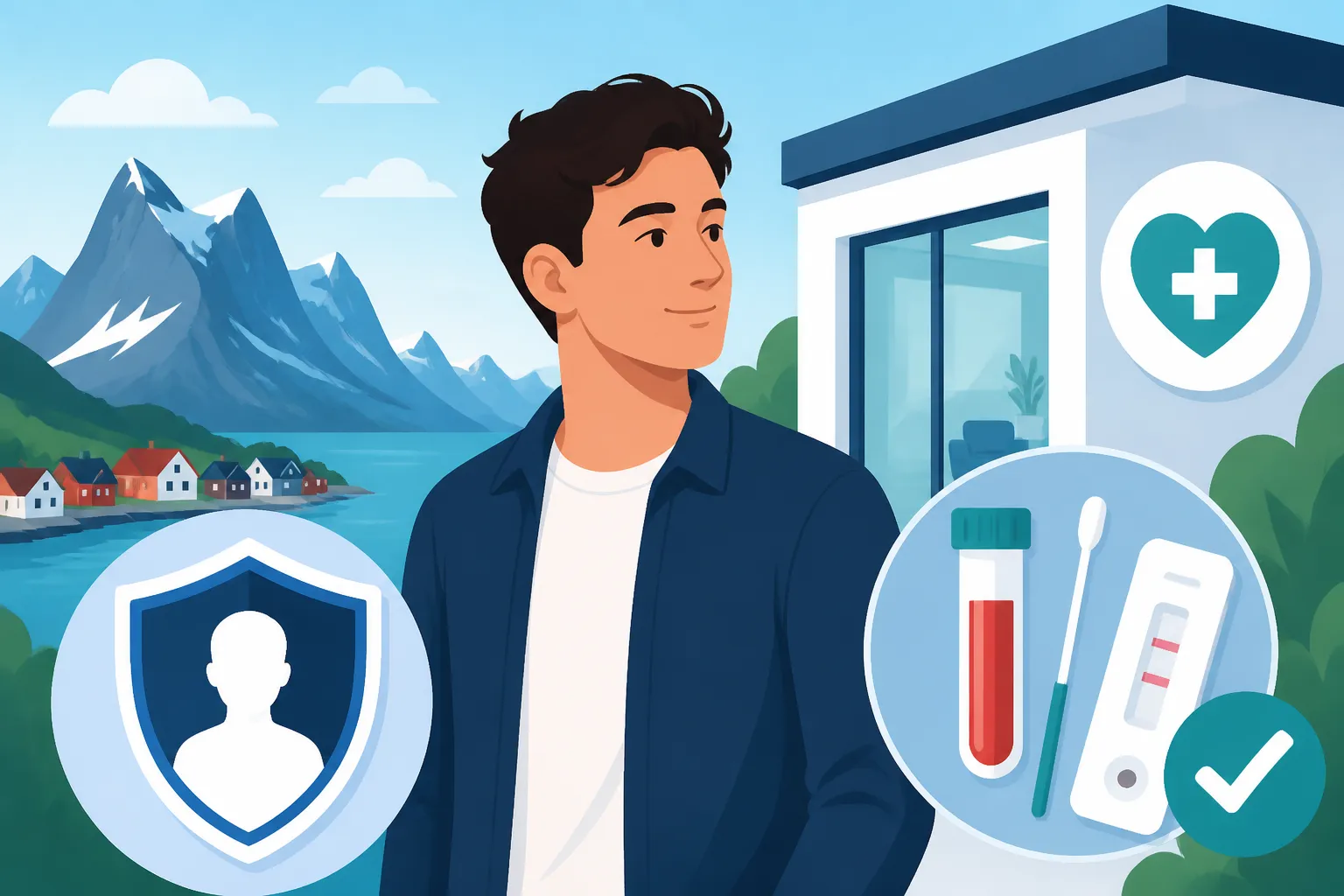
- A Urine Sample: Used primarily for Chlamydia and Gonorrhea. You should not have urinated for at least one hour before the test for the most accurate results.
- Self-Swabs: In many Norwegian clinics, you will be given a kit to perform your own swabs (vaginal, rectal, or throat) in a private bathroom. This is much less invasive than the traditional pelvic exam.
- Blood Tests: Required for HIV, Syphilis, and Hepatitis. These are usually done by a nurse in the clinic.
If you are traveling frequently or are a digital nomad not yet fully integrated into the Norwegian public system, having a plan like SafetyWing can be helpful for general emergencies, though for specific STD testing, the local public clinics remain the most direct route for everyone.
Receiving Results and Treatment
The waiting time for results is typically one week. In Norway, the "no news is good news" rule often applies, but most clinics are moving toward digital notification.
Digital Notifications via Helsenorge
If you have BankID, you can log in to the Helsenorge portal to see your results. If you don't have BankID yet, the clinic will usually agree to call you or have you call them at a specific time. If a test comes back positive, the clinic will contact you immediately to arrange for treatment.
Free Medication
If you test positive for Chlamydia or Gonorrhea, the medication is free. You will be given a "Blue Prescription" or the medication will be dispensed directly at the clinic. This is a significant relief for expats who might be used to high pharmacy costs. For a deeper look at how this works, read Pharmacies and Prescriptions in Norway: White vs Blue Slips.
Partner Notification (Smitteoppsporing)
In Norway, if you test positive for a "public health" disease, you are legally obligated to help with partner notification. This doesn't mean you have to call your exes yourself if you are uncomfortable doing so. The clinic can handle this anonymously. They will contact your previous partners and inform them that they have been exposed to an infection and need to get tested, without ever mentioning your name. This is a very efficient system that keeps the community safe while protecting your identity.
Common Challenges for Expats
While the system is excellent, there are a few hurdles many newcomers face. The biggest is the BankID Explained: Norway's Digital Identity System and Expat Challenges. Without BankID, you cannot easily book appointments online at many clinics or view your results on the Helsenorge app.
If you find yourself in this position:
- Call the clinic directly: Do not rely on web portals. Norwegian healthcare secretaries speak excellent English and can manually book you in.
- Ask for a "paper" solution: Request that your results be sent via secure mail or that you can pick them up in person with a physical ID (Passport or European ID card).
- Use Walk-in hours: Olafiaklinikken has specific hours where you can just show up, take a number, and wait.
Another frustration is the waiting time at public clinics in major cities. On a busy Monday morning, the wait at a walk-in clinic can be several hours. If you are in a rush and don't mind paying, private clinics like Dr.Dropin offer STD packages for around 1,100 NOK. These are often used by those who have private insurance like Cigna Global or those who simply value the convenience of a 5-minute wait time. You can compare these paths in our guide on Public vs Private Healthcare in Norway: A Complete Guide.
Summary of Costs and Rights
It is vital to remember that you have rights as a patient in Norway. If you feel you are being charged for a test that should be free, or if you are being denied service because you only have a D-number, you can refer to Patient Rights: How to File a Complaint with the Health Authority.
To recap the financial side of things:
- Testing for Chlamydia/Gonorrhea/HIV/Syphilis: Free in the public sector.
- Treatment for the above: Free.
- Testing for Herpes or HPV (without symptoms): Often requires a co-pay or may not be offered for free as a "screening."
- Consultation fee at GP: Around 160-300 NOK (unless you have a Frikort).
- Consultation at Olafiaklinikken: Free.
If you are a tourist or a short-term visitor, the rules change slightly. You can read more about that at Tourist Medical Care: What Happens if You Get Sick in Norway?. Even for tourists, the public health mandate usually means they want to test and treat you for free to prevent local spread, though they may ask for insurance details from providers like SafetyWing to cover the administrative overhead.
Final Advice for the Brave Expat
Don't let the fear of a new system keep you from taking care of your health. The Norwegian medical staff have seen it all and their goal is to get you in, tested, and out with as little fuss as possible. If you are living in a smaller city like Stavanger or Tromsø, the process is very similar, though you will rely more on your GP or the municipal Helsestasjon. You can find more local details in our guides for Healthcare in Stavanger: Expat Guide to Rogaland Medical Facilities or Healthcare in Tromsø: Medical Access in Northern Norway.
The first time is always the hardest, but once you’ve navigated the clinic and seen how professional and efficient the process is, it becomes just another part of your life in the Nordics. Stay safe, be proactive, and remember that the system is designed to support you, not judge you.
Disclaimer
This article is for informational purposes only and does not constitute professional medical advice, diagnosis, or treatment. Always seek the advice of your physician or other qualified health provider with any questions you may have regarding a medical condition. Healthcare regulations and costs in Norway are subject to change; please consult Helsenorge or your local clinic for the most current information.