Can I See a Private Specialist Without a Fastlege Referral?
Waiting months to see a specialist through the public system can feel like hitting a brick wall when you are in pain or anxious. I remember sitting in my living room in Oslo, clutching a referral for a dermatologist, only to be told the wait was sixteen weeks—I was absolutely devastated. This guide explains how to bypass that wait and see a private specialist in Norway without a GP referral.
Understanding the Fastlege Bottleneck and Why Private is an Option
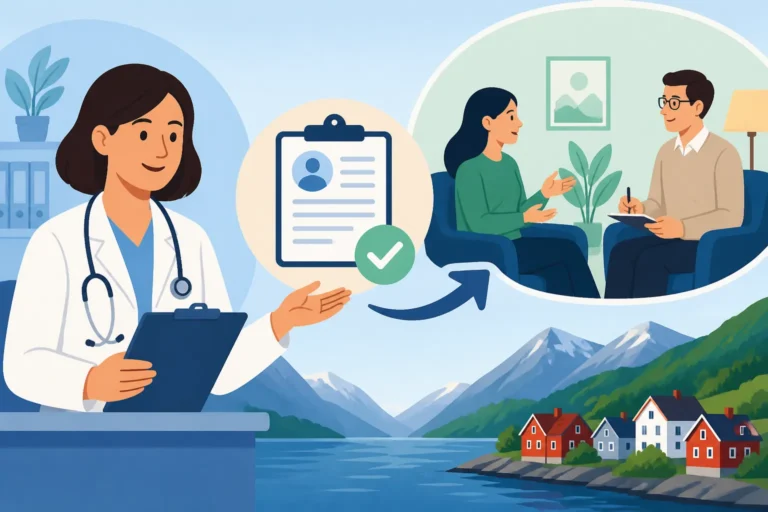
In Norway, the healthcare system is designed around a gatekeeper model. This means your primary point of contact is almost always your GP, or Fastlege. Under The Fastlege Scheme: Navigating Norway’s GP System, you generally need a "henvisning" (referral) to access any secondary care, such as an orthopedist, cardiologist, or dermatologist. If you go through this public route, your costs are capped, but the trade-off is often a significant waiting period.
However, many expats don't realize that Norway has a thriving private medical sector. You can, quite literally, pick up the phone or go online and book an appointment with a specialist today, provided you are willing to pay the full market rate. You do not need a referral from your Fastlege to see a private specialist at clinics like Volvat, Aleris, or Dr.Dropin. This is a common point of confusion for newcomers who are used to the strict public-only narrative.
When you use the public system, your specialist visit counts toward your annual out-of-pocket limit. Once you hit that limit, you receive a "frikort," and further treatments are free for the rest of the year. When you see a private specialist without a referral, none of those costs count toward your frikort. You are effectively stepping outside the national insurance umbrella for that specific service. This is a crucial distinction to make when Public vs Private Healthcare in Norway: A Complete Guide becomes relevant to your personal situation.
The Mechanics of Booking a Private Specialist Without a Referral
The process of seeing a private specialist is surprisingly simple compared to the administrative hurdles of the public system. Most major private clinics have streamlined websites where you can book an appointment in English. You simply select the specialty you need, find an available time slot—often within 24 to 48 hours—and confirm your booking. You will be asked for your fødselsnummer (National ID number), but many private clinics also accommodate those who only have a D-number or even just a passport for temporary visitors.
If you are a digital nomad or currently between residence permits, you might find that Healthcare Rights for D-Number Holders: Exclusions and Alternatives are somewhat limited in the public sphere. In these cases, private specialists are often the only viable way to receive non-emergency care without a long wait. Companies like SafetyWing are particularly popular among the nomad community in Norway because they provide the kind of coverage that can help mitigate the high costs of these private bookings.
There are three main ways to access these specialists:
- Major Private Hospitals: Chains like Aleris and Volvat have specialists in nearly every field, from urology to neurosurgery. They operate like full-service hospitals but are entirely private.
- Compact Private Clinics: Providers like Dr.Dropin have popularized a model of affordable, transparently priced specialist care. While they started with GPs, they now offer specialists in skin, gynecology, and pediatrics.
- Digital-First Providers: Using Private Video Consultations (Kry, Dr.Dropin) in Norway is an excellent way to get an initial specialist opinion or a private prescription without leaving your house. While some physical exams require an in-person visit, many psychiatric or dermatological consultations can happen via your smartphone.
Specialist Waiting Times and the Decision to Go Private
The primary reason anyone in Norway goes private is time. The public waiting lists are managed through a system where "medical necessity" determines your place in line. If your condition is not life-threatening, you might be waiting months for a consultation. You can check Specialist Referrals in Norway: How the Waiting Times Work to see the current estimates, but be prepared for some sobering numbers.
For example, a routine investigation for a non-acute digestive issue could take three to five months in the public sector in Oslo or Bergen. A private gastroenterologist, however, can usually see you within a week. For expats used to faster systems, the psychological relief of getting an answer quickly is often worth the financial cost.
| Specialist Type | Estimated Public Wait | Estimated Private Wait | Public Cost (Approx) | Private Cost (Approx) |
|---|---|---|---|---|
| Dermatologist | 12-20 Weeks | 1-3 Days | 380 NOK | 1,400 – 2,200 NOK |
| Gynecologist | 8-16 Weeks | 2-5 Days | 380 NOK | 1,200 – 1,800 NOK |
| Orthopedist | 10-24 Weeks | 2-7 Days | 380 NOK | 1,600 – 2,500 NOK |
| Psychologist | 12-26 Weeks | 1-7 Days | 380 NOK | 1,300 – 2,000 NOK |
| Cardiologist | 6-12 Weeks | 3-7 Days | 380 NOK | 2,000 – 3,500 NOK |
Note that the "Public Cost" listed above refers to the "egenandel" or user fee. Once you have reached your annual limit for User Fees (Egenandel) for Doctor Visits Before Reaching Frikort Status, that public cost drops to zero. In contrast, the private cost remains high regardless of your status in the national insurance scheme.
Weighing the Costs: Out-of-Pocket vs. Insurance Coverage
If you decide to skip the Fastlege and head straight to a private clinic, you need to be prepared for the bill. A single consultation usually starts around 1,200 NOK and can easily climb to 4,000 NOK if diagnostic tests like MRIs, ultrasounds, or blood work are required. This is where Healthcare Budgeting: The Frikort Exemption Card and User Fees becomes a vital part of your financial planning in Norway.
Many expats choose to maintain private health insurance specifically to cover these specialist gaps. If you have a policy through Cigna Global, you can often bypass the public system entirely. These international policies are designed for people who want a higher level of comfort and speed, allowing you to book directly with top-tier private specialists and then claim the costs back. Cigna Global is frequently cited by high-earning expats in Norway because it provides a seamless experience that feels more like the healthcare systems in the US or UK.
If you don't have private insurance, you are paying out-of-pocket. For a one-off issue, like a suspicious mole or a recurring sports injury, the 2,000 NOK investment might be manageable. However, for chronic conditions requiring multiple follow-ups, the costs can become prohibitive. In those cases, it is often better to use a private specialist for the initial diagnosis and then have them send their findings to your Fastlege. Your GP can then use that private specialist's report to "fast-track" a referral into the public system, though this doesn't always guarantee a shorter wait.
Specialized Care: Women's Health and Mental Health
Two areas where the private route is exceptionally common are gynecology and mental health. For women's health, many prefer the continuity of seeing the same specialist every time, which is easier to achieve in the private sector. If you are looking for routine screenings or specific advice on Women’s Health in Norway: Contraception, Smear Tests, and Gynecology, booking directly with a private gynecologist at a clinic like MamaStork or Volvat avoids the need to explain your history to a new GP first.
Mental health is another area where the public system is notoriously overstretched. Accessing Psychologists with Public Funding vs Private Practice reveals a stark reality: unless you are in an acute crisis, the waiting times for a public psychologist can be upwards of six months. Many expats find the "Direct-to-Specialist" private route for therapy essential for their well-being, especially during the dark Norwegian winters when seasonal issues can peak. SafetyWing often provides options that include some level of mental health support, which can be a lifesaver for those working remotely or on short-term contracts.
It is also worth noting that private specialists in Norway are almost universally fluent in English. While public doctors are too, the private sector places a heavy emphasis on "service," meaning you will often find more time allocated to your appointment. In the public system, a specialist appointment is often strictly 15 to 20 minutes; in a private clinic, you can often book double slots if you feel you need more time to discuss complex issues.
Practical Steps to Take Right Now
If you are currently waiting for a referral and the pain or anxiety is becoming too much, you do not have to just sit there and take it. Here is the veteran expat's "cheat sheet" for taking control:
First, check your insurance. If you are employed by a large multinational in Norway, you might already have "behandlingsforsikring" (treatment insurance) as a perk. Many Norwegians have this through their work and don't even realize it. If you have it, you can call the insurance provider, and they will book a private specialist for you, often within days.
Second, if you are paying yourself, look for a specialist in a slightly smaller city. If you live in Oslo and the private wait for a specific cardiologist at Aleris is two weeks, check the Aleris branch in Lillestrøm or Drammen. A 30-minute train ride can sometimes save you a week of waiting.
Third, ensure you get a copy of your journal (medical records) after the private visit. Since the private and public systems don't always "talk" to each other perfectly, you need to be the bridge. Take those records back to your Fastlege so they can update your main medical file.
Lastly, don't feel guilty about "jumping the queue." The private system exists for a reason, and by using it, you are actually taking pressure off the public waiting lists for those who cannot afford to pay. Whether you are using SafetyWing for a temporary stay or Cigna Global for a permanent move, having a plan to access private specialists will make your life in Norway significantly less stressful.
Disclaimer
This guide is for informational purposes only and does not constitute professional medical or legal advice. Healthcare regulations and costs in Norway are subject to change, and you should always consult with a qualified medical professional or the Norwegian Health Economics Administration (Helfo) regarding your specific circumstances.