Medical Tourism vs Expat Healthcare: What Helfo Will Not Cover
You move to Norway expecting the legendary social safety net to catch every sneeze and scrape, only to realize a single dental crown costs more than a weekend trip to Rome. I have personally stood at a pharmacy in Oslo, staring at a bill for basic allergy medication that Helfo simply wouldn't touch, wondering where the free healthcare was. This guide breaks down the harsh reality of what Helfo will not cover, distinguishing between essential expat care and the risks of seeking medical treatment abroad.
The Limits of the National Insurance Scheme
Many newcomers arrive with the misconception that once they are registered in the Folketrygden Basics: Who is Covered by the National Insurance Scheme system, their medical expenses vanish. In reality, the Norwegian system is designed to cover medically necessary treatments while requiring residents to share the cost through user fees, known as egenandel. These fees apply to GP visits, specialist consultations, and even some diagnostic tests.
The system is built on a foundation of "medical necessity" as defined by the Norwegian Directorate of Health. If a procedure is deemed elective or purely for the improvement of appearance, Helfo—the Norwegian Health Economics Administration—will not provide a single krone of support. I learned this the hard way when trying to get a referral for a minor skin condition that was "bothersome" but not "life-threatening." The GP politely explained that while they could refer me, the public wait times would be infinite because my case wasn't a priority.
Furthermore, coverage is strictly tied to your residency status and the type of identification number you hold. If you are still waiting for your permanent ID, you might find yourself in a coverage gap. For those in this transition period, or those who simply want to avoid the public system's bureaucracy, specialized providers like Cigna Global offer plans that cover the gaps Helfo leaves behind, ensuring you aren't stuck with a massive bill while your paperwork is being processed.
Medical Tourism vs Necessary Expat Care
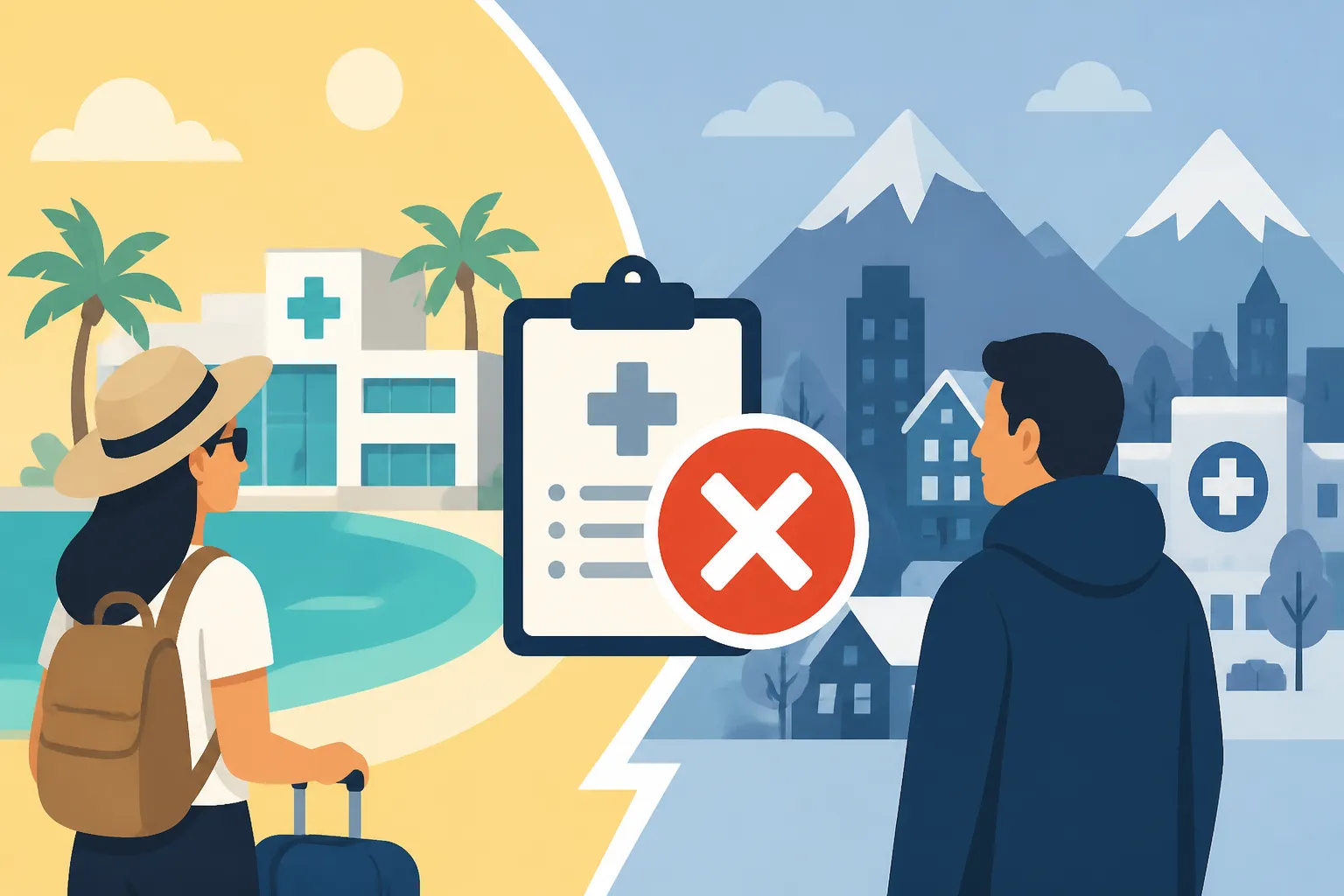
In the context of Norway, "medical tourism" usually works in reverse. It is rarely people coming to Norway for cheap surgery; instead, it is expats living here who fly to Poland, Hungary, or their home countries for faster or cheaper treatment. While this can save you money upfront, it creates a massive legal and financial headache regarding follow-up care.
Helfo generally does not reimburse for planned treatments received abroad unless you have received prior authorization. This authorization is notoriously difficult to get and is usually only granted if the required treatment is not available in Norway or if the Specialist Referrals in Norway: How the Waiting Times Work exceed a legally mandated limit. If you decide to fly to Spain for an elective hip replacement because the wait in Bergen is six months, do not expect Helfo to pay for your flights, the surgery, or even the painkillers you bring back.
If you are a frequent traveler or a digital nomad who hasn't yet fully integrated into the local system, products like SafetyWing can be a lifesaver. They understand the "in-between" nature of expat life, providing a safety net that covers you globally, which is something the local Helfo coverage simply isn't designed to do. Local public coverage is for local problems; once you step outside the EEA for planned care, you are largely on your own.
The Massive Out of Pocket Expense of Dental Care
The most shocking realization for most expats is that Dental Care in Norway: Costs, Subsidies, and Finding a Dentist is almost entirely private for adults. Unless you have a specific rare medical condition or are under the age of 18 (or in some cases, under 26), you are responsible for 100% of your dental costs.
There is no "dental frikort." I remember the sticker shock of my first check-up in Trondheim. A simple cleaning and one X-ray cost nearly 1,500 NOK. If you require a root canal or braces as an adult, the costs can easily spiral into the tens of thousands. Helfo provides very specific subsidies for things like periodontitis or maxillofacial surgery, but for the average expat needing a filling, the public system offers no relief.
| Service Category | Helfo Coverage Status | Typical Out-of-Pocket Cost |
|---|---|---|
| Adult Dental (Routine) | 0% – No Coverage | 1,200 – 2,500 NOK |
| Cosmetic Surgery | 0% – No Coverage | 30,000+ NOK |
| Optical (Glasses/Lenses) | 0% – No Coverage | 2,000 – 8,000 NOK |
| Specialist Referral | 100% after Egenandel | 380 NOK (User Fee) |
| Physiotherapy | Partial (Referral required) | 250 – 500 NOK per session |
| Alternative Medicine | 0% – No Coverage | 800 – 1,500 NOK |
For those used to dental being bundled with general health insurance, Norway feels like a step backward. This is why many expats choose to maintain Private Health Insurance in Norway: Is It Worth the Extra Cost? to cover these specific high-cost areas. Without a private plan or a healthy savings account, a sudden toothache can derail your monthly budget in a single afternoon.
Medications and the White Prescription Trap
Even when your doctor prescribes a medication, you might be surprised to find you have to pay the full price at the pharmacy. In Norway, prescriptions are categorized into "blue" and "white" slips. Understanding Pharmacies and Prescriptions in Norway: White vs Blue Slips is essential for your financial health.
Blue prescriptions (blå resept) are for chronic illnesses where the government covers a significant portion of the cost. Once you reach the Understanding the Frikort: The 2026 Healthcare Exemption Card Limit, these medications become free for the remainder of the calendar year. However, white prescriptions (hvit resept) are a different story. These are typically for short-term illnesses, lifestyle medications, or drugs that the state hasn't deemed "cost-effective" for general subsidy.
Despite having a valid prescription from my GP, the pharmacist informed me it was a "white" slip, and I had to pay 800 NOK. Helfo will not reimburse these costs unless you can prove extreme financial hardship or if the total cost of white-slip medications exceeds a very high annual threshold (around 2,000 NOK, and even then, only 90% of the excess is covered). This is a vital part of Healthcare Budgeting: The Frikort Exemption Card and User Fees that many expats overlook until they are at the checkout counter.
Specialist Care and the Choice of Private Clinics
Norway has a "Patient Choice" (Fritt behandlingsvalg) policy, but this doesn't mean you can go anywhere and send the bill to Helfo. If you choose to see a private specialist without a referral from your GP, you are choosing to bypass the Helfo system entirely.
Many expats get frustrated with the gatekeeper model. You cannot simply book an appointment with a dermatologist or a cardiologist on a whim. You must see your Fastlege first. If you decide to skip the line by using a private clinic like Volvat or Aleris, you must pay the full private rate, which can range from 1,500 to 4,000 NOK for a 20-minute consultation. Helfo will not reimburse these fees because you "opted out" of the public pathway.
Learning How to Use HELFO for Healthcare Refunds After Paying Out of Pocket is important, but it is equally important to know that Helfo only refunds if you followed the rules. If you go private for convenience, you are footing the bill. This is another area where a comprehensive plan from Cigna Global becomes invaluable, as it often covers private specialist visits that the Norwegian state expects you to wait months for in the public queue.
Optical Care and Alternative Medicine
If you wear glasses or contact lenses, prepare to pay. Unlike some other European countries, the Norwegian public system provides virtually no support for adult vision correction. Eye exams are conducted by opticians (not medical doctors, unless there is a disease involved), and the cost of the exam and the hardware is entirely your responsibility.
Similarly, if you are a fan of chiropractic care, acupuncture, or osteopathy, you are largely outside the Helfo umbrella. While there are some very limited subsidies for chiropractors (who are partially integrated into the health system), the amount covered is negligible—often less than 100 NOK per session. Most "alternative" or "supplementary" treatments are viewed as private luxuries rather than medical necessities.
Living as an expat means learning the local "hacks," like buying your glasses online or waiting until you visit home to see an osteopath. Navigating Healthcare in Norway for Expats: How the System Works (2027) requires a shift in mindset: use the public system for the big, scary, expensive things like hospitalizations and chronic care, but have a plan—and the funds—for the "everyday" health needs that Helfo leaves to the individual.
Important Medical Disclaimer
The information provided in this guide is for educational and informational purposes only and is based on the author's personal experience as an expat in Norway and general knowledge of the Norwegian healthcare system as of 2026. This content does not constitute professional medical advice, diagnosis, or treatment. Healthcare laws, Helfo reimbursement rates, and National Insurance regulations are subject to change by the Norwegian government. Always seek the advice of your GP (Fastlege), a qualified healthcare provider, or the official Helfo and UDI portals regarding your specific medical needs and eligibility for coverage. Relying on the information in this article is done at your own risk.