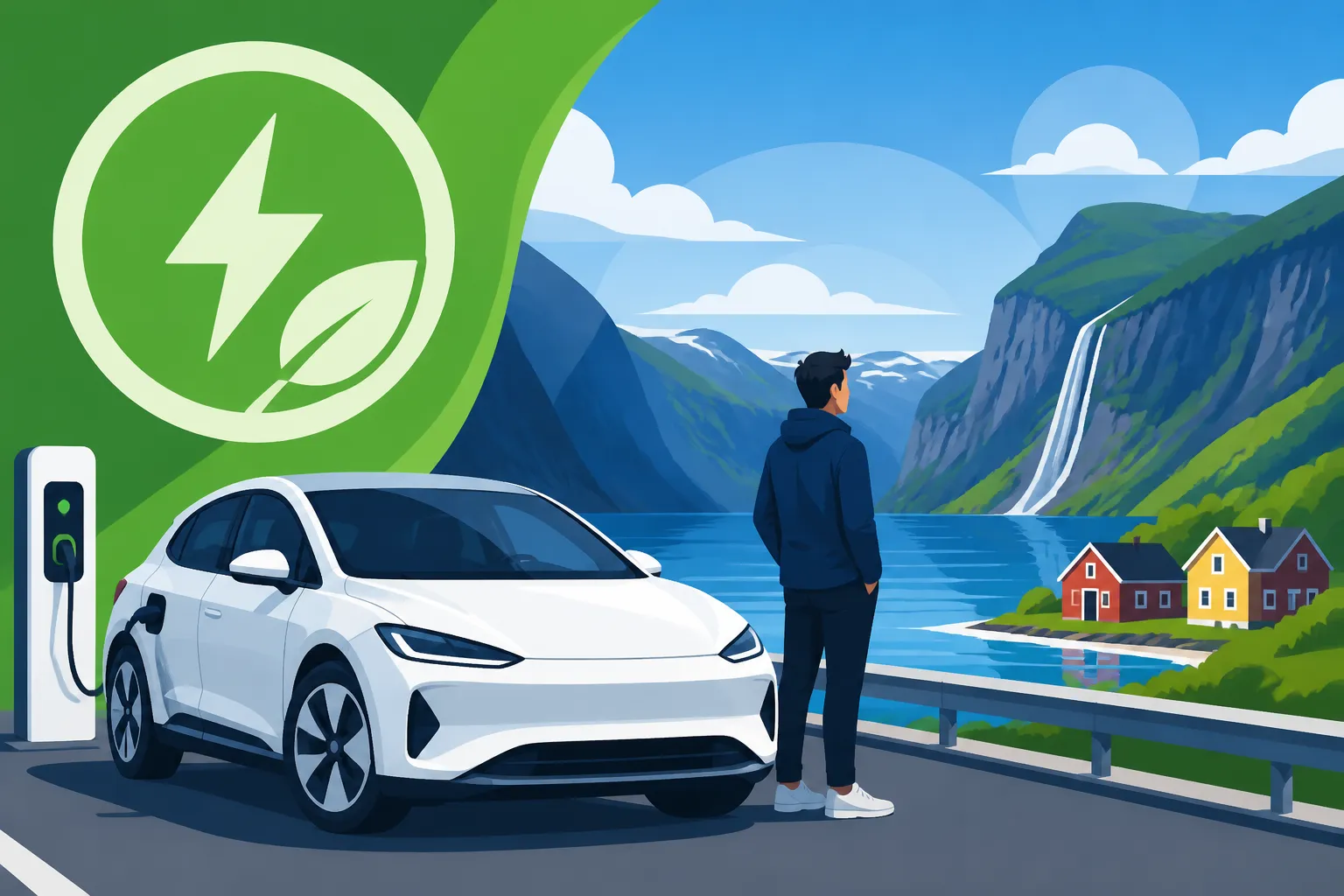
The EV Revolution: Why Expats Should Consider Buying an Electric Car
Moving to Norway often comes with a massive case of sticker shock, especially when you see the price of a liter of gasoline or the eye-watering cost of traditional cars. This guide solves the dilemma of whether to invest in a vehicle in one of the world's most expensive countries by explaining why an electric vehicle (EV) isn't just a green choice, but the only logical financial move for most expats.
The Financial Incentives of Going Electric in Norway
When you first start browsing for cars in Norway, you’ll notice that a high-end Tesla or Audi e-tron often costs nearly the same as a mid-range diesel SUV. This isn't because Norway is cheap; it’s because the government has spent decades making Internal Combustion Engine (ICE) vehicles prohibitively expensive through heavy taxation. As an expat, understanding this tax structure is the first step toward realizing that the "expensive" electric car is actually the bargain of the century in the Norwegian market.
Tax Exemptions and Reduced VAT
For years, EVs were completely exempt from Value Added Tax (VAT), which is a staggering 25% in Norway. While the rules changed slightly in 2023—introducing VAT on the portion of an EV's price that exceeds 500,000 NOK—the savings remain astronomical compared to gas-powered cars. When you buy a petrol car, you aren't just paying for the metal and tires; you're paying a carbon tax, a weight tax, and a NOx tax. These can easily add 100,000 to 200,000 NOK to the base price of a vehicle.
If you are just arriving and looking for a place to stay while you figure out your logistics, using a service like Spotahome can help you secure an apartment with a dedicated parking spot, which is essential for taking advantage of these tax breaks. Most expats find that the money saved on the purchase price of an EV can be redirected toward a higher quality of life or larger travel budget. It’s also worth noting that the annual road tax (trafikkforsikringsavgift) is significantly lower for electric vehicles, saving you several thousand kroner every single year you own the car.
Furthermore, the government’s commitment to "Polluter Pays" means that fossil fuel cars are hit with higher registration fees. When you look at the total cost of ownership over three to five years, the EV wins every time. Even if you are on a shorter contract and planning to sell before you leave, the resale value for EVs in Norway is incredibly robust because the entire country is moving in this direction. You won't be stuck with a "dinosaur" car that nobody wants to buy in 2028.
Lower Road Tolls and Parking Fees
The "Bompenger" system in Norway can be a major source of frustration for newcomers. It feels like every time you drive through a tunnel or cross a municipal border, a camera flashes and a few dozen kroner disappear from your bank account. However, EVs are legally entitled to a significant discount on these tolls. By law, electric vehicles cannot be charged more than 70% of what a petrol car pays, and in many regions, the rate is closer to 50% or even less. If you are commuting into Oslo or Bergen daily, this can result in savings of 1,000 to 2,000 NOK per month.
For more details on how these charges are calculated, you should read about Toll Roads (Bompenger) Costs: Budgeting for Driving in Norway. Having a dedicated toll tag (Autopass) linked to your EV ensures these discounts are applied automatically. Without it, you’ll be billed the full rate, which is a mistake many new arrivals make during their first month. Beyond the tolls, many municipalities still offer discounted public parking for electric vehicles. While the "free parking" glory days are mostly over in the big cities, the reduced rates still add up, especially if you work in a city center where parking is notoriously scarce.
There is also the hidden benefit of access. In some cities, EVs are allowed to use bus lanes during certain hours (though rules on having passengers vary). This can save you twenty minutes of sitting in gridlock during the morning rush. Imagine sailing past a line of idling diesel cars while you listen to your favorite podcast; it’s a level of smugness that you quickly learn to appreciate as a resident.
Long-term Savings vs Internal Combustion Engines
The most immediate "win" for an EV owner is at the "pump"—or rather, the charging station. Electricity in Norway is primarily hydroelectric and, despite recent price spikes, remains significantly cheaper than gasoline or diesel. If you charge your car at home during off-peak hours (usually at night), your "fuel" costs can be as much as 80% lower than a traditional car. Even with high electricity prices, the efficiency of an electric motor means you get much more distance for every krone spent.
To manage these costs effectively, it’s vital to understand Electricity Bills in Norway: Spot Prices, Grid Fees (Nettleie), and Support and how spot prices fluctuate throughout the day. Using smart charging apps allows your car to wait until 2:00 AM to draw power when the price is at its lowest. Over a year of driving, the difference between "filling up" with expensive Norwegian gasoline versus home charging is enough to pay for a very nice holiday in the Mediterranean.
Maintenance is another area where EVs shine. A petrol engine is a complex beast with hundreds of moving parts, oils, filters, and belts that all eventually fail. An EV is essentially a battery on wheels with very few moving parts. No oil changes, no spark plugs, and far less wear on brakes thanks to regenerative braking systems.
| Cost Category | Petrol/Diesel Car (ICE) | Electric Vehicle (EV) |
|---|---|---|
| VAT (MVA) | 25% on full price | 0% up to 500k NOK, 25% over |
| Import/CO2 Taxes | Very High (100k+ NOK) | Zero or very low |
| Road Tolls | Full Price | Max 70% (often 50%) |
| Fuel/Energy | 20-25 NOK per liter | Approx. 1-2 NOK per kWh (home) |
| Maintenance | High (Moving parts) | Low (Mainly tires/wipers) |
Practical Realities: Infrastructure and Charging
While the financial arguments are airtight, many expats worry about the practicalities. "Will I run out of juice in the middle of a mountain pass?" or "How do I charge if I live in an apartment?" are the two most common questions I get. The good news is that Norway has the most sophisticated charging infrastructure on the planet. You are never truly far from a plug, but there is a bit of a learning curve when it comes to the apps and the etiquette.
Home Charging Solutions for Renters and Owners
The holy grail of EV ownership is home charging. If you can plug in while you sleep, you start every day with a "full tank" and never have to visit a station unless you’re on a long road trip. If you are buying a house, installing a home charger is straightforward, though you should budget about 15,000 to 25,000 NOK for the unit and professional installation. It’s an investment that adds value to the property.
For renters, the situation is slightly more complex but still very manageable. Most modern apartment buildings and housing cooperatives (Borettslag) are now legally required to facilitate charging if a resident requests it. You might have to pay a monthly fee to the board to cover the infrastructure costs, but it’s still cheaper than public charging. When searching for your first home, look for Where to Live in Norway: Top Expat Neighborhoods in Oslo, Bergen, and Beyond to see which areas have the best modern housing stock with built-in EV infrastructure.
If you find yourself in an older building without a dedicated spot, don't despair. Street charging is becoming common in cities like Oslo and Bergen. The municipality installs rows of chargers that residents can use overnight for a relatively low fee. It requires a bit more planning, but thousands of Norwegians make it work every day. Just make sure you have a Type 2 charging cable in your trunk, as these street chargers usually don't have cables attached.
The Public Charging Network
When you leave the city for a weekend at a cabin, you’ll rely on the public fast-charging network. This is where Norway really flexes its muscles. From the southern tip of Kristiansand to the far reaches of the Arctic Circle, you will find fast chargers at almost every gas station, supermarket, and roadside diner. Companies like Tesla, Circle K, Mer, and Recharge dominate the market. You can find out more about these by reading our guide on Electric Car Chargers: Using Apps like Fortum, Mer, and Circle K.
One thing that drives expats crazy is the sheer number of apps required. Each charging provider has its own app, and few of them take direct credit card payments at the machine (though this is slowly changing due to new regulations). Pro tip: download the apps and register your credit card before you leave the house. There is nothing worse than standing in the rain at a charging station trying to download a 100MB app on a weak 4G signal.
To stay connected while you're navigating these apps and maps, I highly recommend getting a local SIM or an eSIM from a provider like Airalo. Having reliable data is non-negotiable when you're using apps like "A Better Route Planner" (ABRP) to calculate exactly where you need to stop to reach your destination. It takes the guesswork out of the trip and eliminates range anxiety entirely.
Charging in the Wild: Range Anxiety and Winter Realities
The phrase "range anxiety" was practically invented for the first generation of EV owners, but with modern cars, it’s mostly a thing of the past. Most new EVs can comfortably handle 300 to 500 kilometers on a single charge. However, as an expat, you need to be realistic about the terrain. Norway is not flat. Driving over the Hardangervidda mountain plateau involves long, steep climbs that will drain your battery much faster than a flat highway in the Netherlands or the US.
The "winter reality" is also something you must prepare for. In temperatures below -10°C, an electric car can lose 20% to 30% of its effective range. This happens because the battery needs to stay warm, and you are likely blasting the heater inside the cabin. Experienced Norwegian drivers know to "pre-condition" the car while it’s still plugged in at home. This uses grid power to warm up the battery and the interior, so you don't waste battery juice doing it once you start driving.
When planning long trips, always aim to arrive at your next charger with at least 10% to 15% remaining. This gives you a buffer in case the charger is out of order or occupied. It’s also helpful to check the Converting Your Foreign Driver’s License to a Norwegian License to ensure your driver's license is valid for the vehicle you're driving, as some larger electric SUVs can be quite heavy and might push the limits of certain foreign license categories if they exceed a specific weight.
Driving an EV in the Norwegian Winter
If you've never driven in a true Nordic winter, the combination of an electric motor's instant torque and icy roads can be intimidating. However, EVs are actually remarkably good in the snow because the heavy battery pack is located at the bottom of the car, giving it a low center of gravity and excellent traction. But there are specific rules and habits you need to adopt to stay safe.
Battery Performance in Sub-Zero Temperatures
Cold weather slows down the chemical reactions inside a battery. This doesn't just reduce your range; it also slows down your charging speed. If you pull up to a fast charger with a "cold" battery, the car will limit the intake of electricity to protect the cells. You might expect a 150kW charge but only get 30kW. To avoid this, most modern EVs have a "navigation to charger" feature. When you set a charging station as your destination in the car's GPS, the car will automatically start heating the battery so it's at the optimal temperature by the time you arrive.
This is a crucial tip for anyone living in the north or planning a trip to see the Northern Lights. If you are struggling with the darkness and the cold, it’s worth reading up on Coping with Seasonal Affective Disorder (SAD) in the Norwegian Winter to keep your spirits high. The car is your sanctuary in the winter, and many EVs have "camp mode" or "utility mode" that allows you to keep the heater running for hours while parked without significantly draining the battery—perfect if you get stuck waiting for a mountain pass to open.
Also, be aware that 12V batteries (the small ones that power the lights and electronics) can also fail in the cold, just like in a petrol car. If your EV won't start, it’s often the 12V battery that’s the culprit, not the main high-voltage pack. Keeping your car in a garage if possible, or at least plugged into a trickle charger, can prevent these minor but annoying winter headaches.
Essential Winter Driving Safety Tips
Safety on Norwegian roads in January is no joke. The instant torque of an EV means that if you stomp on the "gas" pedal at a green light, your wheels might spin instantly on the ice. Most EVs have a "Chill" or "Eco" mode that softens the acceleration. Use it. It makes the car much more predictable on slippery surfaces. Similarly, regenerative braking can be aggressive. On very icy descents, the car might try to slow down so hard when you lift off the pedal that it breaks traction. Many drivers choose to reduce the regen setting during the peak of winter.
You should also familiarize yourself with Preparing Your Car for the Norwegian Winter: Antifreeze and Scrapers to ensure you are prepared for the worst-case scenario. Always keep a shovel, a bag of sand or grit, and a warm blanket in the trunk. Even the best EV can get stuck in a deep snowdrift if the plows haven't been through yet. If you are traveling through rural areas, remember that help might be an hour away, and cell service can be spotty in deep valleys (another reason to have a reliable Airalo data plan for offline maps).
Another specifically Norwegian tip: watch out for the "reindeer and moose" factor. These animals are more active at twilight and can be very hard to see against a snowy backdrop. Because EVs are silent, animals often don't hear you coming until you are very close. Stay alert, keep your headlights clean (EVs don't generate engine heat to melt the snow off the front of the car), and always drive according to the conditions, not the speed limit.
Piggdekk vs Piggfrie: Tire Choices for EVs
In Norway, you have two choices for winter tires: piggdekk (studded) or piggfrie (friction). Most EV owners in the major cities choose friction tires. They are quieter, more energy-efficient, and you don't have to pay the "studded tire fee" that cities like Oslo and Bergen charge. Modern friction tires are incredibly advanced and provide plenty of grip for 95% of driving conditions.
However, if you live on a steep hill that turns into a sheet of ice or if you frequently drive to remote cabins, studded tires might be a lifesaver. Just be aware that they will reduce your range by about 5% to 10% due to increased rolling resistance. For a deep dive into the legal dates for changing your tires and the pros and cons of each, check out Winter Tires (Piggdekk vs Piggfrie): Legal Dates and Rules. Remember, if you are caught with summer tires on a snowy road, the fines are massive, and your insurance will likely be void if you have an accident.
When you buy a car in Norway, it almost always comes with two sets of wheels (winter and summer). If you are buying a used EV, check the tread depth of both sets. Replacing four high-quality EV tires can cost you 10,000 NOK or more, so it's a major negotiation point. EVs are heavy, and that weight can wear out tires slightly faster than a light petrol hatchback, so regular rotation and alignment checks are a good idea.
Buying vs Leasing: What’s Best for an Expat?
Deciding whether to buy a car outright or lease one depends heavily on your residency status and how long you plan to stay in Norway. Both options have distinct advantages in the EV market.
Navigating the Second-Hand Market on Finn.no
Finn.no is the undisputed king of the Norwegian marketplace. If you aren't using it yet, you need to read our Finn.no Masterclass: How to Navigate Norway’s Biggest Housing Site to understand how to filter for the best deals. The second-hand EV market in Norway is the most mature in the world. You can find everything from three-year-old Nissan Leafs for the price of a used bicycle to nearly new Porsches.
When buying used, the most important factor is the "Battery Health Report." Most dealers and some private sellers will provide a diagnostic report showing the remaining capacity of the battery. A car with 95% health is a great find; anything below 85% should be priced significantly lower. Also, check if the car was "imported" (gråimportert). Many EVs are brought in from Germany or the Benelux countries. While they are usually fine, they might lack the "Nordic Pack" which includes heated seats, a heat pump, and battery insulation—features you will desperately want in February.
Always ask for the service history. While EVs need less work, they still need brake fluid flushes, cabin filter changes, and suspension checks. If a car has been driven primarily on salted winter roads, check the undercarriage for excessive rust, although most modern EVs have extensive plastic underbody shielding.
Leasing Options for Temporary Residents
If you are in Norway on a two or three-year contract, leasing might be the most stress-free option. You pay a "startleie" (down payment) and then a fixed monthly fee that often includes service and even winter tire storage. This protects you from the risk of a sudden drop in used car prices and allows you to drive a brand-new, high-tech vehicle without a massive capital outlay.
Many leasing companies in Norway are very expat-friendly, but they will require a credit check. If you are new to the country and don't have a long financial history, you might be asked for a larger down payment or a guarantor. Leasing an EV is particularly popular because it allows you to "test" the lifestyle without the long-term commitment of ownership. If you find that the range doesn't suit your needs after three years, you simply hand back the keys.
One downside of leasing is the strict mileage limits. If you plan to drive from Oslo to the North Cape and back every summer, you will likely exceed your limit and face hefty "over-kilometer" fees. Calculate your expected commute carefully. If you are still looking for a place to live that balances commute distance with rent, Where to Live in Norway: Top Expat Neighborhoods in Oslo, Bergen, and Beyond can provide a good overview of different neighborhoods and their connectivity.
Understanding Depreciation and Resale Value
Historically, EVs in Norway have held their value better than almost anywhere else because demand is so high. However, as the market becomes saturated and new models with better technology arrive, depreciation is starting to follow a more "normal" curve. A Tesla Model 3 or Model Y is the "gold standard" for resale value because they are so popular and have such a good charging network.
If you buy a niche brand or an EV with a very small battery (under 40kWh), expect it to lose value faster. Most buyers now want at least 400km of range. When you eventually leave Norway, you’ll want a car that is easy to sell quickly. Sticking to the top-selling models—Tesla, Volkswagen ID series, Volvo/Polestar, and Audi—is the safest bet for an expat.
Also, keep an eye on government policy. While the current incentives are strong, they are slowly being dialed back as the country nears its goal of 100% zero-emission new car sales by 2025. Any major change in VAT or road tolls for EVs could impact the resale market overnight. Staying informed via local expat groups and news is essential for protecting your investment.
Lifestyle and Environmental Impact
Beyond the cold hard cash, there is a certain "cultural" aspect to driving an EV in Norway. It changes how you interact with the landscape and how you are perceived by your neighbors.
Aligning with Norwegian Values and Green Energy
Norway is a land of contradictions—a major oil exporter that is obsessed with environmental preservation. By driving an EV, you are participating in the "Grønt Skifte" (Green Shift). It is a point of pride for many Norwegians that their cars are powered by the rain falling in the mountains. For an expat, adopting an EV is one of the quickest ways to feel like you are "doing Norway right."
It also opens up the world of Friluftsliv (outdoor life). Many trailheads and national park entries now have charging points, allowing you to drive deep into the wilderness, hike for five hours, and return to a car that is topped up and ready for the drive home. The silent operation of an EV also means you don't disturb the peace of the forest or the fjords as you drive through them.
Access to Low-Emission Zones in Oslo and Bergen
The major cities are increasingly hostile to diesel cars. Oslo, in particular, has "Environmental Zones" where the tolls for older diesel vehicles are astronomically high during days of poor air quality. There are even discussions about making certain parts of the city center entirely "fossil-free" zones where only EVs and delivery bikes are allowed.
By owning an EV, you future-proof your mobility. You don't have to worry about whether you'll be allowed to drive to your favorite restaurant or a doctor's appointment in the city center.
Traveling Around the Fjords in an Electric Car
Finally, there is the sheer joy of the Norwegian road trip. Driving an EV through the Lærdal Tunnel (the world's longest) or up the hairpin turns of Trollstigen is a unique experience. The regenerative braking on the way down those mountains means you actually gain range as you descend. It’s a satisfying feeling to reach the bottom of a mountain with more battery than you had at the top.
Norway’s ferry system is also becoming electrified. Many of the shorter crossings are now served by silent battery-powered ferries. As an EV owner, you are part of a seamless, quiet, and clean transportation chain that stretches from the city streets to the deepest fjords. It makes the "Revolution" feel less like a chore and more like an upgrade to your entire lifestyle.
Disclaimer
This guide is intended for informational purposes only. Norwegian tax laws, EV incentives, and road regulations are subject to frequent changes by the national government and local municipalities. Always verify the latest rates for VAT, tolls, and registration fees on the official Skatteetaten and Statens Vegvesen websites before making a financial commitment. Individual experiences with battery range and charging infrastructure may vary based on weather, driving habits, and vehicle model.