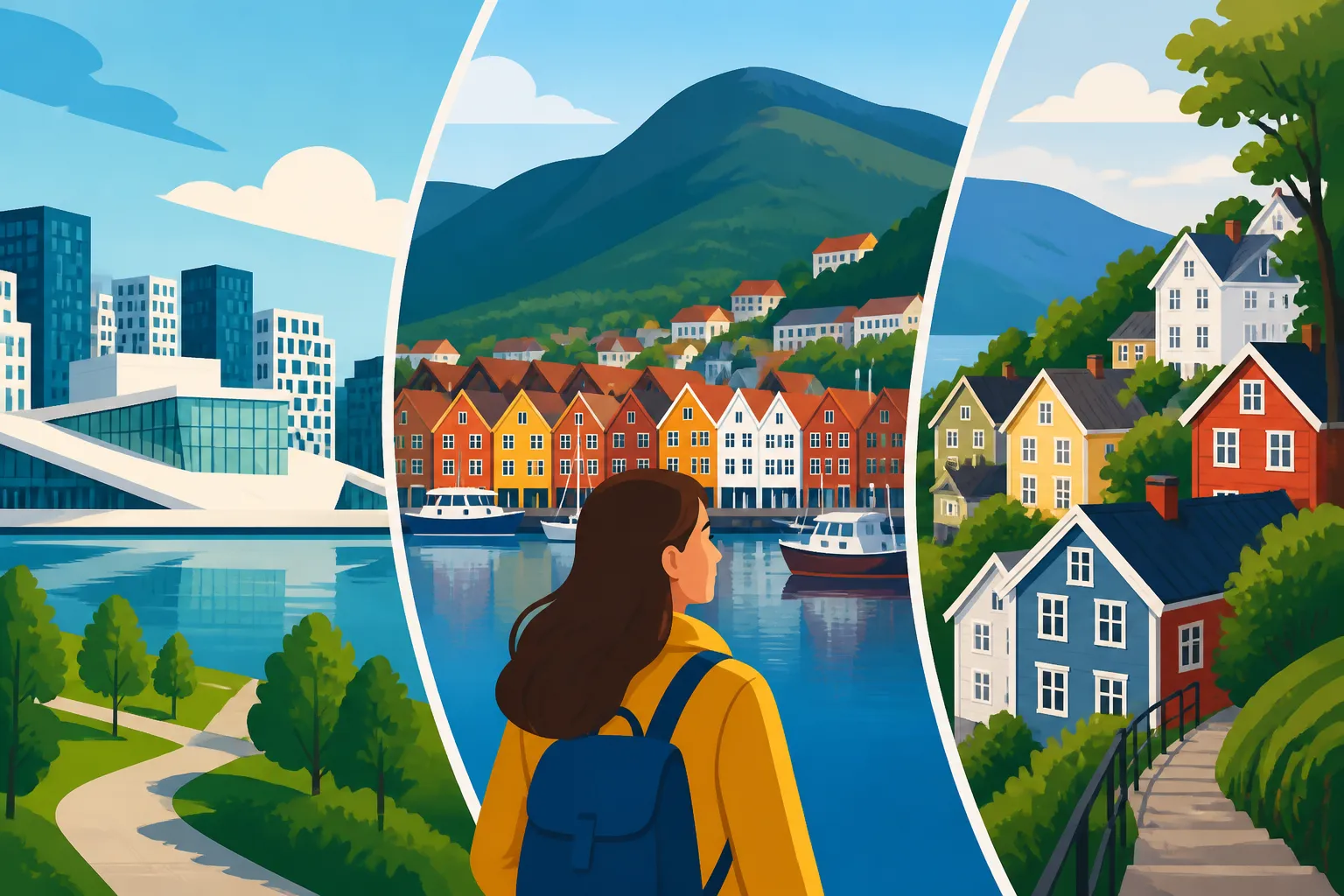
Where to Live in Norway: Top Expat Neighborhoods in Oslo, Bergen, and Beyond
Choosing where to plant roots in Norway is more than just picking a pin on a map; it's about navigating a notoriously tight rental market and understanding the distinct "vibe" of neighborhoods that might look identical on a screen but feel worlds apart during a dark February afternoon. This guide breaks down the top expat neighborhoods in Oslo, Bergen, Stavanger, and Trondheim to help you find your ideal home.
Navigating the Capital: Top Neighborhoods in Oslo
Oslo is the most common entry point for expats, and for good reason. It is the economic engine of the country, but it’s also a city that feels surprisingly like a collection of small villages. Each "bydel" (district) has a personality that dictates your social life, your commute, and your proximity to the legendary Oslo Fjord. When I first arrived, I made the mistake of thinking central was always better, but in Oslo, the best living is often found just a few tram stops away from the noise of Karl Johans gate.
Frogner and Majorstuen: The Classic Expat Choice
If you are looking for the "Grand Dame" of Oslo, Frogner is it. This is where most embassies are located, and the architecture reflects a late 19th-century grandeur that is rare in a city known for modernism. Living here means being steps away from Frogner Park and the Vigeland sculptures. For many foreign professionals, this is the first stop because it feels familiar—there are high-end grocery stores, English-speaking boutiques, and a high concentration of other expats who have walked in your shoes.
Majorstuen, located just uphill from Frogner, is the commercial heartbeat of the West End. It serves as a major transit hub, making it incredibly easy to reach any part of the city. For those who are Buying Property in Norway: Bidding Wars, Mortgages, and Rules, Majorstuen represents a safe, albeit expensive, investment. The downside is the cost; you will pay a premium for the prestige of these postcodes, and the rental market here moves at lightning speed. It’s the kind of place where you need to have your references ready before you even step into a viewing.
Families often gravitate toward these areas because they are quiet at night and close to some of the city's best schools. However, don't expect a gritty or "hip" nightlife here. Frogner is about wine bars and quiet cafes, not underground clubs. It is polished, predictable, and incredibly comfortable if your budget allows for the higher-than-average rent.
Grünerløkka: The Creative and Social Hub
On the opposite side of the Akerselva river lies Grünerløkka, the former working-class heart of the city that has spent the last two decades becoming the pinnacle of cool. If you are moving to Norway for a tech startup or a creative role, you will likely spend most of your time here. It’s a neighborhood defined by street art, independent coffee roasters, and a park culture that is unmatched. In the summer, Birkelunden and Olaf Ryes plass are packed with people grilling Engangsgrill (disposable grills) and soaking up the sun.
Living in "Løkka" means accepting a bit more noise and smaller apartment sizes. Many of the buildings are older "gårds" with charming courtyards but steep staircases and occasionally finicky heating. It is perfect for singles and young couples who want to be at the center of the action. To make the move easier, many expats use services like Spotahome to find medium-term housing in these popular areas without having to be physically present for the frantic "visning" (viewing) sessions that define the local market.
One thing to keep in mind is that while Grünerløkka is vibrant, it can be overwhelming for those who prefer the legendary Norwegian silence. However, the proximity to the river trails means you are only a ten-minute walk away from deep woods if you head north. It’s a neighborhood that perfectly balances the urban hustle with the Norwegian love for nature, provided you don't mind the occasional late-night revelry outside your window.
St. Hanshaugen and Sagene: The Balanced Alternative
For those who find Frogner too stiff and Grünerløkka too loud, St. Hanshaugen is often the "Goldilocks" zone. Named after the massive hilltop park at its center, this neighborhood offers some of the best views of the city and the fjord. It feels lived-in and authentic, with a mix of students from the nearby university and established families. The culinary scene here is excellent, featuring some of the city’s best bakeries and specialized delis.
Further north is Sagene, a neighborhood that has retained its historic charm with red-brick industrial buildings and colorful wooden houses. It’s slightly more affordable than the city center but remains incredibly well-connected by the bus network. This is a great area for those looking for Renting in Norway: Apartments, Contracts, and Tenant Rights because the landlords here are often individuals rather than large corporate firms, leading to a more personal (though still strictly regulated) rental experience.
When you first arrive in these neighborhoods, getting your bearings is the priority. It is wise for new arrivals set up a local data connection immediately. Using a service like Airalo for an eSIM can be a lifesaver during those first few days when you are trying to use Google Maps to find a hidden apartment entrance or communicating with a potential landlord on Finn.no. Having data from the moment you land prevents the stress of hunting for public Wi-Fi in the rain.
The Coastal Charm: Where to Live in Bergen
Bergen is often called "The Heart of the Fjords," and living here is a fundamentally different experience than living in Oslo. The city is squeezed between seven mountains and the sea, which means that space is at a premium and the weather is… consistent (meaning, it rains). However, the beauty of Bergen is unparalleled. It feels more intimate and traditional, with a local pride that is infectious.
Nordnes and the City Center: Historic Peninsula Living
Nordnes is arguably the most beautiful neighborhood in Norway. It’s a narrow peninsula extending into the harbor, characterized by cobblestone streets and 18th-century wooden houses painted in pastel whites and yellows. Living here feels like stepping back in time, yet you are only a five-minute walk from the fish market and the city center. It’s a popular spot for expats who want the quintessential Bergen experience.
The lifestyle in Nordnes is very community-oriented. There is a famous public heated outdoor pool (Nordnes sjøbad) where locals go for a swim in the fjord followed by a sauna, even in the dead of winter. If you are a fan of Friluftsliv: Embracing the Norwegian Outdoors and "Right to Roam", Nordnes offers a unique urban version of that philosophy. The downside is that these historic houses can be drafty and expensive to heat, so make sure to ask about the energy rating before signing a lease.
Because the city center is so compact, you rarely need a car. Most expats in Bergen rely on the "Bybanen" (light rail) or their own two feet. For those moving from abroad, using Spotahome can help you secure a spot in these tightly packed historic areas where listings on the local market often disappear within hours of being posted.
Sandviken: Beauty with a View
Just north of the city center lies Sandviken. This area stretches along the coastline and up the steep mountainsides. It’s home to the Norwegian School of Economics (NHH), so it has a high population of international students and faculty. The lower parts of Sandviken are filled with old boathouses and wharf buildings, many of which have been converted into stunning modern apartments.
The higher you go in Sandviken, the better the view, but the more grueling the walk home. This neighborhood is the gateway to "Stoltzekleiven," one of the most famous (and steepest) hiking trails in the city. Living here means you are part of the "mountain culture" that Bergen is famous for. It’s a bit quieter than the city center and offers a great mix of modern convenience and historic charm.
When moving to Bergen, it’s worth checking a Cost of Living in Oslo vs Bergen: A Detailed Budget Comparison to understand how much you should allocate for housing versus other expenses. While Bergen can be slightly cheaper than Oslo in terms of rent, the limited supply of apartments in popular areas like Sandviken keeps prices competitive.
Landås: Family-Friendly and Convenient
If you are moving with children or working at the Haukeland University Hospital, Landås is likely where you will end up. It’s a sprawling residential area south of the center that offers more space for your money. You can find houses with actual gardens here, which is a rarity in the more central districts. Landås is well-served by schools, sports facilities, and grocery stores.
The connection to the city center is seamless via the Bybanen, making it an easy commute for those who work in the harbor but want to sleep in the quiet. It’s a very "local" neighborhood, meaning you’ll have plenty of opportunities to practice your Norwegian with neighbors. For many, this is where the real Bergen life happens, away from the tourist crowds at Bryggen.
Stavanger: The International Oil and Gas Hub
Stavanger has been Norway's most international city for decades, thanks to the offshore energy industry. This has created a unique environment where English is widely spoken, and the infrastructure for foreigners is incredibly well-developed. If you’re moving here, you’ll find a city that is wealthy, clean, and surprisingly coastal-chic.
Eiganes: The Prestigious Hub
Eiganes is to Stavanger what Frogner is to Oslo. It is a lush, green neighborhood filled with historic villas and large gardens. It’s traditionally the most expensive part of town, located within walking distance of the city center and the Breiavatnet lake. Many executive-level expats choose Eiganes because of its quiet prestige and its proximity to the British International School of Stavanger.
The neighborhood is also home to the Ledaal and Breidablikk museums, giving it a cultured, settled feel. If you are looking for stability and high-end finishes, this is your place. However, the high demand means that competition for rentals is fierce, and landlords often look for long-term corporate contracts.
Hinna Park and Jåttåvågen: Modern Innovation
On the other end of the spectrum is Hinna Park. This is a newly developed area built specifically around the needs of the modern workforce. It’s home to many of the major energy companies and tech firms. The apartments here are sleek, energy-efficient, and often come with underground parking—a luxury in older Norwegian cities.
Living in Hinna Park is about convenience. There is a train station that gets you to the Stavanger center in 7 minutes and to Sandnes in roughly the same time. You have a shopping mall, a stadium, and waterfront walkways right at your doorstep. For an expat who wants a "turnkey" life where everything works and is brand new, Hinna is hard to beat.
Storhaug: The Trendy East Side
Storhaug was once the industrial heart of Stavanger, but it has undergone a massive transformation. The "Øst" (East) part of Storhaug is now the trendiest place in the city, filled with craft breweries, sourdough bakeries, and community gardens. It’s much more diverse than Eiganes and offers a mix of traditional wooden houses and modern "industrial-chic" lofts.
This is a great area for younger expats or those who want a more urban, gritty feel. It’s also one of the few places in Stavanger where you can find relatively affordable "hybels" (studio apartments). If you’re just starting out, Storhaug offers a vibrant social entry point into the city. Before you sign any papers, make sure you understand D-Number vs Fødselsnummer: How It Affects Your Banking Options, as your residency status will dictate how you handle things like utilities and internet contracts in your new home.
Trondheim: History, Science, and Student Life
Trondheim is Norway’s third-largest city and its "technological capital," dominated by the Norwegian University of Science and Technology (NTNU). It feels like a genuine university town—energetic, intellectual, and very bike-friendly. The city layout is easy to master, and the surrounding nature is easily accessible.
Bakklandet: The Most Photogenic Spot
Bakklandet is the historic district located just across the Old Town Bridge (Gamle Bybro). It is famous for its colorful wooden houses built on stilts along the Nidelva river. This area is essentially a postcard come to life. It’s filled with cozy cafes like the famous "Baklandet Skydsstation" and small independent galleries.
Living in Bakklandet is a dream for many, but the apartments are often small and can be quite dark due to the narrow streets. It’s a very high-demand area for students and young professionals. If you manage to find a spot here, you’ll be at the heart of Trondheim’s social life. To keep connected while you’re out exploring these winding streets, an Airalo eSIM is a great tool to have, as it ensures you don't have to rely on spotty cafe Wi-Fi to stay in touch with family or look up local events.
Ila and Elgeseter: The Academic Corridor
Ila is located to the west of the city center and has a similar charm to Bakklandet but with a bit more breathing room. It’s known for the Ilaparken and its proximity to the sea. It’s a very artistic and laid-back neighborhood that attracts a mix of families and long-term residents.
Elgeseter, on the other hand, is the functional heart of the student and research community. It is adjacent to the main NTNU campus and St. Olavs Hospital. While not as "quaint" as the historic districts, it is incredibly practical. If you are a researcher or international student, living in Elgeseter saves you hours of commuting time every week. The area is seeing a lot of new development, with modern apartment blocks replacing older structures to accommodate the growing population.
Solsiden: Upscale Waterfront Living
Solsiden (The Sunny Side) is a former shipyard that has been converted into a high-end residential and commercial district. It is the place to be on a Friday night, with a long strip of restaurants and bars facing the water. The apartments here are modern, with large windows and balconies designed to catch every possible minute of the Norwegian sun.
For expats with a generous housing allowance, Solsiden offers a lifestyle of total convenience. You have a gym, a supermarket, and dozens of dining options within a two-minute walk. It’s professional, clean, and very lively. If you are moving here, it’s worth reading up on Where to Live in Norway: Top Expat Neighborhoods in Oslo, Bergen, and Beyond to see how Trondheim’s modern districts compare to the other major cities.
Tromsø and the Arctic: Living in the North
For the truly adventurous, moving to Tromsø—the "Paris of the North"—offers a lifestyle unlike any other. Located well above the Arctic Circle, life here is dictated by the seasons: the Midnight Sun in the summer and the Polar Night in the winter.
Tromsøya: The Island Hub
The majority of people in Tromsø live on the island of Tromsøya. The city center is on the eastern side of the island and is surprisingly cosmopolitan for its latitude. You’ll find world-class restaurants, a vibrant music scene, and a very international university (UiT).
Living on the island means you are close to everything, but rent can be surprisingly high due to the limited space. The "South Island" (Sør-Tromsøya) is a particularly popular residential area for families, offering quiet streets and great views of the surrounding mountains and fjords. If you are moving here, you must be prepared for the weather. Knowing how to manage Surviving the Norwegian Winter: Clothing, Heating, and Mørketid (Dark Season) is not just a suggestion; it's a survival skill.
Kvaløya: The Nature Lover's Paradise
Connected to Tromsøya by a bridge, Kvaløya is a large island that offers a more rural, rugged lifestyle. This is where you go if you want to see the Northern Lights from your living room window or if you want reindeer occasionally wandering through your garden. The "Ersfjordbotn" area is particularly stunning, though it requires a car and a tolerance for long, snowy commutes.
Living in the North requires a specific mindset. It is a place of extreme beauty but also extreme isolation. The community is tight-knit, and you will find that locals are incredibly welcoming to those who embrace the Arctic lifestyle. If you're coming from a warmer climate, perhaps look for a short-term stay through Spotahome first to see how you handle the transition into the darker months before committing to a long-term lease.
Practical Considerations: Making the Right Choice
Choosing a neighborhood isn't just about the aesthetics of the buildings; it's about the logistics of your daily life. Norway is a country of high standards and high prices, and small differences in location can have a large impact on your quality of life.
The Commute and Public Transport
Before you settle on a neighborhood, test the commute. Norwegian public transport is excellent, but it can be expensive. In Oslo, the "Ruter" system covers everything from subways to ferries. If you live in a "Zone 1" area, your monthly pass will be significantly cheaper than if you live on the outskirts. Check Public Transport in Oslo (Ruter): Zones, Tickets, and Monthly Passes for a breakdown of the costs.
In cities like Bergen and Stavanger, the topography often dictates your route. A neighborhood might look close to your office on a map, but if there is a mountain or a fjord in between, your commute might involve a tunnel with a heavy toll (Bompenger) or a specific ferry schedule. Always check the local transport apps (Entur is a great all-in-one option) before signing a lease.
Supermarkets and Local Amenities
Norwegian supermarkets are generally categorized into "price-fighters" and "premium" stores. Kiwi and Rema 1000 are the budget-friendly options, while Meny and Spar offer a wider selection of international goods but at a higher price point. When choosing a neighborhood, check which stores are within walking distance.
In Norway, almost everything is closed on Sundays (except for very small "Brustadbu" sections of grocery stores). Living in a neighborhood with a high concentration of Sunday-open shops can be a major convenience for an expat who isn't yet used to the strict Norwegian weekend schedule.
Neighborhood Comparison Table
| City | Top Neighborhood | Vibe | Typical Rent (2-bed) | Best For |
|---|---|---|---|---|
| Oslo | Grünerløkka | Trendy, Urban, Social | 18,000 – 24,000 NOK | Singles, Creatives |
| Oslo | Frogner | Prestigious, Quiet, Green | 22,000 – 30,000 NOK | Families, Diplomats |
| Bergen | Nordnes | Historic, Coastal, Quaint | 16,000 – 22,000 NOK | Couples, History Lovers |
| Stavanger | Hinna Park | Modern, Efficient, Corporate | 15,000 – 21,000 NOK | Oil & Gas Professionals |
| Trondheim | Bakklandet | Artistic, Student-heavy | 14,000 – 19,000 NOK | Researchers, Students |
| Tromsø | Tromsøya | Arctic, Active, International | 15,000 – 20,000 NOK | Adventure Seekers |
Securing Your Home: The Final Steps
Once you've narrowed down your neighborhoods, the real work begins. The Norwegian housing market is very transparent, but it is also very competitive. Most listings are found on Finn.no, which is the "everything" app of Norway.
Mastering Finn.no and the "Visning"
In Norway, we don't really have "real estate agents" for rentals in the way other countries do. Most of the time, you deal directly with the landlord. When a listing goes up on Finn, you need to act immediately. Send a polite message in English (or Norwegian if you can) introducing yourself, your job, and your situation.
Be prepared for the "visning." This is an open-house viewing where 20 other people might be looking at the same apartment. To stand out, have a "housing CV" ready. This sounds formal, but it’s just a one-page document with your photo, your job contract details, and references from previous landlords. Since you’ll likely be running around the city to multiple viewings, having an Airalo eSIM ensures you can update your search filters and respond to messages in real-time without losing a potential lead.
Contracts and the Depositumskonto
When you finally get an offer, the paperwork is standard but vital. Never, ever pay a deposit into a landlord’s personal bank account. In Norway, we use a "Depositumskonto"—a special, locked bank account that neither you nor the landlord can access without the other's consent. This is a legal requirement designed to protect tenants. If a landlord asks for cash or a personal transfer, it’s a red flag.
The standard notice period is three months, which is quite long compared to many other countries. Make sure you are comfortable with the neighborhood before committing, because breaking a lease early can be difficult. For more details on your rights, see Tenant Protections: Notice Periods and Eviction Rules in Norway.
Settling into Your New Bydel
Once the keys are in your hand, the final step is integration. Join your local "Dugnad"—the community volunteer day where neighbors clean the courtyards or paint fences. It is the single best way to meet your Norwegian neighbors.
Don't be discouraged if people seem quiet at first. In neighborhoods like Landås or St. Hanshaugen, friendships are built slowly over shared activities rather than quick small talk. Before you know it, you’ll be the one telling the new arrivals which bakery has the best "skoleboller" and which park gets the best evening sun. Norway is a place where you truly get out what you put in, and picking the right neighborhood is the first step toward a successful expat life.
Disclaimer
The information provided in this guide is for informational purposes only and does not constitute legal or financial advice. Housing laws, rental prices, and visa regulations in Norway are subject to change. Always verify details with official sources such as the Norwegian Directorate of Immigration (UDI) or the Norwegian Tax Administration (Skatteetaten).