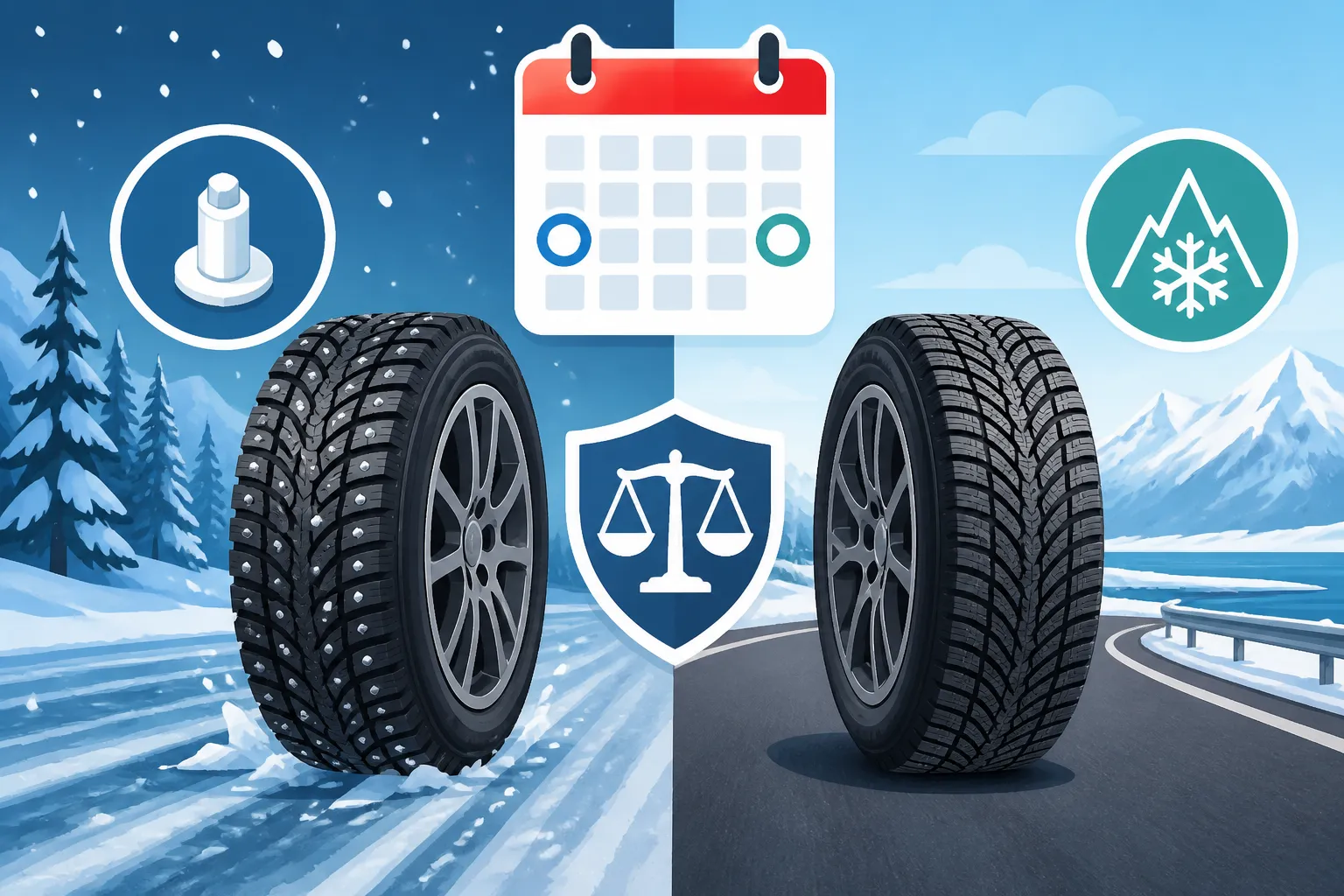
Winter Tires (Piggdekk vs Piggfrie): Legal Dates and Rules
The first time you wake up in Norway to a world covered in a thick, silent blanket of white, it feels like a fairy tale—until you remember your car is still sitting on summer tires. That sinking feeling in your stomach as you realize you have to navigate a steep, icy driveway or an unplowed side street is a rite of passage for every expat. This guide is designed to take that panic away, providing the legal dates, technical requirements, and local nuances of winter tires so you can drive with confidence through the Norwegian winter.
The Reality of Winter Driving in Norway
Driving in Norway during the winter months is not merely a matter of dealing with snow; it is about managing a constantly shifting landscape of ice, slush, and freezing rain. For many of us coming from milder climates, the concept of "black ice" (underkjølt regn) is a terrifying novelty. It looks like a dry road but offers zero traction. This is why the choice between studded tires (piggdekk) and non-studded friction tires (piggfrie dekk) is one of the most debated topics in expat circles.
In major cities like Oslo or Bergen, the roads are frequently salted and plowed, meaning you spend a lot of time driving on wet asphalt. However, if you live further north or in more rural, mountainous areas, you might be driving on hard-packed snow for months on end. This environmental difference dictates not only what tires you should buy but also how much you will pay in city fees. It is also worth noting that while Owning a Car in Norway: Insurance, EU Inspections (EU-kontroll), and Tolls brings its own set of administrative hurdles, the tire situation is the one that directly impacts your safety on a daily basis.
Beyond the safety aspect, there is the social pressure. Norwegians take winter preparedness seriously. If you get stuck on a hill because you haven't changed your tires in time, don't expect much sympathy from the line of cars behind you. You might even find yourself participating in a What is "Dugnad"? Surviving Mandatory Community Volunteering event just to help clear the local neighborhood roads, but your personal responsibility starts with your own vehicle's equipment.
Piggdekk vs Piggfrie: The Eternal Debate
Piggdekk are tires equipped with small metal studs that "bite" into the ice. They are undeniably superior when driving on blue ice or very hard-packed snow. If you are frequently heading to a cabin in the mountains or living in Northern Norway, these are often the go-to choice. However, they are noisy on dry asphalt and they contribute to the "pve" (particulate matter) in the air by grinding down the road surface. This is why cities have introduced fees for using them.
Piggfrie dekk, or friction tires, use a softer rubber compound and a complex tread pattern to grip the road. They are silent, better for the environment, and perform exceptionally well on slush and fresh snow. For the vast majority of expats living in urban areas, friction tires are the logical choice. They allow for more flexibility with the changing seasons and save you from the annual headache of paying city-specific studded tire taxes. If you are still in the process of Where to Live in Norway: Top Expat Neighborhoods in Oslo, Bergen, and Beyond, consider the topography of your potential neighborhood; a steep hill might make you lean toward studs even in a city.
Regional Differences in Snow and Ice
Norway is a massive country with vastly different climates. In Stavanger, you might see more rain than snow all winter, making friction tires almost mandatory for comfort. In contrast, in places like Tromsø or Finnmark, the "winter" can last from October until May. The local authorities understand this, which is why the legal dates for changing tires are split into two distinct zones: Northern Norway and the rest of the country.
When you are Surviving the Norwegian Winter: Clothing, Heating, and Mørketid (Dark Season), your car needs as much attention as your wardrobe. Just as you wouldn't go out in sneakers in a blizzard, you shouldn't expect your car to handle a Norwegian winter on anything less than dedicated winter rubber.
Legal Dates for Winter Tires in Norway
The Norwegian Public Roads Administration (Statens vegvesen) sets strict dates for when you are allowed to use studded tires. It is a common misconception that you must change on these specific dates; rather, these are the dates when you may use studs without needing a specific weather-related reason. For friction tires (piggfrie), there are no specific date restrictions, though their soft rubber wears down very quickly in the summer heat, so they should not be used year-round.
One of the most confusing aspects for newcomers is the "Easter Rule." The end of the studded tire season in Southern Norway is tied to the lunar calendar, specifically the Monday after Easter Monday. Because Easter moves every year, you have to stay sharp and check the calendar in March. If you are renting a car for a trip, always double-check the equipment, especially if you are transitioning between regions.
| Region | Start Date for Studded Tires | End Date for Studded Tires |
|---|---|---|
| Northern Norway (Nordland, Troms, Finnmark) | October 16th | April 30th |
| Southern/Central Norway | November 1st | First Monday after Easter Monday |
| Friction Tires (Piggfrie) | No date restrictions | No date restrictions |
| Minimum Tread Depth (Winter) | 3 millimeters | 3 millimeters |
The "Conditions Apply" Rule: Safety First
The most important legal clause to remember is that the driver is always responsible for ensuring the vehicle has sufficient grip. This law overrules the calendar. If there is a sudden ice storm in Oslo on October 20th, you are legally permitted—and encouraged—to put on your studded tires early. Conversely, if it is still snowing heavily in May, you are allowed to keep them on.
Police and road authorities are generally pragmatic about this, but they have little patience for people caught with summer tires in a snowstorm. If you cause an accident or block traffic because you were "waiting for the legal date" despite six inches of snow on the ground, you can expect a heavy fine and potentially the loss of your license. This is a crucial part of Driving in Norway: Licenses, Winter Driving, and Electric Vehicles (EVs).
Dealing with the Easter Monday Deadline
The floating date for Southern Norway creates an annual scramble at the local garages. Since everyone is trying to change their tires during the same week in April, booking an appointment can be nearly impossible. A veteran expat tip is to book your "omlegging" (tire change) appointment weeks in advance or learn to do it yourself. If you are doing it yourself, ensure you have a proper torque wrench; the changing temperatures in Norway can cause bolts to loosen if not tightened to the manufacturer's specifications.
Understanding Piggdekk Fees and City Rules
If you choose studded tires and live in or drive into Oslo, Bergen, or Trondheim, you must pay a "Piggdekkgebyr" (studded tire fee). This is not a suggestion; it is a strictly enforced tax aimed at reducing the hazardous dust created by studs on bare asphalt. The fee covers the entire "studded tire season" and is verified via your license plate.
When you first arrive, you might be busy with the First 30 Days Health Checklist: GP, Frikort, and Pharmacies, but if you have a car, the tire fee app should be one of your first downloads. Using a service like Airalo to ensure you have an active data plan immediately upon arrival is incredibly helpful here, as you often need to pay these fees via a mobile app like "Bil i Oslo" or the equivalent for other cities.
How to Pay the Studded Tire Fee
The fees can be paid daily, monthly, or for the full season. For many expats, the full season pass is the most convenient option if you live within the city limits.
- Daily: Valid for 24 hours. Perfect if you are just visiting a city from the countryside.
- Monthly: Good if you know you have a few weeks of heavy mountain commuting.
- Full Season: The most cost-effective if you live in the city and use studs.
You can pay these through official apps or at specific automated machines located on the main entry roads into the cities. Failure to pay can result in a fine of 750 NOK or more, and the cameras at the city borders are very efficient at catching offenders. If you are struggling with the digital transition, you can find guides like Navigating the Helsenorge App in English: A Step-by-Step Translation that help with the general logic of Norwegian government apps, which often follow a similar structure.
Environmental Zones and Air Quality
During periods of high air pollution, usually on cold, still winter days, some cities may implement temporary bans or additional charges to discourage driving. While this usually targets older diesel vehicles, it is another reason why friction tires are becoming the default for city dwellers. If you are looking for a car on Finn.no, you will notice that vehicles sold in the cities almost always come with a set of friction tires, while those in the north are sold with studs. It is a reflection of the local reality.
Technical Requirements for Winter Tires
It is not enough to just have "winter tires." They must meet specific technical standards to be legal. In Norway, the minimum tread depth for winter tires on vehicles under 3,500 kg is 3 millimeters. However, almost every mechanic and safety organization in the country recommends at least 4 millimeters.
When buying tires, look for the "Three Peak Mountain Snowflake" (3PMSF) symbol. This indicates that the tire has been tested and approved for severe snow conditions. Older tires might only have the "M+S" (Mud and Snow) marking, but as of 2024 and moving into 2026, the 3PMSF symbol is becoming the gold standard for insurance compliance and safety.
The Importance of Rubber Age
Even if your tires have plenty of tread left, they might be useless if they are too old. Rubber hardens over time, especially when subjected to the extreme temperature fluctuations of the Norwegian climate. A tire that is six or seven years old will have significantly less grip on ice than a new one, even if it looks "new." You can check the age of your tires by looking at the DOT code on the sidewall—a four-digit number where "1222" means the tire was produced in the 12th week of 2022.
Heavy Vehicles and Trailers
If you are driving a larger vehicle or towing a trailer (common when Moving Companies in Norway: Costs and Recommendations are too expensive and you do it yourself), the rules are even stricter. Trailers must have tires with the same grip characteristics as the towing vehicle. If the car has studs, the trailer must have studs. This is a common trap for expats who borrow a trailer from a neighbor without checking the tires.
Practical Tips for New Residents
Managing two sets of tires (summer and winter) requires storage space. Most Norwegians do not have enough room in their apartment "bod" (storage room) to keep four large, dirty wheels. This has led to the rise of the "Dekkhotell" (Tire Hotel).
A tire hotel will store your off-season tires, wash them, check the tread depth, and change them for you when the season arrives. It usually costs between 1,000 and 2,500 NOK per season. While it adds to the Cost of Living in Norway 2026: Budgeting for Singles and Families, the convenience is often worth it, especially if you don't have a garage. If you are currently searching for a home with better storage, platforms like Spotahome can be useful for finding mid-term rentals that include parking or storage facilities.
Buying Second-Hand Tires
If you are on a budget, buying used tires on Finn.no is a valid option, but you must be extremely careful. Always bring a tread depth gauge (available for a few kroner at any gas station) and check the DOT age code. Never buy winter tires that are more than 5 years old, regardless of how much tread they have.
Emergency Equipment to Carry
Even with the best tires, you can still get into trouble. During the winter, your car should always contain:
- A sturdy snow brush and ice scraper (a legal requirement to clear your windows and roof).
- A small shovel.
- A pair of warm gloves and a reflective vest.
- A "startbooster" or jumper cables, as the cold is brutal on batteries.
If you are heading into the mountains, you might even consider carrying "autosock" or snow chains, though with good studded tires, these are rarely necessary for passenger cars. If you ever find yourself in a situation where you are stuck, knowing the difference between Calling 113: Ambulance Services and Life-Threatening Emergencies and the local roadside assistance (like NAF or Viking) is essential.
Summary Table: Winter Tire Comparison
| Feature | Studded Tires (Piggdekk) | Friction Tires (Piggfrie) |
|---|---|---|
| Best Surface | Hard ice, frozen lakes, mountain passes. | Slush, fresh snow, wet asphalt. |
| Noise Level | High (clicking sound on asphalt). | Low (similar to summer tires). |
| City Fees | Yes (in Oslo, Bergen, Trondheim). | No. |
| Legal Dates | Restricted (Nov-April). | No restrictions (but not for summer). |
| Environmental Impact | High (creates road dust). | Low. |
| Flexibility | Must change according to calendar. | Can change earlier in the fall. |
Important Notice
This guide is for informational purposes only and reflects the general rules and regulations regarding winter tires in Norway as of 2024-2026. Traffic laws can change, and local municipalities may implement specific ordinances during extreme weather events. Always consult the official Statens vegvesen website for the most current legal requirements. The driver of the vehicle is legally responsible for ensuring that the vehicle has sufficient grip on the road surface at all times, regardless of the date or type of tires used. Failure to comply with tire regulations can result in fines, vehicle impoundment, or the denial of insurance claims in the event of an accident.