Electricity Bills in Norway: Spot Prices, Grid Fees (Nettleie), and Support
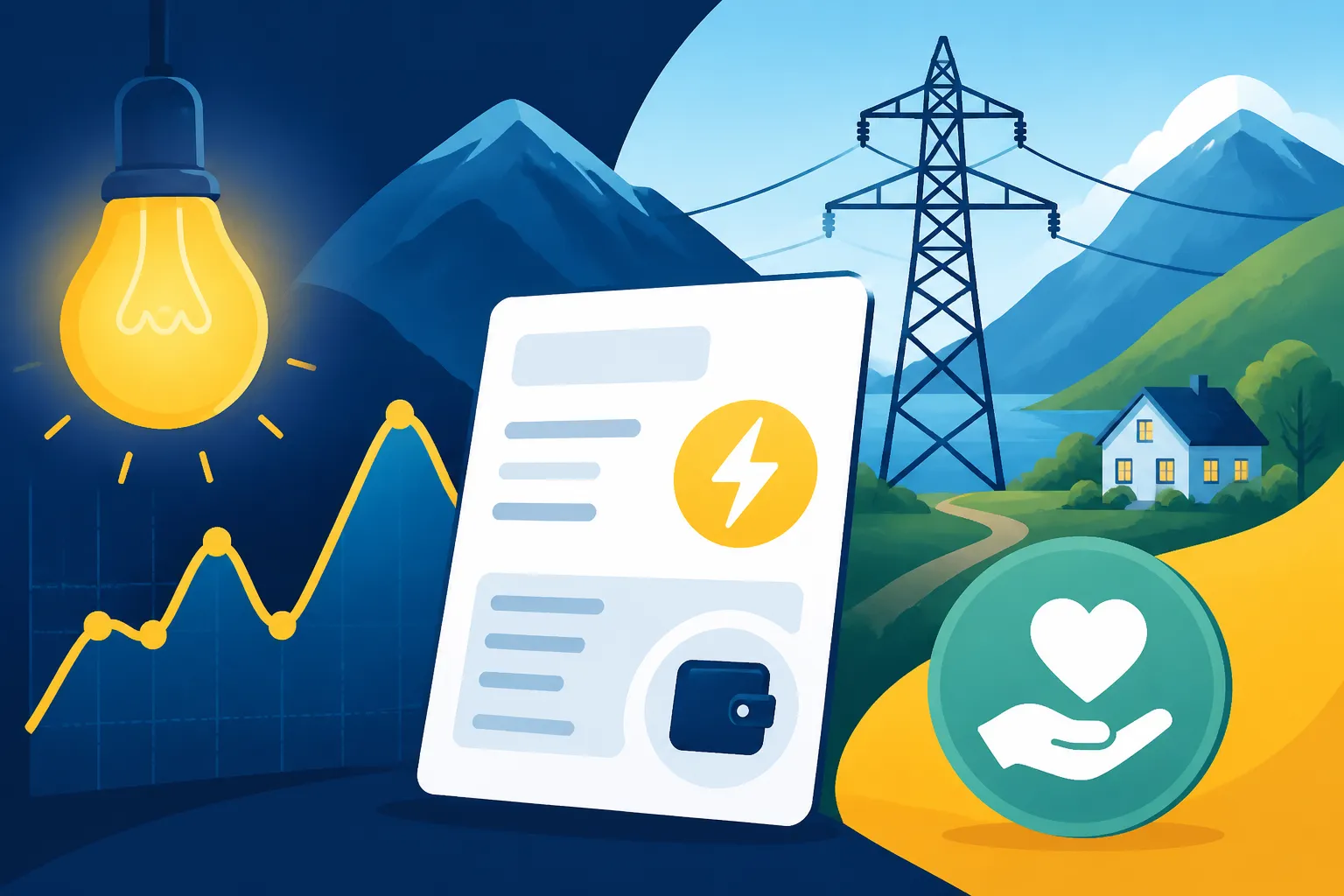
Moving to Norway often involves a romanticized vision of cozy cabins and snow-dusted streets, but the reality check usually arrives in your inbox during your first February. Many expats are caught off guard by the complexity of Norwegian energy bills, which are split into two distinct parts and fluctuate wildly based on European market trends. This guide breaks down how to navigate spot prices, the unavoidable grid fees, and the government support systems that keep the lights on without breaking your budget.
Understanding the Dual-System Bill: Electricity vs Grid Fees
One of the most confusing aspects for anyone newly Renting in Norway: Apartments, Contracts, and Tenant Rights is the realization that you don't just pay one company for your power. In most countries, you receive a single bill from a single utility provider. In Norway, the system is unbundled. You have the company that sells you the actual electrical energy (the power provider) and the company that owns the physical wires, poles, and transformers leading to your house (the grid owner). This means you will often receive two separate invoices, or a combined one where the costs are clearly bifurcated.
The Grid Fee (Nettleie): Paying for the Infrastructure
The grid fee, or nettleie, is a mandatory cost that you cannot "shop around" for. Your grid provider is a geographical monopoly; if you live in Oslo, your grid is likely managed by Elvia, whereas in Bergen, it might be BKK. This fee covers the maintenance of the power lines and the massive investment required to keep the Norwegian grid stable during extreme winter storms. It is important to understand that How to Read Your Norwegian Electricity Bill: Forbruk vs Nettleie requires looking at both the fixed monthly component and the variable "capacity" component.
The capacity component is particularly tricky for newcomers. It is calculated based on your "peak" usage—specifically the average of the three hours during the month when you used the most power simultaneously. If you run the dishwasher, the washing machine, and charge your electric vehicle all at the same time on a Tuesday evening, your capacity step will jump, potentially adding hundreds of kroner to your bill. Veteran expats learn to "stagger" their heavy appliance usage to keep this peak as low as possible.
Power Consumption: Choosing Your Provider
While you are stuck with your grid provider, you have total freedom to choose who actually sells you the electricity. There are dozens of companies competing for your business, from massive legacy firms like Fjordkraft to tech-heavy startups like Tibber. When Setting Up Utilities: Electricity, Heating, Internet, and Mobile Plans, your first task is to compare these providers. Most offer "Spot Price" contracts, which means they pass the wholesale market price directly to you plus a small per-kilowatt-hour margin and a monthly fee.
Choosing a provider can feel overwhelming, especially if you are still navigating the language barrier. Many expats initially look for short-term solutions to avoid this administrative hurdle. If you are using services like Spotahome to find mid-term housing, you might find options where utilities are already bundled, which can save you the stress of setting up these accounts during your first few weeks. However, for long-term residents, picking a provider with a great app is essential for monitoring daily costs.
Spot Prices and Market Fluctuations
Norway’s electricity market is highly transparent but also highly volatile. Unlike many parts of the world where you pay a flat rate per kilowatt-hour regardless of when you use it, the vast majority of Norwegian households are on "Spot Price" contracts. This means the price you pay changes every single hour of the day, dictated by the Nord Pool power exchange.
How the Nord Pool Exchange Dictates Your Monthly Cost
The Nord Pool exchange is the heart of the Nordic energy market. Prices are set a day in advance based on supply (how much wind is blowing, how full the water reservoirs are) and demand (how cold it is in Berlin or Oslo). Because Norway is physically connected to the European grid via massive undersea cables, prices in Southern Norway often mirror prices in Germany or the UK. This has been a major point of frustration for locals and expats alike, as high gas prices in Europe can drive up electricity costs in Norway, even if the local hydropower reservoirs are full.
To manage this, you need to become a bit of a "day-trader" with your laundry. Using electricity at 3:00 AM might cost 10 øre per kWh, while using it at 8:00 AM when everyone is showering and making coffee could cost 200 øre per kWh. Monitoring these rates becomes a second-nature habit. Many expats rely on mobile data to check these prices on the go; having a reliable connection through a provider like Airalo can be a lifesaver when you’re out and need to check if it’s a "cheap" hour to turn on the heating remotely before you get home.
Spot Price vs Fixed Price (Fastpris) Contracts
While spot prices are the norm, "Fastpris" (fixed price) contracts do exist. These function like a fixed-rate mortgage; you agree to pay a set amount (e.g., 150 øre per kWh) for one, three, or five years. During the energy crisis of 2021 and 2022, those on fixed contracts saved thousands of kroner. However, in a normal year, fixed-price contracts are almost always more expensive than spot prices because the power company builds in a "risk premium" to protect themselves from market spikes.
For most people, the spot price remains the most logical choice, provided you have the financial buffer to handle a spike in the Cost of Living in Norway 2026: Budgeting for Singles and Families. If you are a student or on a very tight budget, the predictability of a fixed price might be tempting, but be sure to read the fine print regarding cancellation fees. If the market price drops to 20 øre and you are locked in at 150 øre, you could find yourself paying significantly more than your neighbors for the remainder of your contract.
| Contract Type | Pros | Cons | Best For |
|---|---|---|---|
| Spot Price | Lowest long-term cost; transparent market rates. | Highly volatile; prices can spike hourly. | Most households; those who can shift usage. |
| Fixed Price | Total predictability; protection from spikes. | Usually more expensive; hard to cancel. | Risk-averse individuals; strict budgeters. |
| Variable Price | Slightly more stable than spot. | Often the most expensive; opaque pricing. | Rarely recommended by experts. |
Managing Your Costs: Tools and Technologies
Norway is one of the most digitized nations on earth, and this extends to how we manage our homes. Every Norwegian residence is equipped with a smart meter (AMS meter) that transmits your consumption data to the grid owner every hour. This data is the key to reducing your bill.
Smart Meters (AMS) and Real-Time Monitoring
The AMS meter in your hallway or basement is more than just a regulatory requirement; it is a tool for savings. Most modern electricity providers offer an app that connects to this meter. You can see exactly how much power you used at 4:00 PM yesterday and what it cost you. Some apps even go further, breaking down your usage into categories like "Heating," "Water," and "Appliances" using machine learning.
For those who want to go deeper, you can buy a "Pulse" device that plugs into the HAN port of your meter. This allows you to see your live electricity consumption down to the second. If you turn on your oven, you will see the needle jump instantly. This level of feedback is incredibly effective at changing behavior. It turns the abstract concept of "saving energy" into a real-time game. This is especially useful when Surviving the Norwegian Winter: Clothing, Heating, and Mørketid (Dark Season), as heating is by far the largest contributor to your bill.
Essential Apps and the Role of Connectivity
To effectively manage a Norwegian household, your smartphone is your primary tool. You will need your electricity provider's app, the grid owner's app, and often a third-party app like "Hva koster strømmen" (What does electricity cost). These apps require a constant internet connection to give you alerts when prices are exceptionally high or low.
When you first arrive, setting up a home internet line can take weeks. During this transition, using a travel SIM or an eSIM from Airalo ensures you don't lose access to these vital monitoring tools. Being able to check the Nord Pool prices while you are sitting in a cafe or commuting on the bus allows you to plan your evening—perhaps deciding to wait until after 9:00 PM to run the dryer. This proactive management is the difference between a manageable bill and a financial shock.
Government Support and the Strømstøtte Scheme
In late 2021, as prices hit historic highs, the Norwegian government introduced a subsidy scheme known as strømstøtte. This was a game-changer for residents, effectively capping the pain of extreme market volatility. Understanding how this works is vital for anyone Dealing with Debt Collection (Inkasso): Strict Norwegian Late Fees, as it significantly lowers the total amount you owe during the coldest months.
How the Subsidy is Calculated and Applied
The government support kicks in when the average monthly spot price in your specific price area (Norway is divided into five zones, NO1 through NO5) exceeds a certain threshold. In 2024 and 2025, this threshold has hovered around 73 øre per kWh (excluding VAT). When the price goes above this, the government covers 90% of the cost for the portion exceeding that price.
The beauty of this system is its simplicity for the consumer: you do not need to apply for it. The subsidy is automatically calculated and deducted from your grid fee (nettleie) bill. If the subsidy is larger than your grid fee, the grid company will actually transfer the remaining balance to your bank account. It is important to note that the subsidy only applies to the first 5,000 kWh of consumption per month per household—which is plenty for a standard home but might be an issue if you are heating a massive, poorly insulated villa or a large outdoor pool.
Eligibility for Renters and Homeowners
A common question among the expat community is Electricity Support Scheme (Strømstøtte): Do Renters Get It?. The answer is a resounding yes, provided you have the electricity contract in your own name. If your landlord includes "electricity included" in your rent, they are the ones receiving the subsidy, and you should ensure that your rent reflects a fair market rate. If you are renting a small apartment or a "hybel," the subsidy makes the high winter prices much more palatable.
However, the subsidy does not cover everything. It only applies to residential properties. If you are renting a creative studio, an office, or a "hytte" (cabin), you generally do not receive strømstøtte. This makes Purchasing a Cabin (Hytte): Rules for Foreigners Buying Leisure Property a bit more expensive in terms of monthly overhead than many expect, as you will be paying the full market spot price for heating the cabin during the winter to prevent pipes from freezing.
Practical Tips for Reducing Consumption in a Nordic Climate
The most effective way to lower your bill is, of course, to use less power. In Norway, where temperatures can drop to -20°C in the cities and lower in the mountains, this is easier said than done.
Heating Strategies: Varmepumpe vs Panel Heaters
Heating accounts for roughly 60-70% of a typical Norwegian household's energy use. Most modern apartments are equipped with an air-to-air heat pump (varmepumpe). These are incredibly efficient, providing about 3 to 4 times as much heat per kilowatt-hour as a traditional "panelovn" (electric baseboard heater). If your rental has a heat pump, use it as your primary heat source.
Another traditional and cost-effective method is wood-burning. If your apartment has a fireplace or a wood stove, check our guide on Heating Your Home: Heat Pumps (Varmepumpe), Firewood, and Insulation. Burning wood during the "peak" price hours can save you a significant amount of money. Just be sure to follow municipal rules regarding "clean burning" to avoid polluting the neighborhood air.
Finding Short-Term Housing with Included Utilities
For many, the first few months in Norway are a whirlwind of paperwork, from getting a tax-deduction card to opening a bank account. Dealing with the complexities of the energy market on top of that can be the breaking point. This is why many veteran expats recommend using services like Spotahome when you first arrive. These platforms often feature "all-in" pricing where the electricity, grid fees, and internet are included in the monthly rent.
While this might be slightly more expensive than managing it yourself, the peace of mind is invaluable. It protects you from the learning curve of the "capacity fee" and the volatility of the Nord Pool exchange while you are still finding your feet. Once you have a BankID Explained: Norway’s Digital Identity System and Expat Challenges, setting up your own utilities becomes significantly easier, as you can use automated payment systems like eFaktura and AvtaleGiro.
Administrative Hurdles for New Arrivals
The "Norwegian way" of doing things is highly efficient, but it relies heavily on having a national identity number and BankID. For a newcomer, this creates a "chicken and egg" problem that can make setting up electricity difficult.
Setting Up Your First Account Without BankID
When you first sign a lease, you are responsible for notifying the grid company that you have moved in. If you do not choose a power provider within a few days, you will be placed on "Ventestrøm" (waiting power). This is an emergency tariff provided by the grid owner, and it is intentionally very expensive to encourage you to find a provider.
If you don't have BankID yet, you cannot use the slick web portals that most Norwegians use. You will need to call the customer service line of a provider like Fjordkraft or Fortum. They can often set up an account using your passport number and a copy of your rental contract. Be persistent; while the frontline staff might say you "need BankID," their supervisors usually have a manual workaround for foreigners. Getting this sorted early is a key part of your First 30 Days Health Checklist: GP, Frikort, and Pharmacies and general administrative setup.
Dealing with Debt Collection (Inkasso) and Late Payments
Norway has a very strict and very fast debt collection system. If you miss an electricity bill, you will receive one reminder (purring) with a small fee. If that isn't paid within 14 days, the debt is often sent to an inkasso (debt collection) agency. The fees jump significantly at this stage.
If you find yourself struggling with a high winter bill, do not ignore it. Most Norwegian utility companies are surprisingly empathetic if you contact them before the due date. They will often allow you to split the payment over two or three months. This is particularly important for maintaining a good credit score, which you will need if you ever plan on Buying Property in Norway: Bidding Wars, Mortgages, and Rules. Staying connected is also vital here; keeping your phone active with a reliable service like Airalo ensures you never miss an SMS notification or email about an upcoming payment.
Disclaimer
The information provided in this guide is for educational purposes only and reflects the Norwegian energy market as of early 2026. Energy prices, government subsidy rates (strømstøtte), and regulatory frameworks for grid fees are subject to change by the Norwegian Parliament (Stortinget) and the Norwegian Energy Regulatory Authority (RME). While we strive for hyper-local accuracy, individual experiences may vary based on your municipality and specific housing type. Always consult your specific utility provider’s terms and conditions before signing a contract.