Home Births in Norway: Legality, Safety, and Midwife Availability
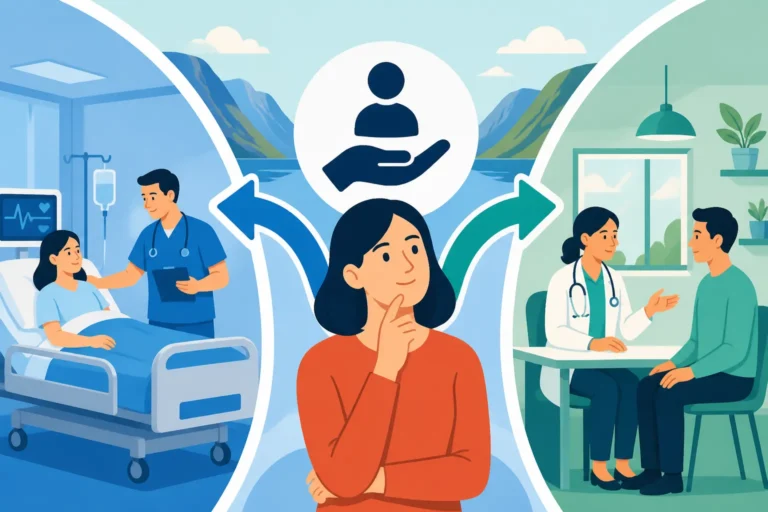
Choosing to give birth at home in Norway often feels like swimming against a very polite but very strong current. When I first mentioned the idea to my local health circle, the reaction was a mixture of confusion and intense curiosity. This guide clarifies the legal rights, financial realities, and safety protocols for home births to help you decide if it is the right path for your family.
Is Home Birth Legal in Norway? Understanding Your Rights
In Norway, the principle of patient autonomy is exceptionally strong. You have a legal right to choose your place of birth, which includes your own home. The Norwegian healthcare system is built on the foundation of the Folketrygden Basics: Who is Covered by the National Insurance Scheme, which generally ensures that maternity care is free. However, while the law supports your choice, the system is heavily weighted toward hospital births. About 99% of births in Norway occur in a hospital or a specialized maternity ward, meaning that choosing a home birth puts you in a very small, though legally protected, minority.
The "official" stance of the Norwegian Directorate of Health is that birth is a natural process, but they have established very strict criteria for who is eligible for a planned home birth. To be "cleared" by a midwife for a home birth, you must meet the following conditions:
- You must be in generally good health with no underlying chronic conditions.
- The pregnancy must be considered "low-risk" (no gestational diabetes, pre-eclampsia, or placenta issues).
- The baby must be in the cephalic (head-down) position.
- You must be between week 37 and week 42 of your pregnancy.
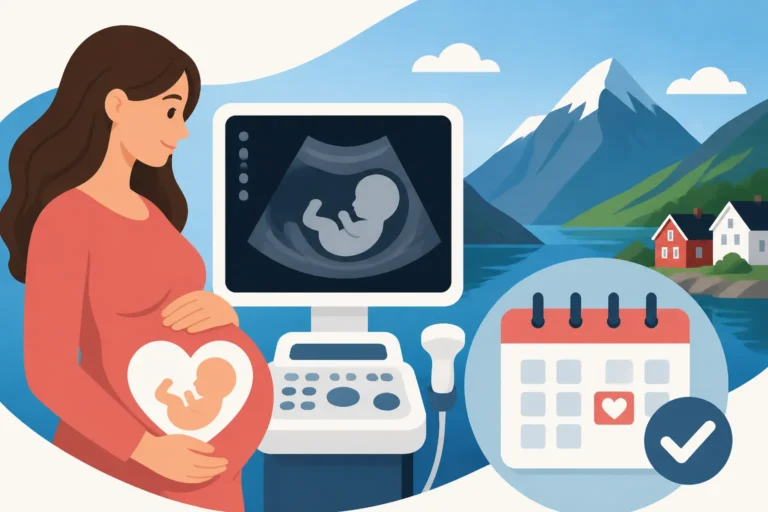
- You must have had a normal progression in your Maternity Care in Norway: Prenatal Appointments, Scans, and Midwives schedule.
If you meet these criteria, you are legally entitled to pursue a home birth. It is important to know that the state does not provide a midwife for you automatically; you must find and contract one yourself. This is where many expats feel the first "administrative hurdle." While the Public vs Private Healthcare in Norway: A Complete Guide explains that most essential services are covered, home birth exists in a unique middle ground where the state provides a small subsidy, but the parent often bears the brunt of the organizational work and some of the costs.
For expats who might not yet have full residency or those transitioning between visas, the situation can be more complex. If you are covered by Healthcare Rights for D-Number Holders: Exclusions and Alternatives, you still have the right to medical assistance during birth, but the subsidy for a private midwife might be harder to access. In these cases, having comprehensive coverage from providers like SafetyWing can provide an essential safety net for unexpected complications or private consultations that fall outside the standard public offering.
The Logistics: Finding a Midwife and Navigating the Costs
The biggest challenge for a home birth in Norway is not the law, but the geography. Midwife availability for home births is highly localized. In Oslo or Bergen, you might find several experienced midwives who specialize in home deliveries. However, if you are living in a more rural area or in Northern Norway, finding a midwife willing to travel to your home can be incredibly difficult. Most home-birth midwives in Norway work in private practice, and they often book up months in advance.
When you find a midwife, you will enter into a private contract. This is a significant departure from the usual "everything is free" experience of Norwegian healthcare. Here is how the costs typically break down:
- The Midwife's Fee: This usually covers the "on-call" period (the two weeks before and after your due date), the birth itself, and the immediate postpartum visits. You can expect to pay between 15,000 NOK and 25,000 NOK for this private service.
- The State Grant: Norway provides a "home birth grant" (hjemmefødselstilskudd). As of 2026, this is approximately 3,000 NOK. This is intended to help cover the midwife's travel and equipment costs. It is a drop in the bucket compared to the actual fee, but it is a symbolic gesture of support from the state.
- Supplies: You will be responsible for purchasing a "birth kit," which includes things like plastic sheeting, sterile pads, and sometimes a birth pool if you choose a water birth.
For many expats, the high upfront cost is a shock. This is why some choose to supplement their public coverage with private options. While Cigna Global is often used for high-end private hospital access, it can also offer peace of mind if you need to seek private specialist consultations during a high-risk pregnancy that would otherwise disqualify you from a home birth.
| Expense Category | Public System (Hospital) | Planned Home Birth (Private Midwife) |
|---|---|---|
| Birth Attendance | Free | 15,000 – 25,000 NOK |
| Pain Relief | Epidural/Gas (Free) | Natural/Water (Self-funded) |
| Postpartum Stay | 2-3 days in hospital (Free) | Immediate home recovery |
| State Subsidy | N/A | Approx. 3,000 NOK refund |
| Follow-up Care | At hospital/Helsestasjon | Home visits by midwife |
Remember that even if you pay for a private midwife, you still need to use the Navigating the Helsenorge App in English: A Step-by-Step Translation to ensure your pregnancy is registered in the national system. This ensures that if a transfer to a hospital becomes necessary, the medical staff has instant access to your records.
Safety Protocols and the Reality of Hospital Transfers
Safety is the primary concern for any parent, and in Norway, the safety of home births is managed through a very strict "transfer protocol." Norwegian midwives are highly trained medical professionals; they are not just "birth attendants." To practice home births, they must have extensive experience in hospital labor wards. They carry oxygen, resuscitation equipment for the baby, and medications to stop postpartum hemorrhaging.
A home birth in Norway is only allowed to continue as long as everything is perfectly normal. If there is any sign of "stalled labor," meconium in the water, or abnormal fetal heart rates, the midwife will initiate a transfer. This is not seen as a failure, but as a proactive safety measure. You should discuss the "transfer plan" with your midwife early on. This includes:
- Which hospital is the closest "backup."
- How you will get there (private car vs. ambulance).
- Who will communicate with the hospital staff.
In a life-threatening emergency, you would be calling 113. For more details on how this works, see Emergency Medical Care in Norway: 113, Legevakten, and Hospitals. If a transfer happens, you will transition into the standard public system. This means you will experience Giving Birth in a Norwegian Hospital: Pain Relief and Postpartum Stays, and the costs from that point forward are covered by the state. You will not be "billed" for the emergency hospital stay just because you started the birth at home.
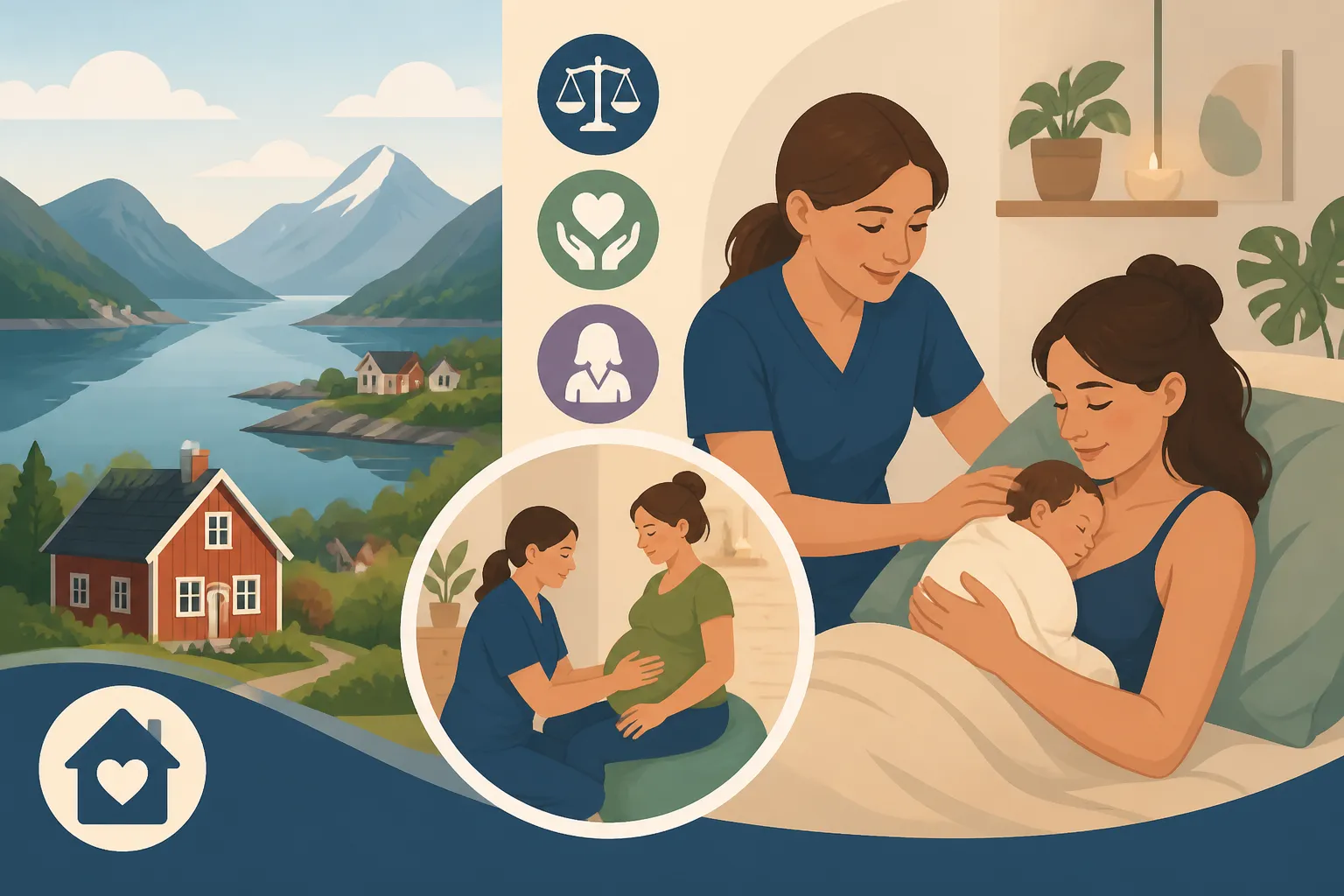
One of the major benefits of a home birth in Norway is the continuity of care. In a hospital, you might see three different midwives during a long labor. At home, your private midwife stays with you the entire time. After the birth, she will also handle the initial screenings for the baby. However, you will still need to integrate with the local Helsestasjon: Norway’s Free Child Health Clinics and Vaccination Program for long-term care. Your midwife will usually perform the Postpartum Home Visits: What the Helsestasjon Nurse Checks for the first few days, after which the responsibility shifts to your local municipal nurse.
Practical Advice for Expats Considering a Home Birth
If you are an expat, there are a few extra layers of complexity. First, ensure your living situation is conducive to a home birth. If you are renting an apartment, check your contract regarding "water damage" if you plan on using a birth pool. Most landlords cannot legally prevent you from giving birth in your home, but it is worth being mindful of noise and neighbors, as Norwegian apartment buildings often have strict quiet hours.
Communication is also key. While most midwives in Norway speak excellent English, the "language of birth" is very visceral. You want to make sure you have an intuitive connection with your midwife. If you are still navigating the User Fees (Egenandel) for Doctor Visits Before Reaching Frikort Status during your pregnancy, keep in mind that midwife visits (even private ones) do not typically count toward your "Frikort" limit, as they are considered a choice of private care rather than a required public service.
For those who are in Norway on shorter-term contracts or who have not yet qualified for the National Insurance Scheme, services like SafetyWing or Cigna Global are not just "nice to have"—they are essential. They can help bridge the gap if you need specialized care or if you are not yet fully covered by the Norwegian state. Always check the specific maternity clauses in these private policies, as they often have a 10-to-12-month "waiting period" before they cover pregnancy-related costs.
Finally, prepare your "Nest." The Norwegian winter can make home births feel incredibly cozy, but also logistically challenging. If you are due in January, you need to ensure your home is consistently warm and that the roads are cleared of snow in case of a hospital transfer. Have a "go-bag" ready just like you would for a hospital birth, because in the world of Norwegian maternity care, flexibility is the greatest tool a parent can have.
Disclaimer
The information provided in this guide is for educational and informational purposes only and does not constitute professional medical or legal advice. Maternity laws, healthcare regulations, and subsidy amounts in Norway are subject to change. Always consult with a qualified medical professional, such as a licensed midwife or doctor, and check with the Norwegian Directorate of Health (Helsedirektoratet) or UDI for the most current regulations regarding your specific residency status and health needs.