Egenmelding vs Sykemelding: Self-Reporting Sickness to Your Employer
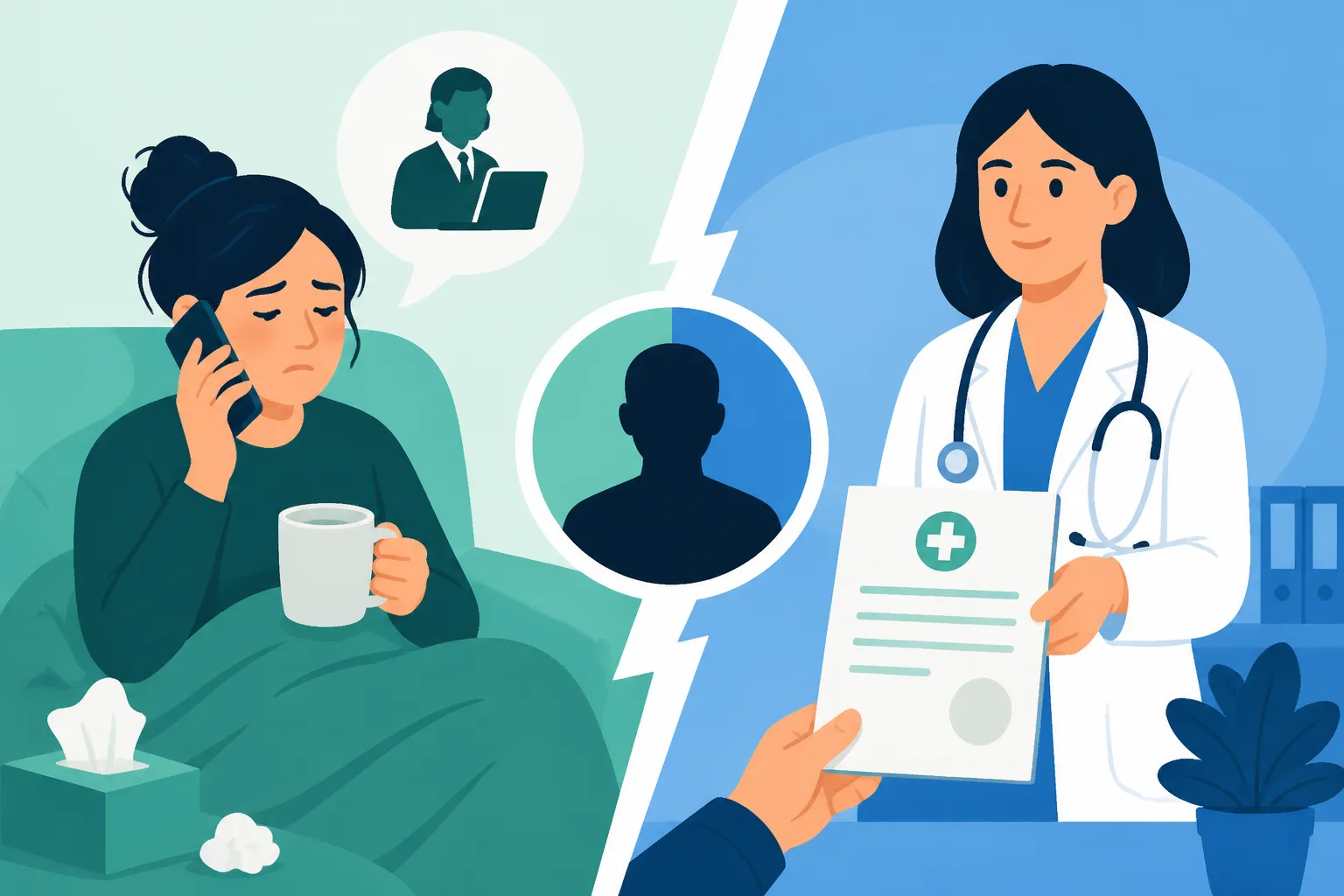
Waking up with a fever in a cold Oslo apartment is stressful enough without the added anxiety of wondering if your boss thinks you’re faking it. I remember panicking the first time I caught a brutal winter flu here, frantically searching for a doctor who could see me at 8:00 AM just to "prove" I couldn't work. This guide clarifies the confusion between self-reporting and medical sick notes so you can rest without administrative dread.
Understanding Egenmelding: The Power of Self-Reporting
In many countries, you need a doctor’s note the moment you miss a single hour of work. Norway operates on a foundation of high trust, which is where the concept of egenmelding comes in. This is a self-report where you simply notify your employer that you are too ill to work, without needing to provide a medical certificate from a physician.
Eligibility and the Two-Month Rule
One of the most common mistakes new arrivals make is assuming they can use egenmelding from day one. To have the right to self-report, you must have been employed with your current company for at least two consecutive weeks. However, for sickness benefit rights in general, you usually need to have worked for at least four weeks. If you fall ill before this two-week mark, you generally cannot use egenmelding and must obtain a professional note from a doctor to be covered.
Furthermore, if you are a freelancer or have a gap in your employment, the rules change significantly. It is always wise to understand the Folketrygden Basics: Who is Covered by the National Insurance Scheme to see how your specific residency status impacts your right to these benefits. If you are in a transition period or moving between jobs, companies like SafetyWing offer specialized insurance products that can bridge the gap when you aren't yet fully integrated into the Norwegian social security net.
The Standard 3-Day Limit
Under the Norwegian Working Environment Act, the statutory minimum for egenmelding is three consecutive calendar days. It is crucial to note the word "calendar." If you are sick on Friday and still sick on Monday, the weekend days count toward your three-day limit, even if you don't work Saturdays and Sundays. If you are still unable to work on Tuesday, you will need to contact your doctor to transition into a formal medical sick leave.
Most employers allow you to use egenmelding up to four times within a 12-month period. If you exceed this, the employer can actually require a doctor’s note for every single absence until a certain period has passed. This is part of the broader Employment Rights in Norway: The Working Environment Act Explained which balances worker flexibility with employer protections.
The IA Agreement: Extended Self-Reporting
You might hear your Norwegian colleagues talking about "IA-bedrift." This refers to companies that participate in the "Inclusive Working Life" (Inkluderende Arbeidsliv) agreement. If you are lucky enough to work for an IA company, your egenmelding rights are significantly expanded.
How IA Rules Differ
In an IA-certified company, the goal is to reduce long-term sick leave by giving employees more flexibility with short-term absences. Instead of the standard three days, employees in IA companies can often self-report for up to eight consecutive days. The total limit is usually 24 days within a 12-month period, rather than the four-occasion limit.
Moving to an IA-compliant firm later was a revelation; the trust-based system allowed me to actually recover from a heavy cold for five days without the stress of dragging myself to a clinic. This is a key part of Norwegian Work Culture: Flat Hierarchies and Communication Styles—the system assumes you are honest about your health.
Communication with Your Manager
Even though you don't need a doctor's signature for an egenmelding, you must notify your employer as soon as possible on the first day of absence. Most companies have a specific routine for this, often involving a text message or a notification via an internal HR system. You don't have to disclose your specific medical diagnosis—Norwegian privacy laws are very strict about this—but you should indicate how long you expect to be away.
Transitioning to Sykemelding: The Doctor’s Role
When your illness lasts longer than the self-reporting period, or if you haven't been employed long enough to use egenmelding, you need a sykemelding. This is a formal medical certificate issued by a healthcare professional, usually your primary doctor.
Seeing Your Fastlege
To get a sick note, you must have a physical or video consultation with a doctor. The sick note cannot be backdated to a time before you contacted the medical office, except in very specific, rare circumstances. This is why expats are advised to prioritize The Fastlege Scheme: Navigating Norway’s GP System as soon as they get their Fødselsnummer. If you wait until you are actually sick to find a GP, you might find yourself stuck at a crowded emergency clinic (Legevakt) just to get a piece of paper.
For those who are still waiting on their permanent ID numbers or prefer a more premium experience, Public vs Private Healthcare in Norway: A Complete Guide explains how private clinics can sometimes offer faster appointments. In these cases, having international coverage from Cigna Global can be a lifesaver, as they often cover the higher costs associated with private consultations that wouldn't be fully reimbursed by the public system.
Digital Handling via NAV
Gone are the days of hand-delivering yellow carbon-copy papers to your boss. In Norway, Getting Sick Notes (Sykemelding) from Your GP for Work is almost entirely digital. Once your doctor issues the certificate, it appears on your personal page on the NAV or Helsenorge portal. You then log in—usually using BankID—and "send" the sick note to your employer digitally.
The system will ask you a few questions, such as whether you can perform some of your duties or if the injury happened at work. It’s a very transparent process, but it does require that you have your digital life in order. If you're struggling with the tech, Navigating the Helsenorge App in English: A Step-by-Step Translation is a resource you'll want to bookmark.
Comparing the Two Systems
Understanding the nuances between these two forms of sick leave is essential for financial stability and career protection.
| Feature | Egenmelding (Self-Report) | Sykemelding (Doctor's Note) |
|---|---|---|
| Who issues it? | You (the employee) | A doctor (Fastlege or Specialist) |
| Duration | Usually 3 days (up to 8 in IA firms) | As determined by the doctor |
| Eligibility | Minimum 2 weeks of employment | Minimum 4 weeks for pay (usually) |
| Max use | 4 times per year (standard) | No set limit, but requires medical proof |
| Diagnosis | Private (not shared with employer) | Shared with NAV, but hidden from boss |
| Payment | 100% (within the 16-day period) | 100% (up to 6G threshold) |
The Financial Aspect: Who Pays Your Salary?
The transition between who is responsible for your paycheck is another area where expats get confused. In Norway, there is something called the "Arbeidsgiverperiode" or the Employer Period.
The First 16 Days
For the first 16 calendar days of your illness, your employer is responsible for paying your sick pay (sykepenger). This applies whether you are using egenmelding or sykemelding. Because the employer is footing the bill during this time, they have a vested interest in your recovery and may request a "dialogue meeting" if you are frequently absent.
NAV and the 6G Limit
If you are sick for more than 16 days, NAV takes over the payment of your sickness benefits. It is important to know that NAV only covers up to six times the National Insurance Basic Amount (known as "6G"). In 2026, this amount is significant, but if you have a high-paying job in tech or oil and gas, 6G might be lower than your actual salary.
Many professional contracts in Norway state that the employer will "top up" the difference between the NAV limit and your actual salary. You should check your contract or read Salaries and Minimum Wage in Norway: Industry Benchmarks to see how this applies to your sector. For those worried about long-term disability or gaps in the public safety net, Cigna Global offers supplemental income protection that can be vital for high-earning expats.
Gradert Sykemelding: The "Partial" Sick Leave
Norway has a very pro-work philosophy. Doctors will often issue a "gradert sykemelding" (graded sick leave), meaning you might be 20%, 50%, or 80% sick. This allows you to work reduced hours while you recover.
Balancing Recovery and Tasks
The idea is that staying completely away from the workplace can sometimes make it harder to return. If you have a broken leg but a desk job, your doctor might say you are 50% fit to work. You and your boss then agree on which tasks you can handle and what your reduced schedule looks like.
I’ve found that many expats find this concept strange—they feel that if they are "sick," they should be home in bed. However, embracing the graded system can actually help your standing with a Norwegian employer, as it shows a commitment to the team even during recovery. If you are managing a long-term condition, Managing Chronic Illness in Norway: Diabetes, Asthma, and Heart Disease provides more context on how the system supports ongoing health challenges.
Cultural Nuances and "Syk er Syk"
One of the most refreshing aspects of living in Norway is the cultural attitude toward illness. There is a common phrase: "Syk er syk" (Sick is sick). Unlike in the US or some parts of the UK, there is very little "hustle culture" pressure to work through a fever.
The Guilt Factor
When I first started working in Bergen, I remember feeling immense guilt for using an egenmelding for a migraine. My manager actually scolded me—not for taking the day off, but for trying to answer emails while I was supposed to be resting. In Norway, if you are sick, you are expected to switch off and get better.
However, this trust is fragile. If you are seen hiking or at a party while on egenmelding, you can face serious disciplinary action. The system relies on the fact that if you say you are too ill to work, you are actually at home resting. For digital nomads who might be used to working from anywhere, SafetyWing can provide travel-specific medical coverage if you get sick while traveling outside of Norway, ensuring you aren't stuck with massive bills while away from the Norwegian system.
BankID: The Essential Key
You cannot effectively manage your sick leave in Norway without BankID. Whether it's booking a doctor's appointment online or signing your digital sick note for NAV, this digital signature is your lifeline. If you are a new arrival still waiting for your full Fødselsnummer, you might face some hurdles. Make sure to read BankID Explained: Norway's Digital Identity System and Expat Challenges to avoid being locked out of the system when you need it most.
Practical Steps When You Fall Ill
- Check the Clock: Notify your employer before your shift starts or as early as possible.
- Assess the Duration: If you think it's a 1-2 day bug, use egenmelding.
- Verify Eligibility: Ensure you've worked at the company for at least two weeks.
- Contact the Doctor: If you’re still sick on day three (or day one if you're new), How to Book a Doctor’s Appointment Online Using BankID should be your next step.
- Log into Helsenorge: Once the doctor has seen you, check the portal to ensure the digital sick note has arrived.
- Send to Employer: Use the "Send to employer" button on the portal.
- Monitor Expenses: Keep track of your user fees (egenandel). These count toward your Healthcare Budgeting: The Frikort Exemption Card and User Fees limit, after which care is free for the rest of the year.
Norway’s system is designed to be a safety net, not a trap. By understanding the difference between self-reporting and medical leave, you can focus on what actually matters: getting back on your feet and enjoying the beautiful Norwegian outdoors once you're healthy.
Disclaimer
This guide is for informational purposes only and does not constitute legal or professional medical advice. While every effort has been made to ensure the accuracy of the information provided based on Norwegian laws in 2026, regulations regarding NAV and the Working Environment Act can change. Always consult with your HR department, your trade union, or the official NAV website for the most current rules applicable to your specific employment situation. For medical emergencies, always call 113.