Health Checkups for Occupational Health: What Employers Must Provide
One of the most confusing aspects of starting a new job in Norway is figuring out where your personal health responsibilities end and your employer’s legal obligations begin. I remember sitting through my first health and safety briefing in Stavanger, nodding along while trying to decode whether my frequent headaches were a "me" problem or a "workplace" problem. This guide clarifies exactly which health checkups and occupational services your employer must provide under Norwegian law.
Understanding the Bedriftshelsetjeneste and the Working Environment Act
In Norway, the cornerstone of workplace safety is the Arbeidsmiljøloven, or the Working Environment Act. This legislation isn’t just a dry set of rules; it is a powerful protector of your physical and mental well-being. Central to this is the Bedriftshelsetjeneste (BHT), or the Occupational Health Service. Not every small coffee shop is required to have a dedicated BHT, but for many industries, it is a mandatory requirement. Even if your employer isn't legally required to have a permanent BHT contract, they are still obligated to provide specific health-related assessments if the nature of your work poses a risk.
The BHT is an independent, neutral third party. This is a crucial distinction that many expats struggle to grasp. In many other countries, a "company doctor" might feel like a spy for HR. In Norway, the BHT is there to advise both the employer and the employee. They help identify risks before they become chronic illnesses. If you are struggling with Employment Rights in Norway: The Working Environment Act Explained, knowing how to trigger a BHT assessment is a vital skill. They are experts in ergonomics, chemical exposure, and even the psychosocial aspects of Norwegian Work Culture: Flat Hierarchies and Communication Styles.
The Legal Framework of Mandatory Health Surveillance
The Norwegian Labor Inspection Authority (Arbeidstilsynet) maintains a list of industries where the employer is strictly required to provide regular health checkups. These are not optional "perks" but mandatory health surveillances. For instance, if you work with hazardous chemicals, asbestos, or in high-noise environments, your employer must offer checkups before you start the job and at regular intervals thereafter.
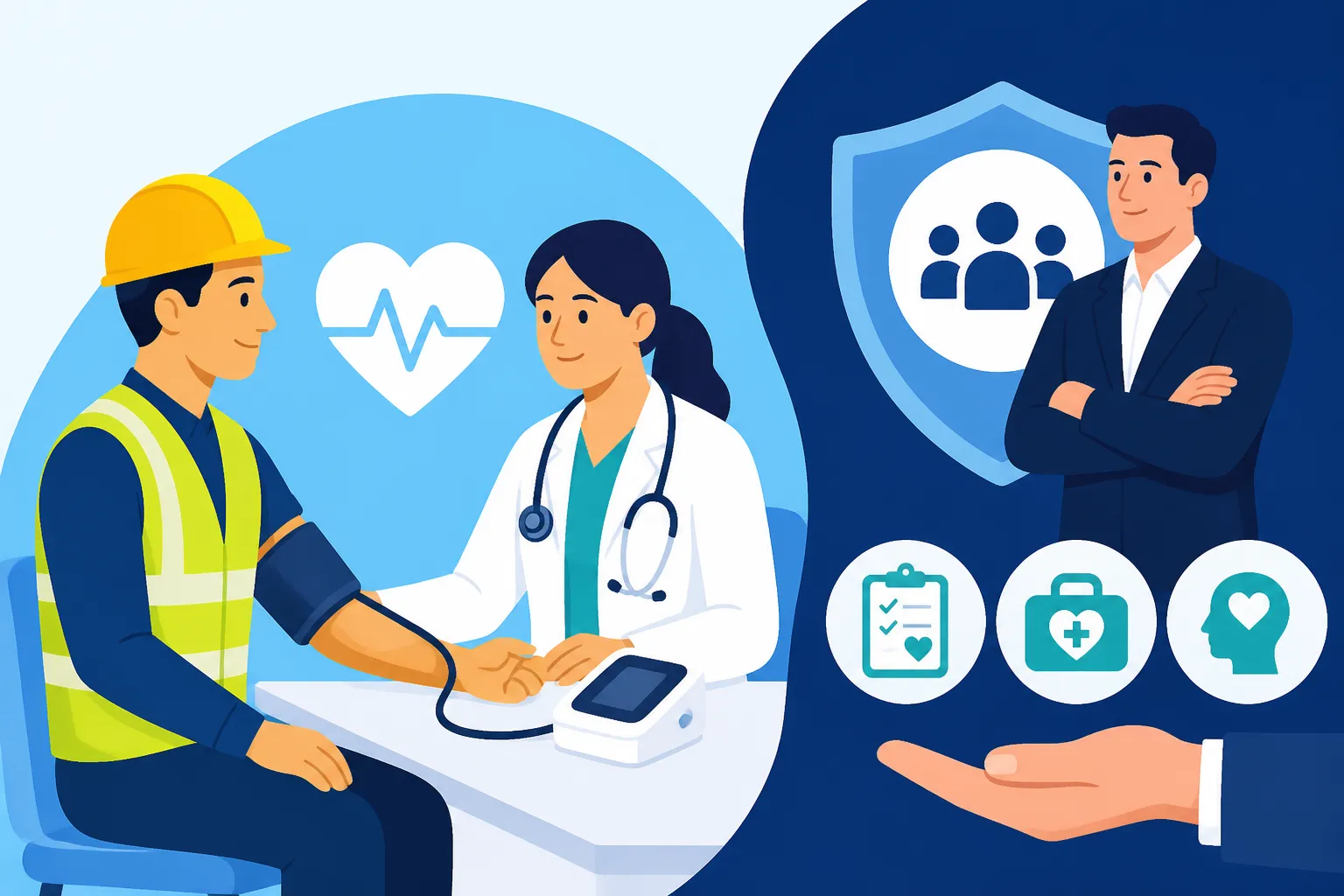
Expats in the construction and offshore sectors have often been surprised by the rigor of these exams. These aren't just "feel-good" checkups; they involve lung function tests, blood work for heavy metals, and hearing tests. The goal is to ensure that the work isn't causing measurable harm. If you are wondering how this fits into the broader picture, you might want to read about Healthcare in Norway for Expats: How the System Works (2027) to see how work-related care interacts with the public system.
Which Industries Must Provide Health Checkups?
Not every office worker gets a full physical every year on the company dime. However, the list of mandatory BHT industries is extensive. It includes construction, healthcare, cleaning services, wood processing, and many manufacturing sectors. If your workplace is on this list, the employer must pay for the BHT services, and you, as an employee, generally have a right and sometimes a duty to participate in the health monitoring.
For those in professional services or tech, the requirements are different but no less important. While a software engineer might not need a lead-exposure blood test, they are entitled to ergonomic assessments and specific eye exams. If you find yourself in a role that doesn't provide these services, you might look into Private Health Insurance in Norway: Is It Worth the Extra Cost? to bridge the gap for more frequent preventive screenings.
Specific Health Checkups and Screenings Required by Law
The most common health checkup that applies to the modern expat workforce in Norway involves screen usage. If you spend a significant portion of your day in front of a computer, the "Display Screen Equipment" regulations apply to you. Your employer is legally required to provide an eye examination and, if necessary, pay for "computer glasses" (terminalbriller).
These are not your everyday reading glasses. They are specifically tuned for the distance between your eyes and your monitor. To access this, you usually need to visit an optician and have them fill out a specific form for your employer. It’s a small detail, but it’s one of those "hidden" benefits that many foreigners miss because they assume they have to pay out of pocket. For more on how vision care works outside of the office, check out Eye Exams in Norway: Opticians vs Ophthalmologists Explained.
Physical Risk Screenings: Noise, Chemicals, and Manual Labor
For those in more "hands-on" industries, the checkups are more intensive. If your job involves high noise levels, the employer must provide audiometry (hearing tests). Some expats working in the tunnels around Bergen may not realize that their annual hearing test was a legal right. If the results show a decline, the employer is then obligated to investigate the workplace noise levels and provide better protection.
Similarly, if you are working in healthcare or with biological agents, vaccinations and regular screenings for infections are often covered. This is managed through the BHT to ensure that The Fastlege Scheme: Navigating Norway’s GP System isn't overwhelmed by occupational hazards. The employer bears the full cost of these screenings; you should never see a bill for a mandatory occupational health checkup.
Mental Health and Psychosocial Support
Norway is quite advanced in recognizing that "health" includes your mental state. The Working Environment Act specifically mentions the psychosocial work environment. While an employer might not provide a weekly therapy session, they are required to monitor the workplace for signs of bullying, harassment, or extreme stress.
If you are feeling the weight of Burnout and Work Stress: Sick Leave Protections in Norway, the BHT can be your first port of call. They can conduct "work environment surveys" and offer guidance on how to restructure your tasks to reduce stress. It is a proactive approach rather than a reactive one. While they don't replace clinical therapy, which you can read about in Mental Health in Norway: Accessing Therapy and Psychiatric Care, they act as a bridge to ensure the workplace isn't the primary cause of your distress.
| Type of Work | Mandatory Provision | Responsibility of | Frequency |
|---|---|---|---|
| Office / Screen Work | Eye Exam & Computer Glasses | Employer | Upon request / every 2 years |
| High Noise (Construction/Factory) | Audiometry (Hearing Test) | Employer / BHT | Annual or bi-annual |
| Chemical Exposure | Blood Tests / Lung Function | Employer / BHT | Risk-dependent |
| Night Shift Work | General Health Assessment | Employer | Before start / regularly |
| Heavy Manual Labor | Ergonomic Assessment | Employer / BHT | Ongoing / when symptoms arise |
How to Access and Navigate Occupational Health as an Expat
Navigating the system requires knowing the right terminology. If you feel your health is being affected by your work, you should first speak to your Verneombud (Safety Representative). Every Norwegian company with more than five employees (and often even smaller ones) must have a Verneombud. This is a colleague elected to represent your interests in health and safety matters. They can help you request a BHT consultation without it feeling like a direct confrontation with your manager.
When you do go for a checkup, it’s important to understand the privacy rules. The doctor or nurse at the BHT is bound by medical confidentiality. They cannot tell your employer your specific diagnosis. They can only report on your "work fitness" or suggest "tilrettelegging" (adjustments). For example, they might tell your boss, "This employee needs a standing desk and a reduction in night shifts for medical reasons," without revealing exactly what the medical reason is. This level of privacy is why Public vs Private Healthcare in Norway: A Complete Guide is such an important topic to master; knowing who sees your data is key to feeling safe in the system.
Supplemental Insurance and Private Options
While the Norwegian state and your employer provide a solid foundation, many expats choose to supplement this with private insurance. This is especially common for those who travel frequently or want to bypass the waiting lists for non-occupational specialists. Brands like Cigna Global are popular among the international community here because they provide a level of continuity that stays with you even if you change jobs or move back home.
If you are a digital nomad or in a "gap" period between contracts, you might look into SafetyWing. Their products are designed for people who aren't yet fully integrated into the Healthcare Budgeting: The Frikort Exemption Card and User Fees system or those who aren't covered by a Norwegian BHT because they are freelancing. While these private options won't replace the employer's legal obligation to provide occupational health, they offer a safety net for everything that happens outside the office walls.
Privacy and the Role of the Company Doctor
A common fear among foreigners is that an occupational health checkup could lead to them being fired. In Norway, the opposite is usually true. The goal of the health checkup is to find ways to keep you in work. If the BHT finds that the work is making you ill, the law places a heavy burden on the employer to adapt the workplace for you. This is a core part of the "Inclusive Workplace" (IA) agreement that many Norwegian companies sign.
It is worth noting that you should keep your own records of these checkups. While the BHT stores them, having your own copies of hearing tests or lung function results is helpful if you ever move to a different company or need to show your history to your Fastlege. If you find the administrative side of this daunting, learning about Healthcare Rights for D-Number Holders: Exclusions and Alternatives can help you understand your status during the early months of your residency.
Summary Checklist for Employees
If you are currently working in Norway, here is a quick checklist to ensure you are receiving the health benefits you are entitled to:
- Find out if your company has a contract with a Bedriftshelsetjeneste (BHT).
- Identify your Verneombud (Safety Representative).
- If you work at a computer, ask about the process for a terminalbrille (computer glasses) exam.
- If you work in a high-risk industry, check your contract for the frequency of mandatory health screenings.
- Remember that any health checkup mandated by the employer or the law must be paid for by the employer, including the time you spend at the appointment.
- Ensure your employer provides the necessary personal protective equipment (PPE) identified during health screenings.
Norway's system is designed to prevent illness before it starts. By taking advantage of the health checkups your employer must provide, you aren't being a "difficult" employee; you are participating in a culture of health that benefits everyone. Whether it’s a simple eye exam or a complex screening for offshore work, these services are there to ensure your Norwegian adventure isn't cut short by preventable health issues.
Disclaimer
The information provided in this article is for informational purposes only and does not constitute legal or medical advice. Occupational health regulations in Norway are subject to change, and specific requirements can vary based on individual employment contracts and industry-specific mandates. Always consult with the Norwegian Labor Inspection Authority (Arbeidstilsynet), your union representative, or a legal professional regarding your specific situation.