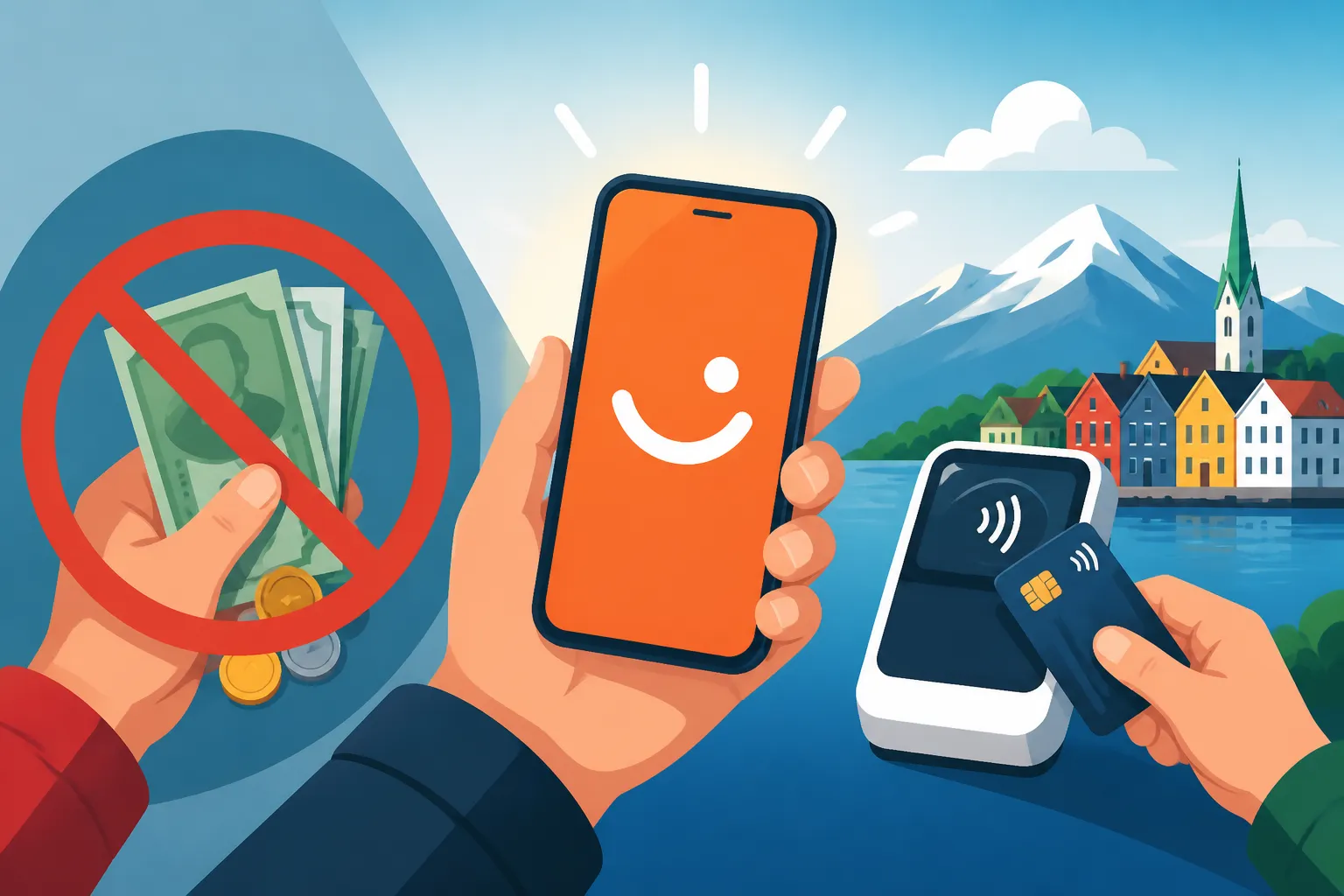
Cashless Norway: Vipps, Debit Cards, and the Disappearance of Cash
You've just arrived in Norway, perhaps with a handful of kroner notes, expecting to pay for your coffee or bus ticket, only to be met with a bewildered stare or a polite, "Card or Vipps, please." It's a common scene for new arrivals, realizing that cash, that familiar, tangible medium of exchange, has all but vanished from this ultra-modern Nordic nation. This guide will walk you through the reality of Norway's nearly cashless society, introducing you to the digital payment methods that rule supreme, and offering seasoned advice on how to navigate this technological landscape without losing your cool (or your ability to buy groceries!).
The Reality of Cash in Norway: A Vanishing Act
Stepping into Norway often feels like a leap into the future, especially when it comes to how money changes hands. For many expats, the expectation is that cash is always an option, a fallback. But here, cash is less a fallback and more a forgotten relic. It's a fundamental culture shock that can leave you feeling unprepared and, frankly, a bit silly trying to pay with physical notes.
Why Norway Went Cashless So Quickly
Norway's rapid shift to a cashless society isn't a fluke; it's a testament to a combination of cultural factors, technological adoption, and a concerted push from various sectors. It's all about convenience, security, and a national inclination towards efficiency. Norwegians, by nature, are early adopters when it comes to technology that streamlines their lives, and digital payments fit perfectly into that ethos.
Firstly, there's the sheer convenience factor. Imagine never having to worry about having the correct change, waiting for a cashier to count out coins, or making a special trip to an ATM. Digital payments are instant, trackable, and can be done from your phone or card without a second thought. Secondly, security plays a huge role. Less cash circulating means fewer opportunities for theft, both for individuals and businesses. It reduces the risk of armed robberies at shops and offers a digital trail for every transaction, which aids in combating tax evasion and money laundering. The government, through agencies like Skatteetaten (the tax authority), has actively encouraged this shift, recognizing the transparency benefits. Furthermore, Norway has a relatively small, highly educated, and trusting population, which fosters a high level of confidence in digital systems and banking infrastructure. When everyone else is using a digital method, it quickly becomes the default, and those clinging to cash become the anomaly.
Places Where Cash Might Still Be Accepted (But Don't Count On It)
While the vast majority of transactions in Norway are digital, you might occasionally stumble upon a place where cash is still reluctantly accepted. However, "reluctantly" is the key word here, and you should absolutely not rely on it as your primary payment method. Think of cash as that one friend who always insists on wearing a vintage band t-shirt to a black-tie event – it stands out, and not always in a good way.
You might find a few small, independent vendors at a local flea market or a bruktbutikk (second-hand shop) in a tiny village that will take cash, perhaps even preferring it for smaller transactions to avoid card fees. Some older, traditional barbershops or kiosks might have a dusty cash register, but even these are rapidly modernizing. Newcomers often find themselves in situations where the cashier has had to call a supervisor to remember how to open the till for a cash payment! It’s a genuine moment of awkwardness when you’re holding up a line of people who are breezing through with a tap of their card or phone. Even charity drives or small club memberships often have a Vipps number prominently displayed, expecting digital donations. The general rule of thumb is: if you can pay digitally, do. If you only have cash, prepare for a slight delay and potentially a polite suggestion to use your card next time. Having a few kroner tucked away for absolute emergencies, like a vending machine that surprisingly only takes cash (a rare breed now), might not hurt, but for daily life, it's essentially obsolete.
Vipps: Your Digital Wallet, BankID's Best Friend
If Norway has a payment king, its name is Vipps. This app isn't just a payment method; it's practically a social institution. Everyone has it, from teenagers splitting a pizza to grandmothers sending pocket money, and businesses use it for everything imaginable. For an expat, understanding and getting Vipps is arguably as crucial as opening a bank account itself.
What is Vipps and How Does It Work?
At its core, Vipps is a mobile payment application that allows instant money transfers between individuals, businesses, and organizations. Launched in 2015 by DNB, Norway's largest bank, it quickly gained widespread adoption and is now owned by a consortium of Norwegian banks. Think of it like a ubiquitous, hyper-integrated version of PayPal or Venmo, but even more ingrained into daily life here. Vipps seamlessly links directly to your Norwegian bank account using your phone number as your identifier. This means you don't need to top up a separate e-wallet; funds are drawn directly from, or deposited directly into, your bank account.
The beauty of Vipps lies in its simplicity. To send money to a friend, you just need their phone number or Vipps username. For businesses, they often display a "Vipps nummer" (Vipps number) – typically a five- or six-digit code – which you enter into the app to pay. You can also scan QR codes at checkout, or simply select Vipps as a payment option when shopping online. It's incredibly fast; the money is transferred in real-time, which is a stark contrast to traditional bank transfers that can take a business day or more. Beyond simple payments, Vipps has evolved into a comprehensive digital identity and payment platform. You can pay bills, set up recurring payments, split expenses with friends (and automatically calculate who owes what), and even log into various services that accept "Logg inn med Vipps" (Log in with Vipps). It truly acts as a digital wallet that goes far beyond just transactions.
Getting Set Up with Vipps as an Expat
Here's where many expats hit their first real administrative hurdle: the infamous "catch-22" of needing certain things to get other things. To get Vipps, you generally need a Norwegian bank account and, crucially, BankID. BankID is Norway’s national electronic identification system, used for everything from logging into your bank to signing contracts digitally. It's truly your key to digital life here. For many new expats, especially those with just a D-number (a temporary identification number) rather than a full fødselsnummer (national identity number), acquiring BankID can take some time. You might find yourself in an awkward limbo where you have a bank account but can't yet get BankID, which in turn delays your Vipps setup.
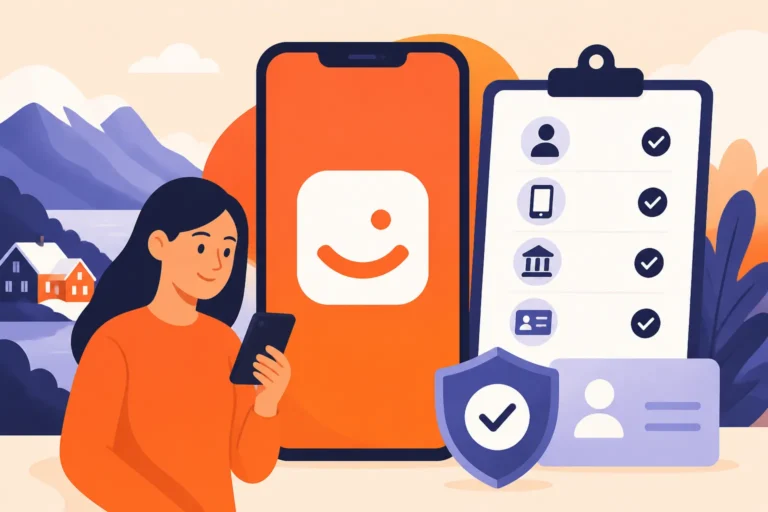
The typical process, once you have your fødselsnummer and a Norwegian bank account, is quite straightforward. First, you'll need to apply for BankID through your bank. This usually involves a visit to the branch or a secure online application, often requiring a valid passport with an RFID chip. Once your BankID is active (which can take a few days after application), you download the Vipps app, register your phone number, and link it to your bank account using your shiny new BankID. Some banks might offer a "light" version of BankID or BankID on mobile initially, which could potentially expedite Vipps access, but the full BankID is what truly unlocks everything. Be prepared for some patience here; the system is designed for security, which sometimes means extra steps for newcomers. Until you get BankID and Vipps sorted, you'll be relying heavily on your physical debit card, which brings us to the next essential payment method. You can find more detailed information on navigating these identity hurdles in our guide on BankID Explained: Norway's Digital Identity System and Expat Challenges and D-Number vs Fødselsnummer: How It Affects Your Banking Options.
Everyday Uses of Vipps (Beyond Just Sending Money)
Vipps is far more than just a peer-to-peer payment app; it's interwoven into the fabric of daily Norwegian life, touching nearly every aspect of commerce and social interaction. Once you're set up, you'll quickly realize how indispensable it is. Expats often express surprise at the sheer breadth of its functionality.
Imagine going out for dinner with friends. When the bill comes, no one is fumbling for cash or trying to figure out exact splits; someone simply pays the whole amount with their card, and then "vippser" their friends their share. The app even has a built-in "split bill" function that calculates everyone's contribution. It's incredibly efficient. Beyond social situations, many small businesses, market stalls, and even self-service farm stands (where you might pick up fresh eggs or vegetables) operate solely with a Vipps number. You simply open the app, enter their number, the amount, and confirm. It’s that easy. For larger organizations, you'll find Vipps used for paying club memberships, school fees, or even making donations to local charities. You might even use it to pay for parking in some cities, bypassing the need for physical meters. For those looking to budget carefully, the digital trail means every transaction is recorded, making it easier to track your spending, which can be invaluable when you're managing a new cost of living. Seriously, getting Setting Up Vipps: The Requirements for Norway’s Leading Mobile Payment should be high on your to-do list.
Debit and Credit Cards: Your Primary Payment Powerhouses
Before Vipps dominated the scene, and still for many transactions, physical plastic cards were (and still largely are) the backbone of Norway's cashless economy. You'll find card terminals everywhere, from the smallest kiosk to the largest supermarket, and they are designed for speed and efficiency.
Essential Cards for Daily Life: Debit vs Credit
In Norway, your debit card will quickly become your most used financial tool. For most day-to-day purchases – groceries at Kiwi or Rema 1000, a coffee at your local café, or a bus ticket – debit cards are king. They draw money directly from your bank account, meaning you're spending your own funds. The primary system behind most Norwegian debit cards is "BankAxept," Norway's domestic payment system, which is incredibly efficient and widely accepted. Many cards also feature Visa or MasterCard branding, allowing for international use, but for transactions within Norway, BankAxept is often the underlying network.
Credit cards, on the other hand, serve a slightly different purpose. While they are accepted almost everywhere debit cards are, they're typically used for online purchases, larger expenses where you might want buyer protection, or for situations where you want to defer payment. For expats, getting a Norwegian credit card can be a bit challenging initially, as it usually requires a established credit history in Norway, which takes time to build. You'll often need a fødselsnummer, a stable income, and a few months (or even a year) of banking history before a Norwegian bank will issue you a credit card. However, they can be useful for managing your Cost of Living in Norway 2026: Budgeting for Singles and Families by separating larger purchases or taking advantage of any loyalty programs. For new arrivals, relying on your debit card will be your primary method of payment for quite some time.
International Cards and Foreign Transaction Fees
When you first arrive, before you've managed to set up a Norwegian bank account and get your local debit card, you'll likely be relying on debit or credit cards from your home country. This is perfectly fine as a temporary solution, as most Norwegian card terminals accept major international networks like Visa, MasterCard, and often American Express. However, be prepared for potential hidden costs that can quickly add up and frustrate your budgeting efforts.
The main issue you'll face is foreign transaction fees. Most banks in your home country will charge a fee, typically a percentage of the transaction amount (e.g., 2-3%), every time you use your card abroad. On top of that, you might encounter unfavorable exchange rates. While terminals will often ask if you want to pay in NOK or your home currency, always choose NOK. Allowing the terminal to convert to your home currency (Dynamic Currency Conversion, or DCC) almost always results in a worse exchange rate. These small fees can really chip away at your funds, especially when you're making frequent, smaller purchases. This is where services like Wise (formerly TransferWise) can be incredibly helpful for managing your international finances. Wise offers multi-currency accounts and debit cards that allow you to hold and spend NOK at real exchange rates, significantly reducing foreign transaction fees compared to traditional banks. Using a Wise card for your initial period can be a smart move until your Norwegian banking is fully sorted. It's a pragmatic solution for saving money on everyday spending while you navigate the often-lengthy process of getting established. For larger transfers or sending money home, checking out Remittances: Cheapest Ways to Transfer NOK to International Accounts can save you a bundle.
How to Get a Norwegian Debit/Credit Card
Getting your hands on a Norwegian debit or credit card is intrinsically linked to opening a bank account in Norway, which is one of the first and most critical financial steps for any expat. This process can feel daunting, especially with the ID requirements, but it's entirely achievable with the right preparation. Many expats find themselves in a bit of a chicken-and-egg situation at first: you need a bank account to function, but banks need proof of residency and a valid ID.
To open a Norwegian bank account, you will typically need your fødselsnummer (national identity number) or a D-number, a valid passport (often one with an RFID chip for digital verification), and proof of address in Norway. Some banks, like DNB, Nordea, or SpareBank 1, are generally more expat-friendly than smaller local banks. You’ll usually need to book an appointment, either online or by phone, and bring all your original documents. During this process, you will apply for your debit card. It will typically be mailed to your registered address in Norway within a week or two. Once you have your bank account and debit card, you'll then work towards getting BankID, which we discussed earlier. As for credit cards, as mentioned, they usually require a longer period of financial stability and a local credit history. Don't be surprised if your application is denied initially; it's not personal, it's just the Norwegian system being cautious. Focus on getting your debit card and establishing your financial footprint first. You can get more detailed guidance in our comprehensive post on Banking in Norway: How to Open an Account as a Foreigner.
Beyond Vipps and Cards: Other Digital Payment Methods
While Vipps and physical cards cover the vast majority of transactions, Norway's digital payment ecosystem is rich with other tools that enhance convenience and efficiency. These often integrate seamlessly with your primary bank account and BankID, further solidifying the cashless environment.
Mobile Payments: Apple Pay, Google Pay, and Samsung Pay
The convenience of tapping your phone or smartwatch to pay is rapidly gaining traction in Norway, complementing the existing card infrastructure. Most modern card terminals are equipped with NFC (Near Field Communication) technology, making them compatible with popular mobile payment systems like Apple Pay, Google Pay, and Samsung Pay. This means that once your Norwegian debit or credit card is linked to your device's digital wallet, you can simply tap your phone or watch at the terminal, just as you would with a physical card.
The beauty of these systems is the added layer of security they provide. Your actual card number isn't transmitted during the transaction; instead, a unique, encrypted token is used, making it more secure than swiping a physical card. For expats who are used to these technologies from their home countries, it's a familiar and reassuring way to pay. While Vipps often handles peer-to-peer and online payments with its own integrated system, mobile payments are a fantastic alternative for in-store purchases when you don't want to dig out your physical card or when a business doesn't have a Vipps number for direct payment. The integration is usually straightforward through your bank's app or directly in your phone's settings, reinforcing the interconnectedness of Norway's digital finance world.
Online Banking and eFaktura
Managing your finances in Norway means embracing the power of online banking, which goes far beyond just checking your balance. Norwegian online banking portals, typically accessed securely with your BankID, are sophisticated hubs for all your financial needs. From paying bills to setting up savings goals, everything is designed for digital efficiency.
One of the most valuable features for expats (once they get the hang of it) is "eFaktura" (electronic invoice) and "AvtaleGiro" (direct debit agreement). eFaktura is a system where invoices from companies, utilities, and even some public services are sent directly to your online bank. Instead of receiving paper bills or emails, the invoice pops up in your banking portal, pre-filled with all the payment details. You just review and approve it with a click or two, often requiring BankID for confirmation. This eliminates manual entry errors and ensures you never miss a payment because a paper bill got lost in the mail. AvtaleGiro takes it a step further: it's a direct debit system where you authorize a company to automatically withdraw payments from your account on specific dates. This is perfect for recurring bills like rent, electricity, or internet, ensuring you're always on time. Both systems are incredibly common and often the default for businesses in Norway. Learning to use them effectively will save you a lot of time and hassle, helping you seamlessly manage your Money & Finance budget.
Alternatives for Those Without BankID (Initially)
For many expats, the initial period in Norway can feel like a waiting game, especially when it comes to getting BankID. Without it, you're effectively locked out of many digital services, including the full functionality of Vipps and some online banking features. This can be genuinely frustrating, leaving you feeling less than fully integrated.
While you're in this temporary limbo, your primary lifeline will be your physical Norwegian debit card. This card will work at nearly all point-of-sale terminals for in-store purchases. You might also be able to use international debit or credit cards (mind those foreign transaction fees!). For online purchases or paying bills, you might need to rely on your bank's basic online banking features (if accessible without BankID for certain tasks), or even, in rare cases, generate a physical giro payment slip from your bank to pay at a post office counter (though this is becoming increasingly rare and inconvenient). Some new residents choose to keep a prepaid card from an international service like Wise as a stop-gap for online shopping or travel before their full Norwegian banking setup is complete. It's important to remember that this "without BankID" phase is usually temporary. The system is designed to eventually onboard everyone into its digital fold. Be proactive in applying for your fødselsnummer and then your BankID as soon as you're eligible, as it will dramatically simplify your daily financial life. We have a dedicated guide on Overcoming the BankID Block: Workarounds for D-Number Holders that might offer some practical tips during this transition.
The Pros and Cons of a Cashless Society for Expats
Living in a predominantly cashless society like Norway brings with it a unique set of advantages and disadvantages. For expats, understanding these can help in adapting more smoothly and managing expectations about daily financial interactions. It's a double-edged sword: incredibly convenient for many, but potentially challenging for a few.
The Upsides: Convenience, Security, and Tracking
The most immediate benefit of a cashless society, and the one you'll quickly come to appreciate, is the sheer convenience. Imagine never having to visit an ATM, break a large bill, or count out exact change. Transactions are swift and seamless, often just a tap of your card or phone. This speeds up queues, especially at busy times in supermarkets or cafes, making daily errands far less stressful. You'll quickly get used to the Norwegian efficiency.
Beyond convenience, security is a major upside. Carrying less physical cash significantly reduces your risk of theft or loss. If your card is stolen, it can be quickly blocked, and fraudulent transactions are often reversible. This provides a peace of mind that cash simply can't. Every digital transaction leaves a clear, immutable trail. This means tracking your spending is incredibly easy through your online bank or budgeting apps. For expats, this can be invaluable for understanding the true Cost of Living in Norway 2026: Budgeting for Singles and Families and making informed financial decisions. This digital record also simplifies things when it comes to taxes. All your income and most expenses are automatically recorded, which can be a huge benefit when it's time to file your tax return (skattemelding). Services like "Taxes for Expats" often highlight how this digital footprint in Norway can actually make compliance easier, as the tax authority (Skatteetaten) already has access to much of your financial data, pre-filling large parts of your tax declaration. This transparency, while sometimes feeling a little Big Brother-ish, genuinely makes tax season less of a headache compared to many other countries. For more on this, check out The Complete Guide to Norwegian Taxes for Expats (Skatteetaten).
The Downsides: Privacy Concerns, Digital Exclusion, and Tech Hurdles
While the cashless system offers many benefits, it's not without its drawbacks, particularly for expats who might come from less digitized economies. One major concern for some is privacy. With every transaction leaving a digital footprint, there's less anonymity than with cash. Your spending habits can be tracked, analyzed, and potentially used by companies or even government agencies. While trust in institutions is generally high in Norway, this level of data collection can feel unsettling for those unaccustomed to it.
Then there's the issue of digital exclusion. While Norway boasts high digital literacy, not everyone is equally comfortable or able to navigate these systems. Older individuals, some with disabilities, or those new to the country who haven't yet mastered the language or the technological landscape, can find themselves at a disadvantage. Imagine trying to pay for something with an international card and hitting a language barrier with the cashier when the terminal demands an obscure "PIN OK" confirmation. It’s frustrating. For expats, the initial hurdles of getting a fødselsnummer, then a Norwegian bank account, then BankID, and then Vipps, can be a prolonged and confusing process. This multi-step authentication system, while secure, can feel like a series of gatekeepers blocking access to basic services. What happens if your phone battery dies, or you lose your wallet? You're effectively cut off from making payments until you resolve the issue, a situation that cash would typically avert. It's a vulnerability that many only realize after experiencing it firsthand.
Practical Tips for Navigating Cashless Norway
Adapting to Norway's cashless ways is less about overcoming a challenge and more about embracing a new normal. With a few practical tips and a change in mindset, you'll be tapping and vipps-ing like a local in no time.
Always Have a Backup (or Two!)
In a society where cash is no longer king, being prepared for digital hiccups is paramount. Imagine being at the checkout, only to realize your phone battery is dead, or your only debit card has been declined for some mysterious reason. It’s a moment of panic that can be easily avoided with a little foresight.
The golden rule for navigating cashless Norway is simple: always have a backup, or better yet, two. Your primary payment method will likely be your Norwegian debit card or Vipps. Make sure your phone is always sufficiently charged, as many essential applications, including Vipps and BankID, rely on it. Secondly, always carry a secondary card. This could be a credit card, a debit card from a different Norwegian bank (if you happen to have one), or a Wise multi-currency debit card. This ensures that if one card is declined, lost, or stolen, you have an immediate alternative. Don't be that person holding up the line, frantically searching for non-existent cash. It's also worth noting that while rare, some older card terminals might struggle with newer chip-and-PIN cards or contactless payments, so having a physical card you can insert is always a good idea. A small amount of emergency cash (e.g., a 200 NOK note) might be useful for highly specific, rare scenarios, but it should not be considered a primary backup. Think of it as a relic, not a reliable tool.
Embracing Helsenorge and BankID for Digital Life
BankID is not just for banking and Vipps; it's the master key to almost all aspects of digital life in Norway. From accessing your health records on Helsenorge to communicating with government agencies like NAV or Skatteetaten, BankID is required for secure authentication. For expats, getting comfortable with and understanding the broad utility of BankID is fundamental to truly integrating into Norwegian society.
Helsenorge.no, for instance, is Norway's public digital health portal. With BankID, you can access your medical records, book appointments with your fastlege (GP), order repeat prescriptions, and even check your vaccination history. Without BankID, these essential services become significantly more cumbersome, often requiring phone calls or physical visits. Similarly, dealing with social services (NAV), filing your taxes (Skatteetaten), or even registering a change of address with the National Registry (Folkeregisteret) all rely on BankID for secure login and digital signatures. It's the government's way of ensuring that you are who you say you are in the digital realm. Therefore, one of the most proactive steps you can take upon settling in Norway is to prioritize getting your fødselsnummer and then immediately applying for BankID through your chosen Norwegian bank. It's the gateway to not just financial transactions, but virtually all official communication and personal administration in Norway. Seriously, take a deep dive into How to Book a Doctor’s Appointment Online Using BankID to see how integrated it is.
Budgeting and Financial Tracking in a Digital World
In a truly cashless society, every single expense, from your morning coffee to your monthly rent, leaves a digital record. This might feel like a privacy concern to some, but it's also a powerful tool for financial management and budgeting, especially when navigating the notoriously high Cost of Living in Norway 2026: Budgeting for Singles and Families.
Your online banking portal will become your best friend. Norwegian banks offer robust online interfaces and mobile apps that provide detailed overviews of all your transactions. You can categorize spending, view trends, and set budgets. This level of transparency makes it incredibly easy to see exactly where your money is going, helping you identify areas where you can cut back or save more effectively. Moreover, this digital trail is a blessing when it comes to tax season. As mentioned earlier, Skatteetaten will have access to much of this data, pre-filling your tax return (skattemelding) for you. While you'll still need to review and potentially add deductions, the heavy lifting is often done. For new expats, this detailed tracking can be invaluable in understanding the nuances of Norwegian pricing and ensuring you don't overspend in your initial months. Embrace the digital records; they are not just for the government, but also a powerful tool for your own financial health.
Here's a quick comparison of various payment methods you'll encounter in Norway:
| Payment Method | Acceptance Level (Norway) | Ease of Use | Security Features | Requirements |
|---|---|---|---|---|
| Cash | Very Low (Declining) | Low (often awkward) | Poor (theft risk) | Physical notes, exact change needed |
| Vipps | Very High (Peer-to-peer, many businesses) | Very High (once set up) | High (BankID-protected, phone number linking) | Norwegian bank account, Norwegian phone number, BankID (full or light) |
| Debit Card | Very High (Universal) | High (tap & PIN) | High (PIN, fraud monitoring) | Norwegian bank account, physical card, PIN |
| Credit Card | High (Most businesses) | High (tap & PIN) | High (PIN, buyer protection, fraud monitoring) | Norwegian bank account (often required), credit history, physical card, PIN |
| Mobile Pay | High (Most modern terminals) | Very High (tap phone/watch) | High (tokenization, device authentication) | Compatible smartphone/watch, Norwegian debit/credit card linked |
| Online Banking | Very High (Bills, transfers) | High (with BankID) | Very High (BankID authentication, encrypted access) | Norwegian bank account, BankID |
Disclaimer
The information provided in this guide is for general informational purposes only and does not constitute financial, legal, or immigration advice. While we strive to keep the information up-to-date and accurate, policies and regulations in Norway, especially concerning banking, taxes, and immigration, can change rapidly. Always consult with official sources such as UDI, Skatteetaten, or a qualified professional for personalized advice pertaining to your specific situation.