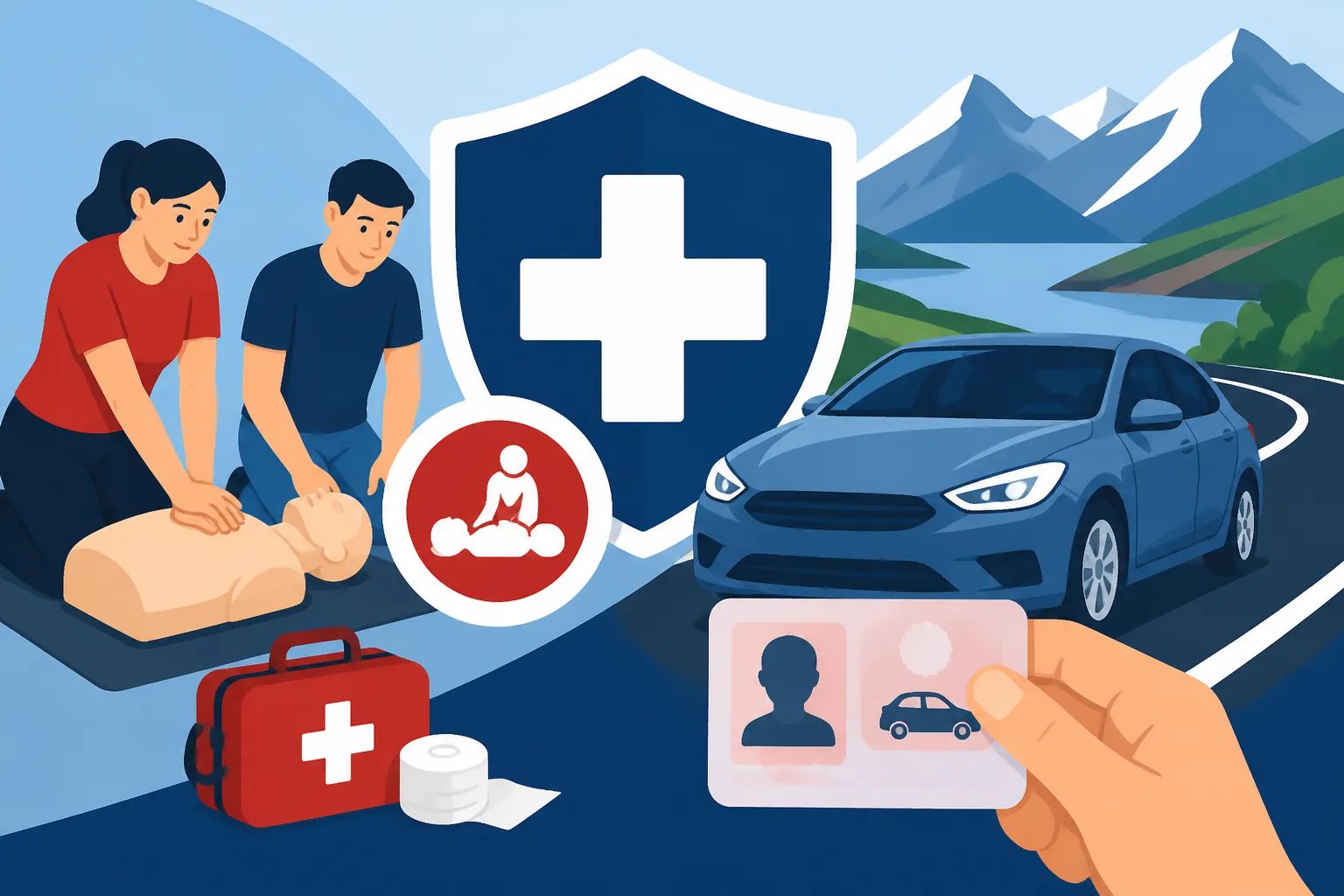
First Aid Training Requirements for Norwegian Driving Licenses
Navigating the Norwegian bureaucracy to secure a driver's license often feels like preparing for a high-stakes rescue mission rather than a simple road test. I remember sitting in a dimly lit classroom in Oslo, awkwardly practicing chest compressions on a mannequin while wondering if I'd ever actually get to drive a car. This guide explains the mandatory first aid training requirements for Norwegian licenses, ensuring you don't get stuck in administrative limbo.
The Philosophy of Road Safety and the Trafikalt Grunnkurs
In Norway, driving is viewed as a significant social responsibility rather than a basic right. This perspective is the cornerstone of the "Vision Zero" policy, which aims for zero fatalities or serious injuries on the roads. To achieve this, the government mandates a comprehensive introductory course called the Trafikalt Grunnkurs. For many expats, this is the first major hurdle. It is a 17-hour program that covers the basics of traffic safety, but its most critical component is the first aid module.
The training isn't just about passing a test; it’s about preparing you to be the first person on the scene of an accident. Unlike in some other countries where you might just call for help and wait, Norwegian law imposes a "duty to assist" (Hjelpeplikt). This means if you are the first to arrive at a crash site, you are legally obligated to provide aid to the best of your ability. Because the terrain in Norway can be rugged and help might be far away, especially in the northern regions, every driver must be a mini-paramedic. Understanding Healthcare in Norway for Expats: How the System Works (2027) helps contextualize why these high standards exist across all public safety sectors.
If you are under the age of 25, you must complete the entire Trafikalt Grunnkurs before you are even allowed to start practice driving (øvelseskjøring). If you are over 25, you are exempt from some parts of the course, but the first aid and night driving (mørkekjøring) modules remain strictly mandatory. Even for seasoned drivers moving here on a Skilled Worker Visa in Norway: Eligibility, Salary Thresholds, and Process, proving you have these specific Norwegian-standard skills is often required before you can exchange your foreign license.
Breaking Down the Mandatory First Aid Module
The first aid module (Førstehjelp) is usually a four-hour intensive session. It is designed to be highly practical. You won't just be watching PowerPoints; you will be on the floor, getting your hands dirty. The course focuses heavily on the "Chain of Survival." This starts with securing the accident scene to prevent further collisions, which involves the specific Norwegian protocol for placing the warning triangle and using reflective vests.
One of the most intense parts of the training involves learning how to handle an unconscious person. You will practice the recovery position and learn how to check for clear airways—skills that are vital in the cold Norwegian climate where hypothermia can set in quickly. Instructors emphasize that in a crisis, your primary job is to keep someone alive until professional help arrives. This ties directly into the wider system of Emergency Medical Care in Norway: 113, Legevakten, and Hospitals, where the synergy between the public and first responders is critical for patient outcomes.
The course also covers the use of Automated External Defibrillators (AEDs). These are increasingly common in public spaces across Norway, from shopping malls to remote ferry terminals. The training ensures you aren't intimidated by the device. While you are learning these life-saving skills, it is worth considering your overall health safety net. While the public system is robust, many expats choose to supplement their coverage with SafetyWing for travel-related gaps or Cigna Global for more comprehensive, international private options that cover specialized rehabilitation if a serious accident were to occur.
| Module Component | Duration | Core Skills Taught |
|---|---|---|
| Accident Scene Safety | 1 Hour | Warning triangles, vests, and traffic control |
| Life-Saving First Aid | 2 Hours | CPR, AED usage, and airway management |
| Triage and Reporting | 1 Hour | Assessing injuries and Calling 113: Ambulance Services and Life-Threatening Emergencies |
| Practical Scenarios | Ongoing | Hands-on simulations of road accidents |
Logistics for Expats Finding English-Friendly Courses
One of the biggest frustrations for foreigners is the language barrier. Most Trafikalt Grunnkurs sessions are conducted in Norwegian. However, in larger cities like Oslo, Bergen, and Stavanger, many driving schools (Trafikkskole) offer courses specifically tailored for English speakers. It is essential to book these well in advance, as they fill up quickly. I spent weeks calling different schools before finding one that could accommodate me in English, so do not leave this until the last minute.
The cost of the first aid module is usually bundled into the total price of the Trafikalt Grunnkurs, which typically ranges from 3,000 to 5,000 NOK. If you only need the first aid portion, expect to pay around 800 to 1,200 NOK. You will also need to provide valid identification to register your completion. This is where having your paperwork in order is crucial. Whether you are using a D-Number vs Fødselsnummer: How It Affects Your Banking Options to pay for the course, the driving school will report your completion directly to the Statens Vegvesen (The Norwegian Public Roads Administration) electronically.
Once you complete the course, you don't receive a paper diploma to carry around. Instead, your "certificate" is stored digitally in your personal portal on the Statens Vegvesen website. You can log in using BankID to see your status. If you are stopped while practice driving, you must be able to show this digital proof, or a printout of it, along with a valid ID. For those who are still waiting for their permanent residency and don't have BankID yet, the school can provide a physical certificate, but it’s a bit of a legacy process that requires extra stamps.
Exemptions and the Foreign License Exchange Trap
If you already hold a valid driver's license from another country, you might think you can skip the classroom time. This is a common misconception that catches many expats off guard. If your license is from an EU/EEA country, you can generally exchange it without any additional training. However, for those from "third countries"—including the US, Canada, Australia, and many others—the rules are much tighter.
In many cases, you have a limited window (often 12 months) from the date you move to Norway to exchange your license. If you miss this window, you might have to go through the entire Norwegian driver training process from scratch, including the first aid module. Even within that window, you may still be required to take a practical driving test and, crucially, the first aid and night driving modules if your original home-country training isn't deemed equivalent. You can find more detail on this in the guide for Converting Your Foreign Driver's License to a Norwegian License.
For those who are here temporarily or as digital nomads, using SafetyWing is a popular way to ensure medical costs are covered while navigating these local requirements. If you are planning a long-term life in Norway, having a robust plan from Cigna Global can be helpful if you need to undergo medical screenings that the Norwegian authorities sometimes require for older drivers or those with specific health conditions. Always check if you are eligible for the public system and if Is Calling an Ambulance (113) Free in Norway? applies to your current residency status before you get behind the wheel.
Navigating the Psychological Aspect of First Aid
The Norwegian course is unique because it forces you to confront the reality of a traumatic event. The instructors often use realistic makeup and simulated "blood" to desensitize students to the shock of an accident. They discuss the psychological impact of being a first responder and how to manage your own adrenaline. This is not just about the victim; it's about making sure the driver doesn't freeze up.
The concept of dugnad—the Norwegian tradition of communal work and responsibility—extends to the road. By taking this course, you are participating in a social contract that says, "I will look out for you, and you will look out for me." It builds a sense of security when you are driving through the dark, snowy mountains of Telemark, knowing that every other driver on that road has been trained to save your life if something goes wrong.
For expats, this can be a bit overwhelming. Coming from a culture where you might be sued for providing the "wrong" kind of help, it is a relief to learn that Norway has "Good Samaritan" principles baked into its legal system. You are protected as long as you act in good faith. If the intensity of the training or the stress of moving triggers anxiety, don't hesitate to look into Public vs Private Healthcare in Norway: A Complete Guide to find support for your mental well-being during the transition. Using a service like SafetyWing can also provide peace of mind for those still finding their feet in the local system.
Practical Scenarios and the Night Driving Link
The first aid requirements are often linked with the "Night Driving" (mørkekjøring) module. In Norway, because the winter months are so dark, you are taught how to perform first aid in low-visibility conditions. This includes how to use your car's headlights to illuminate a scene without blinding oncoming traffic and how to stay visible to other drivers while you are helping someone on the shoulder of the road.
During the practical scenarios, you might be asked to simulate an extraction from a car that has gone off the road. You’ll learn when it is safe to move a person (usually only if there is a risk of fire or drowning) and when it is better to keep them still to avoid spinal injuries. This level of detail is why Tourist Medical Care: What Happens if You Get Sick in Norway? is so different for those who are residents; as a resident driver, you are an active participant in the medical response network.
Finally, remember that your first aid knowledge needs to stay fresh. While the Statens Vegvesen only requires you to take the course once for your license, most veteran expats recommend taking a refresher every few years. If you are covered by a high-end plan like Cigna Global, check if they offer or subsidize advanced first aid or wellness workshops as part of their expat packages. Being prepared isn't just about following the rules; it’s about being a reliable member of your new Norwegian community.
Disclaimer
This guide is provided for informational purposes only and does not constitute legal or professional medical advice. Requirements for Norwegian driving licenses and health regulations are subject to change by the Statens Vegvesen and the Norwegian Directorate of Health. Always consult official government sources and authorized driving schools for the most current information regarding your specific situation in 2026.