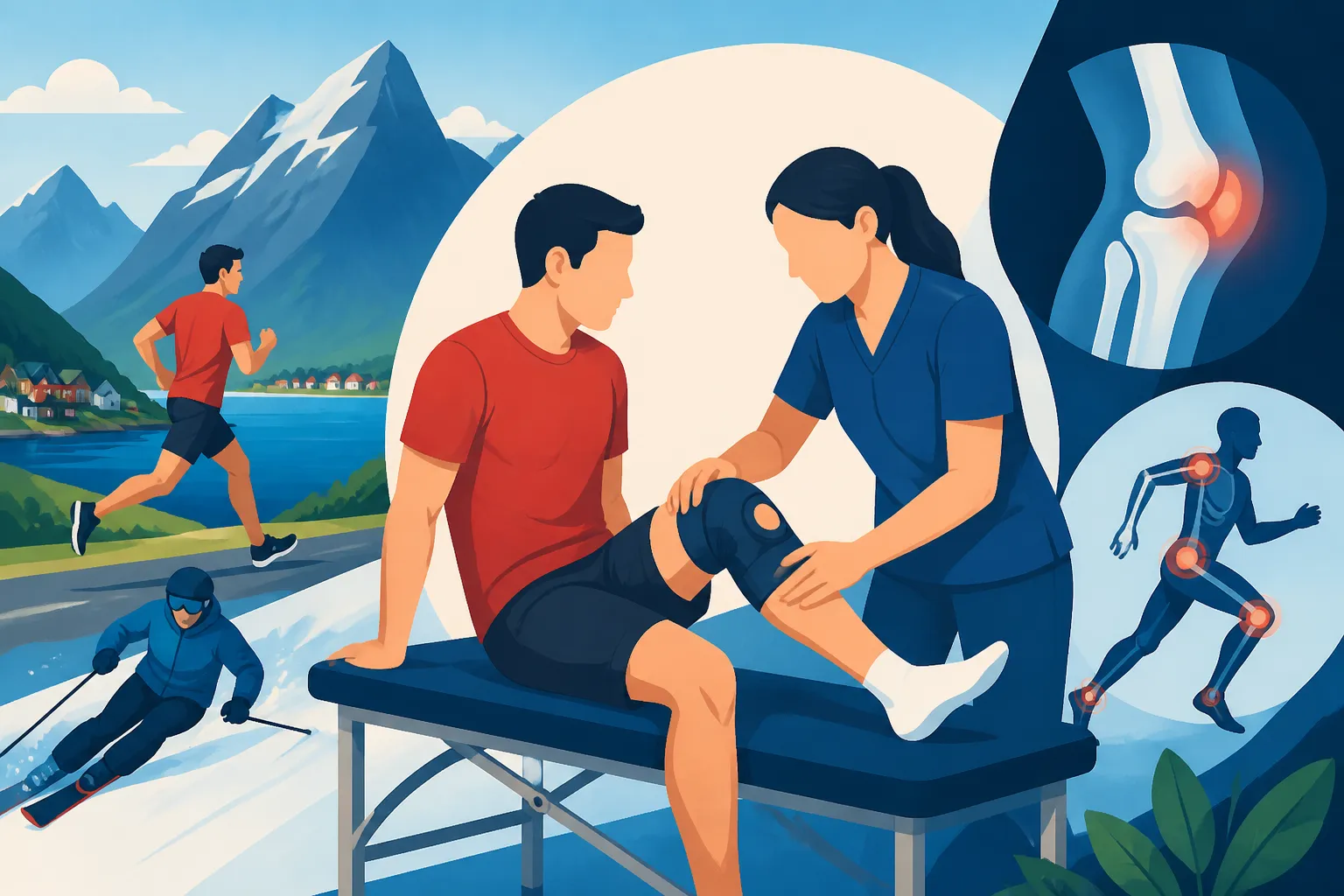
Sports Injuries in Norway: Navigating Physiotherapy and Orthopedics
Dealing with a torn ACL or a chronic runner's knee while trying to keep up with the hyper-active Norwegian lifestyle is a lonely, confusing battle. I remember my first winter here, slipping on "glattis" (black ice) during a trail run and wondering if the public system would even prioritize my non-life-threatening sprained ankle. This guide breaks down exactly how to access orthopedic care and physical therapy without getting lost in the "venteliste" (waiting list).
Understanding the Pathway to Care for Sports Injuries
The first hurdle many expats face is realizing that you cannot simply call up an orthopedic surgeon at Oslo Universitetssykehus (Ullevål) and book an appointment. In Norway, the healthcare system is built on a gatekeeper model. This means your journey almost always begins with your primary care physician. If you have moved here and registered with the National Registry, you should have been assigned a doctor through The Fastlege Scheme: Navigating Norway’s GP System. This doctor is your essential first stop for any sports-related ailment that isn't an immediate emergency.
When you sit down with your Fastlege, be prepared to be your own advocate. The Norwegian approach to medicine is often "wait and see," emphasizing rest and basic movement over immediate intervention. If you are an athlete or someone whose mental health relies on being active, you must communicate the specific impact the injury has on your daily life. A simple "my knee hurts" might result in a prescription for ibuprofen and a suggestion to walk less. Instead, explain that you can no longer participate in your local "bedriftsidrett" (company sports) or that your training for the Oslo Marathon has come to a complete halt.
For acute injuries—the kind where you hear a "pop" on the ski slopes or roll your ankle during a hike—you might bypass the GP and head straight to Legevakten (116 117): When and How to Use the Out-of-Hours Service. Every municipality has a Legevakt, and in major cities like Bergen or Stavanger, they often have specialized "Skadestue" (injury clinics) specifically for orthopedics. However, be warned: unless there is a visible deformity or a suspected break, the triage system may still categorize you as low priority. You might wait several hours only to be told to follow up with your GP on Monday for a referral.
Physiotherapy in Norway: Public vs. Private Options
Once you have a diagnosis or a suspected issue, the next step is usually physical therapy. This is where the system can get complicated for foreigners. There are two parallel tracks for physiotherapy in Norway: those with a "driftstilskudd" (municipal grant) and those who are purely private. If you want the state to cover most of the cost, you must find a therapist with a municipal contract. The good news is that as of 2018, you no longer need a formal referral from your GP to see a physiotherapist and still have the costs count toward your exemption card.
The Publicly Subsidized Route
When you use a physiotherapist with a municipal contract, you only pay a standardized "egenandel" (user fee). These fees are regulated by the government and contribute toward your annual Healthcare Budgeting: The Frikort Exemption Card and User Fees. Once you hit the spending limit for the year, your sessions become free. The massive downside here is the waiting time. In popular areas like Grünerløkka in Oslo or the center of Trondheim, the wait for a subsidized sports physiotherapist can be three to six months.
For many expats, waiting six months to fix a shoulder impingement is unacceptable. This is where Physical Therapy (Fysioterapi): Helfo Coverage and Referrals becomes a critical topic of research. If your injury is severe but not "emergency" status, you might find yourself stuck in a limbo of wanting professional help but being unable to access the subsidized version in a timely manner.
The Private Clinic Route
If you have the means or high-quality private insurance, private clinics are the way to go. Centers like NIMI (Norwegian Institute of Sports Medicine) in Oslo are world-class facilities where you can often get an appointment within 48 hours. You do not need a referral, and you will see specialists who work with professional athletes. However, you will pay the full price out of pocket, which can range from 800 NOK to 1,200 NOK per session.
For digital nomads or those on shorter assignments who might not be fully integrated into the Folketrygden yet, having a plan like SafetyWing can be a lifesaver. While it is primarily travel medical insurance, it provides a safety net for those unexpected sports accidents that occur while you are exploring the Norwegian fjords before your official residency paperwork is finalized.
| Feature | Publicly Subsidized Physio | Private Clinic (e.g., NIMI, Volvat) |
|---|---|---|
| Cost | Fixed user fee (approx. 250-400 NOK) | 800 – 1,500 NOK per session |
| Referral Needed | No (but helpful for history) | No |
| Waiting Time | 4 weeks to 6 months | 1 to 5 days |
| Frikort Eligibility | Yes | No |
| Specialist Access | Generalist initially | Direct access to sports specialists |
Advanced Orthopedics and Specialist Referrals
Sometimes, "fysio" isn't enough. If you suspect a labral tear, a meniscus issue, or chronic tendonitis that requires a specialist's eye, your GP must send a "henvisning" (referral) to an orthopedic department or a private specialist with a public contract. This is where the Norwegian "Fritt behandlingsvalg" (Right to Choose Your Treatment Place) becomes your best friend.
When your GP sends a referral, it goes into a central system. You have the right to choose which hospital or clinic treats you. You can use the "Velg behandlingssted" service on the Helsenorge website to compare waiting times across the country. If the wait for orthopedic surgery at Norwegian Hospitals: Inpatient Care, Outpatient Care, and Patient Choice in Oslo is 40 weeks, you might find that a hospital in Lillehammer or a private clinic in Drammen with a public contract can see you in 12 weeks.
For those who find the public wait times unbearable, a comprehensive international policy from a provider like Cigna Global can be a game-changer. It allows you to bypass the public queues entirely and head straight to private hospitals like Aleris or Volvat. These facilities offer "one-stop" shops where you can have your consultation, MRI, and surgery scheduled within a matter of weeks rather than months.
If you are navigating the public system, understand that Specialist Referrals in Norway: How the Waiting Times Work is not just a suggestion; it is a rigid queue. If you are categorized as "non-urgent," you will be at the back of the line. This is why it is so important to clearly document how your injury prevents you from working or caring for children, as these factors can sometimes increase your priority level in the eyes of the hospital's intake board.
Imaging: Getting an MRI or X-Ray
In my experience, getting an MRI is the most common bottleneck in Norwegian sports medicine. A Fastlege will rarely order an MRI during your first visit unless you cannot put weight on the limb. Usually, they will insist on six weeks of physiotherapy first. If the physiotherapy doesn't work, only then will they refer you for imaging.
You can choose to go to a public imaging center, such as Unilabs or Curato, using a public referral. You will pay a small user fee, and the results will be sent back to your GP. However, the wait for a non-urgent MRI can be several months. Many locals and expats choose to pay for a private MRI out of pocket (typically around 2,500 NOK to 3,000 NOK) to speed up the process. Once you have the private scan results, you can take them back to your GP to facilitate a faster referral to an orthopedic surgeon.
If you are considering going private from the start, you should look into whether Can I See a Private Specialist Without a Fastlege Referral? is the right move for you. While it costs more, the clarity of knowing exactly what is wrong within a week of the injury is often worth the investment for those of us who can't stand being sidelined.
Budgeting for Recovery: Frikort and Out-of-Pocket Costs
One of the most pleasant surprises about the Norwegian system is the Understanding the Frikort: The 2026 Healthcare Exemption Card Limit. In 2026, once you have spent a certain amount (usually around 3,000 to 3,500 NOK) on approved medical treatments, including GP visits, public imaging, and subsidized physiotherapy, you receive an exemption card. For the rest of the calendar year, these services are free.
However, you must be careful about what counts. Only "godkjente" (approved) providers contribute to this total. If you see a private chiropractor or a physiotherapist without a municipal grant, those hundreds of crowns will never count toward your Frikort. This is a common pitfall for expats who grab the first available appointment they find on Google, only to realize later they are paying 1,000 NOK a week with no hope of reimbursement.
To manage this, I highly recommend using the Helsenorge app. It tracks your progress toward the Frikort automatically. You can see every "egenandel" registered against your name. If you have been seeing a specialist and don't see the charge reflected, it’s a sign that the provider is private. For more details on managing these costs, check out User Fees (Egenandel) for Doctor Visits Before Reaching Frikort Status.
For those covered by Cigna Global, your out-of-pocket concerns might be different, focusing more on deductibles and ensuring the clinic is in-network. For everyone else, the strategy is usually to "power through" the initial costs until the Frikort kicks in. This makes the latter half of the year much cheaper for those dealing with long-term rehabilitation for things like ACL reconstruction or chronic Achilles tendonitis.
Rehabilitation and Returning to Sport
The final stage of any sports injury is the "opptrening" (rehabilitation). In Norway, there is a strong culture of active recovery. Don't be surprised if your physiotherapist has you doing heavy deadlifts or squats much sooner than you expected. The goal is always to get you back into the "marka" (the forest) or onto the "løype" (the ski tracks).
If your injury is work-related or particularly debilitating, your GP might suggest a stay at a specialized rehabilitation center. These are often located in beautiful rural settings and provide intensive daily therapy. While these are primarily for major surgeries or neurological issues, some centers specialize in complex orthopedic recovery.
Remember that while you are recovering, you have rights as an employee. If you cannot perform your job due to a sports injury—for example, if you are a physical therapist yourself or work in a warehouse—you may be entitled to "sykemelding" (sick leave). Your GP handles this, and it ensures you don't lose income while focusing on your exercises. However, the Norwegian system encourages "gradert sykemelding," where you might work 50% in an office capacity while doing rehab the other 50%.
Whether you are using SafetyWing for a temporary stay or are a long-term resident relying on the public system, the key to success in Norway is patience combined with polite persistence. Keep your documents in order, use the Helsenorge portal religiously, and don't be afraid to travel to a different city to see a specialist sooner. The Norwegian outdoors are waiting for you, and with the right navigation, you'll be back on the trails before the first snow falls.
Disclaimer
The information provided in this guide is for educational and informational purposes only and does not constitute professional medical advice, diagnosis, or treatment. Always seek the advice of your physician or another qualified health provider with any questions you may have regarding a medical condition. Reliance on any information provided in this article is solely at your own risk. The Norwegian healthcare system and regulations regarding Helfo and the Frikort system are subject to change, and you should always consult official government sources such as Helsenorge.no for the most current information.