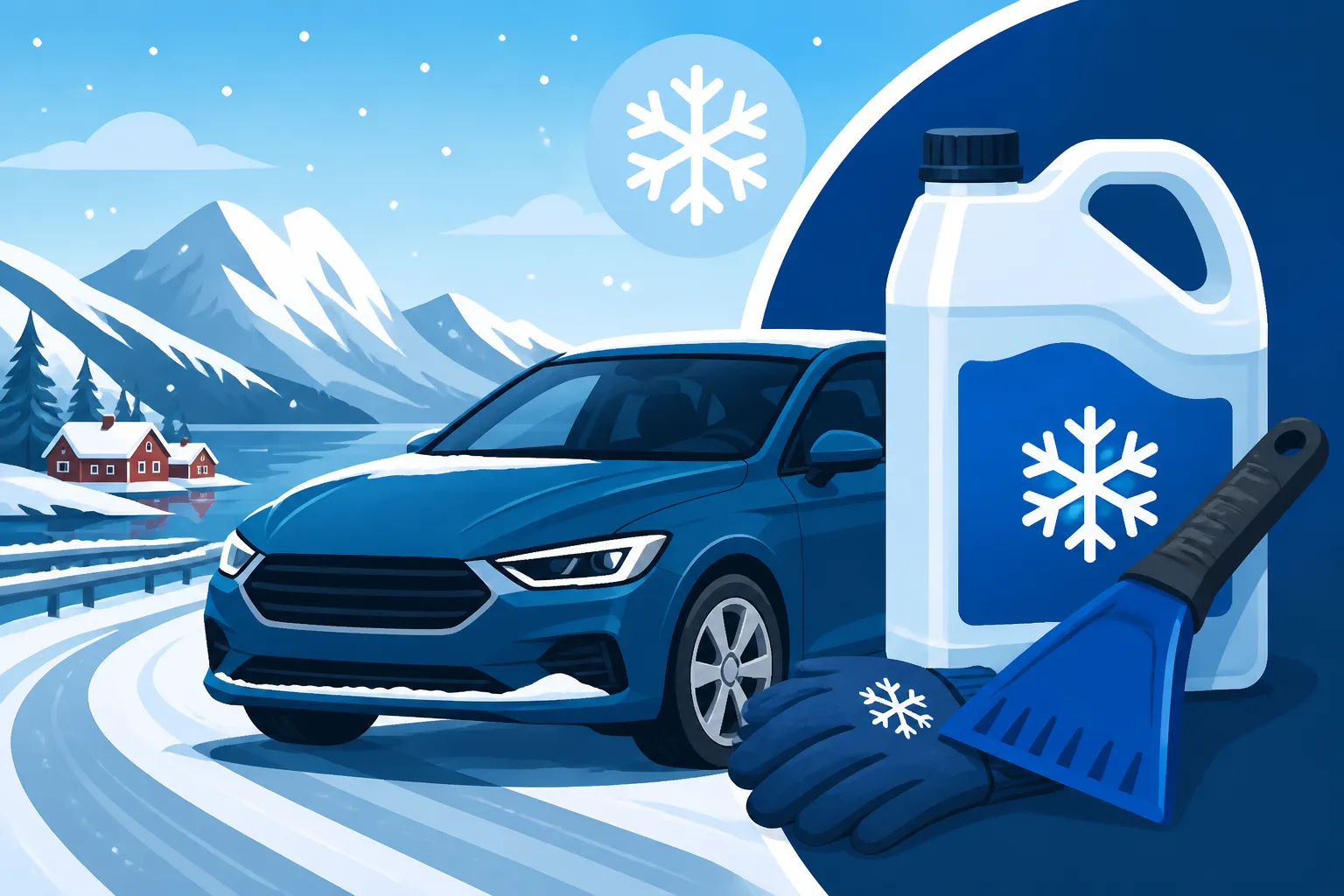
Preparing Your Car for the Norwegian Winter: Antifreeze and Scrapers
Alright, let's be real. Moving to Norway, or even just visiting, you've probably heard the whispers about the winters. They're not just a little chilly; they're a force of nature that demands respect, especially when it comes to driving. You might be picturing cozy cabins and stunning snowscapes, but the reality on the roads can be treacherous if you're not prepared. This guide is all about cutting through the myths and getting down to the nitty-gritty of what you absolutely must do to prepare your car for the Norwegian winter, focusing specifically on two often-overlooked but critical aspects: proper antifreeze and robust scrapers. Trust me, overlooking these details isn't just an inconvenience; it can be downright dangerous.
The Lifeblood of Your Engine: Antifreeze and Washer Fluid
When the mercury drops well below zero, as it frequently does here in Norway, the fluids in your car become your first line of defense against serious damage and impaired visibility. This isn't just about keeping warm; it's about keeping your engine running and your windshield clear so you can actually see the road – and those reindeer that might dart out in front of you.
Understanding Engine Antifreeze Coolant
Your car's engine coolant, often referred to as antifreeze, is the unsung hero of winter driving. Without the correct type and concentration, you're looking at a potential catastrophe. This isn't just about preventing the water in your cooling system from freezing; it also protects against corrosion and helps regulate engine temperature in all conditions.
In Norway, where temperatures can plummet to -20°C or even colder in some areas, the standard 50/50 mix of antifreeze and distilled water is usually sufficient for most modern cars, offering protection down to around -37°C. However, if you're in a particularly harsh region like Finnmark, or if you just want extra peace of mind, you might consider a slightly higher concentration, perhaps a 60/40 mix, which can protect down to -50°C. Just be careful not to exceed a 70/30 concentration, as pure antifreeze actually freezes at a higher temperature than a properly mixed solution and can reduce cooling efficiency.
There are different types of antifreeze, often distinguished by their color – typically green, orange, or pink/purple. These colors usually denote different chemical compositions (e.g., ethylene glycol vs. propylene glycol, or different additive packages like OAT, HOAT, IAT). It is absolutely crucial that you use the type specified for your car by the manufacturer. Mixing incompatible types can lead to chemical reactions that form gels or corrosive sludge, clogging your cooling system and causing severe engine damage. If you're unsure, consult your car's manual or ask at a local bilrekvisita store (car parts shop) or a reputable mechanic. They've seen it all and can guide you.
Checking your antifreeze level is a simple but vital task. Locate your coolant reservoir, usually a translucent plastic tank with "min" and "max" markings. The fluid level should be between these marks when the engine is cold. If it's low, top it up with the correct pre-mixed antifreeze or a 50/50 mix of concentrate and distilled water. Never, ever use plain tap water, as it contains minerals that can cause scale buildup and corrosion over time, negating the protective properties of the antifreeze. A hydrometer, which you can pick up for a few hundred kroner, can accurately measure the freezing point of your coolant, giving you concrete assurance of its protection level.
Winter-Ready Windshield Washer Fluid
Imagine driving down a dark, icy road and suddenly your windshield gets splattered with slush from an oncoming truck. You hit the washer fluid, and nothing happens. Or worse, it sprays, but then freezes instantly on your windshield, turning your view into an opaque sheet of ice. This isn't a hypothetical scenario; it's a genuine risk if you haven't switched to proper winter-grade windshield washer fluid.
Norwegian winter washer fluid is formulated with alcohol (often ethanol or methanol) to prevent it from freezing. It comes in various strengths, usually indicated by the temperature it protects against, like -10°C, -20°C, or even -30°C. You'll find it widely available at petrol stations (bensinstasjoner), supermarkets like Kiwi or Rema 1000, and car parts stores. Many are sold as concentrates, which you then dilute with water according to the desired temperature protection. Again, if you're unsure, opt for a stronger concentration or pre-mixed solutions, especially if you'll be driving in exposed areas or mountainous passes.
Before the deep cold sets in, make sure your reservoir is completely emptied of summer fluid. You can do this by running your washers until no more fluid comes out. Then, fill it with the winter-grade fluid. If you forget and your summer fluid freezes in the lines, you'll have a real headache. It might require parking in a heated garage for hours or using a de-icing spray on the nozzles to get things flowing again. Don't underestimate this small but critical detail. Staying connected while you're tackling these winter prep tasks can also be a big help; if you need to quickly look up a tutorial or find the nearest auto store, having a reliable data plan, perhaps with an Airalo eSIM, can be incredibly useful, especially if you're not on a local contract yet.
Visibility is King: Mastering Scrapers and De-Icers
Clear vision isn't just a recommendation; it's a legal requirement and an absolute necessity for safe driving. The combination of snow, ice, and persistent frost can turn your car into an igloo overnight. Relying on your car's defrosters alone is often too slow and insufficient, leading to dangerous blind spots.
The Humble Ice Scraper
Every Norwegian car owner has at least one, often several, ice scrapers. These simple tools are indispensable. But not all scrapers are created equal, and knowing how to use them effectively can save you time and prevent damage to your car.
-
Types of Scrapers:
- Plastic Scrapers: These are the most common and cheapest. Look for ones with a sturdy grip and a sharp, clean edge. Some have jagged edges for breaking up thicker ice, and a rubber squeegee side for clearing slush.
- Brass Blade Scrapers: Often considered superior, brass blades are softer than glass but harder than ice, meaning they glide over the windshield more smoothly and efficiently remove ice without scratching. They are a bit more expensive but worth the investment.
- Scrapers with Brushes: These often combine a scraper on one end with a brush on the other, perfect for clearing snow off the car body, roof, and bonnet before tackling the ice on the windows. Make sure the brush bristles are soft enough not to scratch your paint.
-
Proper Technique:
- Clear Snow First: If there's a layer of snow, use the brush part or your hand to sweep it off the windows and roof before you start scraping. Scraping snow with an ice scraper is ineffective and can push grit against the glass.
- Angle is Key: Hold the scraper at a shallow angle to the glass, applying firm, even pressure. Push the scraper away from you, working from top to bottom or side to side in overlapping strokes.
- Don't Rush: Aggressive, frantic scraping can lead to scratches, especially if there's any grit on the windshield. Take your time, overlap your strokes, and let the scraper do the work.
- All Windows, Not Just the Front: It's a common mistake to only clear the driver's side of the windshield. Legally and for safety, all windows, mirrors, and headlights/taillights must be free of snow and ice before you drive. This includes the side windows and rear window. You need a full 360-degree view.
Keeping a spare scraper in the glove compartment is a smart move. There's nothing worse than realizing you left your primary scraper inside your warm house when you're already outside in a blizzard.
De-Icing Sprays and Heated Scrapers
While the manual scraper is your bread and butter, de-icing sprays and heated scrapers offer convenient supplementary tools for those particularly stubborn mornings.
- De-Icing Sprays: These sprays typically contain alcohol or other chemical agents that rapidly melt ice. They're great for a quick fix on a light layer of frost or for loosening stubborn patches of ice on your windshield or side mirrors. Simply spray, wait a few seconds, and then wipe or scrape off the slush.
- Pros: Fast-acting, good for light frost, useful for tricky spots like frozen door locks or wiper blades.
- Cons: Can be expensive if used frequently, not environmentally friendly, can leave residue, and often less effective on thick layers of ice where a scraper is still needed. They are also not a substitute for proper washer fluid inside your car.
- Heated Scrapers: These are often powered by your car's 12V cigarette lighter socket. They use a heated element to melt the ice, making it easier to scrape away.
- Pros: Can make scraping large amounts of ice much less physically demanding.
- Cons: Requires power, takes time to heat up, the cord can be cumbersome, and battery-powered versions might run out of juice when you need them most. Generally, a good quality brass scraper is often faster and more reliable.
Remember, these tools are aids, not replacements for thoroughly clearing your car. Even after using a de-icer, it's wise to finish with a good scrape to ensure a perfectly clear view.
Preventing Ice Build-up
The best way to deal with ice is to prevent it from forming in the first place. While you can't stop nature, you can certainly mitigate the problem.
- Windshield Covers: A simple, affordable, and highly effective solution. A magnetic or weighted windshield cover placed on your car overnight will prevent snow and ice from forming directly on your glass. Just pull it off in the morning, shake off the snow, and you're good to go. You can find these at most car accessory stores.
- Parking Strategically: If possible, park your car facing east to catch the first rays of morning sun. Even weak winter sun can help thaw a light layer of frost. Parking under an overhang or in a garage, of course, is the ultimate prevention, but not always an option.
- Wiper Blade Position: In freezing conditions, lift your wiper blades off the windshield when you park. This prevents them from freezing to the glass, which can damage the rubber or even the wiper motor if you try to use them when frozen.
- Cardboard: A temporary, old-school hack is to place old cardboard boxes or newspaper over your windshield, securing them under your wipers and door. It's not as effective as a proper cover but can help.
When you first set foot in Norway, getting your bearings is paramount. You'll be busy setting up your life, perhaps looking at initial housing options through platforms like Spotahome to get a roof over your head. It's easy to overlook the practicalities of car ownership during this flurry, especially as winter might still feel far off. But trust me, you want to get this sorted before the first snow. Getting around to find the right car accessories and knowing where to go can be part of the adventure, and with a solid plan for your vehicle, your explorations of Norway, from the bustling cities to the quiet fjords, will be much safer.
Beyond the Basics: Other Winter Car Essentials
While antifreeze and scrapers are critical, winter car preparation in Norway is a holistic endeavor. Neglecting other components can quickly lead to being stranded in the cold.
Battery Health and Engine Heaters
The cold is a battery's worst enemy. As temperatures drop, a car battery's capacity significantly decreases, and the engine requires more power to start due to thicker oil. This combination often leads to dead batteries on frigid mornings.
- Battery Check: Before winter truly bites, have your battery tested at a local garage. They can check its charge level and overall health. A weak battery is almost guaranteed to fail you.
- Engine Block Heaters (Motorvarmer): These are incredibly common in Norway, especially in colder regions. An motorvarmer is an electric heater installed in or on the engine block that keeps the engine coolant and oil warm. This makes starting much easier, reduces wear on the engine, and saves fuel. You plug it into an outdoor electrical outlet, often with a timer, a few hours before you plan to drive. Many Norwegian parking spots, especially in apartment complexes or workplaces, have dedicated power outlets for this purpose.
- Interior Heaters (Kupévarmer): Often paired with an engine heater, a kupévarmer is a small electric fan heater placed inside the cabin. It warms the interior, defrosts windows from the inside, and makes stepping into your car a far more pleasant experience.
Together, these heating systems not only prevent frozen components but also make your daily commute significantly more comfortable and safer by ensuring quick defrosting.
Emergency Kit for Winter Driving
Even with the best preparation, unexpected things can happen. A well-stocked emergency kit can be the difference between a minor inconvenience and a dangerous situation. This isn't just a recommendation; it's practically a requirement for peace of mind, especially if you're venturing out of the major cities.
Here’s what you should consider packing:
| Item | Purpose | Norwegian Term (Approx.) |
|---|---|---|
| Warm Blanket / Sleeping Bag | For warmth if stranded and without heat. | Varmt teppe / Sovepose |
| Shovel | To dig out tires from snowdrifts. | Spade |
| Sand or Cat Litter | To provide traction if tires are spinning on ice. | Sand / Kattesand |
| Jumper Cables | To jump-start a dead battery (or help someone else). | Startkabler |
| High-Visibility Vest | Mandatory in Norway. For safety if you need to exit your vehicle on the road. | Refleksvest |
| Tow Rope | To be pulled out of a ditch or help others. | Tauekabel |
| Flashlight / Headlamp | For visibility in the dark (which is a lot of winter in Norway!). | Lommelykt / Hodelykt |
| First-Aid Kit | For minor injuries. | Førstehjelpsutstyr |
| Food and Water | Non-perishable snacks and water, in case of long delays. | Mat og vann |
| Fully Charged Phone | For emergencies (and a power bank!). | Fulladet telefon |
Speaking of phones, when you're exploring the vast landscapes, especially in winter, mobile reception can be spotty. Even in the relatively populated areas, having access to maps or emergency numbers is vital. Before embarking on longer trips, it's a good idea to ensure you have a dependable data plan. Services like Airalo can offer flexibility and peace of mind for staying connected, allowing you to access information about things like Calling 113: Ambulance Services and Life-Threatening Emergencies or checking local road conditions.
Winter driving in Norway demands respect and thorough preparation. Beyond these items, remember that Winter Tires Piggdekk vs Piggfrie: Legal Dates and Rules are non-negotiable, and understanding Driving in Norway: Licenses, Winter Driving, and Electric Vehicles EVs is essential. Also, be mindful of the cost of living; while Supermarkets in Norway: Finding International Ingredients are great for food, they're also handy for picking up basic car fluids. For anyone settling in, remember that finding a home is step one, and platforms like Spotahome can help you get established quickly. Once you’ve got your place, you can then focus on securing your car for the colder months. Don't forget to budget for Toll Roads Bompenger Costs: Budgeting for Driving in Norway, as they add up. Finally, be aware of the wildlife; knowing What to Do If You Hit a Moose or Deer While Driving is vital. Prepare your car diligently, and you'll find that navigating Norway's stunning winter landscapes can be a truly rewarding experience, not a harrowing one.
Disclaimer
The information provided in this guide is for general informational purposes only and does not constitute professional advice. While we strive to provide accurate and up-to-date information, car maintenance and safety procedures can be complex and specific to your vehicle. Always consult your car's owner's manual or a qualified mechanic for specific instructions and recommendations. Road and weather conditions in Norway can change rapidly and severely; always exercise caution and adapt your driving to the prevailing conditions.