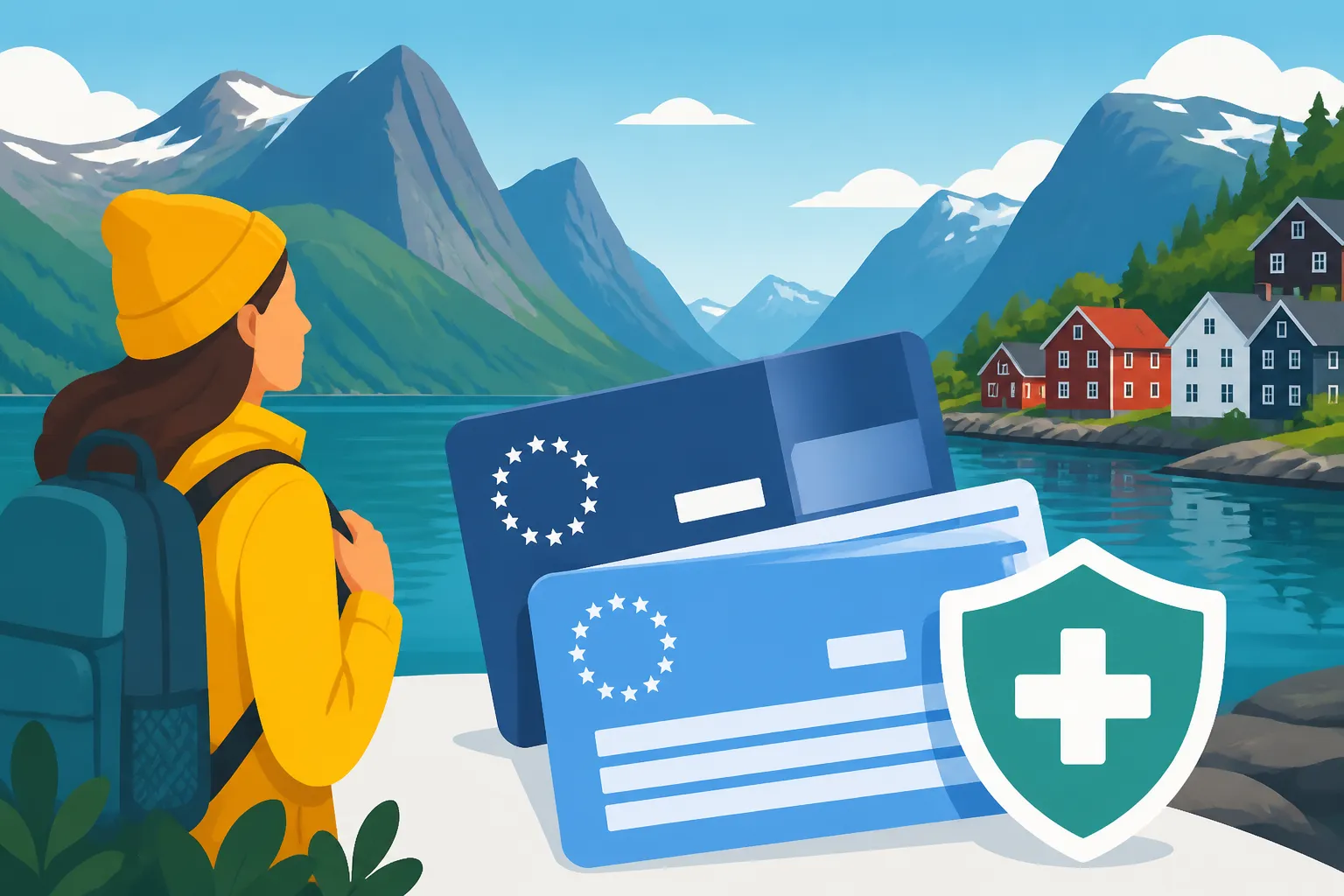
EHIC and GHIC in Norway: Using European Health Insurance
Stepping into a Norwegian clinic with a throbbing migraine only to realize your European Health Insurance Card isn't being recognized because you went to a private clinic is a classic expat mistake. I remember the sinking feeling of paying four times the expected rate in Oslo before I understood the rules. This guide solves the confusion surrounding EHIC and GHIC in Norway.
Understanding the EHIC and GHIC Framework in Norway
When you move to Norway from an EU or EEA country, or from the UK, you likely carry a small plastic card that promises access to medical care. While Norway is not a member of the European Union, it is a member of the European Economic Area (EEA). This membership is the backbone of why your European Health Insurance Card (EHIC) is valid here. It essentially acts as a bridge between the Healthcare in Norway for Expats: How the System Works (2027) and the system in your home country.
The EHIC and its newer British counterpart, the Global Health Insurance Card (GHIC), are designed to ensure that you receive "necessary medical treatment" under the same conditions and at the same cost as residents of Norway. However, the term "necessary" is a bit of a legal gray area that often surprises newcomers. It doesn't mean you can fly to Bergen specifically for a planned hip replacement. It means that if you are living here temporarily or visiting and you fall ill, the state will cover the bulk of your costs so you don't have to fly home mid-recovery.
The UK transition created a lot of noise, but for the average person on the ground in Norway, very little changed. If you have a GHIC or an existing EHIC issued by the UK, it is treated with the same respect as a French or German EHIC. The fundamental rule remains: you must be using the public system. If you walk into a flashy private hospital in the center of Oslo, your card is effectively just a piece of plastic. To truly benefit, you need to understand how to stay within the lines of the Public vs Private Healthcare in Norway: A Complete Guide.
What Exactly is the EHIC and How Does it Differ from the GHIC
The EHIC is a standardized document used across the EEA and Switzerland. It proves that you are a member of a social security system in another member state. In Norway, this is crucial because the Folketrygden Basics: Who is Covered by the National Insurance Scheme usually requires a long-term residency or a specific work contract. The EHIC allows you to bypass those long-term residency requirements for immediate, necessary care.
The GHIC was introduced following Brexit to replace the EHIC for UK residents. In Norway, the GHIC functions identically to the EHIC. It covers emergency care and necessary treatment for chronic or pre-existing conditions. For example, if you require dialysis or oxygen therapy, these are covered, though you must arrange them with the Norwegian hospital well in advance of your arrival. It is not a travel insurance policy, and this is where many expats get into financial trouble.
Why the Card is Not a Replacement for Travel Insurance
Many people arrive in Norway thinking their EHIC or GHIC is an all-access pass to free medicine. This is a dangerous assumption. While the card covers treatment in public hospitals, it does not cover mountain rescue—a very real concern in a country where people regularly get stuck on hikes to Trolltunga. It also doesn't cover medical repatriation. If you are seriously injured and need a specialized medical flight back to London or Berlin, the EHIC will not pay for it.
This is why many long-term travelers and digital nomads opt for something like SafetyWing. While the EHIC handles the hospital bill in a public ward, SafetyWing provides the safety net for things like emergency evacuations or travel-related mishaps that the Norwegian state simply doesn't cover for non-residents. Too many people rely solely on the EHIC, only to be hit with a 100,000 NOK bill for a helicopter ride after a hiking accident.
Validity and Expiry Logistics
Your card must be valid at the time of treatment. It sounds obvious, but some expats have realized their cards expired six months after they moved. Once you are no longer a resident of the country that issued the card—for instance, if you have officially moved your "center of vital interests" to Norway—you should technically be transitioning into the local system through The Fastlege Scheme: Navigating Norway’s GP System.
Using an EHIC when you are no longer eligible (because you are now a tax-resident of Norway) can lead to "clawback" situations where your home country demands reimbursement for the bills Norway sent them. It is a messy administrative nightmare that you want to avoid. If you are here for the long haul, use the card as a temporary shield while you wait for your Fødselsnummer and your official enrollment in the National Insurance Scheme.
How to Use Your Card at a Norwegian Doctor or Hospital
If you find yourself needing a doctor, the first thing you need to know is that you cannot just show up at a random office. In Norway, healthcare is highly structured. For non-emergencies during the day, you would typically see a GP, known as a Fastlege. However, as someone using an EHIC or GHIC, you don't have a "registered" Fastlege yet. You should look for a clinic that has "Fastlege" in the name and ask if they have a "gjestepasient" (guest patient) slot.
For urgent issues outside of office hours, you head to the Legevakten (116 117): When and How to Use the Out-of-Hours Service. This is where most EHIC holders end up. You walk in, take a number, and wait. When you reach the reception desk, you must present three things: your EHIC/GHIC, your passport or national ID card, and proof of your address in your home country if it isn't on your ID. Without the physical card (or a provisional replacement certificate), they will bill you the full "private" rate, which can be hundreds of Euros for a simple consultation.
The Triage Process and Documentation
Once you've handed over your card, you will be triaged. This is a standard Norwegian procedure where a nurse determines how urgent your case is. It doesn't matter if you have a GHIC or if you are the King of Norway; you wait based on medical need. Your card ensures you are in the queue, but it doesn't jump you to the front.
Ensure the receptionist actually scans or copies your card. In the chaos of a busy emergency room, sometimes they might miss the "foreign insurance" step and default you to a standard invoice. If that happens, you’ll receive a bill in the mail weeks later for the full cost of the visit. Always double-check that they have marked you down as an EHIC/GHIC patient before you leave the building.
What Necessary Medical Treatment Really Means
In Norway, "necessary treatment" is defined as care that cannot wait until you return home. If you have an ear infection, that is necessary. If you break your arm, that is necessary. However, if you want a routine check-up, a smear test, or a consultation for a long-standing back issue that hasn't worsened, the clinic may refuse to treat you under the EHIC. They will tell you to wait until you go home or pay the full private fee.
For those with chronic conditions, the rules are more generous. If you are managing diabetes or asthma, your visits to monitor these conditions are covered. You should bring a letter from your doctor back home explaining your condition and your current treatment plan. This makes the process much smoother when you need to access Emergency Medical Care in Norway: 113, Legevakten, and Hospitals or specialized clinics.
Finding Public vs Private Providers
This is the golden rule of using European health insurance in Norway: stay public. Most Fastleger are private contractors but operate within the public system. However, there are purely private clinics like Dr. Dropin or Volvat. These clinics are fantastic for speed, but they do not accept the EHIC or GHIC. You will pay the full price (usually between 700 NOK and 2,000 NOK) out of pocket.
If you are confused, look for the "Helfo" logo or ask directly: "Tar dere EHIC-kortet?" (Do you take the EHIC card?). If you find that the public waiting times are too long for your comfort, this is where having a secondary policy like Cigna Global becomes invaluable. They allow you to use those private clinics and skip the queues, which can be a lifesaver when the public Legevakt is backed up during flu season.
Costs, User Fees, and the Frikort System
A common misconception is that the EHIC makes healthcare "free." In Norway, healthcare is subsidized, not entirely free for adults. Even with your card, you are required to pay a "user fee" (known as egenandel). This is the exact same amount a Norwegian citizen pays. As of 2026, a standard GP visit might cost around 160 NOK to 300 NOK, and a visit to the Legevakt can be slightly more, especially if tests or X-rays are involved.
These fees apply until you reach a certain spending limit known as the Healthcare Budgeting: The Frikort Exemption Card and User Fees. Once you have paid a specific amount in a calendar year (the limit for 2026 is usually around 3,165 NOK), you receive a "frikort" which makes all further public treatment free for the rest of the year. The beauty for EHIC holders is that your payments count toward this total too, provided you have a D-number or are registered in the system properly.
| Service Type | Estimated User Fee (Egenandel) | Covered by EHIC/GHIC? |
|---|---|---|
| General Practitioner (GP) | 160 – 280 NOK | Yes (Public only) |
| Specialist Referral | 375 – 500 NOK | Yes |
| Hospital Stay (Inpatient) | 0 NOK | Yes |
| Emergency Room (Legevakt) | 200 – 450 NOK | Yes |
| Prescription Meds (Blue Slip) | Part of User Fee | Yes |
| Prescription Meds (White Slip) | 100% Out of Pocket | No |
| X-Rays and Lab Tests | 250 – 300 NOK | Yes |
Understanding Egenandel and Invoicing
When you see a doctor, you will usually pay at a small kiosk in the waiting room before you leave. You insert your card, your birth date, and the machine tells you what you owe. If you have an EHIC, the machine might not always recognize your status automatically. You may need to speak to the receptionist to ensure the "state" portion of the bill is sent to Helfo (the Norwegian health economics administration) and not to your home address.
If you forget to pay at the kiosk, they will mail you an invoice. Be careful—these invoices often come with a heavy administrative fee (around 70 NOK). If you are a tourist or a temporary expat and you move addresses, that invoice could go to debt collection, which can complicate your ability to get a bank account or a phone contract in Norway later on. Always try to pay on the spot.
Pharmacies and Prescriptions
The EHIC also applies to the Pharmacies and Prescriptions in Norway: White vs Blue Slips system. In Norway, medications are categorized. "Blue" prescriptions are for chronic illnesses and are heavily subsidized. If your condition qualifies, you will only pay a small fraction of the cost, and this counts toward your frikort total. "White" prescriptions are for short-term illnesses (like antibiotics for a one-off infection) and you generally pay the full price.
When you take your prescription to an Apotek (pharmacy), hand over your EHIC along with the paper or electronic prescription. The pharmacist will check if the medicine is covered under the EEA agreement. If you are using a GHIC, the process is the same. Just be aware that some brands of medication you use at home might not be available in Norway, and the pharmacist may substitute them for a Norwegian equivalent.
Why You Might Still Need Private Backup
Even with the subsidized user fees, healthcare in Norway can add up. If you are an expat who hasn't yet reached the Understanding the Frikort: The 2026 Healthcare Exemption Card Limit, a series of specialist visits can be a strain on your budget. Furthermore, the EHIC doesn't cover things like physical therapy or certain types of mental health support unless they are deemed an absolute emergency.
For those who want a higher level of service or coverage for things the state ignores—like specialized dental surgery or osteopathy—private insurance is the way to go. Brands like Cigna Global are specifically designed for the expat who wants to maintain a consistent level of care across borders without worrying about the local user fee limits. It bridges the gap between the "basic" care guaranteed by the EHIC and the "comprehensive" care most of us are used to.
Limitations: What the EHIC and GHIC Won't Cover
The most frequent complaints I hear from new arrivals in Norway involve the things the EHIC doesn't do. The biggest shock is usually dental care. In Norway, adults pay 100% of their dental costs. Unless you are under 18 or have a very specific, rare medical condition, your EHIC is useless at the dentist. If you have a toothache in Oslo, expect to pay at least 1,200 NOK just for the check-up and an X-ray.
Another major limitation involves Dental Care in Norway: Costs, Subsidies, and Finding a Dentist. If you need an emergency extraction, you will be paying the same high rates as any Norwegian. This is why I always tell people to get their teeth checked before they move to Norway. If you're already here and a molar snaps, your EHIC won't help, but a comprehensive travel or expat policy might cover "emergency pain relief."
Medical Repatriation and Rescue
As I mentioned earlier, Norway is a land of extreme nature. If you are skiing in Hemsedal and have a bad fall, the Calling 113: Ambulance Services and Life-Threatening Emergencies team will get you to the hospital. The ambulance ride and the initial hospital stabilization are covered by the EHIC. However, if you are then stuck in a Norwegian hospital and want to be moved to a hospital near your family in Manchester or Lyon, you are on your own.
A medical flight from Norway to the UK or the EU can cost upwards of £20,000. The EHIC strictly excludes this. This is the primary reason why many expats keep a policy with SafetyWing active during their first few months. It provides that specific "repatriation of remains" or "emergency medical evacuation" coverage that is completely absent from the European Health Insurance framework.
Non-Emergency Specialist Care
If you want to see a dermatologist for a mole check or a gynecologist for a routine exam, the EHIC is generally not the right tool. To see a specialist in the public system, you first need a referral from a GP. The Specialist Referrals in Norway: How the Waiting Times Work can be several months long for non-urgent issues.
If you try to use your EHIC to "skip the line" by going to a specialist, you will likely be turned away or charged the full private rate. The Norwegian system is designed to prevent "medical tourism," so they are very strict about what constitutes an emergency. If your life isn't in danger, the system expects you to either wait in the public queue or pay for private care out of pocket.
Practical Scenarios for Different Expat and Traveler Groups
The way you use your card depends heavily on your legal status in Norway. For example, Tourist Medical Care: What Happens if You Get Sick in Norway? is a straightforward process—use the EHIC for emergencies, pay your user fees, and go home. But for students and workers, it gets more complex. If you are here for more than a year, you are generally expected to join the National Insurance Scheme.
If you are an EU/EEA student, you are in a privileged position. You can usually keep using your EHIC from your home country for the duration of your studies, provided you are not working. Once you take a part-time job in Norway, you automatically become a member of the Norwegian National Insurance Scheme through your salary deductions, and you should technically start using the local system rather than your EHIC.
The D-Number Dilemma
Many expats start with a D-number (a temporary identification number). While you have a D-number, you aren't always automatically assigned a Fastlege. In this "limbo" period, your EHIC is your best friend. It proves you are covered by some system while the Norwegian bureaucracy processes your Healthcare Rights for D-Number Holders: Exclusions and Alternatives.
During this phase, keep a folder with copies of your EHIC, your work contract, and your passport. Norwegian healthcare administrators are generally very helpful, but they need to see the paperwork. If you show up with a D-number but no EHIC, they may struggle to find you in the system, leading to those dreaded full-price invoices.
Posted Workers and Short-Term Contractors
If your company in Poland or Ireland has "posted" you to Norway for a six-month project, you remain a member of your home country's social security system. In this case, your EHIC is your primary form of coverage. You should also carry an S1 form (formerly E101) if you have one. This form is a more robust version of the EHIC for workers and can sometimes help you register for a local Fastlege even without a permanent Fødselsnummer.
If you find yourself in this category, it’s worth looking at How to Register for a Fastlege (GP) on Helsenorge to see if you can get on a list as a guest. Having a dedicated doctor who can see your history is much better than visiting a different doctor at the Legevakt every time you have a cough.
Comparing EHIC/GHIC with Private Health Insurance
By now, you’ve realized that the EHIC and GHIC are fantastic "floor" levels of coverage, but they are not the "ceiling." The Norwegian public system is world-class, but it is slow and comes with out-of-pocket costs. This is why many veterans of the expat life in Norway eventually look into private options.
SafetyWing is often the go-to for the "transition phase." It is affordable, can be bought even if you’ve already left home, and covers the big stuff the EHIC misses (like that 20,000 Euro flight home). It is perfect for digital nomads or those on a job-seeker visa who aren't yet paying into the Folketrygden Basics: Who is Covered by the National Insurance Scheme.
Cigna Global for Long-Term Peace of Mind
For those who have moved to Norway permanently and want to avoid the 3-month wait for a specialist or the 5-hour wait at the Legevakt, Cigna Global is a strong contender. They allow you to access private hospitals like Aleris or Volvat, where you can get an MRI or see a consultant within days. In the public system, unless it’s cancer or a heart attack, you could be waiting weeks.
When deciding between relying solely on your EHIC/GHIC or adding private insurance, consider your health history. If you are young and healthy, the EHIC plus a basic travel policy for emergencies might be enough. If you have a family or a chronic condition that requires regular specialist input, the private route will save you a massive amount of stress and waiting time.
The Verdict: A Hybrid Approach
My personal recommendation, after years of navigating the Norwegian fjords and its bureaucracy, is a hybrid approach. Use your EHIC or GHIC for the "boring" stuff—the flu, the basic prescriptions, and the emergency room visits. It’s what it’s there for, and it keeps you in the local system.
However, do not let it be your only shield. Always have a secondary policy that covers repatriation and private care. Whether it’s Private Health Insurance in Norway: Is It Worth the Extra Cost? or a specialized expat plan, the peace of mind is worth the monthly premium. Norway is an expensive country; don't let a medical bill be the thing that ruins your adventure.
Disclaimer
This guide is intended for informational purposes only and does not constitute legal or medical advice. Healthcare regulations in Norway and the terms of the EHIC/GHIC agreements can change. Always check the official UDI or Helsenorge websites for the most current requirements. While I have shared my personal experiences as an expat, your situation may differ based on your nationality, visa type, and specific health needs. Always consult with a professional insurance advisor before making significant changes to your coverage.