Medical Confidentiality in Norway: What Can Employers Actually See?
Navigating a new workplace in a foreign country is stressful enough without worrying that your boss knows the intimate details of your medical history. I remember my first winter in Oslo, terrified that my manager would see my specific diagnosis on a sick note and judge me for it. This guide solves the mystery of medical confidentiality in Norway, detailing exactly what your employer is legally allowed to see.
The Ironclad Wall of Privacy: Sykemelding and Your Diagnosis
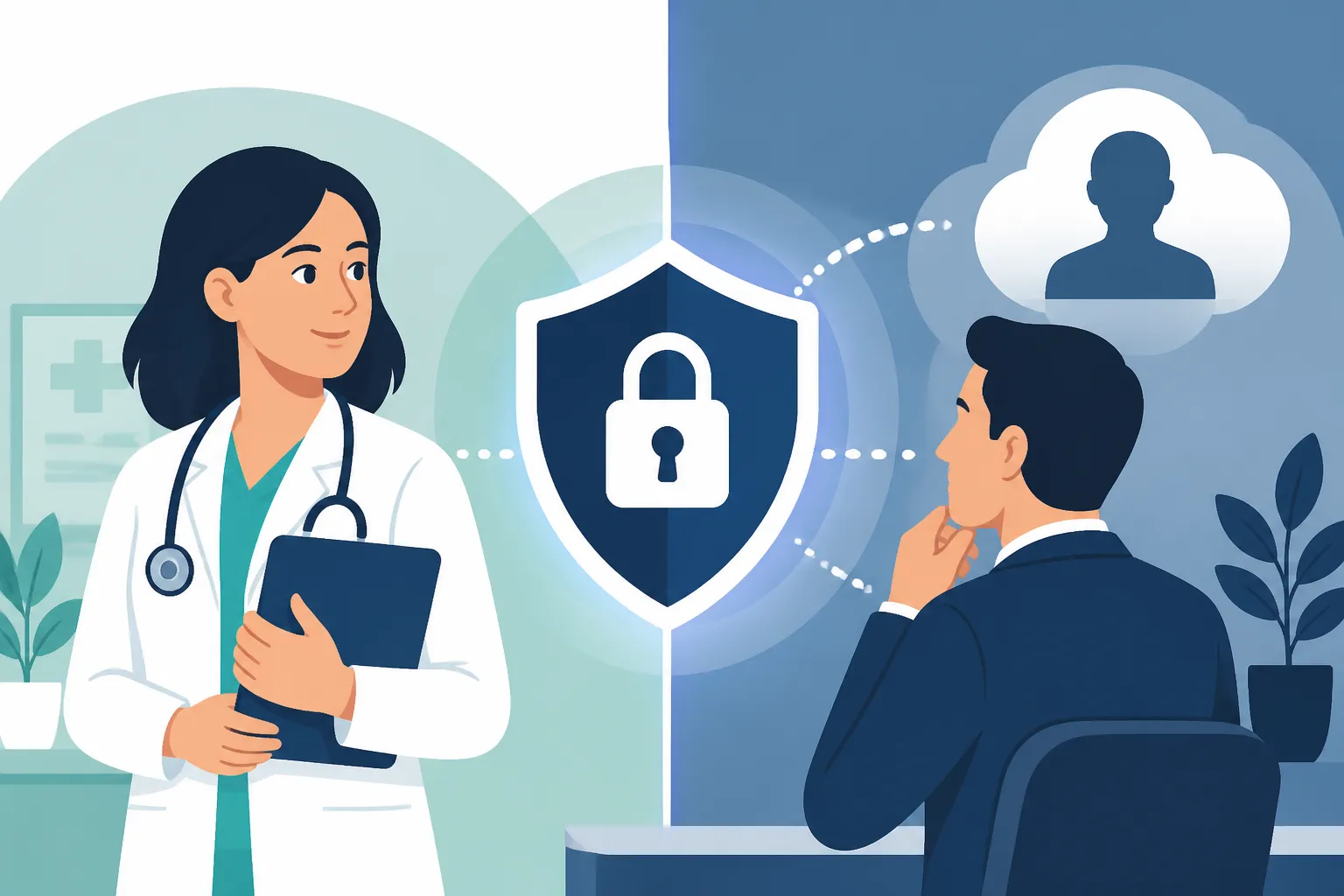
When you are too ill to work in Norway, the process of documenting that illness is governed by the Health Personnel Act and the Working Environment Act. These laws are incredibly strict about one thing: your diagnosis is between you and your doctor. When you receive a digital sick note, known as a sykemelding, it is actually split into several parts. The version your employer receives is stripped of the medical codes and the specific name of your condition.
I’ve sat in many expat meetups where newcomers were convinced their boss was "reading between the lines." The reality is that the digital system on Helsenorge is designed to protect you. When your doctor issues a sykemelding, they must evaluate your "work capability," not your illness name, for the employer's benefit. For instance, if you are struggling with Mental Health in Norway: Accessing Therapy and Psychiatric Care, your doctor might state that you cannot handle high-stress environments or long hours, but they will never write "depression" or "anxiety" on the copy sent to your office.
Your employer’s primary right is to know how your illness affects your ability to perform your specific job duties. They are entitled to information regarding your functional limitations—can you lift heavy objects, can you look at a screen, or can you commute? If you are Getting Sick Notes (Sykemelding) from Your GP for Work, the focus is always on the "tilrettelegging," or the adjustments needed to get you back to work, rather than the underlying cause of the absence.
In some cases, expats might maintain international coverage through providers like Cigna Global while waiting for their full Norwegian rights to kick in. Even in these private scenarios, the Norwegian labor laws regarding what an employer can demand to see remain the same. The privacy culture here is so strong that if a manager were to pressure you for a diagnosis, they would likely be in violation of the Working Environment Act, a situation that often requires a chat with a union representative.
Egenmelding vs Sykemelding: Navigating the First Days of Illness
In Norway, the system trusts the employee through the use of the "egenmelding," or self-certification. For the first few days of a sudden illness—like a nasty bout of the flu or a migraine—you do not even need to see a doctor. You simply notify your employer that you are sick. During this period, you are under zero legal obligation to tell them anything more than "I am sick and cannot work."
This trust-based system can feel alien if you come from a culture where you need a "doctor's note" for a single afternoon of absence. However, the Egenmelding vs Sykemelding: Self-Reporting Sickness to Your Employer rules are very specific. Most companies allow for three consecutive days of self-certification up to four times a year, though many "IA-bedrifter" (Inclusive Workplace companies) allow for up to eight days at a time. Throughout this process, your manager cannot demand to know if you have a fever, a broken toe, or a stomach bug.
If your illness extends beyond the self-certification period, you must visit your Fastlege to get a professional sykemelding. Even then, the privacy barrier holds. Your employer will see the start date, the end date, and the percentage of your sick leave (you might be 50% sick, meaning you work half-days). They will not see the "Bi-diagnosis" or the detailed clinical notes the doctor records in your electronic health record. For those traveling frequently or just arriving, having a plan through SafetyWing can provide peace of mind, but it doesn’t change the fact that your Norwegian employer remains in a "need-to-know" vacuum regarding your specific medical data.
| Data Type | Can the Employer See It? | Who Holds the Full Record? |
|---|---|---|
| Specific Diagnosis (ICD-10 Code) | No | GP and NAV |
| Functional Limitations (e.g., Cannot Lift) | Yes | Employer, GP, and NAV |
| Expected Duration of Absence | Yes | Employer, GP, and NAV |
| Treatment Plan Details | No | GP and Patient |
| Medication List | No | GP and Patient |
| Pregnancy Status | No (Until you choose to disclose) | GP and Patient |
The Oppfølgingsplan: When Dialogue Becomes Mandatory
While the diagnosis remains private, the "process" of being sick is not anonymous. If you are on long-term sick leave, the Employment Rights in Norway: The Working Environment Act Explained mandates a follow-up process. After four weeks of absence, your employer is required to create an "oppfølgingsplan" (follow-up plan) in consultation with you. This is a document that outlines what is needed to help you return to your role.
During these follow-up meetings, many expats get nervous and feel they have to "prove" they are sick by over-sharing their medical history. You must resist this urge unless you truly feel it helps the situation. The conversation should remain focused on functionality. For example, if you are dealing with Burnout and Work Stress: Sick Leave Protections in Norway, you might discuss that you need a quieter workspace or fewer deadlines, without needing to disclose the clinical severity of your burnout.
NAV, the Norwegian Labour and Welfare Administration, acts as a mediator here. They receive the full version of your sick note, including the diagnosis, because they are responsible for paying your sickness benefits after the first 16 days. However, NAV is also bound by strict professional secrecy. They cannot turn around and tell your boss what is in the "hidden" part of the sykemelding. Their role is to ensure the employer is fulfilling their duty to accommodate you, not to act as a whistleblower for your medical secrets.
If your employer uses an Occupational Health Service (Bedriftshelsetjeneste), you might be asked to meet with their doctor. Even in this scenario, the occupational doctor is a medical professional bound by the same confidentiality as your GP. They can advise your manager on whether your workplace environment is safe for you, but they cannot hand over your medical file to the HR department.
Digital Security: BankID and the Helsenorge App
Norway is one of the most digitized societies on earth, and your health data is stored in a central hub. This often worries expats who think a tech-savvy boss might find a way to peek into their digital life. However, accessing your health data requires BankID Explained: Norway's Digital Identity System and Expat Challenges, which is a high-level security clearance unique to you. Your employer has no backdoor into your Helsenorge profile.
When you use the Navigating the Helsenorge App in English: A Step-by-Step Translation tools to manage your sick notes, you are the one who "sends" the copy to your employer. You can actually see exactly what the digital version looks like before you hit send. You will notice that the fields for "Diagnosis" are simply not there in the employer's view. This puts the control firmly in your hands.
Even if you are using supplemental insurance like Cigna Global to access private specialists, those specialists must still follow the same Norwegian privacy laws when communicating with your employer. The only time medical confidentiality is legally breached is if there is a direct threat to life or if you work in a highly specialized safety-critical role (like an airline pilot or a bus driver) where a specific condition might make you a danger to the public. For the vast majority of office, tech, and service jobs, the wall of silence is absolute.
If you ever feel that your privacy has been compromised, you have the right to see who has accessed your medical records. On Helsenorge, there is a log of every health professional who has opened your file. If you see a name you don't recognize—especially if it's linked to your company's health service without a valid reason—you have strong grounds for a formal complaint. In the transition period of moving to Norway, SafetyWing can be a great bridge for health needs, but once you are in the system, the Norwegian state's digital protection is your primary shield.
Occupational Health Checks and Pre-Employment Privacy
A common question among new arrivals is whether a "pre-employment medical check" allows the employer to see their past. In Norway, an employer can only require a medical examination if the position carries specific risks or if there are legal requirements for the role. They cannot ask for a general health check just to see if you are a "healthy person" before hiring you.
If a medical check is required, the doctor performs the exam and only tells the employer one of two things: "Fit for work" or "Not fit for work." They do not provide a list of your previous surgeries, your blood pressure readings, or your mental health history. This is a massive relief for those who might have a chronic condition but are fully capable of doing the job.
Furthermore, under the Working Environment Act, employers are generally prohibited from asking about health issues, including pregnancy or plans to have children, during the interview process. If they do ask, you are actually legally permitted to withhold the truth or decline to answer, as the question itself is unlawful. This level of protection is designed to prevent discrimination and ensure that your medical history does not follow you into every new contract.
What to Do If You Face Pressure to Disclose
Despite the law, some managers—especially in smaller companies or those not well-versed in HR law—might push for more information. They might say, "I just want to help, tell me what's really going on." While often well-intentioned, this can lead to uncomfortable dynamics. It is perfectly acceptable to respond with: "My doctor and I are working on a plan to get me back to full capacity, and right now the focus is on [specific functional adjustment]."
If the pressure continues, you should contact your union "tillitsvalgt" (representative). Unions are incredibly powerful in Norway and take medical privacy very seriously. If you aren't in a union, you can also consult the Arbeidstilsynet (The Norwegian Labour Inspection Authority). They provide guidance on what is acceptable in the workplace.
For those who are not yet fully integrated into the National Insurance Scheme, perhaps because they are on a shorter contract or still waiting for a Fødselsnummer, having private insurance like Cigna Global can provide a buffer, but the legal standards for workplace privacy remain your strongest ally. You are never "less protected" just because you are a foreign national. The privacy laws apply to every person working on Norwegian soil, regardless of their citizenship or the type of insurance they carry.
The Role of the Fastlege as Your Privacy Advocate
Your GP, or Fastlege, is your primary advocate in this system. When you are sitting in their office, you can be completely honest about your situation. If you are afraid of your employer finding out a certain detail, tell your doctor. They are experts at writing the "Functional" part of the sick note in a way that protects your dignity while satisfying the employer's legal requirement for information.
For example, if you are experiencing severe stress due to a conflict with a manager, the doctor might write that you need "total rest from the workplace for 14 days" without mentioning the conflict or your emotional state. This allows you the space to recover without giving the employer ammunition to use against you in a performance review.
Remember, the goal of the Norwegian system is to keep people in work, not to find reasons to fire them. The Fastlege Scheme: Navigating Norway’s GP System is built on the principle that a healthy worker is a private worker. By understanding the limits of what your boss can see, you can focus on your recovery and your career without the looming shadow of medical stigma.
Medical Confidentiality Disclaimer
This guide is for informational purposes only and does not constitute legal or professional medical advice. While every effort has been made to ensure the accuracy of the information provided regarding Norwegian labor laws and medical privacy, laws and regulations can change. Always consult with a qualified legal professional, your union representative, or the Norwegian Labour Inspection Authority (Arbeidstilsynet) for advice specific to your situation. If you are experiencing a medical emergency, please contact the emergency services in Norway at 113.