Alcohol Laws in Norway: Opening Hours for Beer and Vinmonopolet
You finish a long week of work in Oslo, head to the supermarket at 6:05 PM on a Saturday to grab a six-pack for a planned dinner with friends, only to find the refrigerators locked behind metal grates. It is a rite of passage for every expat. This guide explains Norway’s restrictive alcohol laws, Vinmonopolet’s specific hours, and how to navigate the "6-8 rule" without going thirsty.
The State Monopoly: Understanding Vinmonopolet
If you are coming from a country where you can buy a bottle of wine or whiskey at a gas station or a local corner store at midnight, Norway’s system will be a shock. For anything stronger than 4.7% ABV, there is only one shop in town: Vinmonopolet. Often referred to simply as "Polet," this state-owned retailer has the exclusive right to sell wine, spirits, and strong beer to consumers. It is not just a store; it is a pillar of Norwegian social policy designed to limit consumption through high prices and restricted availability.
Why the Monopoly Exists and the Social Mandate
Norway’s relationship with alcohol is historically complicated. The monopoly was established in 1922 following a period of prohibition. The primary goal was to remove the profit motive from alcohol sales, thereby reducing the public health issues associated with overconsumption. Unlike a private business, Vinmonopolet does not have "buy one, get one free" deals, and they do not place cheap vodka at eye level to tempt you. Their mandate is to provide high-quality service and a massive selection while ensuring that sales are conducted in a responsible, controlled environment.
From an expat perspective, while the lack of competition drives up prices, the quality of the stores is incredibly high. Because they are one of the world's largest buyers of wine, they have immense bargaining power. This means that while mid-range wine is expensive due to taxes, high-end, vintage wines are often cheaper in Norway than in London or New York because the markup is a flat fee rather than a percentage. When you are settling into your new home, perhaps found through a platform like Spotahome, you will find that the local Polet is often the most well-designed shop in the neighborhood.
Operating Hours and the Saturday Scramble
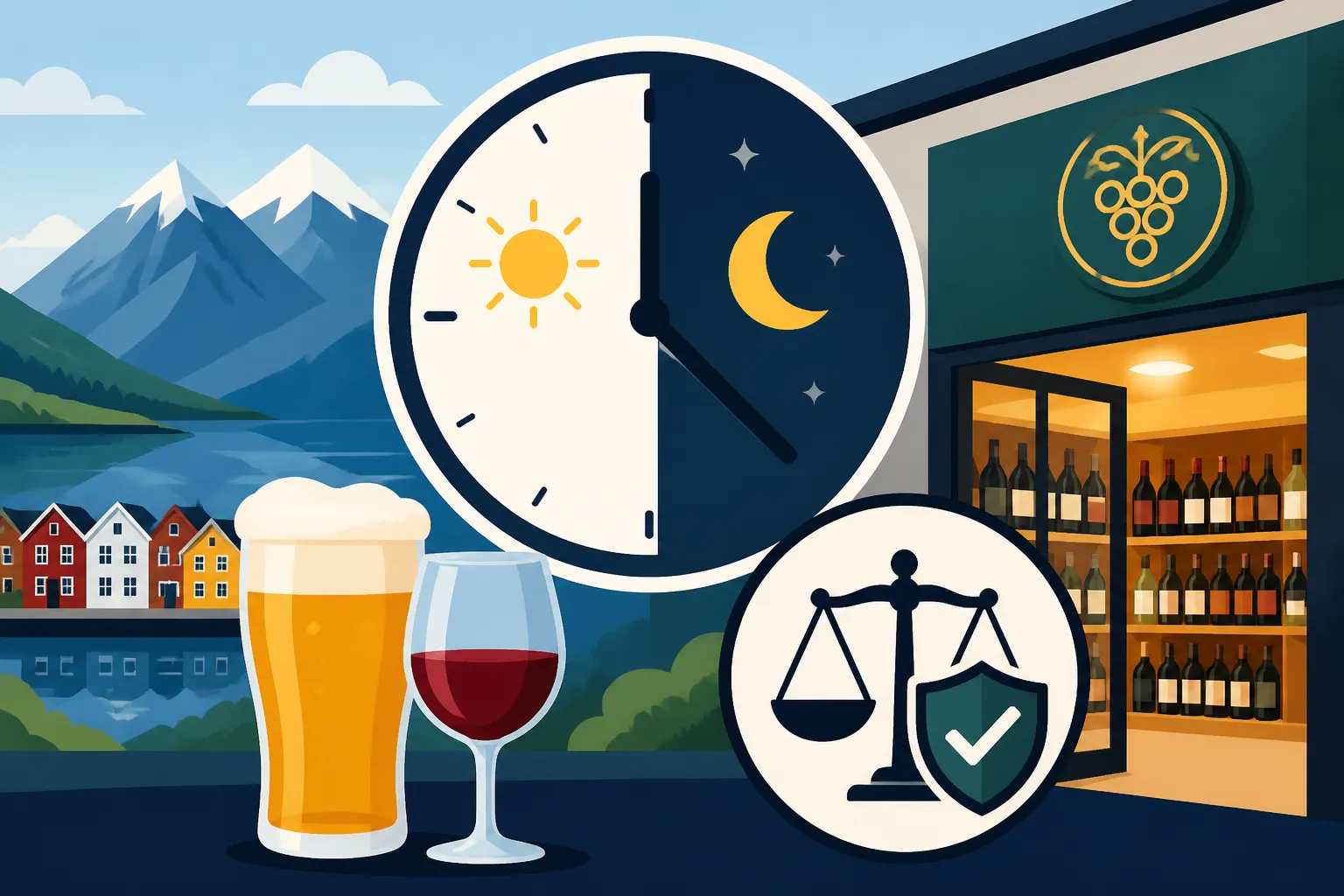
The most important thing to memorize is the opening hours. Vinmonopolet is never open on Sundays. During the week, most branches open at 10:00 AM and close at 6:00 PM. On Saturdays, they shut their doors at 4:00 PM or even 3:00 PM in smaller towns. If you miss that window on Saturday afternoon, you are effectively "dry" until Monday morning, unless you want to pay triple the price at a bar.
There are also specific "red days" (public holidays) when the shops are closed entirely. This includes Christmas Eve, New Year's Eve (usually limited hours), and Constitution Day on May 17th. Planning ahead is the only way to survive. You will often see a massive queue outside the shop at 3:30 PM on a Saturday; that is the sound of a thousand expats and locals alike realizing they forgot to buy wine for the weekend. To keep track of these erratic hours while you're out and about, having a local data connection through Airalo is a lifesaver so you can check the nearest branch’s closing time on the fly.
Selection Expertise and Ordering Online
One of the few perks of a monopoly is the expertise of the staff. Employees at Vinmonopolet undergo rigorous training. If you tell them you are making a specific dish, they will find the perfect wine pairing within your budget. They are not salespeople; they are consultants. This is a far cry from the indifferent service you might find in a supermarket in other countries.
If your local branch is small and lacks variety, you can use their website or app to order from their entire national inventory—which includes thousands of products—and have it delivered to your local store for free. This is particularly useful for finding niche spirits or craft beers that exceed the supermarket ABV limit. Understanding these nuances is part of the broader Cost of Living in Norway 2026: Budgeting for Singles and Families reality, as alcohol will likely be one of your highest discretionary expenses.
Supermarket Alcohol Sales: Beer, Cider, and the 6-8 Rule
While the Polet handles the hard stuff, you can find beer and low-ABV ciders in regular grocery stores. However, don't be fooled by the presence of the bottles on the shelves. Just because the store is open until 11:00 PM doesn't mean you can buy the beer. Norway enforces strict "sales windows" that catch almost every newcomer off guard at least once.
The Strict Weekday and Weekend Cut-offs
In most municipalities, the law states that alcohol up to 4.7% can only be sold until 8:00 PM on weekdays and 6:00 PM on Saturdays. Even if you are standing in the checkout line at 8:01 PM with a crate of beer, the cashier is legally prohibited from scanning it. The system will literally lock the item out of the cash register.
This creates a strange phenomenon in Supermarkets in Norway: Finding International Ingredients where the grocery store remains bustling and bright, but the alcohol section is shrouded in darkness or blocked by rolling shutters. It is incredibly frustrating to be able to buy milk and bread but be denied a single bottle of pilsner because you stayed at the office twenty minutes too late. Note that on Sundays, supermarket alcohol sales are completely prohibited.
Alcohol Content Limits and the 4.7% ABV Barrier
The 4.7% limit is a hard ceiling. This is why you will see versions of famous international beers, like Guinness or Heineken, brewed specifically for the Norwegian market at exactly 4.7% or 4.5%. If a craft IPA is 4.8%, it must go to Vinmonopolet. If it is 4.7%, it can stay in the grocery store.
When shopping, pay close attention to the labels. Many expats accidentally buy "Lettøl" (light beer), which is usually around 2.5%, thinking they’ve found a bargain. In reality, the price difference is due to the lower alcohol tax. If you’re looking for a proper stout or a heavy Belgian ale, you’ll need to plan a trip to the monopoly. This distinction is a key part of Buying Alcohol in Norway: Vinmonopolet Prices and Budgets that you'll need to master to avoid disappointment at your first dinner party.
Election Days and Special Holiday Restrictions
Norway takes its "sober" periods seriously. In the past, alcohol sales were banned on election days to ensure a clear-headed electorate, though this has been relaxed in many municipalities recently. However, the rules around holidays remain firm. On the days before major holidays (like Maundy Thursday or Ascension Day), the 6:00 PM Saturday rule often applies even if it’s a Wednesday.
Election cycles and local municipality votes can also change these rules. Some very conservative "dry" municipalities in the rural west still have even tighter restrictions than the national average. Always check the local ordinances if you move out of the major cities like Oslo or Bergen. Dealing with these administrative quirks is much like navigating D-Number vs Fødselsnummer: How It Affects Your Banking Options; it requires patience and a bit of local knowledge.
Pricing and Taxation: Why is Alcohol So Expensive?
It is no secret that Norway is one of the most expensive places in the world to grab a drink. This isn't just because of high wages; it is a calculated tax move by the government. The tax is not based on the price of the product, but on the volume of pure alcohol it contains.
The Taxation Tiers Based on ABV
The Norwegian government uses a sliding scale for alcohol duties. There are different brackets for drinks based on their percentage. For example, the tax per liter on a 4.5% beer is significantly lower than the tax per liter on a 40% vodka. This is why a bottle of spirits can easily cost 400 to 600 NOK, with the vast majority of that price going straight to the state treasury.
When you see the price of a pint in a bar—often exceeding 110 or 120 NOK—remember that the business is paying high VAT, high alcohol tax, and high labor costs. This is a fundamental part of Norwegian Work Culture: Flat Hierarchies and Communication Styles where social outings are often planned around these costs. You won't see many "happy hours" in Norway because they are technically illegal; bars are not allowed to advertise discounted alcohol or "two-for-one" deals.
The Panting System for Cans and Bottles
When you buy a beer in a supermarket, you will notice an extra charge of 2 or 3 NOK on your receipt. This is the "Pant," a deposit for the can or bottle. Norway has one of the most efficient recycling systems in the world. You don't throw your cans in the trash; you take them back to the supermarket and feed them into a "Panteautomat."
The machine spits out a voucher that you can use as cash at the register or donate to charity. For an expat, this is a great way to recoup some of the high costs of living. If you have a party, those empty cans can easily add up to enough money for a bag of groceries the next day. Make sure you understand the Panting System: How to Return Bottles for Cash in Norway to keep your kitchen tidy and your wallet a little fuller.
Budgeting Tips for Your Social Life
To maintain a social life without going bankrupt, you have to adopt the "Norwegian way" of drinking. This involves buying your alcohol at the supermarket or Polet and drinking at home before you head out. Going straight to a bar at 8:00 PM and staying until 2:00 AM is a financial disaster for most people.
Instead, locals focus on the concept of "Koselig": Understanding the Norwegian Concept of Coziness. This often means a long evening at a friend’s apartment with store-bought drinks, followed by just one or two "expensive" drinks at a club later. If you are moving and looking for a place with a nice living room for these gatherings, checking listings on Spotahome can help you find a space that fits this social lifestyle.
Public Consumption and Social Etiquette
The laws regarding where you can drink are just as strict as those regarding where you can buy. While you will see people enjoying a beer in the park on a sunny day, it is technically illegal. However, there is a significant gap between the letter of the law and how it is enforced.
Drinking in Parks vs. Private Properties
According to the Alcohol Act, drinking in public places like parks, squares, and streets is prohibited. You can be fined several thousand kroner if a police officer decides to be strict. However, in major cities during the summer, the police usually turn a blind eye as long as you are being respectful, not visibly intoxicated, and not using glassware.
The "discreet beer in the park" is a staple of Norwegian summer, but you should always be aware of your surroundings. If you are causing a disturbance, the police will use the alcohol law as the first tool to move you along. If you are traveling to a park, remember to use Public Transport in Oslo (Ruter): Zones, Tickets, and Monthly Passes and never, ever attempt to drive after even one drink. Norway has a near-zero tolerance policy for drink-driving.
The Concept of Vorspiel and Nachspiel
Because of the high prices at bars, the "Vorspiel" (pre-party) and "Nachspiel" (after-party) are culturally mandatory. The Vorspiel usually starts around 7:00 PM or 8:00 PM at someone's home. Guests bring their own alcohol—it is not expected that the host provides drinks for everyone, which is a common misconception for expats.
The Nachspiel happens after the bars close at 2:00 AM or 3:00 AM. This is when everyone heads back to someone's apartment to finish whatever is left in the fridge. This social structure is deeply ingrained in Norwegian Etiquette: Social Rules, Dugnad, and Making Local Friends. If you want to integrate, you must learn to host or participate in these home-based events.
Underage Drinking Laws and ID Requirements
The legal age to buy beer and wine (up to 22% ABV) is 18. For anything stronger than 22%, you must be 20 years old. This applies to both Vinmonopolet and bars. Do not be surprised if you are 35 years old and still get asked for ID; the policy in Norway is to check anyone who looks under 25 or even 30.
Foreigners should carry their residence card or passport. Often, a foreign driver's license is not accepted as a valid form of ID for alcohol purchases. If you are waiting for your permanent ID, ensure you have your passport. This is one of the many reasons why the transition from D-Number vs Fødselsnummer: How It Affects Your Banking Options is so important, as it eventually leads to getting a standard Norwegian ID card that everyone recognizes.
| Venue Type | Weekday Sales | Saturday Sales | Sunday/Holiday Sales | Max ABV |
|---|---|---|---|---|
| Supermarkets | 08:00 – 20:00 | 08:00 – 18:00 | Closed | 4.7% |
| Vinmonopolet | 10:00 – 18:00 | 10:00 – 16:00 | Closed | No Limit |
| Bars/Restaurants | 09:00 – 03:00 | 09:00 – 03:00 | 09:00 – 03:00 | No Limit |
| Gas Stations | Prohibited | Prohibited | Prohibited | 0.0% |
Bringing Alcohol into Norway: Customs and Quotas
Given the prices, it is very tempting to load up your suitcase when flying back from a trip abroad. However, Norway's customs officers are notoriously efficient, often waiting at the "Green Zone" with X-ray machines.
The Duty-Free Limits and Quotas
There are very specific quotas for how much alcohol you can bring into the country tax-free. As of 2026, the standard quota allows for 1 liter of spirits, 1.5 liters of wine, and 2 liters of beer. Alternatively, you can trade your spirits quota for more wine or beer. If you don't use your tobacco quota, you can also "exchange" it for a small amount of extra wine or beer.
It is highly recommended to download the "KvoteAppen" from the Norwegian Customs (Tolletaten). It allows you to calculate exactly how much you can bring and even pay the duty on extra items before you land. If you're arriving and need to check these rules quickly, having your Airalo eSIM active will save you from expensive roaming charges while you navigate the customs website.
The Meat and Alcohol Exchange Rules
Norway has a unique system where your alcohol and tobacco quotas are linked. If you do not bring cigarettes or snus, you can bring an extra 1.5 liters of wine or beer. This is often the best strategy for expats who don't smoke. For a detailed breakdown of what else you can bring, see Bringing Food to Norway: Customs Limits on Meat and Alcohol.
Be aware that these rules apply to people over 18 (for wine/beer) and over 20 (for spirits). If you are caught with even one bottle over the limit, the fines are heavy, and the alcohol will be confiscated. There is no "I didn't know" excuse that works with Norwegian customs officers.
Consequences of Smuggling and Overshooting
If you are caught exceeding the quota without declaring it, you face a simplified forelegg (fine). For small amounts, it might be 400-1000 NOK, but for larger amounts, it can escalate into a police matter. This can have serious implications for your future in the country.
For those on a Skilled Worker visa, a criminal record—even for something like smuggling 10 liters of wine—can complicate your application for permanent residency. It is always better to declare and pay the small tax at the "Red Zone" or via the app. The peace of mind is worth the few extra kroner.
Comparing Norway to its Neighbors
Many expats assume that because Sweden and Norway are neighbors, their laws are the same. While Sweden also has a monopoly (Systembolaget), the rules and prices are quite different, leading to a massive cross-border shopping culture.
Systembolaget (Sweden) vs. Vinmonopolet
Systembolaget is generally cheaper than Vinmonopolet due to lower Swedish taxes. Furthermore, the Swedish monopoly has slightly longer hours, often staying open until 8:00 PM on weekdays and 3:00 PM or 4:00 PM on Saturdays. However, the 4.7% rule in Norwegian supermarkets is actually more "liberal" than in Sweden, where anything over 3.5% must be sold in the monopoly.
This means that while wine is cheaper in Sweden, "real" beer is easier to find in a Norwegian grocery store late at night compared to a Swedish one. This comparison is a frequent topic of conversation in Norwegian Work Culture: Flat Hierarchies and Communication Styles during lunch breaks, as everyone has an opinion on which system is better.
Cross-Border Shopping (Harrytur)
The "Harrytur" is a legendary Norwegian tradition. It involves driving across the border to Sweden (usually to towns like Strömstad or Charlottenberg) to buy cheap meat, candy, and, most importantly, alcohol. For people living in Oslo, a trip to Sweden takes about 90 minutes.
While it saves money, you must still adhere to the Norwegian customs quotas mentioned earlier. You cannot simply fill your car with Swedish beer and drive back; if you are stopped at the border, the same limits apply as if you were flying in from Spain or the USA. Many expats find this to be a fun weekend activity that combines a road trip with a way to beat the high cost of living.
Disclaimer
This guide is for informational purposes only and does not constitute legal advice. Alcohol laws and municipal regulations in Norway are subject to change. Always check the official websites of Helsenorge, Vinmonopolet, and Tolletaten for the most up-to-date information regarding sales hours, taxes, and import quotas. Consumption of alcohol should be done responsibly and in accordance with local laws.