Public Transport in Oslo (Ruter): Zones, Tickets, and Monthly Passes
Moving to a new city is overwhelming, but landing in Oslo and realizing the entire transport system relies on a single app you haven't downloaded yet adds a unique layer of stress. This guide solves the confusion surrounding Oslo’s Ruter system, breaking down the complex zone maps, ticket pricing, and the unwritten social rules of the T-bane to ensure you never face a heavy fine or a long walk in the rain.
Getting Started with Ruter: The Digital Heart of Oslo’s Transit
If you have spent any time in cities like London or New York, you might be used to physical barriers—turnstiles that won't open without a card or a ticket. Oslo operates on an "honor system," which is a bit of a misnomer because it is actually a high-stakes digital system backed by frequent random inspections. The first thing any expat or visitor must do is realize that physical tickets are becoming a relic of the past. Almost everything happens through your smartphone.
The Ruter App: Your Essential Travel Companion
The Ruter app is more than just a place to buy tickets; it is the brain of the city’s movement. It integrates buses, trams, the metro (T-bane), ferries, and even some local trains (Vy). When you first arrive, your priority should be setting up the app correctly. You can add a foreign credit card without much trouble, but a common pitfall for newcomers is forgetting to activate the ticket before boarding. In Oslo, your ticket must be "active" the moment you step onto a vehicle. If you are fumbling with your phone as the tram pulls away, and an inspector is standing by the door, you are technically in violation.
For those just arriving, having a reliable data connection is non-negotiable because public Wi-Fi at bus stops is hit-or-miss. Using a service like Airalo to grab a local eSIM ensures you can download the app and validate your ticket the second you leave the airport terminal. Once the app is running, you will see a countdown timer on your active ticket. This is your lifeline. It shows exactly how much time you have left to transfer between different modes of transport without paying again.
Traveling Without BankID: Workarounds for Newcomers
One of the biggest administrative hurdles in Norway is the wait for a national identity number. Without it, you cannot get BankID Explained: Norway's Digital Identity System and Expat Challenges, which makes many digital services difficult. However, the Ruter app is surprisingly friendly to those without a Norwegian bank account. You can use Apple Pay, Google Pay, or a standard international Visa/Mastercard.
If your phone dies or you simply prefer not to use an app, you can purchase a physical "Reisekort" (Travel Card) at kiosks like Narvesen or 7-Eleven. However, be warned: physical cards are increasingly discouraged. You will pay a premium for the card itself, and topping it up is less intuitive than the app. If you are scouting for long-term accommodation through a platform like Spotahome, you will likely be moving around the city constantly to view apartments. Relying on the app's "Reis" discount—a dynamic pricing model that rewards frequent travel—is far more cost-effective than physical cards.
Navigating the Zone System: Why Zone 1 is Usually Enough
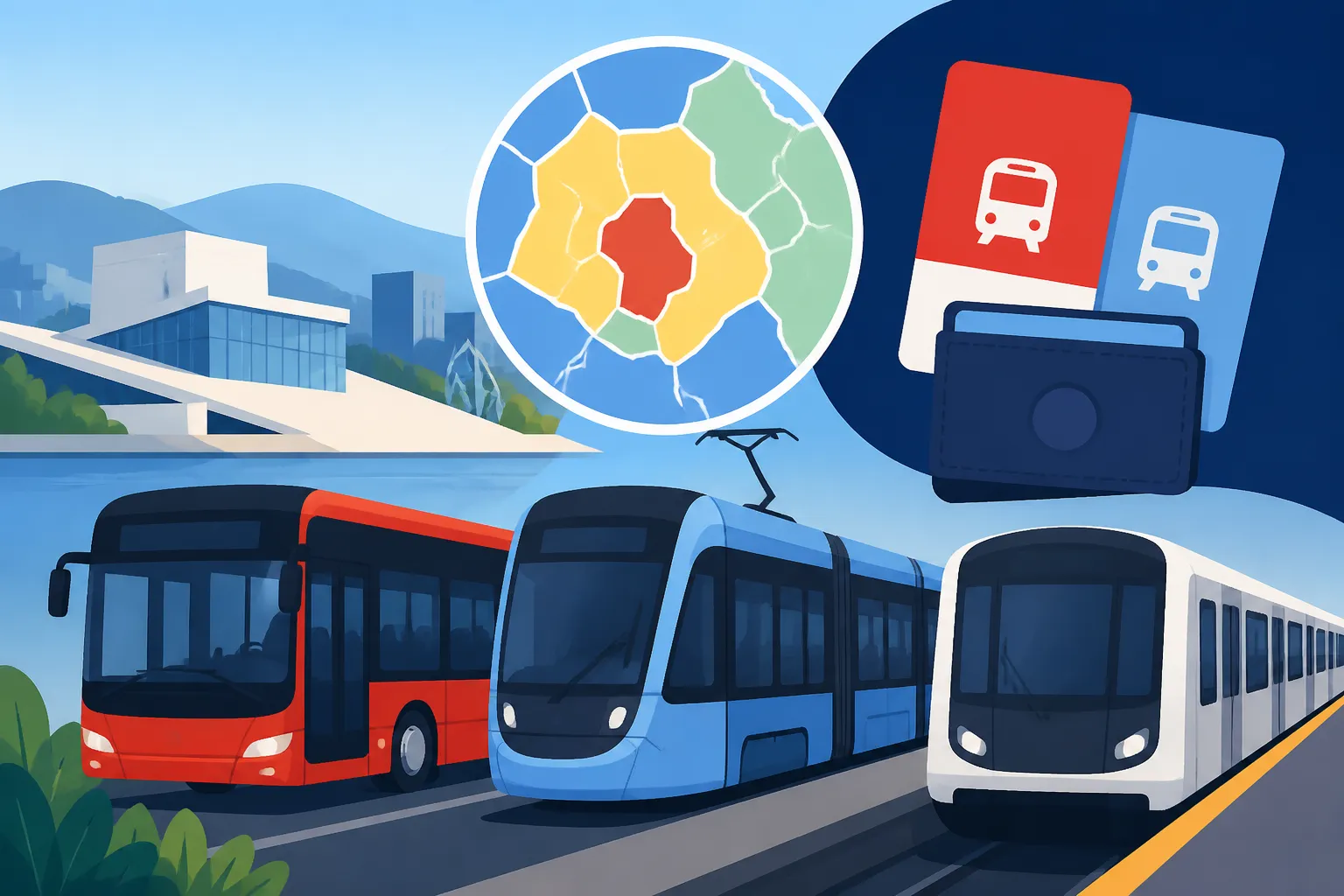
Oslo and the surrounding Akershus county are divided into zones. For the vast majority of expats living and working within the city limits, Zone 1 is the only one that matters. This covers the entire city center, the inner suburbs, and even the islands in the Oslofjord. However, the moment you cross an invisible boundary into the outskirts, your Zone 1 ticket becomes invalid, and the fines for being in the wrong zone are just as steep as having no ticket at all.
Understanding Zone 1 vs. Greater Oslo
Zone 1 is surprisingly expansive. It includes major hubs like Majorstuen, Grünerløkka, and even the edges of the forest (Marka). Most people who move here for work or study find that 95% of their life happens within this zone. If you are looking at Where to Live in Norway: Top Expat Neighborhoods in Oslo, Bergen, and Beyond, you will find that even the more distant residential areas like Holmenkollen or Nordstrand are still within Zone 1.
The trouble starts when you head to places like Lillestrøm, Asker, or Ski. These are in Zone 2 or beyond. If you have a 30-day pass for Zone 1 and need to travel to Zone 2, you don’t need to buy a whole new ticket. You can buy an "additional zone" ticket in the app. This is a common point of confusion for expats who end up overpaying for a full single ticket when they only needed a small top-up.
The Gardermoen Trap: Getting to the Airport
Oslo Airport (Gardermoen) is notoriously not in Zone 1. In fact, it is in Zone 4N. This is the single most expensive mistake travelers make. A standard Ruter ticket for Zone 1 will not get you to the airport. You have two main options: the Flytoget (Airport Express Train) or the Vy local/regional trains.
While Flytoget is flashy and fast, it is significantly more expensive. The Vy train (R12, RE10, RE11) uses the Ruter pricing system. If you already have a 30-day pass for Zone 1, you can simply add the extra zones to reach the airport for a fraction of the cost of a Flytoget ticket. This is the kind of local knowledge that helps when you are managing the Cost of Living in Oslo vs Bergen: A Detailed Budget Comparison and trying to keep your monthly expenses under control.
Ticket Types and Pricing: From Single Rides to Annual Passes
The pricing structure in Oslo is designed to incentivize long-term residency and frequent use. While a single ticket might feel pricey compared to other European capitals, the value of the 30-day and annual passes is where the system shines.
| Ticket Type | Duration | Estimated Price (NOK) | Best For |
|---|---|---|---|
| Single Ticket | 60 Minutes | 42 | Occasional trips |
| 24-Hour Ticket | 24 Hours | 127 | Tourists/Heavy errands |
| 7-Day Ticket | 7 Days | 352 | Visitors staying a week |
| 30-Day Ticket | 30 Days | 897 | Residents/Daily commuters |
| 365-Day Ticket | 1 Year | 8,970 | Long-term residents |
Single Tickets and the 60-Minute Rule
A single ticket in Oslo is valid for 60 minutes from the moment of activation. However, here is the secret: you can board your last vehicle at minute 59 and stay on it until you reach your destination, even if that trip takes another half hour. This makes the single ticket quite powerful for cross-city travel.
The "transfer" is seamless. You don't need to tap out or tap in when moving from a bus to the T-bane. As long as your app shows a valid ticket, you are legal. This flexibility is essential when you are in your First 30 Days Health Checklist: GP, Frikort, and Pharmacies phase and zig-zagging across town between the tax office, the bank, and your new GP.
Period Tickets: Is the 30-Day Pass Actually Worth It?
For most expats, the 30-day pass is the "gold standard." If you commute to work at least four days a week, the pass pays for itself in roughly 11 days. But Ruter recently introduced a feature called "Reis" (Travel) which complicates this choice. Reis provides a sliding scale discount for single tickets. The more you travel in a 30-day period using single tickets, the cheaper the next ticket becomes.
If you are a hybrid worker only going into the office two days a week, the Reis discount on single tickets might actually be cheaper than a 30-day pass. You have to do the math based on your specific lifestyle. However, the 30-day pass offers a psychological freedom—you can hop on any tram or ferry (like the ones to the islands) without thinking about the cost. If you used Spotahome to find a place in a neighborhood like Aker Brygge, having that 30-day pass makes the ferries to Nesodden or Hovedøya feel like a free weekend perk.
Discount Categories: Students, Seniors, and Children
Norway is very generous with discounts, but they are strict about the documentation required to prove eligibility. Students under the age of 30 receive a massive 40% discount on period tickets. However, "student" in Norway has a very specific definition. You must be studying at a recognized institution and have a valid semester receipt. If you are an international student navigating Student Part-Time Work Limits: Navigating the 20-Hour Rule, this discount is vital for your budget.
Seniors (honør) over 67 also get a 50% discount. Interestingly, if you are a "co-traveler," children under 18 travel for free on weekends when accompanied by an adult with a valid ticket. This makes family outings much more affordable. Just remember to always have your ID and proof of status; "I forgot my student ID at home" will not stop an inspector from issuing a 1,150 NOK fine.
Practical Etiquette and Norsk Transit Culture
Understanding the tickets is only half the battle; the other half is surviving the social landscape of Norwegian public transport. Norwegians are famously private in public spaces, and the transit system is the epicenter of this "quiet culture."
The Unwritten Rules of the Bus and T-bane
Rule number one: do not sit next to someone if there is an entirely empty row of seats available. It is considered a mild social transgression. If the bus is crowded, you may sit, but expect a wall of silence. Rule number two: let people off before you try to board. This sounds obvious, but in the rush at Jernbanetorget, it is strictly enforced by the glares of commuters.
Furthermore, Norwegians take the "Quiet Carriage" (Stille Sone) on trains very seriously. If you are taking a longer Vy train as part of your Transportation in Norway: Trains, Buses, Ferries, and Commuter Cards, ensure your phone is on silent. On the T-bane and buses, keep your phone conversations brief and low-volume. If you are using Airalo for a quick VoIP call home, it’s best to wait until you are off the vehicle.
Night Buses and Weekend Travel
Oslo is a city that sleeps, but its transport system stays somewhat awake. During the week, most lines stop running around 1:00 AM. However, on Friday and Saturday nights, the "Nattbuss" (Night Bus) network takes over. Your 30-day or 24-hour pass covers these without any extra fee, which is a significant change from years ago when night buses required a special, expensive ticket.
The T-bane also runs later on weekends, but the frequency drops significantly. Waiting 30 minutes for a train in the middle of a Norwegian winter is a rite of passage for every expat. This is when the "Koselig" (cozy) factor of your home becomes important—you’ll be dreaming of your heated floors while standing on a frozen platform at Nationaltheatret.
Fines, Inspections, and the Dreaded Sniking
In Norway, riding without a ticket is called "sniking" (sneaking). While the city doesn't have gates, it has highly efficient, plainclothes inspection teams that can board at any moment. They move quickly, blocking the exits, and they have seen every excuse in the book.
What Happens During a Ticket Inspection?
When the inspectors board, they will ask to see your "bevis" (proof). If you have the Ruter app, you simply show them the QR code. They will scan it with a handheld device. This device tells them exactly when the ticket was purchased. If they see you bought the ticket 30 seconds ago—likely when you saw them boarding—they may still fine you because the ticket wasn't active before you boarded.
The inspectors are generally polite but firm. They speak excellent English and will explain the process clearly. If you are caught without a ticket, you have two options: pay the reduced fine on the spot (around 950 NOK) or receive an invoice for the full fine (around 1,150 NOK). For many expats, this is a heart-stopping amount of money, equivalent to a week's worth of groceries.
Paying Fines and Appealing a Penalty
If you genuinely believe there was a technical error—for example, the Ruter app crashed or the network was down—you can appeal. You usually have to pay the fine first and then seek a refund through Ruter’s customer service portal. However, be warned: the burden of proof is on you. They can see the logs of the app and will know if you were genuinely trying to buy a ticket.
This is why having a reliable data connection is so important. If your phone loses signal and you can't show your QR code, the inspector is technically required to fine you. This is another reason to ensure your Airalo data is topped up. It’s a small price to pay to avoid a 1,000 NOK penalty. If you are struggling with the bureaucracy, check out How to Use the Ruter App for Oslo Public Transport for a deeper dive into the technical settings that can prevent these errors.
Making the Most of the Ruter System
The Ruter system is truly world-class once you get past the initial learning curve. One of the best features is the integration of the city's public ferries. From the pier at Aker Brygge, you can use a standard Zone 1 ticket to visit the islands of the Oslofjord. In the summer, this is the cheapest "cruise" in the world.
Integrating Other Modes of Transport
The Ruter app also shows you the location of "City Bikes" (Bysykkel). While the bikes require a separate subscription, having their availability integrated into the map helps you plan the "last mile" of your journey. Oslo is becoming increasingly car-free in the center, so combining the T-bane with a 10-minute bike ride is often the fastest way to get around.
If you are commuting from further out, perhaps from a larger house you found on Spotahome in the suburbs, you might combine driving with public transport. Many stations have "P+R" (Park and Ride) facilities. You park your car for a low daily fee and take the train into the city, avoiding the astronomical tolls and parking fees in central Oslo.
Future-Proofing Your Commute
As Oslo continues to grow, the Ruter system is expanding. New lines, like the Fornebu line, are under construction to connect emerging business hubs with the city center. Staying updated on these changes is part of the expat experience. The city is also moving toward a fully electric bus fleet, making the commute quieter and greener.
Whether you are here for a few months or a few decades, mastering Ruter is the key to feeling like a local. It gives you the freedom to explore the forests, the fjords, and the hidden cafes of the city without the stress of navigating traffic or hunting for parking. Just remember: download the app, add your card, and always, always activate your ticket before you step on board.
Disclaimer
This guide is intended for informational purposes only. Public transport rules, zone boundaries, and ticket prices in Oslo are subject to change by Ruter AS and the Norwegian Ministry of Transport. While we strive to provide the most current information for 2026, always verify specific details and terms of service directly on the official Ruter app or website before traveling. The author is not responsible for any fines or penalties incurred while using the transit system.