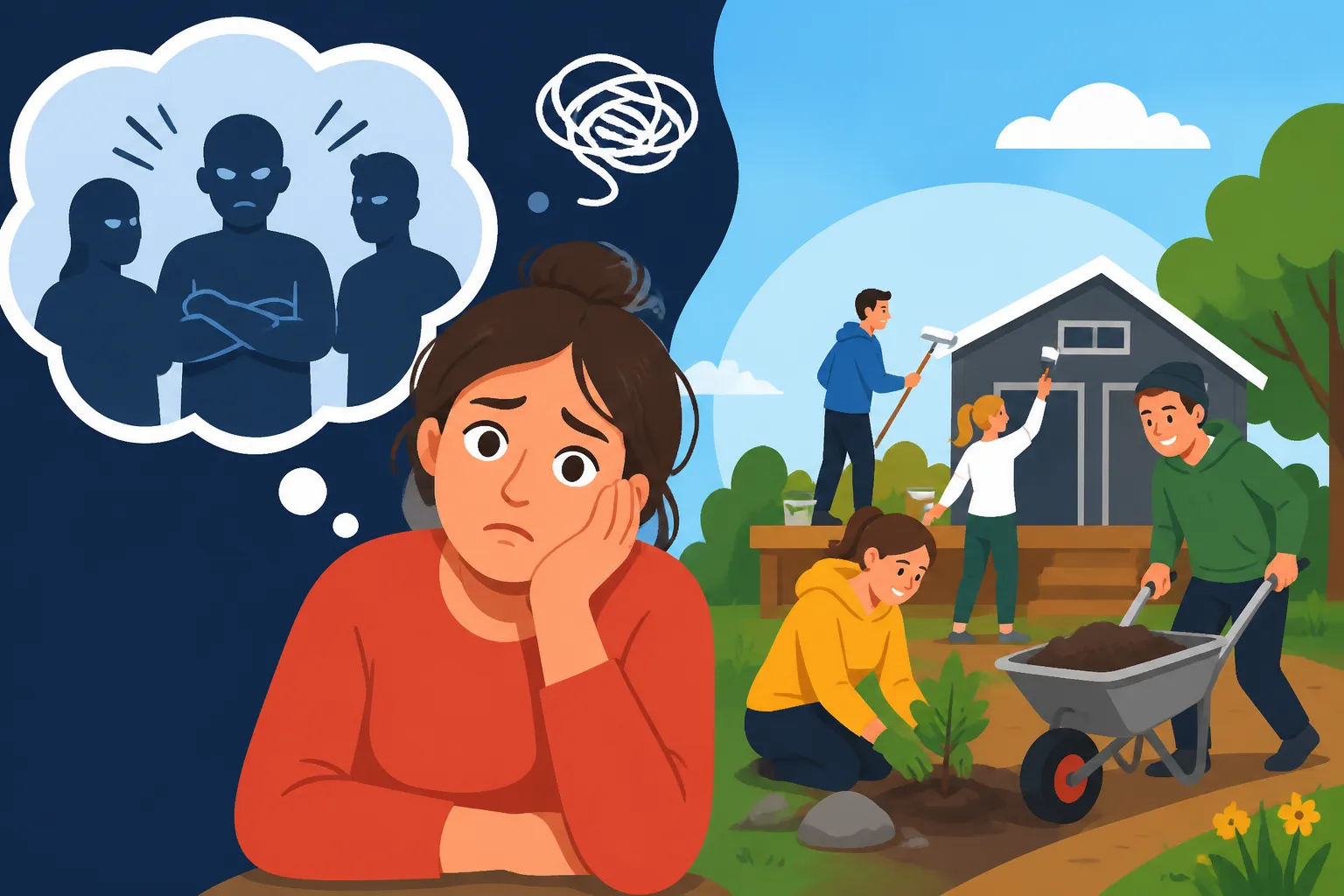
What is “Dugnad”? Surviving Mandatory Community Volunteering
Imagine walking to your mailbox in Oslo or Bergen, only to find a brightly colored flyer announcing a mandatory community workday for your apartment building this Saturday morning. For many newcomers, this "invitation" to rake leaves or paint fences feels like a strange, unpaid tax on your personal time. This guide breaks down the cultural phenomenon of Dugnad, helping you navigate the social expectations, legal loopholes, and practical survival tips for these communal gatherings.
The Cultural Philosophy of the Norwegian Dugnad
If you want to understand the Norwegian soul, you have to understand Dugnad. At its core, Dugnad is a centuries-old tradition of unpaid, voluntary community work. In the old days, it was how a village built a neighbor’s barn or cleared a shared road after a heavy winter. Today, that same spirit has transitioned into the urban landscape, where residents of a building or members of a sports club come together to perform tasks that would otherwise cost the group a significant amount of money in professional fees.
The Historical Transition from Farm to City
The roots of this practice are deeply agricultural. In a country with a harsh climate and a small population, survival depended on the collective. If one farmer’s crop was failing or a house burned down, the community rallied. While Norway has become one of the wealthiest nations on earth, this "pulling together" mentality remains a point of national pride. In fact, in 2004, the word "dugnad" was voted the national word of Norway.
As people moved from rural areas into urban apartment complexes, the practice evolved. It shifted from building barns to cleaning out common basements and planting flowers in the courtyard. When you are looking at Renting in Norway: Apartments, Contracts, and Tenant Rights, you might not see the word "Dugnad" in your lease, but it is almost certainly waiting for you in the fine print of the house rules or mentioned during the first resident meeting.
The Social Contract and Building Trust
In Norway, trust is the primary currency. Participating in a Dugnad is less about the physical labor and more about showing your neighbors that you are a reliable member of the "tribe." For an expat, this can be one of the most effective ways to break the ice. Norwegians are notoriously private, but give them a rake and a shared goal, and you will find them much more open to conversation.
This is where you learn who the "board leader" is, which neighbor has the best tips for local hiking, and who might be bothered if you don't follow the Noise Rules in Norwegian Apartment Buildings: Quiet Hours Explained. It is an informal vetting process. By showing up, you signal that you respect the shared environment and are willing to contribute your fair share of sweat equity.
The Psychology of "Mandatory" Voluntarism
The biggest hurdle for foreigners is the paradoxical nature of the event. It is described as voluntary, yet everyone expects you to be there. This "mandatory voluntarism" can be frustrating for those from more individualistic cultures. However, viewing it through a different lens helps: the Dugnad is a way to keep costs down. If everyone refuses to help, the building must hire a commercial firm, which directly increases the monthly costs. Understanding Shared Expenses (Felleskostnader): What Your Monthly Condo Fee Covers helps clarify why your neighbors are so insistent on you showing up with a paintbrush.
Common Types of Dugnad You Will Face
Not all Dugnads are created equal. Depending on your life stage—whether you are a student, a working professional, or a parent—you will encounter different variations of this communal work. Each has its own set of unwritten rules and expectations.
The Borettslag or Sameie Housing Cleanup
This is the most frequent type of Dugnad. Usually occurring twice a year—once in late April or early May (to clear the winter grit) and once in October (to prepare for the snow)—these sessions focus on the upkeep of common areas. Tasks usually include raking leaves, washing the windows in the stairwell, oiling the outdoor furniture, and clearing out abandoned bicycles from the basement storage.
When you are searching for a place to stay through platforms like Spotahome, you might find that smaller, more intimate buildings have a stronger Dugnad culture than large, modern high-rises. In these smaller communities, your absence is much more noticeable. These sessions typically end with a social gathering involving coffee, waffles, or pølse (hot dogs), which is the traditional reward for the day's labor.
The Barnehage and School Support
If you have children, the Dugnad load increases significantly. Norwegian daycares and schools rely heavily on parent participation to keep their facilities in top shape. You might find yourself spend a Saturday building a new sandbox or painting the playhouse. This is often considered a non-negotiable part of the Daycare (Barnehage) Application Process: Deadlines and Max Prices ecosystem.
While the "max price" for daycare is regulated by the government, the quality of the environment often depends on the parents' willingness to pitch in. If you are worried about the cost of living, remember that these volunteer hours are essentially a way to ensure your child has high-quality facilities without the school needing to hike extracurricular fees. You can find more about the financial side of parenting in our guide on Barnehage Max Price 2026: What is the Monthly Cap for Daycare.
Sports Clubs and Recreational Organizations
Norway is a nation of "joiners." Whether it’s a local football team, a ski club, or a marching band (korps), these organizations are almost entirely run by volunteers. Parents of children in these clubs are often expected to work shifts at the local kiosk, sell lottery tickets, or help maintain the sports fields.
This is a fantastic way to integrate into the local community. If you are looking to expand your social circle, How to Join Local Sports Clubs and Volunteer Groups to Make Friends is your best resource. Just be prepared that "joining" a club usually means "working" for the club at least a few weekends a year. The "Dugnadsånd" (spirit of Dugnad) is particularly strong in these settings, and being a "unngår" (avoider) can lead to your child feeling left out of the group dynamic.
The Logistics: Is It Actually Mandatory?
One of the most common questions expats ask is: "Can they legally force me to do this?" The answer is a nuanced "no, but…" Understanding the legal and social framework is essential to surviving without creating enemies in your building.
Legal Realities and the "Dugnadsgebyr"
Under Norwegian law, a housing cooperative (Borettslag) cannot technically force a resident to perform physical labor. However, they are allowed to incentivize participation. Many buildings implement a "Dugnadsgebyr" (Dugnad fee). This works by increasing the shared monthly expenses for everyone, and then providing a "discount" or a refund to those who actually show up and work.
If you are a tenant and not an owner, you should check your contract. Usually, the responsibility for Dugnad falls on the owner of the apartment, but many landlords pass this expectation down to the tenant. If you used a service like Spotahome to find your rental, ensure you clarify who is responsible for these fees if you choose not to attend. For a deeper dive into the governance of these buildings, see our article on Navigating Housing Cooperatives (Borettslag): Board Rules and Fees.
The Social Consequences of Skipping
While the financial penalty might be small—often between 200 and 500 NOK—the social penalty can be much higher. In a country where Norwegian Etiquette: Social Rules, Dugnad, and Making Local Friends is built on the concept of equality, being the person who watches from their balcony while everyone else is working can lead to a very chilly atmosphere in the elevator.
If you genuinely cannot attend due to work, illness, or travel, the key is communication. Send an email to the board (styret) in advance. Often, they will give you a "pre-Dugnad" task, such as cleaning a specific hallway or painting a small section of a fence on your own time. This shows you have the right spirit, even if you can't be there for the main event.
Comparing Dugnad Costs vs. Professional Services
To understand why your neighbors are so passionate about this, it helps to look at the numbers. Hiring a landscaping company in Norway is incredibly expensive due to high labor costs and taxes.
| Task | Estimated Professional Cost | Dugnad Cost (Materials Only) | Savings for the Building |
|---|---|---|---|
| Spring Yard Cleanup | 15,000 NOK | 500 NOK (Trash bags/tools) | 14,500 NOK |
| Painting Common Shed | 25,000 NOK | 3,000 NOK (Paint/brushes) | 22,000 NOK |
| Stairwell Deep Clean | 10,000 NOK | 200 NOK (Supplies) | 9,800 NOK |
| Basement Clearing | 8,000 NOK | 2,000 NOK (Container rental) | 6,000 NOK |
When these savings are spread across 10 or 20 apartments, it makes a noticeable difference in your monthly bills. This is why Shared Expenses (Felleskostnader): What Your Monthly Condo Fee Covers is such a vital topic for any resident to understand.
Practical Survival Strategies for Foreigners
If you’ve decided to take the plunge and join your first Dugnad, a little preparation goes a long way. You don’t want to be the person who shows up in designer jeans and white sneakers when there is heavy lifting to be done.
What to Wear and What to Bring
The most important rule: dress for the weather, not for the fashion. In Norway, spring and autumn can be unpredictable. If the Dugnad is outdoors, you will likely be working regardless of a light drizzle. This is the perfect time to break out your Wool Underwear (Ullundertøy): Why Norwegians Insist You Wear It. Layering is key, and having a pair of sturdy work gloves will save your hands from blisters and splinters.
You generally don't need to bring your own tools, as the building or club will provide them. However, bringing a positive attitude is mandatory. If you are worried about the social aspect, remember that you don't need to be fluent in Norwegian to rake leaves. Simple greetings and a willingness to help are usually enough. If you’re invited for coffee afterward, you might wonder Do I Need to Bring a Gift When Invited to a Norwegian Home; for a Dugnad, the answer is no. Your labor is your gift.
Communication and Connectivity
Before the big day, make sure you stay updated on the timing and specific tasks. Most buildings use apps or email lists to coordinate. If you have just moved and don't have your home internet set up yet, having a reliable mobile data plan is crucial. We often recommend using a travel SIM or an eSIM from Airalo during your first few weeks so you don't miss these important community notifications. Having consistent access to your inbox ensures you can RSVP and perhaps even volunteer for a task that suits your skill set.
Once you have settled in, you should look into more permanent Internet Providers in Norway: Fiber Optics and 5G Home Broadband to stay connected with the various "Beboer" (resident) Facebook groups where much of the Dugnad planning happens. Being active in these digital spaces can make the physical event feel much less intimidating.
Making the Most of the Experience
Think of the Dugnad as a networking event where the dress code is "grubby." It is one of the few times you will see the CEO of a tech company and a university student working side-by-side on the same task. This flat hierarchy is a hallmark of Norwegian culture.
Use the time to ask questions about the neighborhood. Where is the best place to buy firewood? Which local grocery store has the best selection of international foods? By the time the coffee and waffles are served, you will likely have made at least one or two "neighbor friends" who can help you navigate the complexities of life in Norway.
The Long-Term Benefits of Participation
While it might seem like a chore in the moment, participating in Dugnad pays dividends over time. It transforms your apartment building from a collection of strangers into a community. This sense of belonging is vital for expats, who often struggle with the "Nordic chill" in social interactions.
Building a Reputation as a "Solid" Resident
In Norway, being "solid" or "ordentlig" (proper/reliable) is a high compliment. When you show up to Dugnad year after year, you build a reputation. If you ever need to ask a favor—like borrowing a ladder, needing someone to water your plants while you're away, or seeking advice on local bureaucracy—your neighbors will be much more likely to help if they've seen you working alongside them in the rain.
Integration and Language Practice
There is no better place to practice "small talk" than during a Dugnad. The vocabulary is practical and limited, making it less stressful than a formal dinner party. You'll learn words for tools, plants, and cleaning supplies that you won't find in a standard textbook. Over time, these interactions contribute significantly to your overall sense of integration.
If you are currently navigating the early stages of your move, using tools like Airalo to keep your translation apps ready can be a lifesaver. You can look up the word for "pruning shears" (beskjæringssaks) on the fly and impress your neighbors with your commitment to both the labor and the language. Ultimately, the Dugnad is a gateway into the heart of Norwegian society. It’s about more than just cleaning—it’s about proving you’re part of the team.
Disclaimer
This guide is intended for informational purposes only and does not constitute legal advice regarding housing regulations or employment law in Norway. Dugnad practices and fees can vary significantly between different housing cooperatives (Borettslag), municipalities, and organizations. Always consult your specific rental contract or housing association bylaws for the rules applicable to your situation.