Building Inspections (Tilstandsrapport): Red Flags When Buying a House
Oh, the thrilling, slightly terrifying adventure of buying a house in Norway! It’s a dream for many, but navigating the market can feel like trying to untangle a ball of yarn while wearing mittens. One of the biggest hurdles, and frankly, a source of immense anxiety for foreign buyers, is the infamous "as-is" clause and the criticality of the tilstandsrapport or building condition report. This isn't just a formality; it's your frontline defense against inheriting someone else's expensive problems. This guide will walk you through what the tilstandsrapport really means, the red flags you absolutely need to spot, and what to do when you find them.
Understanding the Norwegian Tilstandsrapport (Building Condition Report)
Buying property in Norway isn't like buying a car; you can't just kick the tires and hope for the best. Especially with the "as-is" (som den er) clause historically being so prevalent, buyers bore a significant risk. Thankfully, rules changed in 2022, shifting some of that burden and making the tilstandsrapport an even more indispensable document.
What Exactly is a Tilstandsrapport and Why It's Crucial
At its heart, a tilstandsrapport is a detailed technical assessment of a property's condition, prepared by a certified building expert, known as a takstmann. It goes far beyond a simple valuation; it delves into the nooks and crannies, examining various building components, systems, and materials to uncover potential defects, wear and tear, and areas that might require attention.
Before 2022, it was common for properties to be sold "as is," meaning the buyer accepted the property in its current condition and could only claim defects if they were significant, hidden, and substantially affected the property's value – a high bar to clear. This often led to nasty surprises and costly legal battles. The new regulations aim to provide buyers with more transparency and protection. Now, sellers are generally required to provide a tilstandsrapport if they want to sell a property "as is." This report becomes a legally binding part of the sales documentation, reducing the buyer's risk and making it easier to hold a seller accountable for misrepresentations or significant undisclosed defects.
For you, the prospective buyer, this report is your best friend. It arms you with crucial information that can influence your bid, inform your negotiation strategy, or even lead you to walk away from a potentially problematic purchase. The takstmann meticulously inspects elements like the roof, facade, foundation, wet rooms (bathrooms and laundries), electrical systems, and plumbing. They use specialized tools, take moisture readings, and note down visible and detectable issues. It's their job to give you an objective picture of what you're actually buying.
Decoding the Condition Grades (Tilstandsgrader – TG)
One of the most critical aspects of the tilstandsrapport is the use of Tilstandsgrader (TG), or condition grades. These grades provide a standardized way to evaluate the condition of various building components, giving you a quick visual summary of potential issues. Understanding them is paramount.
Here's a breakdown of the typical grades:
- TG0 (Ingen avvik): This means "no deviation" or "no remarks." The component is in very good condition, either new or recently renovated to a high standard, with no identified technical defects. This is what you want to see!
- TG1 (Mindre avvik): "Minor deviation." The component is in good, functional condition, but there might be minor wear and tear or small issues that don't immediately require repair but might need attention in the near future. Think of it as normal aging. A small crack in a window pane that doesn't affect its function, or minor wear on a kitchen countertop, could fall into this category.
- TG2 (Vesentlige avvik): "Significant deviation." This is where you need to start paying serious attention. TG2 indicates that the component has significant defects, reduced functionality, or a shorter expected lifespan. Repairs are often needed within a short to medium timeframe (typically 1-5 years) or the cost to remedy the defect is notable. Examples include signs of moisture in a bathroom that needs renovation, an older roof that is nearing the end of its life, or an electrical system that doesn't meet current standards but isn't an immediate hazard. Seeing too many TG2s, especially on major components, should make you pause and calculate potential costs.
- TG3 (Store eller alvorlige avvik): "Major or serious deviation." This is the big red flag. TG3 means critical defects that require immediate or urgent action. These issues represent a significant risk to safety, health, or the structural integrity of the building. Think active leaks, extensive rot, failing foundations, or non-functional safety systems. A property with multiple TG3s often suggests major renovation costs are looming, potentially making the property a "fixer-upper" at best, or a money pit at worst.
- TG IU (Ikke Undersøkt): "Not Inspected." This grade is for components that the
takstmanncould not assess due to lack of access or other limitations. This is a crucial one to watch out for. If a key area like a crawl space, a closed-off attic, or parts of the plumbing system are markedTG IU, it means there's an unknown risk. You simply don't know what lies beneath, and that uncertainty can be expensive. If you seeTG IUin critical areas, you might consider requesting further investigation or factoring that unknown risk into your offer.
For example, a TG2 on a bathroom might mean it's 15-20 years old and doesn't meet modern wet room standards, suggesting a renovation is due soon. A TG3 on that same bathroom, however, could mean there's an active leak or extensive mold, demanding immediate, costly intervention. Remember, each TG carries potential financial implications. Budgeting for these repairs is just as important as the initial purchase price, and it certainly impacts your overall Cost of Living in Norway 2026: Budgeting for Singles and Families.
Common Red Flags to Watch Out For in the Tilstandsrapport
The tilstandsrapport can be a hefty document, sometimes running dozens of pages, filled with technical jargon. It's easy to feel overwhelmed, but certain sections demand extra scrutiny. These are the areas where defects tend to be most common, most expensive to fix, and most impactful on your living quality and safety.
Moisture and Water Damage (Fukt og Vannskader)
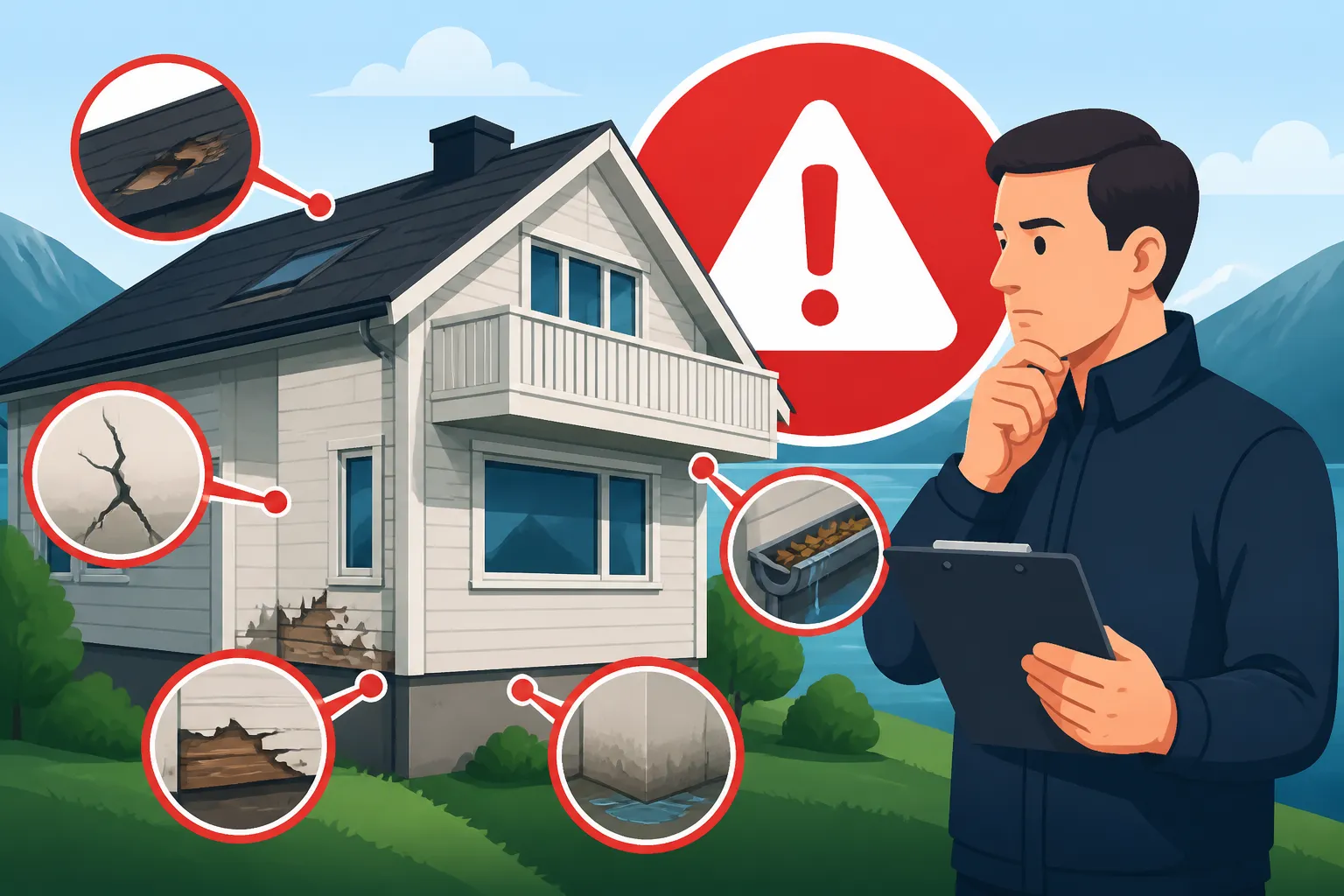
Given Norway's often damp climate, moisture and water damage are perennial problems and often the most costly defects to remedy. The tilstandsrapport will usually have specific sections for wet rooms, basements, and the exterior.
- Bathrooms and Wet Rooms: Pay extremely close attention to
fukt(moisture),råte(rot), andlekkasje(leakage). The report will often detail moisture measurements taken in walls and floors, particularly around showers and toilets. Look forTG2orTG3in these areas. Red flags include elevated moisture readings, visible water stains on walls or ceilings (especially in rooms below a bathroom), peeling paint, bubbling plaster, or a distinct musty smell. ATG3often means a full bathroom renovation is needed, which in Norway can easily run into hundreds of thousands of kroner. - Basements and Foundations: Basements are notoriously prone to moisture ingress. Look for signs of dampness, efflorescence (white, powdery residue on concrete walls), and especially
råtein wooden structures. Poordrenering(drainage) around the foundation is a major red flag, as it can lead to water pooling against the house, saturating the ground, and eventually seeping into the basement. This can cause widespread mold growth and even structural issues over time. - Roof and Exterior Walls: Any mention of
lekkasjeorfuktin connection with the roof, gutters, or exterior cladding (fasade) is a serious concern. Water intrusion from the outside can damage insulation, cause rot in the wall structure, and lead to mold in attic spaces or within walls.
Structural Issues and Foundation Problems (Bygningstekniske Feil og Fundament)
While less common than moisture issues, structural problems are often the most expensive and complex to fix, sometimes requiring specialized heavy-duty contractors.
- Cracks in Walls and Foundations: Not all cracks are created equal. Fine hairline cracks are often cosmetic. However, wide cracks (larger than a few millimeters), cracks that run diagonally, or cracks that appear to follow the same line across multiple stories can indicate
setningsskader(settlement damage) or other serious structural shifts. The report should differentiate between cosmetic and structural cracks. If you seeTG2orTG3related to the foundation or load-bearing elements (bærevegg), further expert assessment is essential. - Sagging Floors or Roofs: While minor sagging might be normal in older houses, noticeable dips or unevenness in floors, or visible sagging in the roofline, can point to failing support structures or excessive load. The
takstmannwill often use a level to check for deviations. This could signal problems with joists, trusses, or even foundation issues.
Electrical and Plumbing Systems (Elektrisk Anlegg og Rørlegging)
These are the hidden networks of your home, and while not always visible, their condition is crucial for safety and functionality.
- Electrical Systems: An older
EL-anlegg(electrical system), especially pre-1980s, often receives aTG2simply because it doesn't meet current safety standards, even if it's currently functional. The report might mention outdated fuse boxes (sikringsskapwith old-style fuses instead of circuit breakers), lack ofjording(grounding) in wet rooms, or insufficient capacity for modern appliances. While not always an immediate hazard, upgrading an entire electrical system can be a substantial undertaking. ATG3would indicate immediate fire or shock hazards. It's often recommended to get anEl-kontrollby a qualified electrician for older properties. - Plumbing Systems: Look for the age and material of the
rør(pipes). Older galvanized steel pipes (common before the 1970s) are prone to corrosion (korrosjon) and blockage, leading to reduced water pressure and potential leaks. Copper and PEX pipes are generally more reliable. The report might note slow drainage, signs of previous leaks, or general wear on water heaters (varmtvannsbereder). ATG2might suggest pipes are nearing their end of life, while aTG3implies active leaks or serious blockages. Remember, plumbing issues often lead directly back to those expensive water damage problems. Also, remember that if you move into a property with extensive renovations needed, you might temporarily reside in serviced apartments, which you could explore on platforms like Spotahome.
Roof and Exterior Integrity (Tak og Utvendig Kledning)
The outer shell of your house protects everything inside. Any compromise here is a direct threat to the entire structure.
- Roofing Materials: The
taktekking(roof covering) is critical. The report will specify the material (tiles, shingles, felt, metal) and its estimated remaining lifespan. Look forTG2orTG3related to damaged, missing, or brittle tiles/shingles, signs of moss or algae growth, or worn-out flashing around chimneys and vents. A roof replacement is a very costly endeavor. - Gutter and Downpipes: These are crucial for diverting water away from the foundation. Clogged, damaged, or poorly installed gutters and downpipes can lead to water overflowing and saturating the
fasade(exterior cladding) and foundation. - Exterior Cladding and Windows: Look for
råte(rot) in wooden cladding, especially near the ground or around windows, or significant cracks/peeling on painted surfaces. Windows (vinduer) will also be graded.TG2might indicate old windows with poor insulation value (leading to higher Electricity Bills in Norway: Spot Prices, Grid Fees (Nettleie), and Support), whileTG3could mean broken seals, active leaks, or compromised frames.
Acting on Red Flags: Next Steps for the Buyer
Finding red flags in the tilstandsrapport is not necessarily a deal-breaker, but it certainly means you need to proceed with caution, armed with a clear strategy. This is where your preparedness and willingness to invest a little more time and money upfront can save you a fortune down the line.
Seeking Further Expert Opinions (Ny Takstmann or Fagmann)
When a tilstandsrapport reveals significant issues, especially TG2 or TG3 on major components, or extensive TG IU classifications in critical areas, your first step should be to consider a deeper dive. The original takstmann works for the seller; while objective, their report might not fully capture the extent of hidden problems, or might just indicate areas of concern that warrant specialist attention.
- Your Own Takstmann: You can absolutely engage your own independent
takstmannto conduct a more thorough inspection, particularly focusing on the areas of concern. This might seem like an extra expense, but a few thousand kroner now could save you hundreds of thousands later. They can provide a "mot-takst" (counter-report) or a more specific "tilstandsanalyse" (condition analysis) on selected components. - Bringing in Specialists: For specific issues, a general
takstmannmight not be enough.- Moisture: If
fuktis detected, you might need afukttekniker(moisture technician) for advanced diagnostics. - Electrical: For
eldre EL-anlegg, anelektriker(electrician) can perform a detailedEl-kontrollto assess safety and upgrade needs. - Plumbing: A
rørlegger(plumber) can inspect pipes, drains, and water heaters, especially if there are signs of corrosion or leakage. - Structural: If serious structural issues are suspected, a
bygningsingeniør(structural engineer) or an architect specializing in renovation might be necessary.
- Moisture: If
These additional inspections can provide invaluable clarity on the true extent of the problem and, crucially, an estimate of the repair costs. Don't be afraid to ask for these; it's part of your due diligence as a buyer. While doing your research, you'll be constantly on your phone, making calls and checking details. Having a reliable connection is key, and if you're new to Norway, an eSIM from a provider like Airalo can ensure you stay connected without the hassle of a physical SIM card or navigating local mobile plans immediately.
Negotiating Price or Demanding Repairs (Prisforhandling og Utbedring)
Once you have a clearer picture of potential repair costs, you are in a much stronger position to negotiate.
- Impact on Your Offer: Significant
TG2orTG3classifications, especially if backed up by specialist reports, should directly influence your bidding strategy. In Norway's Navigating the Bidding Process (Budrunde) When Buying a Norwegian Home, you typically submit blind bids. If thetilstandsrapportreveals substantial repair needs, your initial bid might be lower, or you might need to include specific conditions (though conditions are rare in a hot market). - Estimating Repair Costs: Get concrete quotes from contractors for the identified repairs. This is vital. Don't just guess; actual quotes provide leverage. If a bathroom needs a full renovation due to
TG3water damage, and quotes suggest a cost of NOK 200,000, that’s a direct financial burden that should be reflected in the price you are willing to pay. - Demanding Repairs (Less Common): While possible, it's less common for sellers to agree to major repairs before the sale is finalized, especially in a seller's market. However, for minor, easily fixable
TG1orTG2issues, you might propose that the seller addresses them, or that you receive a direct price reduction equivalent to the repair cost. Most commonly, price reduction is the preferred method.
Remember, the goal is to ensure you're paying a fair price for the actual condition of the property, not just its perceived value based on location and aesthetics.
Legal Considerations and Insurance (Juridiske Aspekter og Forsikring)
Navigating the legal landscape of property transactions in Norway can be daunting, but understanding your rights and the role of insurance is critical.
- Buyer's and Seller's Insurance: In Norway, it's very common for sellers to have
eierskifteforsikring(change of ownership insurance), and for buyers to considerboligkjøperforsikring(home buyer's insurance).Eierskifteforsikring(Seller's Insurance): This insurance protects the seller against claims from the buyer for undisclosed or significant defects. If you discover a serious hidden defect after purchase, your claim would likely go through the seller's insurance company.Boligkjøperforsikring(Buyer's Insurance): This insurance, which you as a buyer would take out, helps you navigate the claims process against the seller's insurance, providing legal assistance and sometimes covering certain costs. It essentially gives you a legal team to fight for your rights if something goes wrong. This is distinct from Mandatory Insurance in Norway: Home Contents (Innboforsikring) and Auto insurance, which covers personal belongings and vehicle damage, respectively.
- Reviewing the
Salgsoppgave: Beyond thetilstandsrapport, thesalgsoppgave(sales prospectus) is also a crucial document. It contains information provided by the seller, often in a standardized form calledEgenerklæringsskjema, where they declare known defects or issues. Compare thetilstandsrapportwith the seller's declarations. Inconsistencies or omissions could be grounds for a claim later if a defect arises. - The "As-Is" Clause and Hidden Defects: Even with the new laws, the "as-is" clause is still relevant. If the
tilstandsrapportclearly details a defect (e.g., "bathroom needs renovation due to age, TG2"), you cannot claim it as a hidden defect after purchase; you were informed. However, if a major, expensive defect was genuinely hidden and not mentioned in the report or by the seller, and it significantly impacts the property's value, you may still have a claim. This is whereboligkjøperforsikringcan be invaluable.
Ultimately, buying a house is one of the biggest investments you'll ever make. Don't let the excitement of finding your dream home overshadow the importance of thoroughly understanding its actual condition. Take the time to read, understand, and, if necessary, challenge the tilstandsrapport.
Here's a quick overview of condition grades and their implications:
| Tilstandsgrad (TG) | Meaning & General Condition | Repair Urgency & Cost Implications | Buyer Action Recommended |
|---|---|---|---|
| TG0 | Ingen avvik (No deviation). Excellent, new, or recently updated. | No immediate repairs expected. Minimal future costs related to this component. | Celebrate! |
| TG1 | Mindre avvik (Minor deviation). Good, functional, normal wear. | Minor wear & tear. Repairs not urgent, but may be needed within 5-10 years. Low to moderate cost. | Note for future maintenance. Factor into long-term budgeting. |
| TG2 | Vesentlige avvik (Significant deviation). Functional, but with notable defects/reduced lifespan. | Repairs likely needed within 1-5 years. Moderate to high cost. Can be renovation-level work. | Get repair quotes. Strongly consider negotiating price. Possibly seek specialist inspection if uncertain. |
| TG3 | Store eller alvorlige avvik (Major/Serious deviation). Critical defects, safety/structural risk. | Urgent, immediate repairs required. High to very high cost. Can impact safety or structural integrity. | Absolute red flag. Get multiple specialist quotes. Negotiate aggressively, or seriously consider walking away. Buyer's insurance advised. |
| TG IU | Ikke Undersøkt (Not Inspected). Insufficient access to assess. | Unknown condition and potential repair costs. High uncertainty risk. | Another major red flag. Request seller to provide access for inspection, or factor maximum potential repair costs into your offer due to unknown risk. |
Disclaimer
The information provided in this guide is for general informational purposes only and does not constitute legal, financial, or real estate advice. While we strive to provide accurate and up-to-date information, rules and regulations in Norway can change, and individual situations vary. Always consult with qualified professionals, such as a real estate agent (eiendomsmegler), takstmann, lawyer, or financial advisor, for advice tailored to your specific circumstances when buying property in Norway.