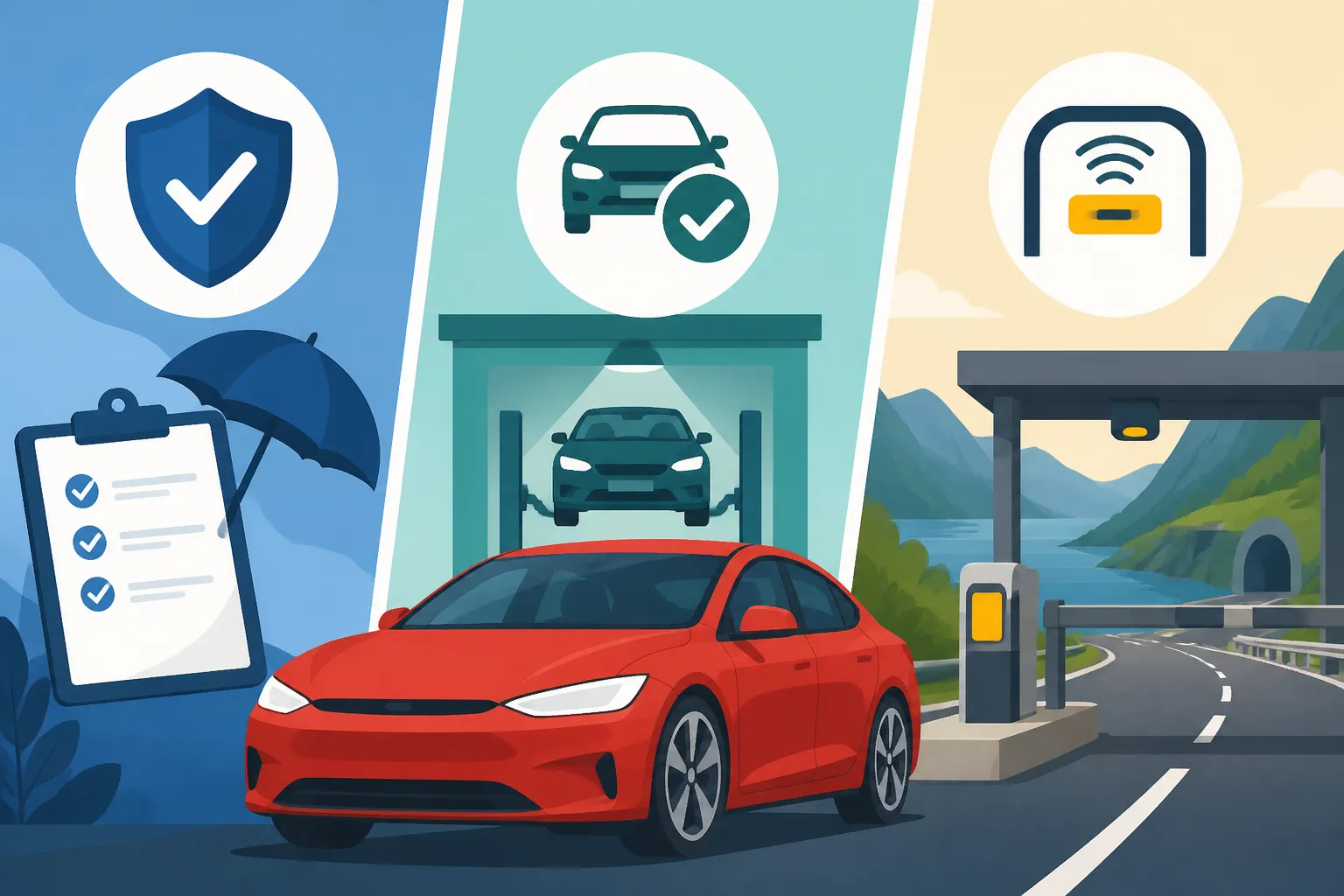
Owning a Car in Norway: Insurance, EU Inspections (EU-kontroll), and Tolls
Deciding to buy a car in Norway is often met with a mixture of excitement and immediate sticker shock once you see the price of petrol and the complexity of the toll system. This guide demystifies the administrative burden of vehicle ownership, from navigating the mandatory EU-kontroll to setting up your AutoPASS account, ensuring you can enjoy the stunning Norwegian landscape without fear of unexpected fines or insurance gaps.
The Financial Reality of Owning a Car in Norway
When you first arrive in Norway, perhaps after securing a long-term rental through a service like Spotahome, you might be tempted to bring your vehicle from home or buy a used one immediately. However, the financial landscape of Norwegian car ownership is unlike almost anywhere else in the world. The government uses high taxation on internal combustion engine vehicles to push the population toward electric alternatives, and this affects everything from your initial purchase price to your daily commute costs.
Purchase Costs and the Omregistreringsavgift
If you are buying a used car from a private individual on Finn.no, the price you see isn't the final amount you’ll pay. You must account for the omregistreringsavgift (re-registration fee). This fee varies significantly based on the age and weight of the vehicle, as well as its fuel type. Newer, heavier diesel cars carry the highest fees, while older vehicles or electric cars are considerably cheaper to transfer into your name.
Unlike in some countries where registration is a flat fee, Norway’s system is designed to penalize high-emission vehicles. When you navigate the Statens Vegvesen (Norwegian Public Roads Administration) website to finalize the transfer, you’ll need your BankID ready. If you are still waiting for your permanent ID number, you might find the process frustratingly manual. I remember the headache of visiting the traffic station in person just because my digital identity wasn't fully active yet. It is these small administrative hurdles that define the expat experience here.
Annual Road Tax and Traffic Insurance Tax
In 2018, Norway changed how it collects what was formerly known as the "annual road tax." It is now called the trafikkforsikringsavgift (traffic insurance tax) and is collected directly through your insurance company. This was a welcome change for many of us because it meant one less separate bill to remember, but it also means your monthly insurance premium looks significantly higher than it actually is.
You are charged a daily rate for every day the car is registered in your name. For 2024 and 2025, this rate is roughly 8 to 10 NOK per day for standard passenger cars. If you are budgeting for your life here, don't forget to factor this in. It is mandatory, and if you fail to pay your insurance, the insurance company will notify the authorities, eventually leading to the seizure of your license plates. While you are getting your bearings and setting up these local accounts, having a reliable data connection via Airalo can be a lifesaver for translating complex insurance terms on the fly.
Navigating Norwegian Car Insurance (Bilforsikring)
Insurance in Norway is not just a recommendation; it is a strictly enforced legal requirement. The moment a vehicle is registered in your name in the central registry, you must have at least the minimum level of coverage. If you drive even a single meter without it, you risk astronomical fines and, more importantly, personal financial ruin in the event of an accident.
Mandatory Liability vs. Comprehensive Coverage
The most basic level of insurance is ansvarsforsikring (liability insurance). This covers damage you cause to other people, their vehicles, or property. It does not cover your own car. Most expats, especially those moving into unfurnished apartments found via Spotahome who might be watching their initial expenses, start by looking at this, but I strongly advise against it unless your car is a "beater" worth less than 20,000 NOK.
The next step up is delkasko (partial cover), which typically includes theft, fire, glass breakage (very common in the winter due to gravel on the roads), and roadside assistance. Finally, there is full kasko, which covers accidental damage to your own vehicle, even if the accident was your fault. Given the icy conditions of a Norwegian winter, full kasko is the standard for most residents. You should also look into Mandatory Insurance in Norway: Home Contents (Innboforsikring) and Auto to see how these different policies can sometimes be bundled for a discount.
The Bonus System: Building Your Discount
One of the biggest frustrations for new arrivals is the "bonus system." Norwegian insurance companies reward years of accident-free driving with a percentage discount on your premium. You usually start at 20% or 40% and earn an additional 10% for every year you don't make a claim, topping out at 75% or 80%.
The catch? Many Norwegian insurers are reluctant to recognize driving history from outside the EU/EEA. I spent weeks arguing with agents, providing letters from my previous insurers back home, just to avoid starting at the bottom. It’s worth the effort, though, as the difference between a 20% bonus and a 50% bonus can save you thousands of kroner annually. If you are struggling with the language barrier during these negotiations, using a travel SIM from Airalo to stay connected while you research terminology can help you stay on top of the conversation.
| Insurance Level | Covers Others | Theft/Fire | Glass | Own Damage | Roadside Assistance |
|---|---|---|---|---|---|
| Ansvarsforsikring | Yes | No | No | No | No |
| Delkasko | Yes | Yes | Yes | No | Yes |
| Kasko | Yes | Yes | Yes | Yes | Yes |
| Super/Top Kasko | Yes | Yes | Yes | Yes (Plus) | Yes (Plus) |
Understanding the EU-kontroll (Periodic Vehicle Inspection)
If you see a letter from Statens Vegvesen in your digital postbox (Altinn), pay attention. It’s likely a notice for your periodisk kjøretøykontroll (PKK), universally known as the EU-kontroll. This is the mandatory safety and environmental inspection that every car in Norway must undergo to remain roadworthy.
Timing and Requirements for Your Inspection
The rule of thumb for most passenger cars is that the first inspection happens four years after the car was first registered, and then every two years after that. You are responsible for ensuring the car is inspected and approved before the deadline. You can check your specific deadline on the Statens Vegvesen website by entering your license plate number.
Don't wait until the last month to book your appointment. In smaller towns, or during the busy spring season, workshops can be fully booked for weeks. If you miss the deadline, your car is technically illegal to drive, and you will eventually receive a letter stating that the police will remove your plates if you are caught on the road. For more on the logistics of staying legal, read about Owning a Car in Norway: Insurance, EU Inspections (EU-kontroll), and Tolls to understand the full scope of your responsibilities.
Common Fail Points and How to Fix Them
The EU-kontroll is rigorous. They check everything from brake pad thickness and tire tread depth to the aim of your headlights and the emissions of your exhaust. One of the most common reasons cars fail in Norway is rust on the brake discs. Because we use so much salt on the roads during winter, the undersides of cars take a beating. If you don't wash your car regularly in the winter, that salt will eat through your components.
If your car fails, you will receive a report with "1," "2," or "3" errors.
- Grade 1: Minor fault; you should fix it, but you don't need a re-check.
- Grade 2: Serious fault; you must fix it and bring the car back for a etterkontroll (re-inspection) within a set timeframe.
- Grade 3: Critical fault; the car is banned from the road immediately.
I once failed because a tiny bulb over my rear license plate had burned out. It’s that level of detail. Always do a quick walk-around of your car before taking it to the shop to save yourself the cost of a re-inspection for something simple.
Tolls and Bompenger: The Digital Payment System
Norway’s road infrastructure is world-class, but it is largely funded by those who use it. The bompenger (toll) system can feel like a maze of different companies and charging zones. Gone are the days of coin baskets or toll booths; the system is entirely automated using cameras that read your license plate or a physical tag in your windshield.
AutoPASS: How to Save 20% on Every Toll
If you own a car in Norway, you must get an AutoPASS tag. It is a small plastic device that sticks to the inside of your windshield. By linking this tag to a service provider like Fremtind Service or Flyt, you automatically receive a 20% discount on almost all toll crossings in the country. Without a tag, you pay the full price, and the bill is sent to the address where the car is registered.
For those living in major hubs like Oslo or Bergen, these tolls add up incredibly fast. If you’ve just moved into an apartment in a central neighborhood via Spotahome, you might find yourself crossing multiple "toll rings" just to go to the grocery store. Having an AutoPASS agreement also simplifies your life when taking ferries, as the tag is often used to pay for the vehicle's fare automatically. To learn more about the environmental side of this, check out The EV Revolution: Why Expats should Consider Buying an Electric Car as EVs often enjoy significantly lower toll rates.
Urban Toll Rings and Environmental Pricing
Norway has implemented "environmental pricing" in cities like Oslo, Trondheim, and Stavanger. This means the price you pay depends on what you drive and when you drive it. Diesel cars usually pay the most, followed by petrol cars, with electric vehicles paying the least (though they are no longer entirely free in most places).
There are also "rush hour" rates. If you pass through a toll station between 06:30–09:00 or 15:00–17:00, the price can nearly double. This is something I had to learn the hard way during my first month of commuting. I realized that leaving the office 15 minutes later saved me enough money over a month to pay for several nice dinners. While navigating these zones, having a map app running on a local data plan from Airalo is essential to avoid accidentally taking a route with multiple expensive toll points.
Winter Maintenance and Seasonal Requirements
Driving in Norway isn't just about the rules; it's about the weather. The transition from autumn to winter is a high-stress period for every car owner in the country. If you aren't prepared, you will find yourself stuck, or worse, sliding off a mountain road.
Winter Tires (Piggdekk vs Piggfrie)
The law regarding tires is specific: you must have "sufficient grip" for the conditions. In practice, this means you need dedicated winter tires. There are two main types: piggfrie (studless) and piggdekk (studded). Studded tires offer better grip on pure ice but are noisier and subject to "studded tire fees" in cities like Oslo and Bergen to combat air pollution.
Most people in the cities opt for studless winter tires. However, if you plan on driving into the mountains frequently or live in the north, studded tires are a literal lifesaver. You should familiarize yourself with the Winter Tires (Piggdekk vs Piggfrie): Legal Dates and Rules to avoid being caught with the wrong setup after the first snowfall. Changing your tires is a biannual ritual in Norway, and most people either do it themselves in their driveway or pay a dekkhotell (tire hotel) to store and swap them.
Preparing Your Car for Sub-Zero Temperatures
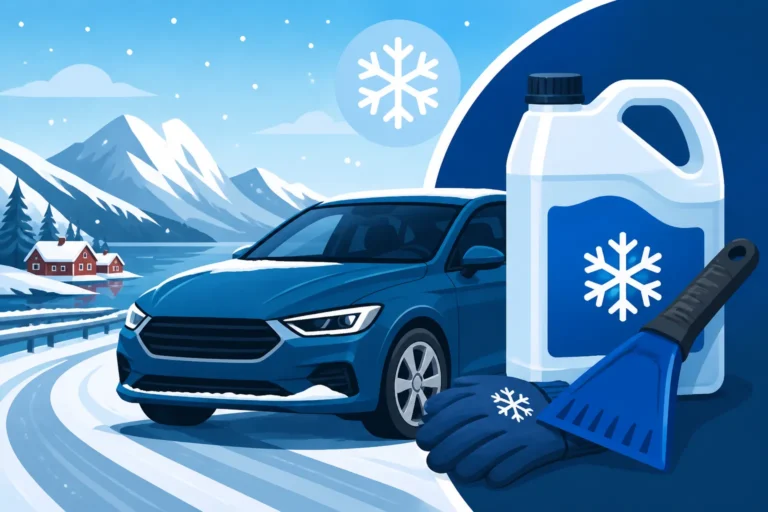
Beyond tires, you need to prepare your vehicle for the "dark season" (mørketid). This includes ensuring your coolant is rated for -30°C, switching to winter-grade windshield washer fluid (which won't freeze at -15°C), and checking your battery health. Car batteries die in the Norwegian cold at an alarming rate.
I always keep a "winter kit" in my trunk: a heavy-duty ice scraper, a snow brush, a small shovel, jumper cables, and a warm wool blanket. If you get stuck on a mountain pass like Hardangervidda because the road is closed for "column driving" (where a snowplow leads a group of cars), you could be sitting in your car for hours. For more tips on surviving the elements, see Surviving the Norwegian Winter: Clothing, Heating, and Mørketid (Dark Season).
Practical Tips for the Expat Driver
Owning the car is one thing; using it daily is another. Norway has some of the strictest traffic laws in the world, and the fines are calculated based on your income in some cases, or are simply flat fees that will make your eyes water.
Navigating Parking Laws and Fees
Parking in Norwegian cities is a nightmare. It is expensive, highly regulated, and the "parking wardens" are incredibly efficient. If a sign says you can park for 2 hours with a "disk," it means you must display a clock in your window showing when you arrived. If you are one minute late, you will likely find a yellow slip on your windshield.
Many residential areas require a beboerparkering (resident parking) permit. If you found your home through Spotahome, check if the rental includes a parking spot or if the street is part of a permit zone. You apply for these through the municipality (Kommune) website, and they usually cost a few thousand kroner per year. Without it, you are stuck paying hourly rates, which is unsustainable. You can find more details on local living in Where to Live in Norway: Top Expat Neighborhoods in Oslo, Bergen, and Beyond.
Fueling Up and Charging Infrastructure
If you drive a petrol or diesel car, try to fuel up on Sunday evenings or Monday mornings. Historically, this is when prices are lowest before they jump for the work week. It sounds like a myth, but in Norway, it is a very real phenomenon.
For EV owners, Norway is paradise. There are fast chargers at almost every gas station, grocery store, and mountain crossing. You’ll need a variety of apps (Elton, Mer, Tesla, Fortum) to manage payments. This is another area where having an Airalo eSIM is incredibly useful, as you'll often need to download an app and register your credit card while standing in the rain at a charging station. For a deeper dive into the logistics of EVs, read Electric Car Chargers: Using Apps like Fortum, Mer, and Circle K.
Lastly, always remember that Norway has a zero-tolerance policy for drink-driving. The legal limit is 0.02%, which basically means if you’ve had one beer, you don't touch the keys. The penalties include prison time and massive fines, and the social stigma is enormous. If you’re going out, leave the car at home and look into Public Transport in Oslo (Ruter): Zones, Tickets, and Monthly Passes.
Important Disclaimer
The information provided in this guide is for informational purposes only and does not constitute legal or professional advice. While we strive to keep the facts updated, Norwegian regulations regarding taxes, tolls, and vehicle inspections can change frequently. Always consult the official Statens Vegvesen website or your local municipality for the most current rules and requirements. Driving in Norway involves significant responsibilities, and ensuring compliance with local laws is the sole responsibility of the vehicle owner.