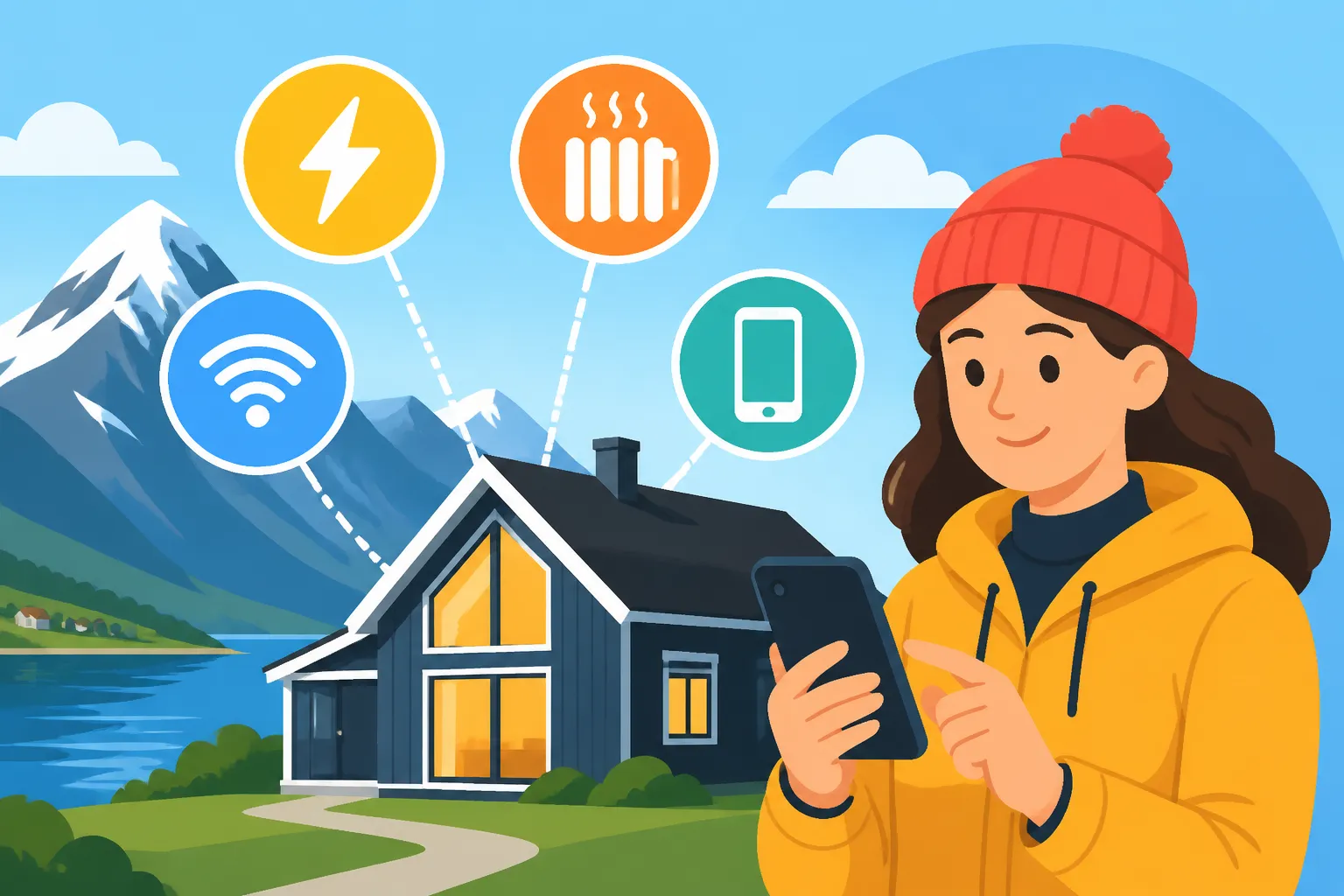
Setting Up Utilities: Electricity, Heating, Internet, and Mobile Plans
Moving into a new apartment in Norway often feels like a triumphant victory over the competitive housing market, but the victory is short-lived when you realize you are sitting in a dark, freezing living room with no way to check Google Maps. Navigating the fragmented world of Norwegian utilities—from the dual-billing system of electricity to the high-stakes world of fiber internet—can be an administrative nightmare for the uninitiated. This guide provides a veteran expat’s roadmap to setting up your home essentials, bypassing the common "BankID barriers," and ensuring you aren't overpaying during those long, dark winter months.
Electricity in Norway: Navigating the Deregulated Market
When I first arrived in Oslo, I assumed electricity was a straightforward utility like water. I was wrong. In Norway, the electricity market is deregulated, meaning you have to deal with two distinct entities: the grid owner (nettleier) and the power provider (kraftleverandør). You don't get to choose your grid owner—they own the physical wires leading to your building—but you absolutely must choose your power provider. If you don’t, you will be placed on a "delivery duty" (leveringsplikt) rate, which is intentionally exorbitant to encourage you to find a private contract. This is a common trap for newcomers who assume the lights staying on means the setup is complete.
The Dual-Bill System: Nettleie vs. Kraft
The most confusing aspect of Norwegian power is receiving two separate bills, or one combined bill that looks like a mathematical puzzle. The "Nettleie" is the fee you pay to the company that maintains the local power grid (like Elvia in Viken/Oslo or BKK in Bergen). This fee is based on your "capacity step"—basically, how much electricity you use at once. If you run the dishwasher, the washing machine, and the oven simultaneously, you might get bumped into a higher, more expensive grid tier.
On the other side is the "Kraft" or "Strøm" bill. This is the actual electricity you consume, purchased through a provider like Fjordkraft, Tibber, or Fortum. Understanding How to Read Your Norwegian Electricity Bill: Forbruk vs Nettleie is essential because it helps you identify which part of your cost is fixed by the infrastructure and which part you can actually reduce through smarter consumption habits. Many expats find that their "Nettleie" can sometimes be higher than the cost of the actual power during the summer months.
Spot Price vs. Fixed Price Contracts
In Norway, almost everyone uses a "Spotpris" (spot price) contract. This means you pay the current market price of electricity as determined by the Nord Pool power exchange, plus a small margin or monthly fee to the provider. While this means your bill fluctuates wildly—sometimes hour by hour—it has historically been the cheapest option over the long term. If you are a fan of predictability, you might be tempted by a "Fastpris" (fixed price) contract, but these are increasingly rare and often priced at a premium that makes them poor value for money.
There is also a "Variabel pris" (variable price) option, which providers often push on unsuspecting foreigners. Avoid this. It usually lags behind the market and ends up being more expensive than the spot price. To get the best deal, use comparison sites like Strømpris.no. Just be aware that many of the "introductory offers" are only valid for a few months before they pivot to a much higher rate. Always check if the contract has a "binding period" (bindingstid). Fortunately, most spot price contracts allow you to switch providers with just a few days' notice.
The Strømstøtte Subsidy and Your Rights
Since the energy crisis of 2021, the Norwegian government has implemented a subsidy program to help residents cope with high prices. This is known as "Strømstøtte." It is calculated automatically and deducted from your "Nettleie" (grid) bill when the average spot price exceeds a certain threshold. A frequent question from those in shared housing or sub-letters is: Electricity Support Scheme (Strømstøtte): Do Renters Get It? The answer is yes, as long as you have a private electricity meter and a contract in your name.
If your electricity is "included in the rent," the landlord receives the subsidy, and technically, they should pass those savings onto you, though this is a frequent point of contention in Renting in Norway: Apartments, Contracts, and Tenant Rights. If you are renting a "hybel" (a small sub-unit) that doesn't have its own meter, you are at the mercy of your landlord’s honesty regarding the subsidy. Always ask for a copy of the bill if your utility costs seem suspiciously high during the winter.
Heating Your Home: Staying Warm Without Breaking the Bank
Heating is the single largest expense for any household in Norway, often accounting for 60-70% of your total energy bill. Most Norwegian homes are heated by electricity, which is efficient but can become a financial burden if you aren't careful. When you are browsing listings on Spotahome or Finn.no, pay close attention to the energy rating of the building and the type of heating installed. A "charming" old wooden apartment might look great in photos, but if it has drafty windows and old electric baseboard heaters, you’ll be wearing a parka indoors by November.
Electric Baseboard Heaters and Heat Pumps
The most common heating method is the "panelovn"—the sleek, white electric heaters mounted under windows. They are designed to counteract the cold air falling from the glass. However, they are "resistance heaters," meaning they use a lot of juice. If your apartment has a "Varmepumpe" (air-to-air heat pump), you have struck gold. These devices are significantly more efficient, providing three to four times the heat for the same amount of electricity.
If you have a heat pump, the golden rule is to "set it and forget it." Don't turn it off when you go to work; instead, lower the temperature by a few degrees. Constantly turning it on and off actually uses more energy as the unit has to work harder to reheat the thermal mass of the room. Many modern units can be controlled via smartphone apps, allowing you to warm up the house 20 minutes before you arrive home from the office.
District Heating and Wood Stoves
In newer apartment complexes or "Borettslag" (housing cooperatives) in major cities, you might have "Fjernvarme" (district heating). This uses hot water circulated through radiators or underfloor pipes. Usually, this is included in your "felleskostnader" (common costs) or billed based on a meter in your hallway. It is generally cheaper and much more consistent than electric heating.
Then, there is the "Peis" (wood stove). For many Norwegians, burning wood is a cultural ritual as much as a heating method. If your apartment has a functioning chimney and stove, you have a valuable backup for the coldest days. However, you need to know Firewood in Norway: Where to Buy It and How to Store It because buying small bags at the gas station is the most expensive way to stay warm. Look for local "ved" sellers on Finn.no who deliver large pallets (storsekk) directly to your door in the autumn.
Insulation and Winter Survival Tips
Beyond the heaters themselves, survival in the Norwegian winter is about retention. Most Norwegian homes are built with triple-pane glass, but seals can perish. A simple roll of weatherstripping from Biltema or Clas Ohlson can save you hundreds of kroner. I also highly recommend the "Norwegian method" of zone heating: keep your bedroom cold (around 15-16°C) for better sleep and only heat the rooms you are actively using.
Invest in high-quality wool rugs and heavy curtains. In many older buildings, the floor can act as a giant ice cube. Putting a barrier between your feet and the floor makes a psychological and physical difference. Also, don't forget to keep your ventilation vents (the small slots above the windows) slightly open. It sounds counterintuitive to let cold air in, but Norwegian homes are built so tightly that you need the airflow to prevent moisture buildup and mold, which can become a major legal headache between tenants and landlords.
| Heating Type | Cost Level | Efficiency | Best For |
|---|---|---|---|
| Heat Pump (Varmepumpe) | Low | Very High | Large living areas, long-term savings |
| District Heating (Fjernvarme) | Medium | High | Modern apartment blocks, consistent heat |
| Wood Stove (Peis) | Variable | Medium | Cold snaps, cozy atmosphere |
| Electric Baseboard (Panelovn) | High | Low | Small rooms, targeted heating |
High-Speed Internet: Getting Online in the Land of Fiber
Norway has some of the best internet infrastructure in the world, but the market is often a monopoly based on your specific address. When you move in, you don't usually get to choose between five different fiber providers. Instead, the building usually has a "collective agreement" with one provider. This is both a blessing and a curse: it’s easy to set up, but you have zero bargaining power on the price.
Major Providers: Telenor, Telia, and Altibox
Telenor and Telia are the two heavyweights. If you move into a standalone house, you might find that Altibox (a conglomerate of local fiber providers) is the dominant player. When you call to set up your service, the first thing they will ask for is your "Fødselsnummer" (National Identity Number). For many expats, this is where the trouble begins.
If you are still waiting for your ID number, you may find it difficult to sign a standard 12-month contract. However, Setting Up Home Wi-Fi Without a D-Number or BankID is possible if you are persistent. Some providers will allow you to sign up with a passport and a deposit, but you usually have to visit a physical brand store (like the Telenor Butikken) rather than trying to do it over the phone or online.
Fiber vs. 5G Home Broadband
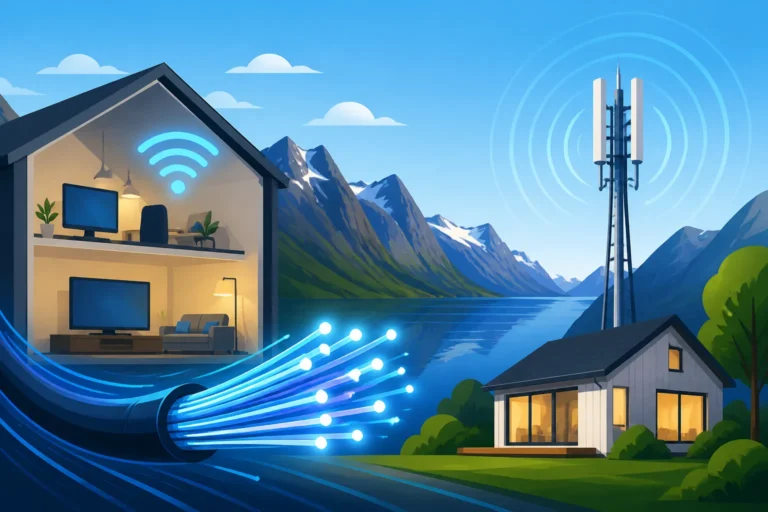
If your apartment doesn't have a fiber connection—common in some older, protected buildings—you might be offered "Trådløst Bredbånd" (Wireless Broadband). This uses the 5G or 4G network to provide home internet via an outdoor antenna and an indoor router.
While 5G speeds in Norway are impressive (often reaching 300-500 Mbps), wireless broadband usually comes with a data cap or a "fair usage" policy. If you are a heavy gamer or stream 4K video all day, fiber is always the superior choice. However, 5G home office setups are a great "bridge" solution if you are living in a temporary rental and don't want to commit to a long-term fiber installation fee.
Navigating Contracts and the BankID Barrier
Almost everything in the Norwegian digital world revolves around BankID Explained: Norway's Digital Identity System and Expat Challenges. Without it, you cannot log into the provider's portal to see your invoices, change your Wi-Fi password, or upgrade your speed.
When you first sign up, ask the provider for "Papirfaktura" (paper invoices) or "E-post faktura" (email invoices). They will often charge a small fee (around 49–79 NOK) for paper, but it is the only way to ensure you actually see your bill before you have a Norwegian bank account set up. Once you have your ID number, you should immediately transition to What is eFaktura and AvtaleGiro? Setting Up Automatic Bills to avoid the "inkasso" (debt collection) notices that Norwegians are so fond of sending the moment a payment is one day late.
Mobile Plans: Staying Connected on the Go
The mobile market in Norway is highly competitive, but again, it is strictly regulated regarding ID. You cannot simply walk into a 7-Eleven and buy an anonymous SIM card that works indefinitely. Every SIM must be registered to a person with a valid ID.
Main Operators vs. MVNOs
You have the "big three" who own the networks: Telenor, Telia, and Ice. Then you have a host of smaller providers (MVNOs) like Talkmore, MyCall, and Fjordkraft Mobil who rent space on those networks.
For expats, MyCall is often the hero of the story. They have historically been the most "foreigner-friendly" provider, offering plans that include international calling minutes and allowing registration with a D-Number vs Fødselsnummer: How It Affects Your Banking Options rather than requiring a full permanent ID number. Talkmore is also popular because they offer significant discounts if you also use Fjordkraft for your electricity.
Pre-paid vs. Post-paid
If you don't have a Norwegian credit history, you will almost certainly be denied a "Post-paid" (monthly contract) plan. Norwegian companies run a credit check (kredittsjekk) on every new customer, and if you haven't been in the tax system for at least a year, your score will be zero.
This means you will start with a "Pre-paid" (Kontantkort) plan. Be aware of the Buying Prepaid SIM Cards in Norway: ID Requirements for Tourists if you are helping friends or family visit. You will need to show a passport at a kiosk like Narvesen or Pressbyrån to get the SIM activated. Once you have a year of residency under your belt, you can switch to a contract, which usually offers much more data for a lower price.
International Roaming and Transitional Connectivity
Norway is part of the EEA, so your Norwegian data plan works exactly the same in Spain or Germany as it does in Oslo. However, if you are traveling from outside the EU/EEA (like the US, UK, or Australia), roaming on your home SIM will be eye-wateringly expensive.
During your first week, before your local SIM is active, I highly recommend using Airalo. It allows you to download an eSIM directly to your phone for immediate data access. This is a lifesaver when you are trying to navigate the UDI office or find your new apartment's hidden trash room. Once you have your MyCall or Telenor SIM, you can phase out the eSIM, but having that instant connectivity from the moment you land at Gardermoen airport prevents a lot of early-arrival stress.
Water, Waste, and Municipal Services
One of the few "reliefs" in the Norwegian utility landscape is water. Unlike in many other countries, you generally do not receive a separate water bill for a residential apartment.
Water and Sewage
In Norway, water and sewage charges are municipal taxes (kommunale avgifter). If you are renting, these are almost always included in your rent. If you are buying, you will pay these to the municipality (Kommune) twice or four times a year. The water quality in Norway is world-class; it is perfectly safe (and encouraged) to drink from the tap. In fact, buying bottled water is seen as a bit of a faux pas unless you are on a long mountain hike.
Garbage Sorting and Recycling Rules
Norwegians take recycling very seriously, and each municipality has its own colors for trash bags. In Oslo, for example, food waste goes in green bags, plastic packaging in blue bags, and general waste in white/transparent bags. These bags are usually free at supermarkets.
Failure to follow the Garbage Sorting and Recycling Rules in Norwegian Municipalities can lead to grumpy notes from the "Vaktmester" (caretaker) or even fines for the entire building. Glass and metal never go in the household bins; you must take them to a local "returpunkt" (usually a container located near a supermarket). For larger items, you'll need to look up the local "Gjenbruksstasjon" (recycling center).
The NRK License (TV Tax)
A few years ago, Norway scrapped the separate TV license fee that used to be sent as a terrifying bill in the mail. Now, the public broadcaster (NRK) is funded directly through the tax system. This means you don't have to "register" your TV or worry about a separate payment; it is automatically deducted from your income tax. If you see old forum posts talking about the "Lisensavdeling," you can safely ignore them—it is one less administrative hurdle for the modern expat.
The First 30 Days: A Strategic Setup Guide
The key to a smooth transition is not doing everything at once. If you try to set up a post-paid mobile plan, high-speed fiber, and a spot-price electricity contract on day one without an ID number, you will face a wall of "Nei."
Finding Short-Term Housing First
If you haven't secured a long-term lease yet, consider using a service like Spotahome. They specialize in mid-to-long-term rentals that often have utilities already set up and included in the price. This gives you a "buffer zone" of 1-3 months where you can focus on getting your D-number and opening a bank account without the pressure of being in the dark or without internet. Having a stable address is a prerequisite for almost every utility contract in Norway.
Registering Your Move
The moment you sign a lease, you must ensure your name is on the mailbox. This sounds trivial, but Posten (the Norwegian postal service) will not deliver mail—including your bank cards or ID documents—if the name on the letter doesn't match the name registered to that mailbox. You can update this online via the Posten website. Furthermore, you are legally required to report your change of address to the Folkeregisteret (National Registry) within eight days of moving.
Establishing Credit and Automated Payments
Your goal should be to reach "automated" status as quickly as possible. Once you have BankID, you should go into your online bank and search for your utility providers under the "eFaktura" section. This allows bills to be sent directly to your bank app rather than your physical mailbox.
Combine this with "AvtaleGiro," and the bank will automatically pay the bill on the due date. Given that Norwegian late fees are some of the highest in Europe, this automation is the best way to protect your fledgling credit score. If you ever find yourself in a dispute with a provider, remember that you have the right to withhold the disputed portion of a bill, but you should always pay the undisputed part to avoid "Inkasso" (debt collection).
Dealing with Administrative Hurdles
Even with the best preparation, you will likely hit a few "Norwegian No's." This is a cultural quirk where a customer service representative tells you something is impossible because their computer screen doesn't have a button for it.
The D-Number Struggle
If you have a D-number instead of a full Fødselsnummer, many automated systems will reject you. This is common with mobile providers and some electricity companies. The workaround is always the same: Human Intervention. Do not use the web forms. Call the customer service line or, better yet, go to a physical office. Explain that you are a "Skilled Worker" or "Student" and offer to pay a deposit (depositum). Most companies have a manual override process for those who are "new in Norway," but they won't volunteer it unless you ask.
What to do if you don't have BankID yet
If you are in the "limbo" period before BankID, you will have to manage your utilities the old-fashioned way. Keep a folder of all your physical invoices. When you go to pay them, you can actually take them to a "Bank i Butikk" (a bank counter inside a grocery store like Meny or Kiwi), though they charge a hefty fee for this service. Alternatively, you can use a foreign bank account to pay via IBAN/SWIFT, but make sure you include the "KID" number (the long identification number on the bill) in the reference field so the provider knows the payment came from you.
Security Deposits for Service Providers
Because you don't have a credit history, some providers—especially for internet or mobile—might ask for a security deposit. This can range from 1,000 to 5,000 NOK. This is legal, but make sure you get a receipt and a clear statement of when the deposit will be returned (usually after 6–12 months of on-time payments). This is separate from your apartment rental deposit and should never be paid in cash; always use a bank transfer for a paper trail.
Disclaimer
This guide is for informational purposes only and is based on the author's personal experience and research into Norwegian utility regulations as of 2024-2026. Utility prices, government subsidies (Strømstøtte), and provider policies change frequently. Always read the specific terms and conditions of your service contracts. We are not responsible for any financial losses or service interruptions resulting from the use of this information.