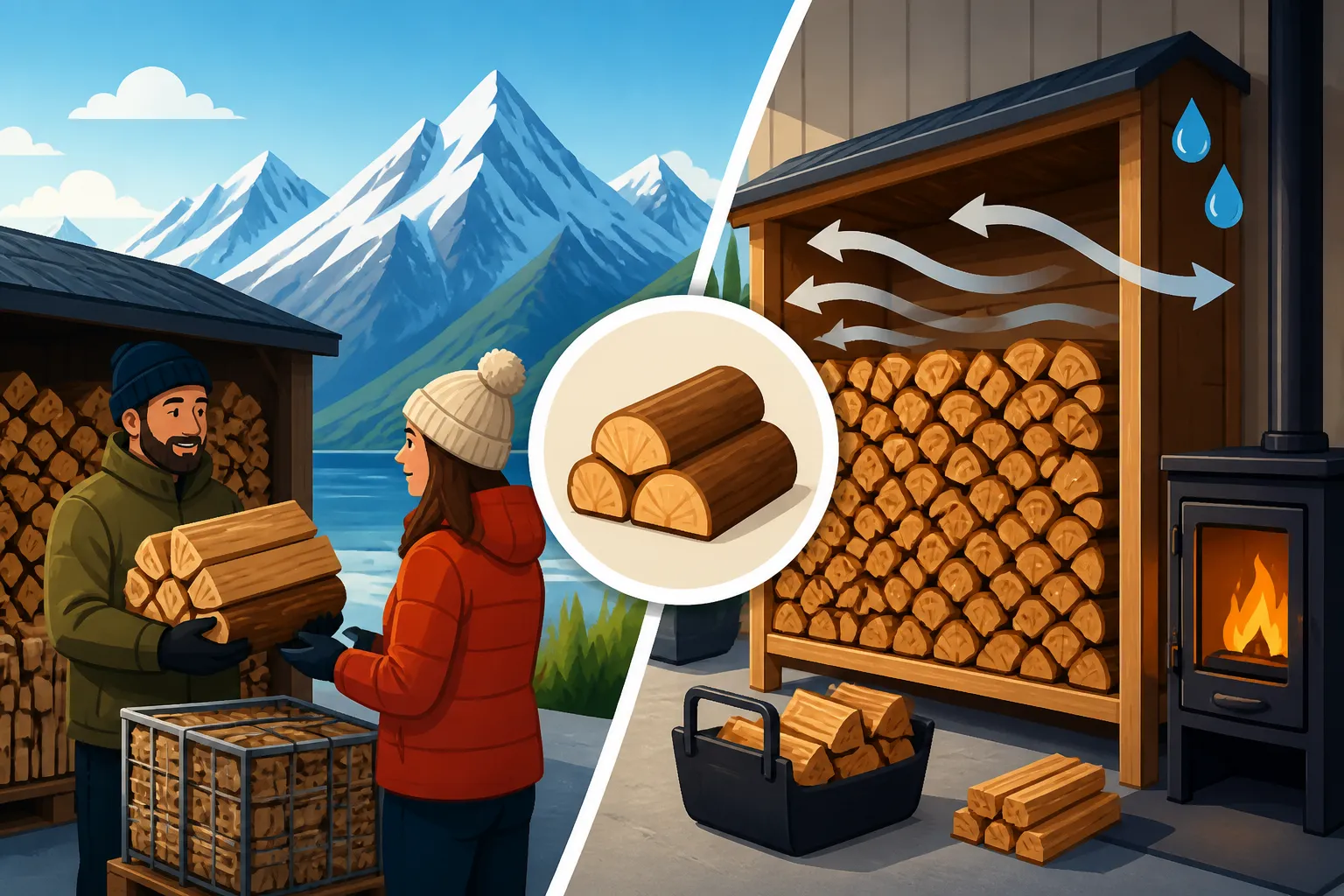
Firewood in Norway: Where to Buy It and How to Store It
One of the most jarring transitions for any expat moving to Norway is the realization that staying warm involves more than just turning up a thermostat. When the first frost hits and your electricity bill begins to climb, you will quickly discover that firewood is not just a hobby—it is a survival skill and a national obsession. This guide explains how to source, buy, and store firewood to keep your home warm and your budget intact.
Understanding the Norwegian Wood Culture
In Norway, firewood is much more than fuel; it is a central pillar of the concept of "peiskygge" and the broader philosophy of "koselig." To truly integrate into Norwegian society, you must understand that the way you handle your firewood—or "ved"—is often seen as a reflection of your character. I remember my first winter in a drafty apartment in Oslo, staring at a beautiful but intimidating cast-iron stove, wondering if I could just burn old IKEA furniture (spoiler: do not do that).
The Norwegian obsession with wood reached its peak a few years ago when a four-hour television program about a wood fire became a national sensation. This deep connection to the hearth means that there are specific expectations regarding the quality and type of wood you use. If you are currently searching for an apartment that features a functional fireplace, platforms like Spotahome can be incredibly helpful for filtering properties that offer these traditional heating elements. Having a wood stove is one of the most effective ways to mitigate the high costs associated with Electricity Bills in Norway: Spot Prices, Grid Fees (Nettleie), and Support.
Why Firewood Matters for Your Budget
While many modern apartments use underfloor heating or heat pumps, many older buildings and suburban homes rely on wood as a secondary—or even primary—heat source during the "Mørketid." Relying solely on electric radiators can lead to a massive financial shock when the temperature drops to -15°C. By mastering the art of the wood stove, you can significantly lower your monthly expenses, which is a key part of managing the Cost of Living in Norway 2026: Budgeting for Singles and Families.
Firewood provides a dry, intense heat that helps manage humidity in older wooden homes. It also serves as a critical backup during the rare power outages that can occur during heavy winter storms. Understanding the nuances of Heating Your Home: Heat Pumps (Varmepumpe), Firewood, and Insulation will help you decide how much wood you actually need to get through the season without overspending.
Choosing the Right Type of Wood
Not all wood is created equal in the eyes of a Norwegian. The gold standard is almost always "Bjørk" (Birch). Birch is prized because it burns cleanly, has a high energy density, and smells wonderful. It also has a beautiful white bark that looks great when stacked next to the fireplace. If you are buying wood for the first time, stick to Birch. It is the safest bet for a clean chimney and a long-lasting fire.
Other options include "Furu" (Pine) and "Gran" (Spruce). These are "softwoods" and are generally cheaper than Birch. They ignite very quickly, making them excellent for kindling (opptenningsved), but they burn much faster and can "pop" or "spit" sparks, which can be dangerous if you have an open hearth. If you are trying to save money, a common strategy is to use Pine or Spruce to get the fire started and then switch to Birch to maintain the heat.
Where to Buy Firewood in Norway
Finding wood is easy; finding affordable, high-quality wood requires a bit more strategy. If you are out and about scouting for deals or traveling to a local farm, make sure your phone has a reliable data connection. Using a service like Airalo to keep your digital maps and translation apps running is essential when navigating the rural outskirts of cities like Bergen or Trondheim.
Local Gas Stations and Supermarkets
The most convenient way to buy wood is at gas stations (like Circle K or Shell) and supermarkets (such as Meny or Coop). These locations sell small 40-liter sacks that are easy to throw in the back of a car. However, convenience comes at a high price. Buying wood this way is the most expensive method possible, and the quality can be hit-or-miss.
When buying from these outlets, always check the weight and the moisture content if possible. If a sack feels unusually heavy, it might be "rå" (wet), meaning it will smoke heavily and provide very little heat. While you are picking up wood, you might also want to check out the current Supermarket Prices (Kiwi, Rema 1000, Meny) to see if there are any seasonal discounts on fire-starters or kindling.
Buying in Bulk on Finn.no and Facebook Marketplace
To get the best prices, you must head to the digital marketplace. This is where the veteran expats and locals find their "ved." Learning the Finn.no Masterclass: How to Navigate Norway’s Biggest Housing Site is vital here, as the "Torget" section of Finn.no is flooded with firewood advertisements starting in late August. You will find farmers and private sellers offering "storsekk" (large sacks) of 1,000 or 1,500 liters.
Buying in bulk usually requires you to have a trailer or to pay for delivery. If you are living in an apartment in the city, see if you can coordinate with neighbors to split a large delivery. This is a great way to save money and is often more reliable than Buying Second-Hand on Tise or Finn to Save Money through smaller, unverified sellers. Be aware that the best wood sells out by October, so start your search early in the autumn.
Professional Suppliers and Farm Sales
In more rural areas, or on the outskirts of major cities, you will see signs on the side of the road saying "Ved til salgs" (Wood for sale). These are often direct-from-the-farm sales. These sellers often take pride in their product and will tell you exactly when the wood was cut and dried. If you find a good farmer, keep their number—reliable wood suppliers are worth their weight in gold.
Professional suppliers often offer kiln-dried wood, which is guaranteed to have a moisture content below 20%. This is the "luxury" option. It lights instantly and burns perfectly. While it costs more than air-dried wood from a local farmer, it eliminates the risk of mold or chimney fires caused by damp logs.
Storing Your Firewood Properly
Once you have secured your wood, the real work begins. If you store your wood incorrectly, it will rot, attract pests, or become too damp to burn. Proper storage is a science in Norway, and there are even books written about the philosophy of the woodpile.
The Art of the Woodstack
The "vedstabel" (woodstack) is a point of pride. The first rule of thumb is that the wood should never sit directly on the ground. Use pallets (paller) to create a base that allows air to circulate underneath the stack. If the bottom layer of wood touches the damp earth, it will soak up moisture like a sponge and rot the entire pile from the bottom up.
When stacking, try to keep the logs bark-side up if they are exposed to the elements. The bark acts as a natural raincoat. However, most Norwegians prefer to stack wood under a "vedskjul" (wood shed) or at least under a tarp. When using a tarp, only cover the top of the stack. Never wrap the sides tightly; you need the wind to whistle through the logs to keep them dry. If you are living in a shared building, make sure you follow the Noise Rules in Norwegian Apartment Buildings: Quiet Hours Explained when you are out there chopping or stacking late in the evening.
Indoor vs. Outdoor Storage
Ideally, you should only bring wood inside a few days before you plan to burn it. Storing a massive amount of wood inside your living area is generally discouraged. Firewood can harbor small insects that wake up once they reach room temperature. Furthermore, if the wood is not 100% dry, it will release moisture into your home, potentially leading to mold issues in poorly ventilated apartments.
Inside, a small, decorative stack near the stove is fine and adds to the "kos" of the room. This also pre-warms the wood, making it easier to ignite. If you have moved into a new place and are unsure about where to store your supplies, check out the Surviving the Norwegian Winter: Clothing, Heating, and Mørketid (Dark Season) guide for tips on organizing your home for the cold months.
Moisture Control and Avoiding Mold
The magic number for firewood is 20%. If the moisture content is higher than 20%, you are effectively wasting money. You will spend all the energy of the fire just evaporating the water in the wood rather than heating your room. You can buy a cheap moisture meter at stores like Biltema or Clas Ohlson to check your supply.
If you notice a grayish-blue tint or white fuzzy spots on your logs, you have a mold problem. This usually happens when the wood is stacked too tightly or covered with a plastic sheet that doesn't allow for evaporation. If you see mold, move those logs to a well-ventilated area immediately and try to use them up first, provided the mold is only on the surface.
Practical Tips and Costs
To help you navigate your first purchase, I have compiled a table showing the typical measurement units and what you can expect to pay. Prices fluctuate based on the region and the time of year, but these are solid benchmarks for 2026.
| Unit Size | Approx. Weight (Birch) | Common Use | Est. Price (NOK) |
|---|---|---|---|
| 40 Liter Sack | 15 kg | Occasional weekend use | 90 – 150 NOK |
| 60 Liter Sack | 22 kg | Frequent evening use | 130 – 190 NOK |
| 1000 Liter (Big Bag) | 300 kg | Primary heat source | 1,800 – 2,800 NOK |
| 1500 Liter (Big Bag) | 450 kg | Whole winter supply | 2,500 – 3,800 NOK |
Understanding Measurement Units
In Norway, wood is sold by volume (liters), not weight. This is important because wet wood weighs more than dry wood, so selling by weight would incentivize people to sell you "green" or wet wood. When you see an ad for a "favn," be careful—this is an old traditional measurement equal to a stack that is 2 meters wide and 2 meters high, with logs 60cm long. Most modern sellers stick to the 1,000-liter "storsekk" standard.
Safety and Chimney Sweeping
Finally, we must talk about safety. Burning wet wood or "soft" woods with lots of resin creates soot and creosote buildup in your chimney. In Norway, the municipal "Feiervesen" (chimney sweep service) is mandatory. They will visit your home periodically to inspect the stove and sweep the chimney. This service is usually covered by your municipal taxes, but as a tenant, you should ensure your landlord has a record of the last inspection.
Never burn treated wood, painted wood, or glossy magazines. These release toxic chemicals and can damage the internal lining of your stove. Stick to natural, dry firewood, and your "peis" will remain a safe, warm heart for your home throughout the long Norwegian winter. If you are just starting your journey here, don't forget to look at the First 30 Days Health Checklist: GP, Frikort, and Pharmacies to ensure you are fully prepared for life in the North.
Disclaimer
The information provided in this guide is for informational purposes only and based on personal experience and local customs in Norway. Prices, regulations, and availability of firewood can vary significantly by municipality and season. Always follow the specific safety instructions provided by your stove manufacturer and local fire authorities. We are not responsible for any damages or accidents resulting from the use of firewood or heating appliances.