BankID Explained: Norway’s Digital Identity System and Expat Challenges
Moving to Norway, you'll quickly realize that getting a foothold here means more than just finding a place to live or a job; it means diving headfirst into the incredibly digital world of Norwegian bureaucracy. And at the heart of almost everything, you'll find BankID. For us expats, this isn't just another login; it's often the single most frustrating hurdle to truly settling in, impacting everything from opening a bank account to accessing your medical records. This guide is going to break down exactly what BankID is, why it feels so impossibly hard to get sometimes, and how you can navigate its quirks to finally unlock Norwegian digital life.
What is BankID and Why is it Essential in Norway?
When you first arrive in Norway, you'll hear "BankID" thrown around like it's common knowledge. And for native Norwegians, it absolutely is. But for us foreigners, it's often a source of immense confusion and sometimes, outright despair. It’s not just an online banking login; it’s your digital passport, signature, and key to pretty much every official and semi-official online service in the country. Without it, you’re stuck in a frustrating analog loop in a highly digital society.
What BankID Actually Is: More Than Just a Login
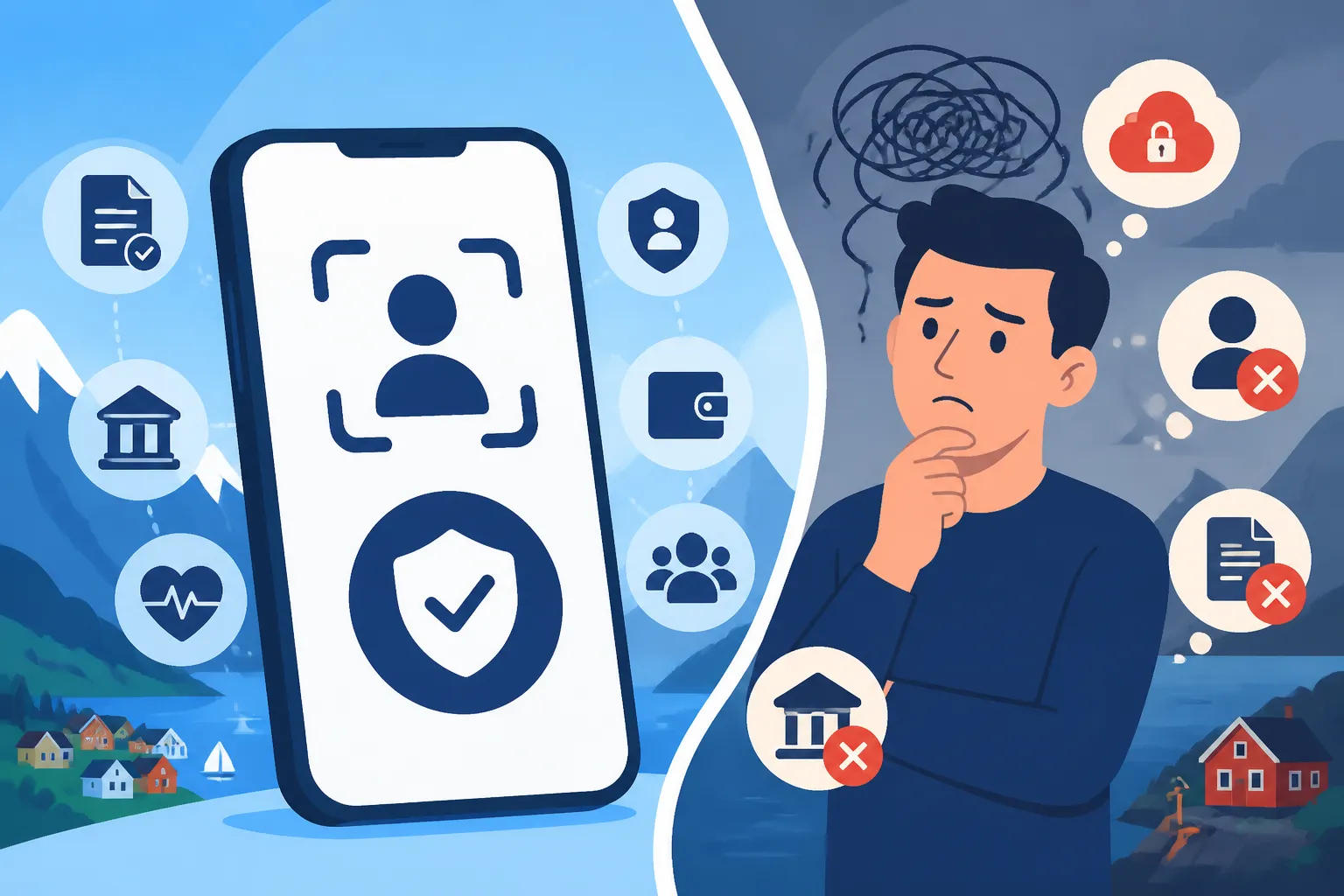
Imagine a single digital key that unlocks nearly every important online door in your life. That's essentially BankID. It’s a personal electronic identification system that allows you to securely identify yourself and sign documents digitally. It's issued by Norwegian banks, but its functionality extends far beyond just banking. Think of it as a national digital identity standard, built on a robust security infrastructure. When you use your BankID, you're not just confirming it's you accessing your bank account; you're confirming your identity to the Norwegian state, to service providers, and to countless other entities. This level of digital trust is fantastic once you have it, but the process of obtaining it can feel like trying to solve a Norwegian riddle wrapped in an enigma. It’s a critical piece of the puzzle for Healthcare in Norway for Expats: How the System Works (2027), The Fastlege Scheme: Navigating Norway’s GP System, and managing almost all your finances.
The Ubiquity of BankID: Everyday Digital Life in Norway
The sheer omnipresence of BankID in Norway cannot be overstated. From filing your tax return with Skatteetaten to checking your children’s school information, signing a rental contract, or even setting up direct debits for your utilities, BankID is the go-to authentication method. Want to track your package with Posten? BankID. Apply for a loan? BankID. Access your health records on Helsenorge? You guessed it, BankID. This deep integration is a double-edged sword for expats. On one hand, once you have it, life becomes incredibly efficient and paperless. On the other hand, not having it means you are locked out of basic administrative tasks that are simply taken for granted by locals. It's the key to everything, which is why the initial struggle to obtain it feels so isolating and impactful. You'll quickly discover that services like Vipps, Norway's ubiquitous mobile payment solution, also rely heavily on BankID for full functionality, meaning that even simple transactions can become a headache without it. Without BankID, even mundane tasks can become complicated, forcing you to rely on physical paperwork or in-person visits in a country that largely tries to avoid them.
The Expat's First Hurdle: Getting Your Initial BankID
This is where the real adventure (and often, frustration) begins for many of us. Getting your very first BankID as a newcomer to Norway can feel like an insurmountable task, primarily due to the stringent identification requirements tied to your residency status. You might have a job, an apartment, and friends, but without BankID, you're still considered an administrative ghost in many ways.
D-Number vs. Fødselsnummer: The Core Identifier Challenge
The fundamental stumbling block for most expats is the type of national identification number they hold. Norway differentiates between a D-number (D-nummer) and a national identity number (fødselsnummer). A D-number is a temporary identification number issued to foreign nationals who need to interact with Norwegian authorities but are not (yet) registered as residents in the National Population Register (Folkeregisteret). You might get a D-number for things like working for a short period, opening a bank account, or other limited purposes. However, a fødselsnummer, a permanent 11-digit number, is only issued when you are registered as a resident in Norway, meaning you plan to live here for more than six months.
The crucial difference for BankID purposes is that most banks will not issue a full BankID to D-number holders. They will typically offer limited online banking access using your bank card and a separate code calculator (kodebrikke), but this is not the full BankID that works across all external services. This means you’re essentially in limbo, able to manage your bank account, but not able to file your taxes easily or access Helsenorge. It's a classic catch-22: you need BankID for full integration, but you need a fødselsnummer to get BankID, and you often need to be somewhat integrated to get a fødselsnummer quickly. Understanding the difference between D-Number vs Fødselsnummer: How It Affects Your Banking Options is paramount to setting your expectations correctly.
Passport Requirements and the Elusive RFID Chip
Even if you do have a fødselsnummer, the journey isn't always smooth sailing. Norwegian banks have become increasingly strict with identity verification, particularly in response to international anti-money laundering regulations. This often means that when you go to apply for BankID, they will require your passport to have an RFID chip. Why? Because the chip allows for a more secure, digital verification of your identity, matching the data on the chip with the visual data on the passport.
For expats from countries with older passports, or those whose passports simply don't have this feature, this can be a huge setback. You might be asked to provide additional forms of ID, or in some cases, you might be outright denied BankID until you obtain a chip-enabled passport from your home country. This unexpected requirement can lead to significant delays, sometimes forcing expats to wait months to replace their passport before they can even begin the BankID application process. It’s an example of how a seemingly small technical detail can have a massive impact on your ability to function digitally in Norway. If you find yourself in this situation, it's worth checking out potential Overcoming the BankID Block: Workarounds for D-Number Holders or discussing alternatives with your chosen bank.
Which Banks Offer BankID to D-Number Holders?
While it’s generally true that getting a full BankID with a D-number is challenging, some banks might offer a more limited version or alternative authentication methods. Historically, some smaller, local banks might have been more flexible, but increasingly, larger banks like DNB, Nordea, and SpareBank 1 adhere to stricter national guidelines. The key is that even if they issue you a "BankID" based on a D-number, it will often be a restricted variant, typically only working for their online banking services and not for external sites.
This means you might have a login to manage your funds, but you still won't be able to electronically sign documents for UDI or access public services through Helsenorge. It's a common point of confusion. Many expats assume they have BankID when they get their online banking login, only to find out it's not the universal key they expected. It's vital to explicitly ask your bank what type of "BankID" they are offering and whether it's compatible with external services like Skatteetaten and Helsenorge. For those still trying to find a bank, our guide on Best Norwegian Banks for Expats: DNB, Nordea, SpareBank 1, and Sbanken might offer some starting points, but always confirm their current BankID policies for D-number holders directly.
| Feature / Requirement | D-Number Holder (Typical) | Fødselsnummer Holder (Standard) |
|---|---|---|
| Bank Account Access | Yes (often with limitations) | Full access |
| Full BankID for External Services | Highly unlikely (limited bank-specific login) | Yes |
| RFID Passport | Often required for even D-number setup | Generally required |
| Vipps Setup | Limited functionality (e.g., only send/receive money to known contacts) | Full functionality (e.g., BankID login, Vipps pay) |
| Helsenorge Access | No | Yes |
| Skatteetaten Digital Access | No (physical letters/proxy often needed) | Yes (digital tax return) |
| Digital Signatures | No | Yes |
| Required Registration | Not registered in Folkeregisteret | Registered in Folkeregisteret (resident) |
Navigating the Types of BankID: Kodebrikke vs. BankID App
Once you manage to get a bank to agree to issue you a BankID (hooray!), you'll encounter the next layer of choice: how you want to actually use it. There are a few different iterations, each with its own quirks, and understanding them is crucial for smooth sailing in Norway's digital waters.
BankID with Kodebrikke: The Traditional Hardware Token
The original, and still widely used, method for BankID authentication involves a physical "kodebrikke" or code token. This is a small, calculator-like device that your bank provides. When you need to log in or sign something, you'll enter your personal BankID password on the website, and then it will ask you for a one-time code generated by the kodebrikke. You simply press a button on the device, and it spits out a unique code.
While it might seem a bit old-school in an era of smartphone apps, the kodebrikke is incredibly reliable. It doesn't rely on your phone's battery, network signal, or app updates. For many expats, this is the first (and sometimes only) option available, especially when initially setting up a bank account or if there are issues with phone compatibility or residency status preventing the app. The downside, of course, is yet another piece of plastic to carry around, and the anxiety of losing it. But for sheer dependability, the kodebrikke holds its own. It’s also often the gateway to eventually setting up the more convenient app-based BankID.
The Modern BankID App: Convenience and Connectivity
For most residents in Norway, the BankID app is the preferred method of authentication. It’s sleek, convenient, and integrates directly with your smartphone. Instead of carrying a physical token, you simply open the app, enter your personal BankID password (or use biometric authentication like fingerprint/Face ID), and confirm the login request. The app essentially replaces the physical kodebrikke, making transactions faster and more seamless.
To get the BankID app, you generally need to have an existing BankID with a kodebrikke, or have completed an in-person identity verification at your bank that allows them to issue it directly. The key is that your phone number and personal details need to be securely linked to your BankID profile, which is part of why the initial setup can be so tricky for expats. Once you have it, though, you'll wonder how you ever lived without it. It's integrated into everything from Setting Up Vipps: The Requirements for Norway’s Leading Mobile Payment to paying your electricity bill. The convenience is truly next-level, but ensure your phone is up-to-date and has a stable internet connection.
BankID on Mobile: The Phasing Out and Why it Matters
You might occasionally hear talk of "BankID on mobile" (BankID på mobil), and it's important to understand this isn't the same as the BankID app. BankID on mobile was an older system that linked your BankID directly to your SIM card. When you needed to authenticate, a request would pop up on your phone's screen, and you'd enter your PIN directly on your phone’s keypad, authenticating via the mobile network.
However, this service has largely been phased out in favor of the more secure and flexible BankID app. Most mobile network providers stopped supporting it in 2022 and 2023. While some older users might still have it, new users, especially expats, will not be able to get it. This is important to know because if you encounter older articles or advice suggesting BankID on mobile, it's outdated information. Focus your efforts on obtaining either the kodebrikke or, ideally, the BankID app. The move to the app was driven by enhanced security features and the ability to work across different operators and even internationally more seamlessly.
Common BankID Challenges for Expats and How to Overcome Them
It's not uncommon for expats to face several bumps in the road even after successfully getting their BankID. These challenges can range from simple forgotten passwords to complex technical glitches, often feeling amplified by language barriers and a lack of familiarity with the Norwegian digital landscape.
Lost Passwords and Blocked Accounts: Re-Authentication Nightmares
We've all been there: you try to log in, and your mind goes blank on the password. With BankID, a forgotten password isn't just an inconvenience; it can be a major headache. After a few incorrect attempts, your BankID will likely get blocked for security reasons. For Norwegians, this usually means a quick call to their bank or a visit to their local branch. For expats, especially those living in rural areas or with limited Norwegian language skills, this can be a full-blown crisis.
The process to unblock or reset your BankID often requires a strong form of identification, which usually means presenting your passport in person at your bank. If you don't have easy access to a branch or your passport isn't RFID-enabled, you might face further delays. My advice? Write down your BankID password somewhere secure and remember that it's different from your regular online banking password. It’s also crucial to have your BankID agreement number (often printed on your kodebrikke or available in your bank’s online portal) handy. If you are abroad and get locked out, it can be even more complicated. Our guide on What to Do if You Get Locked Out of BankID While Abroad provides more detailed steps for this specific scenario. Always use strong, unique passwords and consider a password manager.
Using BankID Abroad: VPNs, Roaming, and Security
One of the most common pain points for expats is using BankID when they're outside of Norway. While the BankID app is designed to work internationally with an internet connection, you might encounter issues. Some services might block access from certain IP addresses, leading people to try VPNs. While a VPN might sometimes allow access, it's not officially supported, and using one can sometimes trigger security flags, potentially leading to your BankID being temporarily blocked.
Furthermore, if you're using the kodebrikke, it works anywhere, as it's a standalone device. However, if you rely solely on your BankID app, you need a stable internet connection. Data roaming costs can be prohibitive, so rely on Wi-Fi where possible. The biggest concern is security: always ensure you are on a secure network when using BankID abroad. Avoid public Wi-Fi for sensitive transactions. Many expats find they need to access services like Skatteetaten for Filing Your Tax Return (Skattemelding): Deadlines and Common Deductions or to manage finances with Wise while traveling, so understanding these limitations is vital.
When Your BankID Doesn't Work: Troubleshooting Tips
There are times when your BankID simply refuses to cooperate. Here are some common troubleshooting steps:
- Check Internet Connection: Seems obvious, but a weak or unstable Wi-Fi/mobile data connection is a frequent culprit, especially for the BankID app.
- Restart App/Browser: Close and reopen the BankID app, or clear your browser's cache and cookies if using a web browser.
- Update App: Ensure your BankID app is updated to the latest version from your app store. Outdated apps can cause compatibility issues.
- Check Your Phone's Date/Time: Believe it or not, an incorrect date or time setting on your phone can interfere with security protocols for authentication.
- Kodebrikke Battery: If using a kodebrikke, check its battery. Some models have a small battery indicator.
- Contact BankID Support: Each bank offers its own BankID support, so contact your bank's customer service. They can check if there are any issues on their end or if your BankID has been blocked. Be prepared for a potentially lengthy call if you need English support.
Remember, persistent issues often indicate a deeper problem with your registration or identity, which can only be resolved by your issuing bank. Don’t hesitate to contact them.
Life Without BankID: Workarounds and Alternatives (Temporarily)
Before you get your precious BankID, or if you're caught in a bureaucratic tangle that prevents you from getting it promptly, life in Norway can feel incredibly inefficient. While it’s certainly not ideal, there are temporary workarounds. However, it's crucial to understand their limitations and recognize that they are not a substitute for having a full BankID.
Limited Digital Services: What You Can and Can't Do
Without BankID, your access to Norway's extensive digital public services is severely restricted. You won't be able to:
- Log into Helsenorge to view your medical records, book appointments with your fastlege, or renew prescriptions. Our guide on How to Book a Doctor’s Appointment Online Using BankID shows how integral it is.
- Digitally sign rental agreements, job contracts, or other official documents.
- Access your digital tax return (Skattemelding) on Skatteetaten. You'll receive paper forms instead, and any corrections or submissions will need to be done manually, often by mail or in person. This is where services like Taxes for Expats can be helpful, as they are experienced in navigating these non-digital processes for foreigners.
- Use the full functionality of Vipps, including Vipps Pay in stores or connecting to services. While you might be able to send/receive money if someone adds you manually, deeper integration requires BankID.
- Access many private online portals for things like insurance, utility providers, or even some online stores that use BankID for secure checkout.
Essentially, you’re forced back into a paper-based world that most Norwegians left behind a decade ago. It's frustrating, but it's a reality for many new arrivals.
Alternative Identification Methods: Bank Card and Other Logins
While you await your full BankID, your bank will typically provide you with some form of limited online banking access. This usually involves your bank card and a separate code calculator (kodebrikke) that generates one-time passwords for logging into your specific bank's online portal. This allows you to manage your accounts, pay bills, and make transfers within your bank's system.
However, as mentioned, this is not the universal BankID. It will not work for Helsenorge, Skatteetaten, or other third-party services. Some services might offer alternative login methods, such as MinID, which is a less secure form of electronic ID issued by the Norwegian Digitalisation Agency. MinID allows access to some public services (like basic tax information), but it has lower security requirements and is generally not accepted for highly sensitive transactions or digital signatures. Another alternative might be Buypass ID, which is a commercial eID that can sometimes be used for public services, but it also has its own application process and is not as universally accepted as BankID. These alternatives are better than nothing, but they still leave significant gaps in your digital access.
Why a Permanent Solution is Inevitable
While temporary workarounds exist, they are not sustainable for long-term residency in Norway. The country's digital infrastructure is built around BankID, and trying to navigate life without it will constantly put you at a disadvantage. Imagine trying to sort out your Pension Tax Rules for Expats Leaving Norway for an EU/EEA Country or applying for Child Benefit (Barnetrygd): Applying via NAV as a Foreign Worker without the ease of digital access. It makes every administrative task more cumbersome, time-consuming, and prone to errors.
Eventually, if you plan to stay in Norway long-term, getting a fødselsnummer and then a full BankID is non-negotiable. It truly unlocks the country and allows you to participate fully in its efficient digital society. Without it, you'll always be an outsider in terms of administrative ease, constantly relying on phone calls, physical mail, or in-person visits for things that could be done with a few clicks online. It’s the essential step to moving from simply living in Norway to truly integrating here.
Beyond Basic Login: Advanced Uses of BankID
Once you’ve successfully navigated the initial hurdles and obtained your fully functional BankID, you'll discover just how powerful and indispensable it becomes in your daily Norwegian life. It's more than just logging into your bank; it's a full-fledged digital identity that allows for secure, legally binding interactions across the board.
Signing Documents Digitally: Binding Agreements with BankID
Perhaps one of the most transformative features of BankID is its ability to serve as a legally binding electronic signature. In Norway, a BankID signature holds the same legal weight as a handwritten signature. This means you can sign everything from rental contracts and employment agreements to loan applications, legal documents, and official forms from the comfort of your own home, often within minutes.
Think about the sheer convenience: no more printing, signing, scanning, and emailing. No more needing to be physically present to witness a signature. This is particularly beneficial for expats, as it eliminates logistical challenges that might arise if you're not in the same city as the other party, or even if you're abroad temporarily. Whether you're Purchasing a Cabin (Hytte): Rules for Foreigners Buying Leisure Property or just adjusting your Norwegian Employment Contracts: Mandatory Clauses and Legal Formats, BankID will be your digital pen. This feature is a cornerstone of Norway's push for a paperless and efficient society, and once you get used to it, you'll wonder why other countries haven't adopted a similar system.
Helsenorge and Public Services: Your Digital Gateway to the State
BankID is your golden ticket to Norway's extensive digital public service portals. The most prominent example is Helsenorge, the national health portal. With your BankID, you can securely log in to:
- View your complete medical history, including doctor's visits, test results, and prescriptions.
- Order prescription renewals, which your doctor can approve and send directly to your chosen pharmacy. For expats managing chronic conditions, this is invaluable, allowing for seamless Blue Prescriptions (Blå Resept): Subsidized Medication for Chronic Illness or White Prescriptions (Hvit Resept): Paying Out-of-Pocket for Medicine.
- Book and manage appointments with your fastlege (GP) and other healthcare providers.
- Access information about your national insurance contributions and the Frikort exemption card. Our guide on How to Check Your Frikort Status on the Helsenorge App highlights this convenience.
- Communicate securely with healthcare professionals.
Beyond Helsenorge, BankID allows access to other crucial government portals like Skatteetaten (the Tax Administration) for Filing Your Tax Return (Skattemelding): Deadlines and Common Deductions, NAV (the Norwegian Labour and Welfare Administration) for benefits and services, and Altinn for business and individual reporting. It streamlines almost all your interactions with the Norwegian state, turning what could be arduous bureaucratic tasks into quick online operations. Navigating the Helsenorge App in English: A Step-by-Step Translation can help you get started even if you are not fluent in Norwegian.
Future-Proofing Your Digital Life in Norway
As Norway continues its rapid digitalization, BankID will only become more integrated into new services and platforms. Staying current with your BankID and understanding its capabilities is essentially future-proofing your life here. New services, both public and private, are constantly being developed with BankID as the primary authentication method. This might include anything from smart home services to secure voting platforms or new ways to interact with municipal services.
Having a robust, up-to-date BankID means you won't be left behind as new digital solutions emerge. It ensures you can quickly adapt to new ways of interacting with institutions and managing your personal affairs. It’s an investment in convenience, security, and full participation in the Norwegian digital society. From paying your bills using What is eFaktura and AvtaleGiro? Setting Up Automatic Automatic Bills to checking your credit score, BankID is the backbone. Even for financial planning, knowing your BankID works seamlessly for accessing financial portals can make it easier to manage your Wealth Building in Norway: ASK Accounts, Funds, and Stock Taxation or track your Pensions in Norway: State Pension, Occupational, and Private Savings.
Maintaining Your BankID: Renewals, Security, and Updates
Just like your passport or driver's license, your BankID isn't a "set it and forget it" kind of deal. It requires some ongoing attention to ensure it remains active, secure, and functional. Neglecting these aspects can lead to unexpected blocks or expirations, plunging you back into the frustration you worked so hard to escape.
Keeping Your Information Current: Address and Contact Details
Your BankID is inextricably linked to your personal data, particularly your fødselsnummer and the information registered with the National Population Register (Folkeregisteret). This means if you move house, change your name, or update your phone number, it’s absolutely critical that you update this information with your bank as well as with Folkeregisteret. While Folkeregisteret updates often automatically filter through to some systems, it's always best practice to directly inform your bank about any changes.
If your registered phone number for your BankID app is outdated, you might find yourself unable to receive codes or verify logins, leading to a blocked account. Similarly, if your address doesn’t match what your bank has on file, it can complicate identity verification if you ever need to reactivate your BankID in person. This is especially important for expats who might move more frequently or return to their home country for extended periods. Make it a habit to cross-reference your personal details across all major institutions, particularly your bank and UDI.
Security Best Practices: Protecting Your Digital Identity
Your BankID is your digital identity in Norway, and protecting it is paramount. Treat your BankID password with the same care you would your bank card PIN. Here are some essential security tips:
- Unique Password: Never use the same password for your BankID as you do for other online services.
- Strong Password: Use a combination of uppercase and lowercase letters, numbers, and symbols. Aim for at least 12 characters.
- Don't Share: Absolutely never share your BankID password or kodebrikke codes with anyone, not even someone claiming to be from your bank, the police, or Skatteetaten. Banks and authorities will never ask you for your full BankID password or codes over the phone or email.
- Be Skeptical of Links: Always navigate directly to official websites (e.g., Helsenorge, Skatteetaten) rather than clicking on links in emails or SMS messages, which could be phishing attempts.
- Check the URL: Before entering your BankID credentials, always ensure the website URL begins with "https://" and displays a secure padlock icon. Double-check that the domain name is legitimate (e.g.,
bankid.noordnb.no, notdnb-securelogin.com). - Monitor Activity: Regularly check your bank statements and Helsenorge for any suspicious activity.
- Report Suspicious Activity: If you suspect your BankID credentials have been compromised, contact your bank immediately to have your BankID blocked.
Maintaining good digital hygiene is crucial, especially in a country where your digital identity is so tightly integrated into almost every aspect of life.
What Happens When You Leave Norway? Closing Your Digital Footprint
If your time in Norway comes to an end, you might wonder what to do with your BankID. It’s not something you can just ignore. While your BankID agreement might automatically expire after a certain period of inactivity or if your fødselsnummer becomes inactive, it’s best practice to formally close it when you close your Norwegian bank account.
When you notify your bank that you are leaving Norway and want to close your accounts, they will typically also initiate the process to terminate your BankID agreement. This is important for security reasons, ensuring that your digital identity is no longer active once you're no longer a resident. Even if you plan to keep your Norwegian bank account open for a while (perhaps for receiving final payments or managing finances with services like Wise), it's worth discussing the status of your BankID with your bank. You might need it for a short period to finalize Leaving Norway Financially Prepared: Closing Accounts and Final Taxes or other loose ends, but eventually, it should be deactivated. Think of it as disconnecting your digital presence from Norway once you've physically departed.
Disclaimer
The information provided in this guide is for general informational purposes only and does not constitute financial, legal, or medical advice. While we strive to provide accurate and up-to-date information, rules and regulations in Norway, particularly concerning banking, immigration, and digital identification, can change frequently. Always consult with official sources, such as your bank, Skatteetaten, UDI, or Helsenorge, or seek professional advice for your specific situation. We are not responsible for any actions taken based on the information in this guide.