Child Benefit (Barnetrygd): Applying via NAV as a Foreign Worker
One of the trickiest parts of moving to Norway, especially with a family, is trying to decipher the public benefits system. It often feels like you need a secret decoder ring and an advanced degree in Norwegian bureaucracy just to understand what you might be entitled to. This guide cuts through the confusion, explaining exactly how foreign workers can apply for Barnetrygd, Norway's child benefit, through NAV, Norway's Labour and Welfare Administration, and navigate the process with a bit more confidence.
Understanding Barnetrygd: What it is and Who it Helps
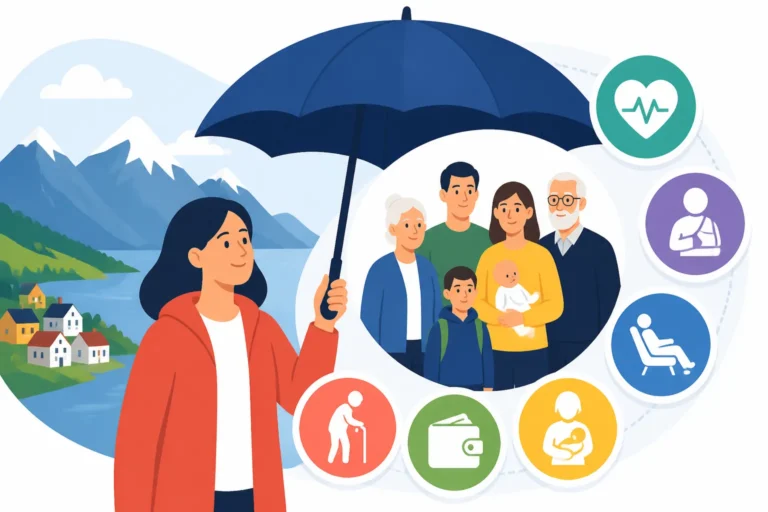
When you arrive in Norway with children, you'll quickly realize that while the cost of living can be eye-watering, the government does provide some support to families. Barnetrygd, or child benefit, is one of the most fundamental of these supports. It's designed to help cover some of the expenses associated with raising children, regardless of your income.
The Basics of Child Benefit in Norway
At its core, Barnetrygd is a monthly cash payment from the Norwegian state for each eligible child under the age of 18. It's not a means-tested benefit, which means your income, wealth, or the amount of tax you pay doesn't affect whether you receive it or how much you get. This can be a huge relief for expat families settling in, as it provides a stable, predictable supplement to your household income. The amount per child is a fixed sum, and it’s usually paid around the 20th of each month. It’s important to understand that while it doesn't cover all the costs of raising a child in Norway – let's be realistic, nothing truly does – it's certainly a welcome contribution towards groceries, clothes, or even a small treat. It's part of Norway's broader commitment to supporting families and ensuring a certain standard of living for all children residing here.
For parents with children between 0 and 6 years old, there's a slightly higher rate of Barnetrygd paid. This is an additional amount, recognizing the typically higher costs associated with very young children, such as more frequent need for new clothes, specific equipment, and possibly more expensive daycare options, though daycare costs are heavily subsidized anyway. The specific amounts are adjusted periodically, so it's always a good idea to check the latest figures directly on the NAV website for the most current information. This additional benefit automatically kicks in once the child's birth date is registered, so there's no separate application needed for the increased amount for toddlers and preschoolers.
Is Barnetrygd Taxable?
One common question that often comes up for expats navigating the Norwegian financial landscape is about the tax implications of various benefits. This is where many of us start scratching our heads, especially when dealing with two different tax systems if you're still tied to your home country's tax rules. The good news about Barnetrygd is that it is not taxable income in Norway. This means you don't have to declare it on your Norwegian tax return, and it won't impact your overall tax bracket or the amount of income tax you pay.
However, while Barnetrygd is tax-free in Norway, depending on your tax residency status and any double taxation agreements between Norway and your home country, you might need to declare it in your country of origin. This can get complicated, particularly for those of us who have to navigate international tax laws. Companies specializing in international taxation, like Taxes for Expats, can be incredibly helpful resources if you're unsure about your obligations back home. They can offer specific advice based on your nationality and individual circumstances, ensuring you don't inadvertently run into trouble with your previous tax authority. Always remember that international tax law is complex, and getting professional advice is often the safest route.
Eligibility Criteria for Foreign Workers
This is often where the rubber meets the road for many foreign workers in Norway. The eligibility for Barnetrygd isn't just about having children; it's intricately linked to your legal status, residency, and your connection to the Norwegian social security system, known as the National Insurance Scheme (Folketrygden). It can feel like a labyrinth, but let's break it down.
Residency and Membership in the National Insurance Scheme
To be eligible for Barnetrygd, both the child and the parent receiving the benefit must generally be residents of Norway. This isn't just about physically living here; it's about being officially registered as residing in Norway with the National Population Register (Folkeregisteret). You also need to be a member of the Norwegian National Insurance Scheme. This membership is crucial, as it’s the gateway to most social security benefits in Norway, including Barnetrygd. As a foreign worker, you typically become a mandatory member of the National Insurance Scheme from your first day of work if you're employed by a Norwegian employer and meet certain income thresholds. This is automatically handled through your employer reporting your income and contributions.
However, the picture gets a bit more nuanced. If you've just arrived and haven't started working yet, or if you're here on a special type of visa, your membership in Folketrygden might not be immediate or automatic. For instance, if you're a job seeker from outside the EU/EEA, you generally aren't covered by the Norwegian National Insurance Scheme until you actually start working. This means that even if your child is with you, you won't be eligible for Barnetrygd until your employment formally begins and your contributions to the scheme start. For detailed information on who is covered by the National Insurance Scheme, you can refer to our guide on Folketrygden Basics: Who is Covered by the National Insurance Scheme. It’s a foundational piece of information for navigating any social benefits here.
Special Cases: EU/EEA Citizens and D-Number Holders
The rules can differ slightly depending on your nationality and the type of identification number you hold in Norway.
EU/EEA Citizens: If you're an EU/EEA citizen, the rules regarding Barnetrygd are influenced by EU regulations on social security coordination. This means that if one parent works in Norway, Norway is typically considered the country responsible for paying child benefits, even if the other parent and children reside in another EU/EEA country. However, if child benefits are also paid in your home country (or another EU/EEA country), then coordination rules apply, and Norway might pay the difference if the Norwegian benefit is higher, or you might receive the full benefit from your home country if that's where the primary activity or residence is. It's a "one country pays" principle to avoid double payments, and NAV will assess your specific situation. This often requires providing documentation from your home country's social security institutions.
D-Number Holders: For those holding a D-number instead of a permanent fødselsnummer (national identity number), eligibility for Barnetrygd is possible, but it comes with additional complexities. A D-number is a temporary identification number, and while it allows you to work and pay taxes, your long-term connection to the Norwegian social security system might not be fully established. You need to be officially registered as a resident and generally have an employment contract of a certain duration. Simply having a D-number does not automatically grant you all social rights. The process might involve more manual checks and a longer processing time by NAV, as they verify your residency and National Insurance Scheme affiliation. If you're currently in Norway with a D-number and your family, it's worth checking our guide on D-Number vs Fødselsnummer: How It Affects Your Banking Options, as similar challenges can arise when accessing financial services.
Summary of Key Eligibility Points
To help clarify, here's a quick overview of the main eligibility criteria:
| Requirement | Details | Exceptions/Notes |
|---|---|---|
| Child's Age | Under 18 years old. | Higher rate for children 0-6 years old. |
| Child's Residency | Child must be registered as a resident in Norway (Folkeregisteret). | May apply to children living in another EU/EEA country if parent works in Norway. |
| Parent's Residency | Parent receiving benefit must be registered as a resident in Norway. | |
| Parent's Status | Parent must be a member of the Norwegian National Insurance Scheme (Folketrygden). | Typically via employment; D-number holders may face extra scrutiny/requirements. |
| Custody | Parent with legal custody of the child. | Only one parent receives Barnetrygd for the same child. |
| Employment | Generally, a foreign worker needs to be employed in Norway to gain Folketrygden membership. | Some social security agreements or specific visa types might differ. |
The Application Process: Step-by-Step with NAV
Applying for Barnetrygd through NAV can seem daunting, especially with language barriers and an unfamiliar system. But thankfully, the process is fairly streamlined once you know the steps. NAV aims to make this as accessible as possible, even for newcomers.
Gathering Your Documents
Before you even think about hitting that "submit" button, you need to make sure you have all your ducks in a row. This is where many of us expats hit our first snag – what exactly do they need? The general rule of thumb is "the more comprehensive, the better." You'll definitely need:
- Proof of your identity: Usually, your passport.
- Proof of your children's identities: Their passports or birth certificates.
- Proof of residency: Documentation showing you and your children are registered with the National Population Register in Norway. This could be a printout from Skatteetaten (the Norwegian Tax Administration) confirming your registration, or your residence card if you have one.
- Marriage certificate (if applicable): If you're married and applying as a couple, or if the child’s parents are married but only one parent is applying.
- Employment contract: To demonstrate your connection to the Norwegian workforce and the National Insurance Scheme.
- Confirmation of residence for children: If your children reside in another EU/EEA country but you're working in Norway, you'll need documents proving their residence and potentially any child benefits received in that country.
It's a really good idea to have clear, legible copies of everything. If any documents are not in Norwegian or English, you might need a certified translation. Always keep the originals safe, as you might be asked to present them. Think of it as building a robust case for your eligibility – every piece of paper helps.
Submitting Your Application: Online vs. Paper
NAV primarily encourages online applications for most benefits, and Barnetrygd is no exception.
Online Application (Recommended): The most efficient way to apply is through the NAV website, specifically via the Helsenorge portal, which acts as your central hub for public services. To do this, you'll need a form of electronic ID, such as BankID. BankID is Norway's digital identification system, and it's essential for accessing many public services and online banking. If you don't have BankID yet, getting one should be a top priority once you've secured your fødselsnummer and opened a Norwegian bank account. Our guide on BankID Explained: Norway's Digital Identity System and Expat Challenges can walk you through the process. Once you're logged into Helsenorge, you'll find the digital application form for Barnetrygd. It’s quite intuitive, guiding you step-by-step through the required information and allowing you to upload digital copies of your documents.
Paper Application: If you don't have BankID, or if you simply prefer good old-fashioned paperwork, you can apply using a paper form. You can download the form (NAV 33-00.07) from the NAV website, print it, fill it out, and send it by post along with copies of your supporting documents. This method typically takes longer to process, both due to mailing times and manual handling. You can also pick up forms at your local NAV office, though it's always best to call ahead and check opening hours and services. Remember, without BankID, managing many aspects of your life in Norway, including interacting with public services, can be more cumbersome, so consider it a priority.
What to Expect After Applying
Once your application is submitted, a period of waiting begins. NAV aims to process applications as quickly as possible, but processing times can vary significantly depending on the volume of applications, the complexity of your case (e.g., if international coordination rules apply), and whether all documentation was submitted correctly. You can usually track the status of your application by logging into your account on Helsenorge, if you applied online.
If anything is unclear or if NAV requires additional documentation, they will contact you, usually via your digital mailbox on Helsenorge or by post. It's crucial to respond to any requests promptly to avoid further delays. Many expats find the process can take anywhere from a few weeks to several months. Once your application is approved, you will receive a decision letter detailing the amount of Barnetrygd you will receive and when payments will commence. Don't be surprised if the first payment includes a back payment for the months since your eligibility started, as NAV backdates payments to the month following your official registration in Norway, provided you applied within a certain timeframe.
Receiving Your Payments and What Else to Know
Getting your application approved is a huge milestone, but understanding how the payments work and what to do if your circumstances change is equally important.
Payment Schedules and International Transfers
Once approved, Barnetrygd is typically paid monthly, around the 20th of each month, directly into your designated Norwegian bank account. It’s a straightforward transfer, and you'll see it clearly marked on your bank statement. For most expat families, this becomes a regular part of their monthly budget.
However, if you're a parent who needs to send money back home to support your child, or manage finances across different currencies, you'll want to think about how to efficiently transfer those funds. While Norwegian banks can facilitate international transfers, they often come with less favorable exchange rates and higher fees compared to specialist money transfer services. Companies like Wise (formerly TransferWise) offer competitive exchange rates and transparent fees for sending money internationally. This can be particularly useful for ensuring that the full value of your Barnetrygd reaches its intended recipient without being eroded by banking charges. Considering the high cost of living in Norway, every penny saved on transfers can make a real difference to your overall household finances, a topic well covered in guides like Cost of Living in Norway 2026: Budgeting for Singles and Families.
Changes in Circumstances: Moving or Leaving Norway
Life in Norway for expats is rarely static. Your circumstances might change, and it's absolutely vital to inform NAV of any relevant changes to ensure you continue to receive Barnetrygd correctly, or to stop it if you're no longer eligible.
Moving within Norway: If you move to a different address within Norway, your Barnetrygd will generally continue automatically, as your address change will be registered with the National Population Register, which NAV has access to. However, it's good practice to double-check on Helsenorge or contact NAV just to be sure.
Moving out of Norway: If you and your children move permanently out of Norway, your entitlement to Barnetrygd generally ceases. You are legally obliged to notify NAV immediately. Failing to do so can result in you having to repay any benefits received after you became ineligible, which is a headache nobody wants. For EU/EEA citizens, there might be specific coordination rules if you move to another EU/EEA country, so clarify this with NAV if applicable. Similarly, if your child moves out of Norway while you remain here, their eligibility for the benefit may cease.
Changes in custody or family structure: Any significant changes, such as a change in legal custody of the child, separation, divorce, or the child reaching the age of 18, must also be reported to NAV. These changes can affect who receives the benefit or if the benefit continues at all. Being proactive and transparent with NAV will save you a lot of hassle in the long run.
Navigating the Norwegian benefits system can feel like learning a new language itself, but with a bit of patience and knowing where to look, Barnetrygd can be a welcome and important part of your family's financial stability in Norway.
Disclaimer
The information provided in this guide is intended for general informational purposes only and does not constitute legal, financial, or tax advice. While we strive to keep the information up-to-date and accurate, regulations regarding Barnetrygd, residency, and the National Insurance Scheme in Norway can change. You should always consult with NAV directly or seek independent professional advice for your specific situation.