Calling 113: Ambulance Services and Life-Threatening Emergencies
Standing on a dark, snowy street in Oslo or a remote fjord-side village when a medical crisis strikes is one of the most isolating experiences you can have as a foreigner. I remember the paralyzing fear during my first winter here, staring at my phone and wondering if my situation was "Norwegian enough" to warrant an emergency call. This guide solves that uncertainty by detailing exactly how the 113 ambulance system functions, when to trigger it, and what happens once those sirens arrive.
The Norwegian Emergency Number Architecture
The first thing you realize as an expat in Norway is that the "911" or "999" reflex doesn't work here, and the system is segmented in a way that can feel confusing during a panic. Norway uses a triple-number system, and knowing the difference between them is the first step in effective emergency management. While many countries consolidate all services, Norway maintains distinct lines for fire, police, and medical emergencies to ensure specialized dispatchers handle your specific crisis from the first second.
Distinguishing Between 110, 112, and 113
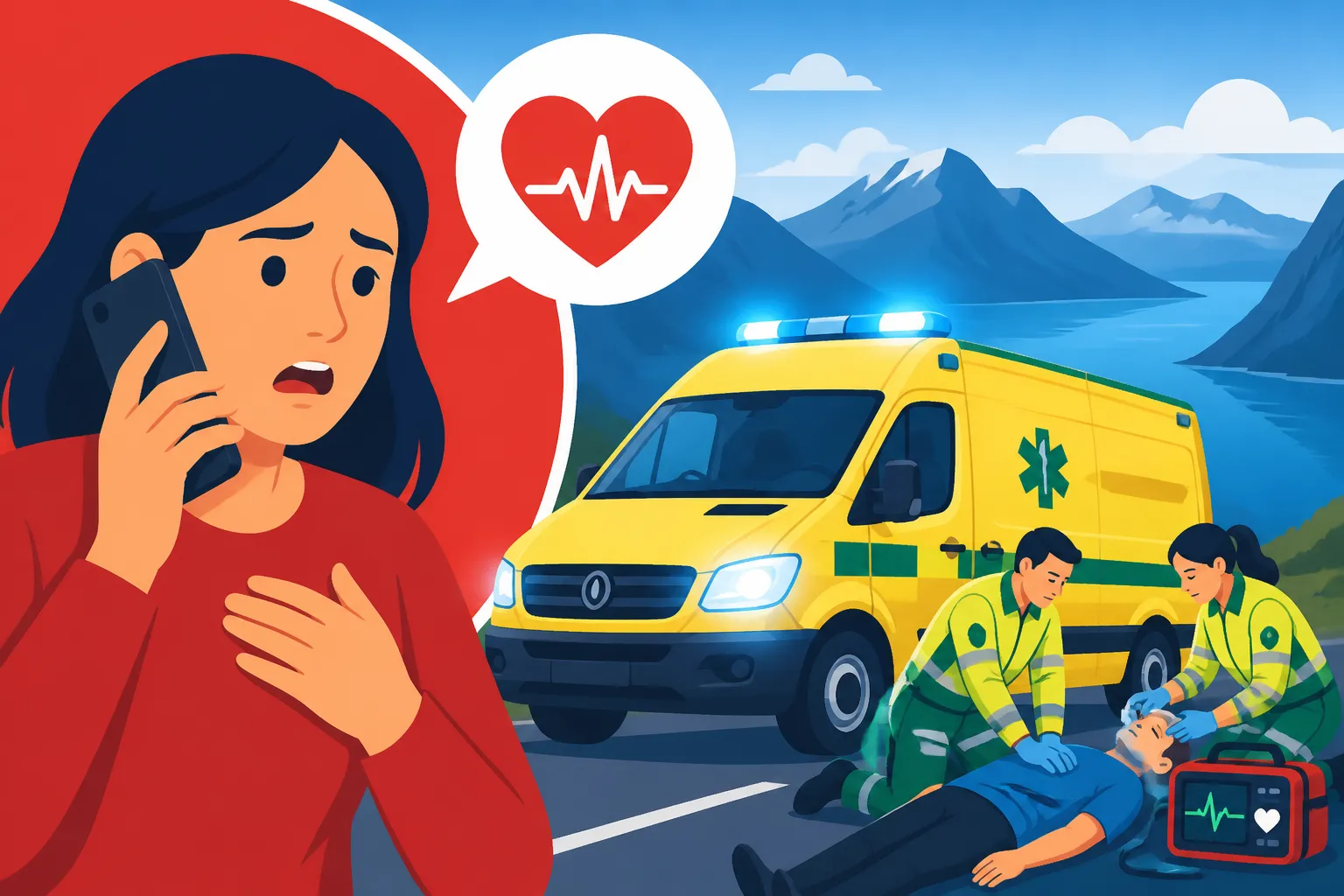
In Norway, 113 is the dedicated number for medical emergencies where life or limb is at immediate risk. If you are witnessing a heart attack, a severe car accident, or an unconscious individual, this is the only number you should dial. The operators are trained medical professionals, often nurses or paramedics, who can provide life-saving instructions over the phone while the ambulance is en route. It is distinct from 110 (Fire) and 112 (Police), though the dispatch centers are interconnected. If you call 112 for a medical emergency, they can patch you through, but those precious seconds lost in transfer can be critical.
For many of us moving from countries with a single emergency number, this feels like an unnecessary mental hurdle. However, the efficiency of the 113 center is remarkable. When I had to call for a neighbor who had collapsed, the dispatcher stayed on the line, counting out the rhythm for CPR and even identifying my location through GPS before I could clearly state the address in my shaky, broken Norwegian. This level of specialized support is why the dedicated 113 line exists.
The Role of the Out-of-Hours Medical Center
A common mistake made by new arrivals is calling 113 for urgent, but non-life-threatening, issues. This is where the Legevakten (116 117): When and How to Use the Out-of-Hours Service comes into play. If you have a high fever, a deep cut that won't stop bleeding but isn't a "gush," or a suspected broken bone, you should call 116 117 instead. This is the national number for the emergency clinic (Legevakt), which operates when your regular The Fastlege Scheme: Navigating Norway’s GP System is closed.
Understanding this distinction is vital for the health of the system. The 113 dispatchers are managing the movement of ambulances and helicopters across vast, often difficult terrain. If the line is clogged with queries about a child’s earache—which is better handled by the Legevakt—it delays response for a cardiac arrest. As an expat, it’s worth saving both 113 and 116 117 in your contacts immediately. If you are a visitor or a digital nomad using a service like SafetyWing, having these numbers ready is just as important as your insurance policy.
Language Support and Communication at 113
One of the biggest fears for foreigners is the language barrier during a crisis. You might worry that your Norwegian isn't good enough to explain a complex medical situation. Rest assured, 113 dispatchers are generally highly proficient in English. Norway’s medical education is rigorous and heavily English-based, and dispatchers are accustomed to dealing with tourists and the international community.
If you find yourself in a situation where you cannot speak English or Norwegian, the dispatcher can bring a certified medical interpreter onto the line via a three-way call. This process is surprisingly fast, although it’s always better to try and communicate basic facts first: "Where, What, Who." State clearly that you speak English (Jeg snakker engelsk) if you feel your Norwegian failing you. The priority is the medical data, not your grammar.
Ambulance Services and Triage Realities
Once the call is made, the Norwegian ambulance service (Ambulansetjenesten) swings into gear. Depending on where you are in the country—from the dense urban center of Bergen to the remote reaches of Finnmark—the type of vehicle and the speed of response will vary significantly. The system is designed to provide Emergency Medical Care in Norway: 113, Legevakten, and Hospitals regardless of geography, but the logistics are fascinating and sometimes daunting.
Ground, Air, and Sea Ambulances
In major cities like Oslo or Trondheim, you will mostly see the high-tech Mercedes or Volkswagen yellow ambulances. These are essentially mobile intensive care units. They are staffed by highly trained paramedics (Ambulansearbeider) or specialized nurses. In my experience, the professionalism of these teams is world-class; they don't just "scoop and run," they often begin complex stabilization procedures right in your living room or on the sidewalk.
However, Norway’s geography often demands more than wheels. The Norwegian Air Ambulance (Norsk Luftambulanse) is a staple of the healthcare system, especially in the fjords and mountains. If 113 determines that a ground ambulance will take too long or if the patient needs to reach a specialized university hospital quickly, they will dispatch a yellow helicopter. Similarly, in coastal regions, sea ambulances (Ambulansebåt) are used to reach island communities. This multi-modal approach ensures that even if you are hiking near Healthcare in Tromsø: Medical Access in Northern Norway, help can reach you.
Understanding the Triage System
When the ambulance arrives, or even during the initial 113 call, the medical team uses a triage system to categorize the urgency of the patient. This is often referred to as the "Norsk Indeks for Medisinsk Nødhjelp." They categorize cases as Red (Akutt), Yellow (Haster), or Green (Vanlig).
- Red (Acute): This is a life-threatening situation. The ambulance will use lights and sirens, and the patient will be taken directly to the Norwegian Hospitals: Inpatient Care, Outpatient Care, and Patient Choice emergency room (Akuttmottak).
- Yellow (Urgent): The situation is serious but not immediately life-threatening. The ambulance may or may not use sirens depending on traffic, and the patient is monitored closely.
- Green (Non-urgent): This usually involves transport where medical supervision is needed but there is no immediate danger.
It is important to manage your expectations: if you are categorized as Yellow or Green, you might experience waiting times at the hospital, as Red cases always take precedence.
Response Times and Geographical Challenges
In urban areas, response times for 113 calls are generally very low, often under 10 minutes. However, if you have chosen the rugged beauty of rural Norway, you must be realistic. Distance and weather can impact how fast a crew reaches you. During the winter, mountain passes can close, and helicopters can be grounded by heavy fog or storms.
This is why many rural communities have "First Responders" (Akutthjelpere)—often local fire department members or volunteers who are trained in advanced first aid and equipped with defibrillators. They are dispatched simultaneously with the ambulance to provide care in those critical first minutes. For expats living outside the major cities, knowing your local geography and having a clear way to describe your location (using apps like "Hjelp 113") is a literal lifesaver.
Costs and Insurance Coverage
The financial aspect of emergency care in Norway is often a source of relief for expats, but there are nuances you need to understand, especially regarding your residency status and the type of insurance you hold. While the system is predominantly public, it is not a "free-for-all" without rules.
| Service Type | Cost for Residents (Folketrygden) | Cost for EU/EEA Tourists (EHIC) | Cost for Non-EU Tourists/Uninsured |
|---|---|---|---|
| 113 Ambulance Call | NOK 0 | NOK 0 | Full cost (unless emergency) |
| Emergency Hospitalization | NOK 0 | NOK 0 | Potentially high fees |
| Air Ambulance | NOK 0 | NOK 0 | Thousands of NOK |
| Follow-up Specialist | User Fees (Egenandel) apply | Standard co-pay | Full private rate |
Is Calling 113 Free?
For anyone legally residing in Norway and a member of the National Insurance Scheme (Folketrygden), emergency ambulance transport and all subsequent emergency hospital treatment are free of charge. You will not receive a bill for the ambulance ride or the life-saving care you receive in the emergency room. This is one of the pillars of the Norwegian social safety net. You can read more about how this is funded in Folketrygden Basics: Who is Covered by the National Insurance Scheme.
This also applies to tourists or visitors who require "necessary" emergency care. Under Norwegian law, the state is obligated to provide emergency medical assistance to anyone on Norwegian soil, regardless of their ability to pay or their insurance status. However, "emergency" is the keyword here. If it is determined that your situation was not an emergency, or once you are stabilized, the billing process for non-residents begins.
Coverage for Residents vs. Tourists
If you are an expat working in Norway, you are likely covered by the public system. However, if you have family visiting from outside the EU/EEA, they are in a more precarious position. While the 113 response and initial stabilization will be provided, the subsequent hospital stay can cost tens of thousands of kroner per day. This is why visitors must have travel insurance like SafetyWing or comprehensive international plans like Cigna Global.
For EU/EEA citizens, the EHIC and GHIC in Norway: Using European Health Insurance card is vital. It proves your right to receive care on the same terms as a Norwegian citizen. Without this card, or a valid passport from a Nordic country, the hospital may ask for payment guarantees up front or bill you at international rates. Always ensure your guests have their documentation ready.
The Role of Private Insurance
While the public system covers the emergency itself, many expats opt for Private Health Insurance in Norway: Is It Worth the Extra Cost? for the aftermath. Public hospitals are excellent for emergencies, but once you are stabilized, you might face long waiting lists for non-acute follow-up surgeries or rehabilitation.
Policies from Cigna Global can be particularly useful here, as they often allow for treatment in private facilities or even medical evacuation back to your home country if the recovery period is expected to be long. For digital nomads or those on a Norway Digital Nomad Visa: Independent Contractor vs Svalbard Routes, having a policy like SafetyWing ensures that the potentially massive costs of an air ambulance or extended ICU stay don't lead to financial ruin, even if the "emergency" portion is technically covered by the state's duty of care.
When to Call 113: Real-World Scenarios
Knowing the theory is one thing, but making the decision in the heat of the moment is another. Norwegians generally have a high threshold for calling emergency services; they value the "dugnad" spirit of not wasting shared resources. However, when it comes to life and death, there should be no hesitation.
Life-Threatening Symptoms
You should call 113 immediately if you or someone else experiences:
- Chest Pain: Especially if it’s a crushing sensation, radiates to the arm or jaw, or is accompanied by shortness of breath. Do not attempt to drive to the hospital yourself.
- Signs of Stroke: Use the "FAST" rule (Fjes/Face drooping, Arm weakness, Språk/Speech difficulty, Tid/Time to call 113). In Norway, this is often promoted as "PRATE, SMILE, LØFTE."
- Unconsciousness: If someone cannot be woken up, even if they seem to be breathing.
- Severe Breathing Difficulties: Blue lips, gasping, or an inability to speak in full sentences.
It is common to see expats try to call a taxi to go to the Legevakten (116 117): When and How to Use the Out-of-Hours Service while having heart palpitations. This is dangerous. If you suspect a heart or brain issue, 113 is the only answer. The paramedics can perform an EKG in your home and transmit the results to the cardiologist at the hospital before you even arrive.
Accidents, Trauma, and Environmental Emergencies
Norway’s environment poses specific risks that might necessitate a 113 call. This includes:
- Severe Hypothermia: If someone is shivering uncontrollably and then stops, becomes confused, or loses consciousness.
- Avalanches or Landslides: Even if you aren't injured, if you are trapped or witnessing someone being buried, call 113 (and 112).
- Major Trauma: Falls from height (common while hiking), deep lacerations with arterial bleeding, or suspected spinal injuries.
When calling from the mountains or a trail, try to provide your coordinates. If you have the "Hjelp 113" app installed, it automatically sends your GPS location to the dispatcher. This app is developed by the Air Ambulance Foundation and is considered an essential tool for anyone living in or visiting Norway.
Pediatric Emergencies
As a parent, the panic is magnified. You should call 113 for a child if they have:
- Seizures: Especially if it’s their first time or the seizure lasts more than a few minutes.
- Meningitis Symptoms: High fever combined with a stiff neck, light sensitivity, and a non-blanching rash (the "glass test").
- Major Allergic Reactions: Swelling of the throat or tongue (anaphylaxis).
- Difficulty Breathing: Look for "retractions" (the skin pulling in around the ribs or neck when they breathe).
For less severe issues, you will likely spend a lot of time at your local Helsestasjon: Norway’s Free Child Health Clinics and Vaccination Program, but never feel guilty for calling 113 if you genuinely believe your child's life is at risk. The dispatchers are trained to talk to frightened parents and will help you determine if an ambulance is needed or if you can safely drive to the Legevakt.
Essential Preparation for Expats
Living in Norway requires a certain level of "Beredskap" (preparedness). The state expects citizens to be somewhat self-reliant but provides world-class support when that self-reliance reaches its limit. Preparing for a medical emergency before it happens is the best way to ensure a positive outcome.
The Hjelp 113 App
I cannot stress this enough: download the Hjelp 113 app. It is free and available on both iOS and Android. When you call emergency services through the app, it uses your phone's GPS to pinpoint your location and displays it on the screen for you to read out to the dispatcher. In a country with confusing street names like "Sørkedalsveien" or "Prinsens gate," being able to give exact coordinates—especially if you are in a park or on a trail—is vital. It covers 110, 112, and 113, and even includes the location of the nearest publicly available defibrillators (Hjertestarter).
ICE and Helsenorge Records
Ensure your "In Case of Emergency" (ICE) information is set up on your smartphone so it can be accessed without a passcode. Paramedics in Norway are trained to check for this. Additionally, make sure your profile on Helsenorge is up to date. This is the national health portal. If you have chronic conditions or severe allergies, having them listed in your "Kjernejournal" (Summary Care Record) allows emergency doctors to see your medical history the moment you are identified.
You should also keep a physical list of your medications in your wallet. If you are taking something prescribed via Blue Prescriptions (Blå Resept): Subsidized Medication for Chronic Illness, the doctors need to know to avoid drug interactions during emergency treatment.
First Aid Requirements and Training
If you are planning to get a First Aid Training Requirements for Norwegian Driving Licenses, you will be required to take a basic first aid course. This is an excellent opportunity to learn the Norwegian terminology for medical emergencies. Even if you don't plan to drive, I highly recommend taking a local Red Cross (Røde Kors) first aid course. They are held in most cities and often have English-speaking instructors. Knowing how to use an AED or perform the Heimlich maneuver is part of being a responsible member of the Norwegian community.
Navigating the Aftermath
What happens after the sirens stop? The transition from emergency care to recovery is another area where the Norwegian system has specific procedures. Once you are out of the "Akutt" phase, the focus shifts to long-term health and administrative follow-up.
Hospital Admission and Patient Rights
If you are admitted, you will be placed in a ward (sengepost). Most Norwegian hospital rooms are shared (usually 2-4 people), though single rooms are becoming more common in newer facilities like the new Stavanger University Hospital. You have specific Patient Rights: How to File a Complaint with the Health Authority if you feel your care was inadequate, but generally, the standard of nursing and medical care is exceptionally high.
While in the hospital, you don't pay for your stay, your food, or your medicine. This is part of the universal coverage. However, once you are discharged, any medications you are sent home with will require a prescription, and you will start paying User Fees (Egenandel) for Doctor Visits Before Reaching Frikort Status for follow-up appointments until you reach the Understanding the Frikort: The 2026 Healthcare Exemption Card Limit.
Following Up with Your Fastlege
The hospital will send an "epikrise" (discharge summary) to your Fastlege. It is your responsibility to book a follow-up appointment with your GP to discuss long-term recovery, Getting Sick Notes (Sykemelding) from Your GP for Work, or referrals to specialists. The emergency system is designed to save your life; your Fastlege is designed to manage your health.
If you are an expat using a private specialist or someone who relies on international insurance, ensure you get a copy of your records in English or a format that can be easily translated. While Norwegian Hospitals: Inpatient Care, Outpatient Care, and Patient Choice provide digital records, getting a physical summary at discharge is always a good idea if you plan to seek a second opinion abroad.
Filing Claims and Documentation
If you are not a resident and used a private insurance policy like Cigna Global or SafetyWing, you will need to gather all documentation for your claim. This includes the medical report, the "epikrise," and any receipts for medications or transportation that weren't covered by the state. Norwegian hospitals are used to dealing with insurance companies, but the process can be slow. Be persistent in requesting your documentation before you leave the hospital, as doing it remotely after you've returned home or moved to another city can be an administrative headache.
Disclaimer
The information provided in this guide is for informational purposes only and does not constitute professional medical or legal advice. While every effort has been made to ensure the accuracy of the details regarding Norway's emergency services in 2026, systems and regulations can change. In a life-threatening emergency, always dial 113 immediately. Neither the author nor this publication is responsible for actions taken based on the content of this article. For specific residency or insurance queries, consult the UDI, Helsenorge, or your insurance provider directly.