Mobile Operators in Norway: Telenor vs Telia and Budget Alternatives
Arriving in Oslo or Bergen only to find out you cannot secure a basic phone plan without a 12-digit identity number is a frustrating rite of passage for many expats. This guide breaks down the complex Norwegian mobile market, comparing the major infrastructure owners against budget-friendly alternatives to ensure you stay connected while navigating the administrative hurdles of your new life.
The Infrastructure Giants: Telenor and Telia
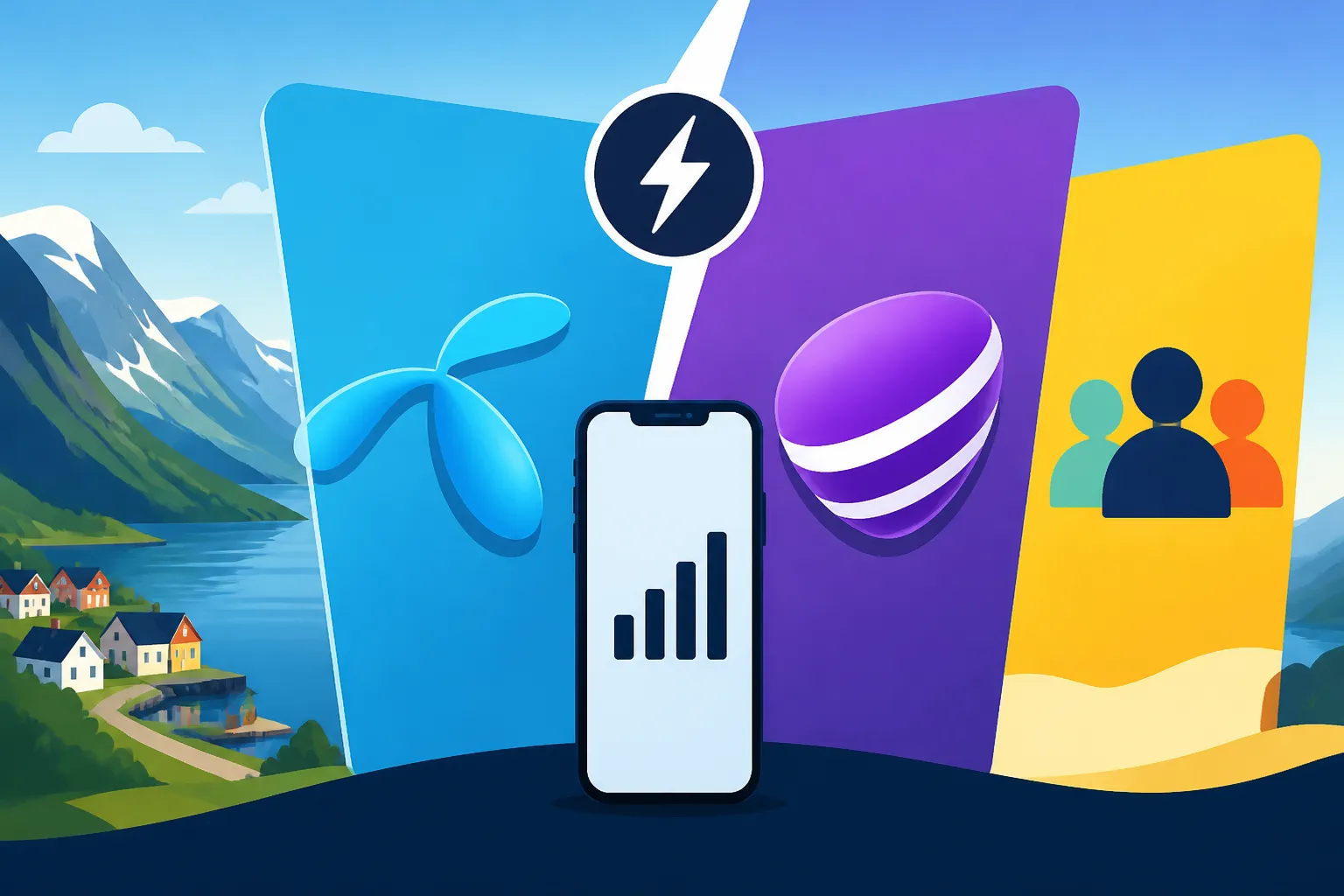
When you first land in Norway, you are stepping into one of the most advanced digital landscapes in the world. However, that technology comes at a premium. The market is dominated by two massive players who own the physical towers and fiber lines that crisscross the mountains and fjords. Understanding the difference between these two is essential because almost every other "budget" brand you see will be piggybacking on one of these two networks.
Telenor: The Heritage Network
Telenor is the "Old Reliable" of Norway. Originally the state-owned telegraph company, it remains the largest provider with the most extensive coverage, particularly in the Far North and deep within the interior valleys. If your new job takes you to a remote fishery or a research station in the Arctic, Telenor is often the only choice that guarantees a signal. Their 5G rollout has been aggressive, and they pride themselves on "Dekningsgaranti" (a coverage guarantee).
From an expat perspective, Telenor is often the most expensive option. You are paying for the infrastructure and a high level of customer service. They offer robust "family" plans where data can be shared, and they often include "Nettslett," a service that helps you remove unwanted personal data or private photos from the internet. However, for a single person just starting out, their monthly fees can feel like a significant chunk of your Cost of Living in Norway 2026: Budgeting for Singles and Families.
Telia: The Challenger with a 5G Focus
Telia is the primary rival to Telenor and often appeals to a slightly younger, more urban demographic. While Telenor feels like the "establishment," Telia positions itself as the innovative alternative. In major cities like Oslo, Stavanger, and Trondheim, the signal strength between the two is virtually indistinguishable. Telia has been particularly focused on being the first to offer 100% 5G coverage across the country, a feat they are very close to achieving.
One of the major draws for Telia is their bundling capability. If you are in the process of Setting Up Utilities: Electricity, Heating, Internet, and Mobile Plans, Telia often offers significant discounts if you combine your mobile phone, home internet, and television services. For expats who have finally secured a permanent apartment, this "total package" can simplify your monthly billing and save you several hundred kroner each month. However, like Telenor, Telia typically requires a fødselsnummer and a credit check for their best post-paid contracts.
The Budget Revolutionaries: Ice and MVNOs
If you find the prices of the "Big Two" a bit eye-watering, you aren't alone. Many Norwegians and seasoned expats have migrated toward smaller providers. These companies fall into two categories: Ice, which is actually building its own third national network, and Mobile Virtual Network Operators (MVNOs), which rent space from Telenor or Telia.
Ice: The Third Network Advantage
Ice has shaken up the Norwegian market by becoming the third player to actually own its own infrastructure. Because they are still expanding their "Ice+" network, they offer some of the most competitive data packages in the country. Their "Data Frihet" (Data Freedom) add-on is legendary among heavy users, offering a massive amount of data for a fraction of the cost of the bigger brands, provided you stay within the reach of their own towers.
For an expat, Ice is a fantastic middle-ground option. They are more flexible than Telenor but more robust than a tiny MVNO. They have physical stores in many shopping malls, which is a lifesaver when you need to speak to a human being about your D-Number vs Fødselsnummer: How It Affects Your Banking Options. Just be aware that when you travel into very remote hiking areas, your phone might "roam" onto the Telia network (which Ice has an agreement with), and your data speeds might be throttled depending on your specific plan.
Talkmore and OneCall: The Customer Favorites
Talkmore (owned by Telenor) and OneCall (owned by Telia) are the "low-cost" versions of their parent companies. They don't have physical stores, which keeps their overhead low and your monthly bill manageable. OneCall has built its entire brand around being "the people's provider," often winning awards for the best customer satisfaction in Norway.
These providers are excellent once you have your BankID Explained: Norway's Digital Identity System and Expat Challenges sorted. Their apps are intuitive, usually available in English, and allow you to toggle your data limits on the fly. They are perfect for the "Skilled Worker" who wants a no-nonsense plan that works everywhere but doesn't include the "premium" fluff like free movie tickets or cloud storage that you might never use.
MyCall: The Lifeline for New Expats
If there is one brand every new arrival needs to know, it is MyCall. For years, they have specialized in the expat and immigrant market. Their biggest selling point is that they often allow you to start a subscription or get a SIM card without a full Norwegian personal number, provided you have a valid passport and can visit one of their partner locations.
MyCall plans often include subsidized international calling minutes to countries outside the EU/EEA, which is a rare find in Norway. While most providers offer free calling within Europe, MyCall remembers that many of us are calling home to the US, India, or the Philippines. If you are still in your First 30 Days Health Checklist: GP, Frikort, and Pharmacies phase, a MyCall SIM is often the easiest way to get a local number quickly so you can start putting a contact number on job applications.
Navigating the Administrative Maze
In Norway, your phone number is more than just a way to call people; it is a core part of your digital identity. Most local services, from the Posten app to the Helsenorge portal, require a Norwegian phone number for two-factor authentication. This is where many foreigners hit a wall.
The D-Number and BankID Bottleneck
To get a "real" mobile subscription (post-paid), Norwegian law requires a credit check. You cannot be credit-checked without a fødselsnummer (permanent ID number). If you only have a D-number, many providers will flat-out refuse to give you a monthly contract. This can feel like a Catch-22: you need a phone to manage your life, but you can't get a phone plan because your life isn't "official" enough yet.
If you are stuck in this limbo, don't panic. You will likely need to start with a "Kontantkort" (prepaid card). Even for a prepaid card, you must register your ID by law. You can usually do this at a Narvesen or 7-Eleven by showing your passport. It is a slightly clunky process, but it gets you that vital +47 number. Once you finally receive your permanent ID and can set up your bank account, you can "port" that prepaid number over to a much cheaper monthly subscription with any provider you like.
Prepaid SIMs vs. Monthly Subscriptions
The difference in cost between prepaid and subscription plans in Norway is significant. Prepaid data is expensive, often costing three to four times more per gigabyte than a standard plan. However, for the first month or two, it is often your only choice. Many expats find it useful to use a travel eSIM like Airalo for their initial data needs upon arrival at the airport, while they spend the first few days hunting for a physical SIM card.
| Provider | Network | Best For | Estimated Monthly Price (10GB) |
|---|---|---|---|
| Telenor | Telenor | Remote Coverage & Support | 399 NOK |
| Telia | Telia | Urban Bundling & 5G | 379 NOK |
| Ice | Ice+ / Telia | High Data Users | 299 NOK |
| Talkmore | Telenor | Budget on Telenor Network | 249 NOK |
| OneCall | Telia | Best Customer Service | 249 NOK |
| MyCall | Telia | New Arrivals & International Calls | 279 NOK |
Digital Tools and Practical Connectivity
Norway is a nearly cashless and paperless society. Your mobile phone will be your primary tool for everything from paying for a bus ticket to Navigating the Helsenorge App in English: A Step-by-Step Translation. Because of this, you need to think about connectivity before you even clear customs.
Using eSIMs for Immediate Access
If your phone supports eSIM technology, you should consider a temporary solution like Airalo before you even land. It allows you to buy a small data package (e.g., 1GB or 3GB) specifically for Norway. While this won't give you a Norwegian phone number, it will allow you to use Google Maps to find your way to your Renting in Norway: Apartments, Contracts, and Tenant Rights viewing or message your landlord on WhatsApp.
This "bridge" connectivity is vital because Gardermoen airport's Wi-Fi can be spotty, and you don't want to be wandering around Oslo Central Station unable to load your train ticket. Once you are settled and have your paperwork in order, you can then move to a more permanent local provider. Using an eSIM also saves you from the extortionate roaming charges your home-country provider might slap on your bill the moment your phone pings a Norwegian tower.
Wi-Fi and Mobile Apps for Life in Norway
Once you have your local SIM, you’ll find that Norway is very generous with public Wi-Fi. Most trains (Vy), buses, and even some city centers offer free "Gjestenett." However, for sensitive tasks like Opening a Blocked Bank Account for Norwegian Student Visas or checking your Skattekort (Tax Deduction Card) and How to Change It, you should always use your mobile data or a secure home connection.
Almost every provider has a dedicated app where you can track your "Data Rollover." This is a standard feature in Norway where any unused data from one month carries over to the next. It’s a small but significant mercy that makes the high monthly costs a bit easier to swallow. If you find yourself at the end of the month with 5GB left, that 5GB will be added to your next month's allowance automatically.
Living Logistics and Long-term Planning
As you transition from a "tourist" mindset to a "resident" mindset, your mobile needs will change. Your initial scramble for a signal will eventually turn into a search for the best long-term value.
Finding a Base and Housing
In those first few weeks, you will likely be staying in temporary accommodation. Many expats use services like Spotahome to find mid-term rentals while they wait for their D-number to process. This is a crucial time for your mobile strategy. If your temporary housing includes high-speed Wi-Fi, you can get away with a much smaller (and cheaper) mobile data plan.
However, be careful when signing up for "Home Internet" contracts. Most Norwegian fiber providers require a 12-month commitment. If you are moving from a temporary Spotahome apartment to a permanent flat within three months, you could be stuck paying for two internet connections at once. Always check if your mobile provider offers "Mobile Broadband" (a small 5G router) that you can simply unplug and take with you to your next home.
Bundling Services to Save Money
Once you are fully integrated—meaning you have your fødselsnummer, your BankID, and a permanent address—it is time to stop paying "sticker price." This is when you should look at "Fellesavtaler" (common agreements). Many apartment buildings or housing cooperatives (borettslag) have bulk deals with Telia or Telenor.
You might find that your monthly building fees already cover a basic internet and TV package. If that is the case, you can often add your mobile phone to that existing account for a heavily discounted rate. Always ask your landlord or the board of your housing complex which provider they use. It is one of the easiest ways to lower your monthly expenses while living in one of the world's most expensive countries.
Disclaimer
The information provided in this guide is for informational purposes only and was accurate at the time of writing. Mobile plans, pricing, and regulatory requirements for ID registration in Norway frequently change. We recommend checking the official websites of Telenor, Telia, Ice, or MyCall for the most current terms and conditions. We are not a financial or legal advisor, and you should always verify the latest UDI and Skatteetaten requirements regarding identity documentation and credit checks.