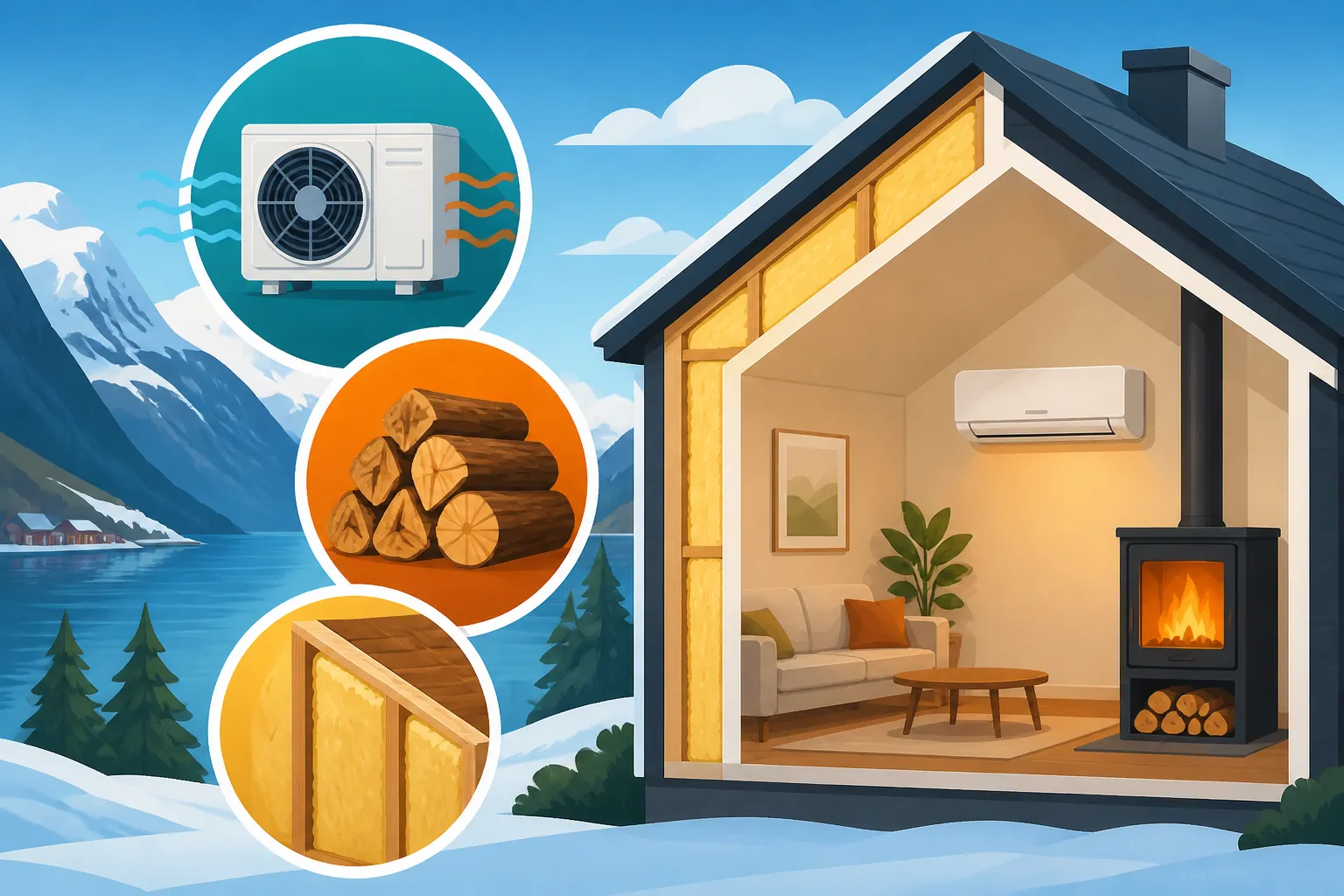
Heating Your Home: Heat Pumps (Varmepumpe), Firewood, and Insulation
Moving to Norway often involves a sharp realization that your previous understanding of "cold" was merely a suggestion. For many expats, the first winter is defined by the sticker shock of electricity bills and the confusing array of heating technologies that seem standard in every Norske home. This guide explores how to efficiently heat your Norwegian residence using heat pumps, firewood, and smart insulation tactics to keep costs manageable.
Understanding the Norwegian Electricity Market and Heating Logic
If you come from a country where central gas heating is the norm, the Norwegian system will feel alien. Almost everything here is electric. Because Norway historically relied on cheap hydropower, the infrastructure for gas pipes simply doesn't exist in residential areas. However, with the integration of the European energy market, prices have become more volatile. Understanding Electricity Bills in Norway: Spot Prices, Grid Fees (Nettleie), and Support is the first step toward survival. You aren't just paying for the energy you use; you are paying for the capacity of the grid and the fluctuating market price of every kilowatt-hour.
Spot Prices vs. Fixed Price Contracts
In Norway, the majority of consumers are on "Spotpris" contracts. This means you pay the hourly market rate for electricity plus a small margin to the provider. While this is usually the cheapest option over the long term, it requires you to be hyper-aware of when you are using power. Heating your home at 8:00 AM when everyone else is showering can be significantly more expensive than heating it at midnight. Some expats prefer "Fastpris" (fixed price) for predictability, but these contracts have become rarer and often include a premium that makes them less attractive during milder winters.
When you are first settling in and perhaps using Airalo to keep your data active while navigating your new neighborhood, you’ll likely spend a lot of time on apps like Tibber or your local power provider’s dashboard. These apps allow you to see the price per hour. If you have an electric heater or a heat pump, you can often automate them to lower the temperature during peak price hours. This level of micro-management is a national pastime in Norway, and while it feels tedious at first, the savings are substantial over a four-month dark season.
The Grid Fee and Peak Consumption Limits
Since 2022, Norway has implemented a "Nettleie" (grid fee) model that penalizes high peaks in consumption. Your monthly fee is determined by the average of your three highest hours of usage in a month. This means if you run the dishwasher, the washing machine, the oven, and all your heaters at the same time, you might bump yourself into a higher "capacity step," costing you several hundred extra kroner.
For those looking for rentals through platforms like Spotahome, it is wise to ask about the age of the building and the type of electrical panel installed. Older apartments in places like Grünerløkka might have limited capacity, meaning you’ll have to be even more strategic. You have to learn to "stagger" your heating. Turn the heat down in the living room while you cook, or use a smart thermostat to ensure the bedrooms aren't drawing power while the water heater is recovering from your morning shower.
Government Electricity Support (Strømstøtte)
The Norwegian government provides a safety net when prices exceed a certain threshold. The "Strømstøtte" scheme covers a percentage of the cost when the spot price goes above 73 øre per kWh (excluding VAT). It is important to know that this is calculated based on the monthly average price in your specific price zone (Norway is divided into five zones, with the south usually being the most expensive).
This support is applied automatically to your grid bill, so you don't need to apply for it. However, it only applies to your primary residence. If you are adventurous enough to be Purchasing a Cabin (Hytte): Rules for Foreigners Buying Leisure Property, you should be aware that cabins generally do not receive this subsidy. This makes efficient heating in a secondary home even more critical, as you will be paying the full market rate regardless of how high the prices climb.
The King of Efficiency: Air-to-Air Heat Pumps (Varmepumpe)
Walk through any residential neighborhood in Oslo, Bergen, or Trondheim, and you will see white boxes humming outside almost every house. These are air-to-air heat pumps, or "varmepumper." They are the gold standard for heating in Norway because they can deliver three to four times more heat energy than the electricity they consume. For an expat, seeing a heat pump in a rental listing is often a sign of a landlord who cares about energy efficiency.
Why Every Norwegian Home Seems to Have One
A traditional electric radiator (panelovn) converts electricity directly into heat at a 1:1 ratio. A heat pump, however, moves heat from the outside air into your home, even when it is -15°C outside. Because they are so efficient, they are the primary tool for keeping a home at a base temperature of 20-22°C without breaking the bank. They also provide the added benefit of air filtration and, during the increasingly warm Norwegian summers, they can act as air conditioning—a luxury that was once rare in the Nordics.
When browsing for your first home, perhaps while reading Building Inspections (Tilstandsrapport): Red Flags When Buying a House, pay close attention to the age of the heat pump. Models older than ten years are significantly less efficient in extreme cold. A modern "Nordic" model is designed specifically to operate in the sub-zero temperatures of the interior or the far north, maintaining high output even when the moisture in the air is freezing on the external unit's fins.
Maintenance and Optimal Settings for Cold Snaps
One of the biggest mistakes newcomers make is "fiddling" with the heat pump. These machines are designed to run consistently. Turning them off when you go to work and blasting them when you get home actually consumes more energy because the unit has to work at maximum capacity to heat up cold walls and furniture. Instead, set it to a steady 21°C and leave it. Most Norwegians only lower the temperature by 2-3 degrees at night.
Maintenance is also vital. You must clean the indoor filters every few weeks. It’s a simple process: pop the cover, vacuum the dust off the mesh, and put them back. If the filters are clogged, the machine has to work harder, and your efficiency drops. Also, keep an eye on the outdoor unit during heavy snowfall. If it gets buried or if ice builds up underneath it from the defrost cycle, it can fail. Ensure there is clear airflow around that outside box at all times.
Installing a Heat Pump in a Rental vs. Owned Property
If you own your home, installing a heat pump is a no-brainer. The investment usually pays for itself in 3 to 6 years through reduced electricity bills. There are also municipal grants in some cities like Oslo that will help cover the installation costs if you are replacing an inefficient heating source. However, if you are renting, you cannot install one without the landlord's written permission, as it requires drilling a hole through the exterior wall.
If your rental doesn't have one, it might be worth negotiating with your landlord. You could offer to pay a slightly higher rent if they install a modern unit, or agree to cover part of the cost in exchange for a longer-term lease. Given how much you can save on User Fees (Egenandel) for Doctor Visits Before Reaching Frikort Status and other living costs, putting that money toward a more efficient home environment is a smart financial move. Always ensure the "Overtakelse" or handover document notes the condition of any existing heat pump to avoid deposit disputes later.
The Cultural and Practical Necessity of Firewood (Ved)
In Norway, firewood is more than just a way to stay warm; it is a cultural pillar. The concept of "kos" (coziness) is almost always centered around a crackling fireplace. But beyond the aesthetic, wood-burning is a practical backup. If a winter storm knocks out the power grid, a wood stove becomes your only source of heat and potentially your only way to cook.
Where to Buy Quality Firewood in Norway
Buying wood in Norway is an art form. You can buy small, expensive bags at gas stations or supermarkets like Kiwi and Rema 1000, but this is the least economical way to do it. Veteran expats know to order wood by the "favn" or in large 1,000-liter bags delivered to their door. Websites like Finn.no are the go-to marketplace for local farmers selling "tørr bjørkeved" (dry birch wood).
When ordering, timing is everything. If you wait until the first snowfall in November, prices will be at their peak and many suppliers will be sold out. The best time to buy is late spring or summer. If you have the space, buying "raw" wood and stacking it to dry yourself is the cheapest method, but it requires a dedicated wood shed with good airflow. Always ask if the wood is "fyringsklar" (ready to burn), meaning the moisture content is below 20%.
Understanding Wood Types: Birch vs. Pine
Not all wood is created equal. Birch (bjørk) is the gold standard in Norway. It burns cleanly, has a high energy density, and produces very few sparks. Oak and ash are even better but harder to find. Pine (furu) and spruce (gran) are cheaper and easier to light, but they burn very fast and can cause "creosote" buildup in your chimney if the fire isn't hot enough.
Many Norwegians use a mix: a bit of pine or specialized fire-starters to get the fire going, and then heavy birch logs to maintain a steady, long-lasting heat. If you are living in an urban apartment, check your building's rules. Some older buildings in Oslo have strict regulations on what kind of fuel you can use in their antique stoves. Using the right wood is part of being a good neighbor and maintaining the integrity of the shared chimney system.
Fireplace Safety and Chimney Sweeping (Feiing)
Safety is paramount. Norwegian homes are often made of wood, and chimney fires are a real threat. By law, your chimney must be inspected and swept by a professional "feier" (chimney sweep) regularly. This service is usually organized by the municipality and paid for through your municipal taxes. You will receive a SMS notification when the sweep is coming, and you must ensure they have access to the chimney, often via a roof ladder.
If you have an old "peis" (open fireplace), it is far less efficient than a modern "vedovn" (closed wood stove). An open fire draws warm air out of the room and sends it up the chimney, whereas a modern stove uses "clean burn" technology to radiate heat back into the room while consuming very little wood. If you're looking at property, a modern Jøtul or Nordpeis stove is a huge asset.
| Heating Method | Efficiency | Cost Profile | Best Used For |
|---|---|---|---|
| Heat Pump | 300% – 400% | Low running cost, High install | Primary heat, 24/7 maintenance of base temp |
| Firewood (Birch) | 70% – 80% | Medium, depends on bulk buy | Supplementary heat, extreme cold, power outages |
| Electric Radiator | 100% | High, fluctuates with spot price | Small rooms, guest rooms, quick temporary heat |
| Underfloor Heating | 90% – 100% | High | Bathrooms, entryways (drying wet shoes) |
Insulation and Passive Heating Strategies
You can have the best heat pump in the world, but if your home is leaking air, you are essentially throwing kroner out the window. Insulation is the silent hero of the Norwegian winter. While you can't always change the walls of a rental, there are several "expat hacks" to improve heat retention.
Glazing and Sealing Drafty Windows
Older Norwegian apartments often have beautiful but drafty windows. If you feel a "trekk" (draft), your heating system is working overtime. A simple fix is weather-stripping tape from stores like Clas Ohlson or Biltema. Applying this foam or rubber tape around window frames can significantly reduce heat loss. For very old single-pane windows, you can even use temporary window insulation film that shrinks with a hairdryer to create a double-glazing effect.
Another tip is to use heavy curtains. In the "Mørketid," the sun is barely up anyway. Closing thick, thermal-lined curtains as soon as the sun goes down adds an extra layer of insulation between the cold glass and your living space. Just make sure you aren't covering your radiators or the sensors for your heat pump, as this will confuse the thermostat and lead to uneven heating.
The Ullundertøy (Wool) Strategy
In Norway, heating the person is often more efficient than heating the entire room. There is a reason why Wool Underwear (Ullundertøy): Why Norwegians Insist You Wear It is a core part of the culture. Wearing a thin layer of merino wool against your skin allows you to keep your thermostat at 19°C instead of 22°C without feeling a chill.
This extends to your home decor. Sheepskins (saueskinn) and wool blankets (ullpledd) aren't just for show. Placing a sheepskin on a wooden chair or a leather sofa provides immediate insulation for your body. When you embrace the Norwegian way of dressing indoors, you'll find that you don't need to blast the heaters quite as high, which saves a massive amount of energy over the six months of cold weather.
Balancing Ventilation and Heat Retention
One of the paradoxes of Norwegian living is the need for "utlufting" (airing out). Because Norwegian homes are built to be airtight, moisture from cooking, showering, and breathing can build up, leading to mold. You must ventilate, even in the dead of winter. The trick is to do it quickly.
Instead of leaving a window cracked all day, which wastes heat, open multiple windows for five minutes to create a cross-breeze. This replaces the stale, humid air with fresh, dry air without significantly cooling down the thermal mass of your walls and furniture. Dry air is actually easier to heat than humid air, so regular "sjokklufting" (shock airing) can actually improve your heating efficiency in the long run.
Practical Tips for New Arrivals
Managing your first winter requires a mix of technology and traditional wisdom. If you are just arriving, you might not have a BankID Explained: Norway's Digital Identity System and Expat Challenges yet, which makes setting up electricity accounts and smart home apps difficult.
Managing Bills Before Your First Paycheck
The first few months in Norway are notoriously expensive. Between deposits, furniture, and winter gear, your budget will be stretched. Heating costs usually peak in January and February. If you are struggling, talk to your power provider early. Most Norwegian companies are willing to set up a payment plan (betalingsplan) if you contact them before the bill is due. They would much rather have you pay in installments than send the bill to "inkasso" (debt collection).
Using tools like Airalo to stay connected while you research different providers is a life-saver. You can compare the "påslag" (the extra cents providers charge over the spot price) on sites like Elskling.no. Some providers offer a "welcome discount" for the first few months, which can be a great way to lower your initial winter costs while you wait for your first full Norwegian salary.
Using Smart Technology to Monitor Consumption
If your home has a modern "AMS" power meter (which most do), you can plug in a small device called a "Pulse" or "HAN-sensor." This device sends real-time data to your phone, showing exactly how many kilowatts you are using at any given moment. It's incredibly revealing to see the spike when you turn on a space heater or the kettle.
By seeing the data, you can change your behavior. You might realize that your old "panelovn" in the bedroom is a power hog and decide to replace it with a more efficient model or simply use a thicker duvet. Knowledge is power—literally—when it comes to surviving the Norwegian winter without going bankrupt.
Disclaimer
This guide is intended for informational purposes only. Heating regulations, electricity support schemes, and market prices in Norway are subject to frequent change by the government and regulatory bodies. Always check with your local municipality (Kommune) and your specific utility provider for the most current rules and safety guidelines regarding fireplace use and electrical installations. Internal links provided are for further reading and do not constitute financial or legal advice.