Buying Prepaid SIM Cards in Norway: ID Requirements for Tourists
Landing in Norway is an exhilarating experience, but the magic of the fjords quickly fades when you realize your smartphone is effectively a paperweight without a local connection. Many travelers arrive expecting to pick up a SIM card as easily as a chocolate bar, only to be met with strict registration laws and ID requirements that can feel like a bureaucratic brick wall. This guide explains the nuances of the Norwegian telecommunications market, detailing exactly how to navigate the mandatory ID registration process so you can stay connected from the moment you leave the airport.
The Reality of the Norwegian Prepaid Market
If you are coming from a country where you can buy a burner phone or an anonymous SIM card at a gas station, Norway will provide a bit of a culture shock. Due to strict national security regulations and anti-money laundering laws, every single mobile number in Norway must be tied to a verified identity. This isn't just a suggestion; it is a legal requirement under the Electronic Communications Act. This means that even "prepaid" cards, often called kontantkort, require a formal registration process before they can be activated. You cannot simply insert the chip and start browsing; you must prove who you are first.
For many tourists, this creates a frustrating "catch-22." To register a SIM, you often need a Norwegian identification number, but to get an identification number, you need to be a resident. Fortunately, there are specific pathways for visitors and new arrivals to bypass this, but it requires knowing which providers to approach and which documents to carry. I remember my first week in Oslo, wandering from one convenience store to another, being told repeatedly that my foreign passport wasn't "in the system." It is a common pain point that can be easily avoided with the right preparation.
The Norwegian mobile landscape is dominated by two main infrastructure owners: Telenor and Telia. While these giants offer the best coverage, they are often the most difficult for short-term tourists to deal with because their systems are heavily integrated with the national registry. For a smoother experience, many expats and frequent travelers look toward MVNOs (Mobile Virtual Network Operators) like MyCall, which have built their entire business model around serving the international community. Navigating these options is part of the essential First 30 Days Health Checklist: GP, Frikort, and Pharmacies because, without a working phone, accessing even basic services like healthcare or banking becomes infinitely more difficult.
Where to Buy and the Mandatory ID Process
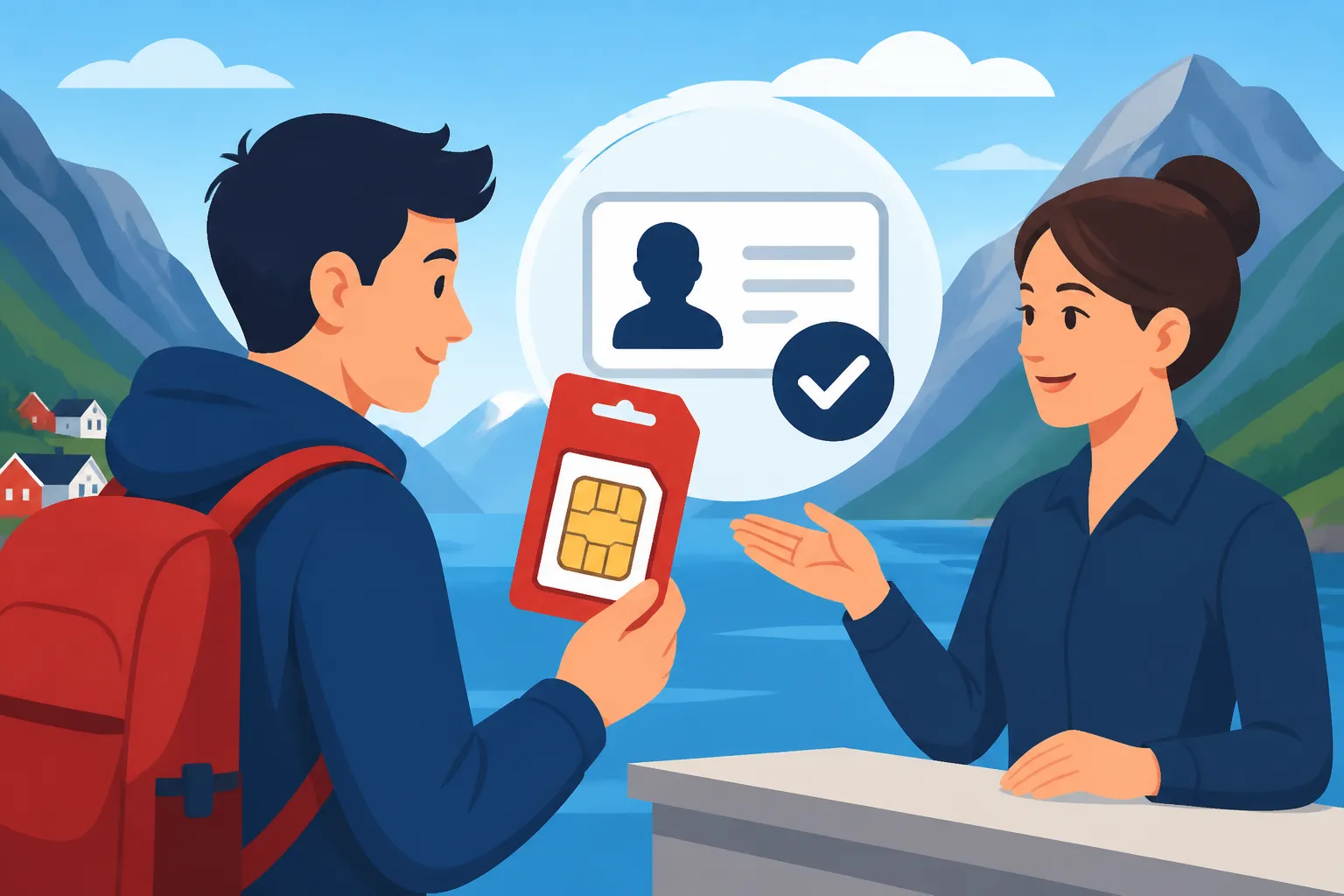
In Norway, you won't find dedicated "SIM card boutiques" on every corner. Instead, you will find startpakke (start packs) at major convenience stores like Narvesen, 7-Eleven, and sometimes in grocery chains like Kiwi or Reema 1000. However, buying the pack is only step one. The real challenge is the registration. If you buy a SIM at a 7-Eleven, the clerk is legally required to see your physical passport. They will take a scan or manually enter your details into a terminal connected to the provider's database.
It is vital to understand that not all ID is created equal in the eyes of a Norwegian telecom provider. While EU national ID cards are generally accepted, visitors from outside the Schengen area almost always need a physical passport. Driver's licenses, even international ones, are frequently rejected at the point of sale. If you are staying in temporary accommodation, perhaps through a service like Spotahome, you will need to provide that address during the registration process. Even if it is a short-term rental, the system requires a physical location to be attached to the user profile for the duration of the SIM's validity.
Once the clerk enters your ID information, there is often a waiting period. It isn't always instantaneous. Activations can take ten minutes and others take six hours. During this window, your phone might show "No Service," which can be nerve-wracking if you are trying to find your way to a new apartment. This is where the digital landscape of Norway shows its complexity. For those who are moving here long-term, the struggle for a SIM card is often the first step in a much longer journey involving the D-Number vs Fødselsnummer: How It Affects Your Banking Options debate, as your mobile number eventually becomes the "key" to your digital life in the North.
| Provider Type | Examples | Best For | Registration Method |
|---|---|---|---|
| Main Networks | Telenor, Telia | Long-term residents | BankID or Physical Store |
| International MVNO | MyCall | Tourists & New Expats | Passport at Narvesen/7-Eleven |
| Budget MVNO | Talkmore, Fjordkraft | Residents with ID | Online with BankID |
| Global eSIM | Airalo | Short-term tourists | App-based (No local ID needed) |
Choosing the Right Provider for Your Needs
When it comes to selecting a provider, you need to weigh convenience against cost. MyCall is widely considered the "expat's choice" because they allow for registration with a wide variety of international IDs and don't require a Norwegian personal number for their prepaid products. You can walk into a Narvesen, show your passport, and walk out with a working number. Their data packages are competitive, and they offer specialized rates for calling abroad, which is a lifesaver when you need to check in with family back home.
However, if you have a phone that supports eSIM technology, you can skip the physical shops entirely. Brands like Airalo offer Norwegian data plans that you can purchase and install before you even land at Gardermoen. This is a game-changer for people who find the idea of navigating a Norwegian convenience store while jet-lagged to be overwhelming. With Airalo, you don't get a local Norwegian phone number—you only get data—but in a country where almost everyone uses WhatsApp, Messenger, or Signal, a local number is becoming less of a necessity for short-term stays. It also saves you from the stress of the ID registration counter, as you handle everything through their app.
For those planning to stay longer than a few weeks, the conversation shifts toward Mobile Operators in Norway: Telenor vs Telia and Budget Alternatives. Once you have secured your temporary housing via Spotahome and settled in, you might find that a prepaid SIM is too expensive for heavy data usage. Most Norwegians use monthly contracts, but these are almost impossible to get without a personal number and a credit check. If you are in that "in-between" phase where you have a D-number but no BankID yet, stick with prepaid or "pay-as-you-go" plans to avoid being locked out of essential communication.
Overcoming Activation Hurdles and Technical Issues
Even with a passport in hand, things can go wrong. One of the most common issues is "frequency compatibility." While most modern iPhones and high-end Androids work globally, some older models from North America or Asia might struggle with Norway’s 4G and 5G bands. Additionally, your phone must be "unlocked." This sounds obvious, but many travelers arrive only to realize their home carrier still has a lock on the device, making any Norwegian SIM useless. Before you leave, call your provider and confirm your device is open to international chips.
If you find yourself in a situation where the physical registration isn't working—perhaps the store's system is down or they don't recognize your specific passport—don't panic. Norway has excellent public Wi-Fi in major cities. You can find free internet at all Oslo City (Ruter) stations, public libraries, and most cafes. This can give you the breathing room to download an eSIM via Airalo or to research the nearest official Telenor or Telia shop, where the staff are generally more trained in handling "edge case" international IDs than the teenager working at a late-night convenience store.
For those moving to Norway for work or study, your mobile number will eventually become tied to your BankID Explained: Norway's Digital Identity System and Expat Challenges. This is why it is so important to register your prepaid SIM correctly the first time. If you use a fake name or a temporary "throwaway" registration, you will have a nightmare of a time trying to port that number over to a permanent contract later. Treat your Norwegian SIM card registration with the same level of seriousness as you would a rental agreement or a work contract.
Managing Connectivity and Costs in the Long Run
Once you have your SIM activated, managing the costs is your next priority. Norway is expensive, and mobile data is no exception. Most prepaid plans come with a small amount of data (usually 1GB to 5GB) that expires after 30 days. To top up, you can use the provider’s app or buy "top-up codes" at the same convenience stores where you bought the SIM. Be careful with "pay-as-you-go" data rates; if you don't buy a specific "data pack," your credit can vanish in minutes just from background app updates.
As you settle into your new life, you will likely look into Setting Up Utilities: Electricity, Heating, Internet, and Mobile Plans to save money. For example, if you find a long-term apartment through Spotahome, you might find that high-speed fiber is included in your rent, which drastically reduces your need for a massive mobile data plan. Most expats eventually transition from a MyCall prepaid SIM to a "post-paid" contract with a provider like Talkmore or Ice once they receive their Opening a Blocked Bank Account for Norwegian Student Visas or their first salary.
Lastly, keep in mind that Norway is part of the EEA (European Economic Area). This means that once you have a registered Norwegian SIM, you can usually use your data roaming in Sweden, Denmark, Germany, and the rest of the EU at no extra cost. This makes the initial "passport at the counter" hassle well worth it, as it gives you a gateway to the entire continent's digital infrastructure. Just ensure you check the "Roam Like at Home" policy of your specific Norwegian provider, as some prepaid plans have smaller roaming quotas than domestic ones.
Final Considerations for Travelers
To summarize the journey, getting a SIM in Norway is a three-step process: buy the pack, prove your identity with a passport, and wait for the central system to authorize your access. It is a protective measure that keeps the Norwegian digital space safe, but it does require a bit of patience from the user. If you are a tourist who only needs a map and the ability to post photos to social media, an eSIM from Airalo is likely your most stress-free path. If you need a local number to receive calls from potential landlords or employers, MyCall is your best bet.
Remember that your mobile phone in Norway is more than just a tool for entertainment; it is an essential part of Navigating the Helsenorge App in English: A Step-by-Step Translation and managing your daily life. The country is rapidly moving toward a "cashless" and "paperless" society, where everything from bus tickets to doctor's appointments is handled via mobile apps. Ensuring you have a stable, registered, and legal connection is the first real step in becoming part of the Norwegian community, even if you are only here for a few weeks.
If you are currently looking for a place to stay and want to ensure you have a "home base" to set up your digital life, check out the options on Spotahome. Having a confirmed address before you arrive can simplify many of the forms you will encounter at the telecom desk. Stay patient, keep your passport handy, and you will be browsing at 5G speeds across the stunning Norwegian landscape in no time.
Disclaimer
The information provided in this guide is for informational purposes only and does not constitute legal or professional advice. Telecommunication laws and provider policies in Norway are subject to change. While we strive to keep this information up to date, always check with the official Norwegian Directorate for Civil Protection or individual service providers for the most current regulations regarding ID requirements and SIM card registration.