How to Read Your Norwegian Electricity Bill: Forbruk vs Nettleie
Opening your first electricity invoice in Norway often leads to a moment of genuine confusion. You might see two different companies listed on one bill, or worse, receive two separate invoices for what seems like the same service. This guide demystifies the difference between Forbruk and Nettleie, helping you navigate the complexities of the Norwegian energy market and keep your monthly expenses under control.
The Great Divide: Why You Get Two Bills or Two Sections
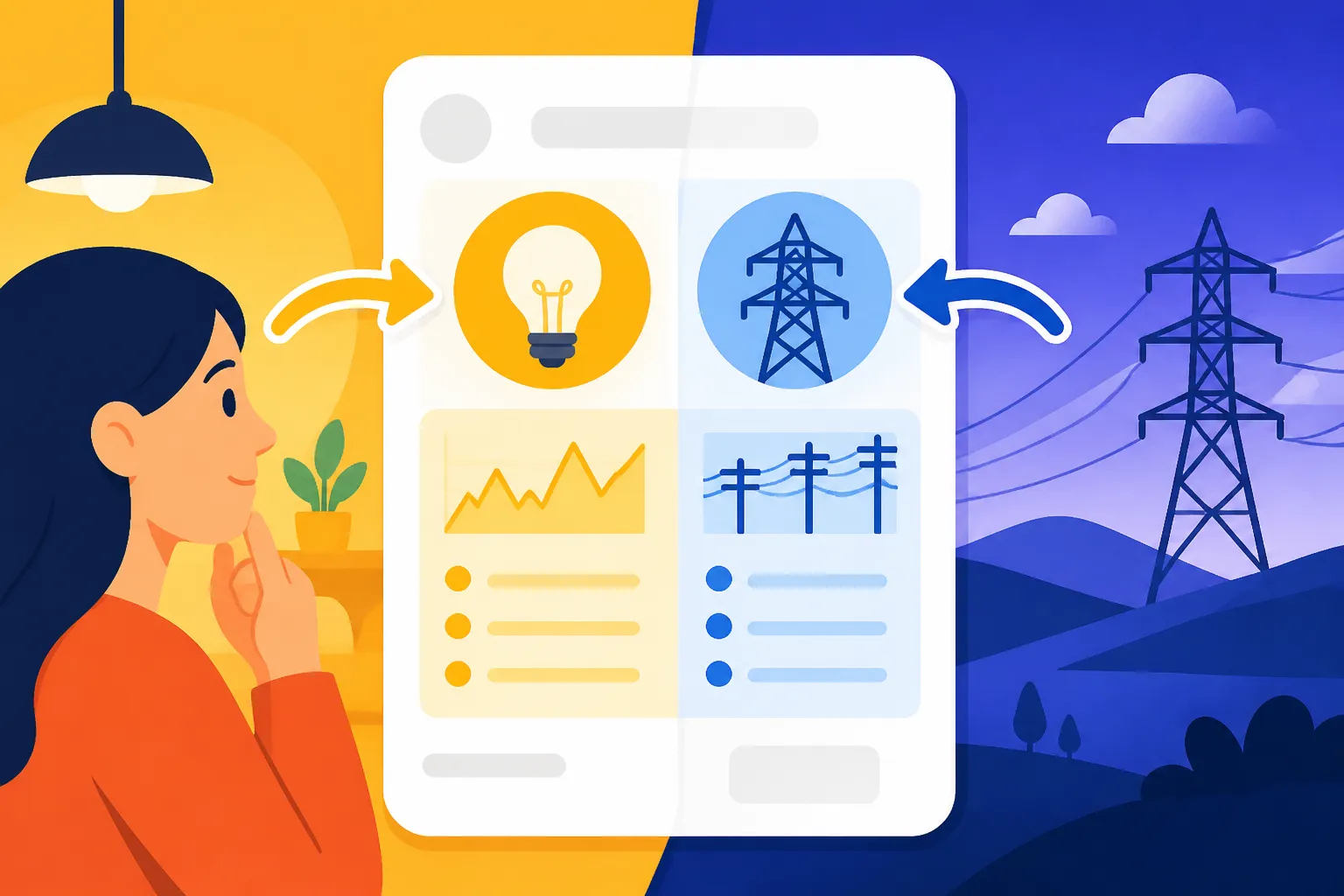
If you have recently moved into a new apartment found through a platform like Spotahome, you might be used to all-inclusive utility bills. In Norway, however, the electricity market is deregulated, which means the entity that owns the physical wires is rarely the same as the company selling you the actual energy. This split is the primary reason for the dual-nature of your billing. When you move in, one of your first tasks in Setting Up Utilities: Electricity, Heating, Internet, and Mobile Plans is understanding that you are essentially paying for a product (the power) and a delivery service (the grid).
Understanding the Power Grid and Nettleie
The term Nettleie literally translates to grid rent. You are paying for the maintenance, operation, and development of the electrical infrastructure that brings power to your door. This includes the high-voltage lines running through the mountains, the local transformers, and the physical meter in your hallway. You cannot choose your grid provider; it is a natural monopoly based on where you live. For example, if you live in Oslo, Elvia is your grid provider. If you move to another region, your grid provider will change automatically based on your address.
The grid company is responsible for ensuring that the lights stay on during a massive winter storm. They also collect government taxes on behalf of the state. This is why even if you find a super-cheap electricity deal, your Nettleie will remain constant and often surprisingly high. It is a common frustration for expats to realize that during months of low usage, the fixed costs of the grid can sometimes exceed the cost of the actual power consumed.
Understanding the Power Provider and Forbruk
Forbruk refers to your actual consumption. This is the part of the bill where you pay for the kilowatt-hours (kWh) you used to heat your water, run your oven, or charge your phone. Unlike the grid, the power provider (Strømleverandør) is someone you choose in a competitive marketplace. There are dozens of companies like Fjordkraft, Tibber, or Fortum vying for your business.
The power provider buys electricity from the Nord Pool power exchange and sells it to you. Most Norwegians opt for a spot price contract, where the price fluctuates hour by hour. When you are first arriving and perhaps using Airalo to stay connected while searching for a long-term home, you might notice that Norwegians are obsessed with checking their power apps. This is because they are monitoring the spot price to see when it is cheapest to run the dishwasher.
Decoding Nettleie: The Cost of Infrastructure
The grid bill is more than just a single number; it is composed of several layers that can be quite opaque to the uninitiated. Since July 2022, Norway introduced a new model for Nettleie intended to encourage residents to spread their power usage throughout the day rather than peaking all at once. This model is built on "capacity steps" (kapasitetsledd).
Fixed Monthly Costs vs Capacity Steps
The largest variable in your grid rent is now determined by your peak usage. The grid company looks at the three hours during a calendar month where you used the most electricity simultaneously (on three different days). The average of these three peaks determines which "step" you fall into. For example, if your average peak is under 5 kWh, you pay a lower base rate than if your peak hits 11 kWh.
This creates a strategic challenge. If you come home from work, turn on the induction stove, start the washing machine, and plug in your electric car all at the same time, you might jump into a higher capacity step for the entire month. Learning to sequence your appliances is a vital part of Budgeting for Winter Electricity Spikes: Planning Your Finances. It is not just about how much total energy you use, but how much you use at any single moment.
Energy Joints and Public Taxes
In addition to the capacity step, you pay an "energy joint" (energiledd). This is a small fee per kWh consumed. Interestingly, this fee is often cheaper at night (usually between 22:00 and 06:00) and on weekends. This is the grid company's way of incentivizing you to use the heavy-duty appliances when the overall load on the national infrastructure is lowest.
Furthermore, a significant chunk of your Nettleie goes toward the Enova fee (supporting green energy projects) and the Consumer Tax on electricity (El-avgift). In the winter months, the government occasionally reduces this tax to provide relief, but it remains a mandatory part of the bill. When comparing the Cost of Living in Norway 2026: Budgeting for Singles and Families, many foreigners are surprised that the "delivery" of the power can cost almost as much as the power itself.
Decoding Forbruk: Paying for the Actual Power
When you look at the Forbruk section of your bill, you are looking at the market value of electricity. In Norway, this is heavily influenced by the water levels in the mountain reservoirs, as the country relies almost entirely on hydropower.
Spot Price vs Fixed Price Contracts
The vast majority of residents use a Spotpris contract. This means you pay the actual market price plus a small surcharge (påslag) and a monthly fee to the provider. The surcharge is usually just a few øre per kWh. If you see a contract that looks too good to be true—perhaps with a negative surcharge—be careful. These are often introductory offers that expire after a few months, shifting you to a much more expensive variable rate.
Fixed-price contracts (Fastpris) exist but have become increasingly rare and expensive due to market volatility. While they offer predictability, they almost always result in paying more over the course of a year. Most veterans of the Norwegian system suggest sticking to spot price and using technology to manage the peaks. If you have been looking for rentals on Spotahome, you might find that some modern apartments include smart home technology specifically designed to track these spot prices in real-time.
The Elhub and Digital Meters
Norway has fully transitioned to AMS (Advanced Metering System) digital meters. These meters send your consumption data to a central system called Elhub every hour. You no longer need to manually report your meter readings as people did a decade ago. This data is what allows power providers to offer detailed apps showing your consumption history.
If you find that your bill is consistently higher than expected, you can log into Elhub with your BankID Explained: Norway's Digital Identity System and Expat Challenges to see exactly when your home is "leaking" energy. Often, the culprit is underfloor heating in the bathroom or an old, inefficient water heater. Understanding these patterns is essential for Heating Your Home: Heat Pumps (Varmepumpe), Firewood, and Insulation, especially as temperatures drop below zero.
| Component | Category | Who Sets the Price? | Can You Switch? |
|---|---|---|---|
| Kapasitetsledd | Nettleie | Local Grid Company | No |
| Energiledd | Nettleie | Local Grid Company | No |
| El-avgift | Taxes | Norwegian Government | No |
| Spotpris | Forbruk | Nord Pool Market | No (Market Driven) |
| Påslag (Markup) | Forbruk | Power Provider | Yes |
| Månedsbeløp | Forbruk | Power Provider | Yes |
Practical Tips for Lowering Your Bill
Understanding the bill is the first step, but taking action to lower it is where the real work begins. Given that heating accounts for roughly 60-70% of energy use in a typical Norwegian home, your habits during the Surviving the Norwegian Winter: Clothing, Heating, and Mørketid (Dark Season) will define your financial health.
Shifting Consumption and Smart Charging
Since the Nettleie capacity step is determined by your highest peaks, you should avoid using the oven, the dryer, and the car charger simultaneously. Many electric vehicle owners use smart chargers that communicate with the house's main breaker to ensure the car only draws power when other appliances are off. If you are still in the process of moving and using Airalo to manage your logistics, you can use that data to download apps like Tibber or Oss, which provide live feeds of your home's power draw.
Another tip is to lower the temperature in rooms you aren't using. Lowering the thermostat by just one degree can reduce your heating costs by about 5%. However, be careful not to turn the heat off entirely in the winter, as pipes can freeze, leading to massive insurance claims.
Using the Strømstøtte Subsidy
Since the energy crisis of 2021, the Norwegian government has implemented a subsidy program known as Strømstøtte. When the spot price in your specific price area (there are five price zones in Norway: N01, N02, N03, N04, and N05) exceeds a certain threshold—currently 73 øre per kWh (excluding VAT)—the government covers 90% of the cost above that price.
This subsidy is applied automatically to your Nettleie bill. You do not need to apply for it. However, it is important to note that the subsidy is based on the average monthly spot price, not your specific hourly price. This means if you use a lot of power during an exceptionally expensive hour, you might still pay a significant amount even with the subsidy. For more details on eligibility, check out Electricity Support Scheme (Strømstøtte): Do Renters Get It?.
The Importance of Combined Billing (Gjennomfakturering)
To simplify life, many power providers offer "Gjennomfakturering." This means the power provider pays the grid company on your behalf and then sends you one single, consolidated bill. This is highly recommended for expats because it makes tracking expenses much easier. Without this, you will have to manage two different due dates and two different payment references (KID numbers).
When you first register your address and deal with the D-Number vs Fødselsnummer: How It Affects Your Banking Options, make sure to ask your chosen power provider if they support combined billing for your specific grid area. Not all companies have agreements with all grid providers, so it is worth a quick check before signing a contract.
Disclaimer
The information provided in this guide is for informational purposes only and is based on the Norwegian energy market regulations as of 2026. Energy prices, government subsidies (strømstøtte), and grid models are subject to change by the Norwegian Water Resources and Energy Directorate (NVE) and the Ministry of Petroleum and Energy. Always consult your specific service providers and the official Helsenorge or Regjeringen websites for the most current rates and legal requirements. This guide does not constitute financial or legal advice.