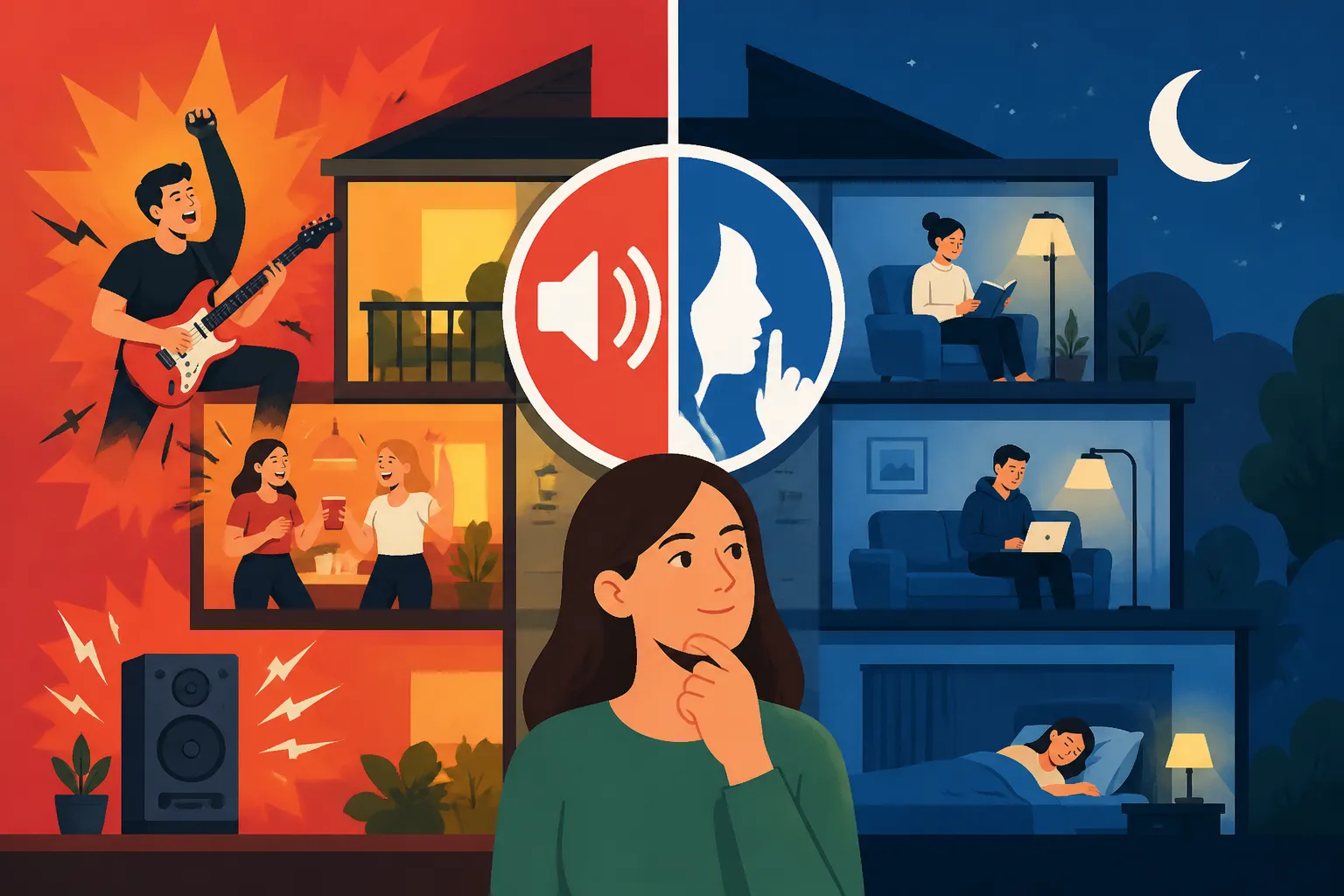
Noise Rules in Norwegian Apartment Buildings: Quiet Hours Explained
Moving into a Norwegian apartment for the first time often comes with a steep learning curve regarding social expectations and the unwritten laws of silence. You might think vacuuming at 8:00 PM on a Sunday is productive, but to your neighbors, it could be a major transgression. This guide explores the legal and cultural noise rules in Norway to ensure you stay on good terms with your community.
The Legal Framework for Silence in Norway
When you first arrive in a city like Oslo or Bergen, you might be surprised by how quiet residential streets become after sunset. This isn't just a cultural preference; it is rooted in Norwegian law. The primary legal document governing public order is the Police Act (Politiloven), specifically the local police regulations (politivedtekter) for each municipality. These regulations generally state that there should be "nattero," or night peace, between 11:00 PM and 7:00 AM. During these hours, any noise that disturbs the sleep or rest of others is technically a violation of public order.
However, for most expats, the more immediate concern is the Act relating to Housing Cooperatives (Borettslagsloven) or the Owner-Tenant Act (Husleieloven). These laws provide the basis for the specific rules found in your rental contract or the building’s internal regulations. If you are still in the process of finding a place, using a service like Spotahome can help you identify properties where the Renting in Norway: Apartments, Contracts, and Tenant Rights are clearly defined, making it easier to understand what you are signing up for before you move in.
Beyond the national laws, Norway has a very specific tradition regarding Sundays and public holidays. The Law on Holy Day Peace (Helligdagsfred) dictates that from midnight on Saturday until midnight on Sunday, as well as on public holidays, people must maintain a higher level of quiet. This means no loud power tools, no lawn mowing, and definitely no drilling into concrete walls. This is one of the most common friction points for foreigners who are used to using their weekends for home improvement.
The Police Act vs Internal House Rules
While the police regulations set the floor for behavior in public spaces, your specific apartment building likely has much stricter rules. These are called "husordensregler." While the police may not show up because you dropped a heavy weight on your floor at 10:30 PM, your neighbor certainly might, or they may file a complaint with the board.
The relationship between these two sets of rules is simple: the house rules cannot contradict the law, but they can certainly be more restrictive. Most buildings in Norway will formalize the 11:00 PM to 7:00 AM window for total silence, but many also include "quiet periods" during the day or evening. Understanding how these layers of regulation interact is a vital part of Navigating Housing Cooperatives (Borettslag): Board Rules and Fees and ensuring you don't face warnings from the board.
Nattero The Standard Definition of Quiet Hours
In the Norwegian context, "nattero" implies that your neighbors should not be able to hear your activities through the walls or floors. This doesn't mean you have to sit in total darkness and hold your breath, but it does mean that the "bass-heavy" speakers need to be turned off, the washing machine should not be running its spin cycle, and loud, boisterous conversations on the balcony should move indoors.
If you are moving into a building with older construction, the sound insulation can be surprisingly poor. I remember living in a classic "Bygård" in Majorstuen where I could hear my neighbor’s alarm clock every morning. In such buildings, the expectation for nattero is even higher. If you've just landed and are trying to coordinate your move or look up these local ordinances, having a digital SIM from Airalo can be a lifesaver so you can stay connected and translate documents like the Finn.no Masterclass: How to Navigate Norway’s Biggest Housing Site to find better-insulated modern builds.
Navigating Life in a Borettslag or Sameie
Most Norwegians live in some form of organized community, whether it’s a Borettslag (housing cooperative) or a Sameie (condominium). These organizations are run by a board (Styret) elected by the residents. The board is responsible for enforcing the husordensregler. When you move in, one of the first things you should do—even before unpacking your kitchen—is to find the printed copy of these rules. They are often posted in the hallway or available on the building's digital portal.
Living in these communities requires a high degree of "dugnad" spirit, which involves shared responsibility. This extends to noise. It is expected that you show consideration for the fact that people have different schedules. Someone working as a nurse might need to sleep during the day, while families with young children will be active very early in the morning. Being aware of Norwegian Etiquette: Social Rules, Dugnad, and Making Local Friends can help you navigate these social nuances without accidentally offending your neighbors.
Husordensregler The Document You Must Read
The husordensregler will specify the exact hours for quiet. While 11:00 PM is the standard for nattero, many buildings request that "loud work" (oppussing) such as hammering or drilling only happens between 8:00 AM and 8:00 PM on weekdays and perhaps 10:00 AM to 6:00 PM on Saturdays.
If you ignore these rules, the consequences can escalate quickly. In Norway, the board has the power to issue formal warnings. If you receive multiple warnings for noise, it can actually lead to the termination of your right to live there. This is why understanding Tenant Protections: Notice Periods and Eviction Rules in Norway is crucial; while the law protects you, it also requires you to follow the agreed-upon community standards.
Weekend vs Weekday Rules
The distinction between weekdays and weekends is sharp in Norway. On a Tuesday night, the expectation of silence at 11:00 PM is absolute. On a Friday or Saturday, there is usually a tiny bit more leeway for social gatherings, but even then, the "hard stop" at 11:00 PM or midnight (depending on the building) remains the golden rule.
Sundays are in a category of their own. As mentioned earlier, the Helligdagsfred law makes Sunday a day of rest. This is often the hardest rule for expats to follow. You might see a beautiful sunny Sunday and think it's the perfect time to fix your balcony floor, but the sound of a power saw on a Sunday morning is the quickest way to get a knock on the door from a frustrated neighbor. If you are unsure about the specific building types and their common noise issues, checking out Understanding Hybel, Leilighet, and Kollektiv: Apartment Types Explained can provide more context on what to expect.
Specific Noises and How They Are Viewed
Not all noise is treated equally in the eyes of a Norwegian neighbor. There is a distinction between "necessary noise" and "unnecessary noise." For example, the sound of a crying baby is generally accepted as a part of life, whereas the sound of someone practicing the drums at 10:00 PM is considered a choice that disregards others.
In many modern buildings, the soundproofing is excellent, but in older "tregårder" (wooden buildings) or 1940s-era brick flats, the sound travels vertically very easily. This is why Shared Expenses (Felleskostnader): What Your Monthly Condo Fee Covers sometimes includes upgrades to common areas or insulation, but until those upgrades happen, you are expected to manage your own sound output.
Renovation and Construction Noise
Norway is a nation of DIY enthusiasts. "Oppussing" is a national pastime. However, there are strict windows for when this can happen. Generally, you should never start drilling before 8:00 AM on a weekday. If you are planning a major renovation, it is common courtesy (and often a requirement) to hang a "nabovarsel" (neighbor notice) in the common hallway. This note should state which apartment is being worked on, what kind of noise to expect, and a phone number where you can be reached.
If you have just moved in and need to buy tools or materials, using a local data plan from Airalo can help you find the nearest Maxbo or Biltema without incurring roaming charges. Providing that neighborly notice goes a long way in preventing complaints. It shows that you respect their right to a peaceful home.
Parties and Social Gatherings
Norwegians love a good "vorspiel" (pre-party) or "hjemmefest" (house party), especially since drinking out in cities like Oslo or Stavanger is so expensive. If you plan on having people over, the rule of thumb is to notify your neighbors at least 24 to 48 hours in advance. A simple note in the hallway saying, "I am celebrating my birthday on Saturday; there might be some music until 11:00 PM," will usually buy you a lot of goodwill.
However, a note is not a "get out of jail free" card. If the music is shaking the floorboards of the apartment below at 1:00 AM, the neighbor still has every right to ask you to turn it down or call the police. If you are renting your apartment through a platform like Spotahome, make sure you check if there are specific clauses regarding guests and noise, as some landlords are more sensitive than others.
Children Pets and Everyday Life
Standard living noises—walking, talking, children playing—are generally protected under Norwegian law. You cannot be evicted because your toddler runs down the hallway at 3:00 PM. That said, parents are expected to take reasonable steps to minimize disruption, such as using rugs to dampen the sound of footsteps.
Pets, particularly dogs that bark incessantly, can be a point of contention. Most husordensregler allow pets, but they also stipulate that the pet must not be a nuisance to other residents. If you are worried about the financial side of potential disputes or damage, remember that Security Deposits (Depositumskonto): How to Protect Your Money in Norway are there to cover damages, but noise complaints are a matter of conduct, not just finances.
Practical Solutions and Dispute Resolution
So, what happens when the rules are broken? Whether you are the one being disturbed or the one being accused of making noise, the way you handle the situation matters immensely. Norwegians value direct but polite communication, though there is a famous tendency toward the "passive-aggressive note" in the hallway.
| Scenario | Recommended Action | Norwegian Cultural Expectation |
|---|---|---|
| Neighbor drilling on Sunday | Knock on the door and politely remind them it's Sunday. | High – Sunday peace is strictly observed. |
| Loud music at 11:30 PM | Text the neighbor or knock. If no response, contact the board. | High – Nattero is a legal right. |
| Children crying at night | Practice patience. This is considered normal life. | Low – Noises of "necessity" are tolerated. |
| Moving furniture at 2:00 AM | Ask them to stop immediately. | High – Unnecessary late-night noise is a major faux pas. |
The Neighborly Approach First
Before you call the police or the board, always try to talk to your neighbor. Many people, especially those new to Norway, may not realize how thin the walls are or how strict the Sunday rules are. A friendly, "Hey, I'm working from home and the drilling is a bit loud, could we agree on a time?" is much more effective than an anonymous complaint.
If you are the one making noise and a neighbor knocks, the best response is to apologize and rectify the situation immediately. Defensive behavior usually escalates the problem to the board level, which can lead to a formal record of the incident.
Escalating to the Board Styret
If the noise is a persistent problem and direct communication has failed, the next step is to contact "Styret" (the board). You should keep a log of the noise—dates, times, and descriptions. The board can then issue a formal warning to the resident. In a Borettslag, if a resident ignores multiple warnings, the board can actually force the sale of the apartment or terminate the lease in a rental situation. This is a slow process, but it is a real possibility in the Norwegian system.
When to Involve the Police
Calling the police (02800 for non-emergencies) should be a last resort, reserved for situations where there is a massive party that refuses to stop or if the noise is accompanied by signs of a domestic disturbance or danger. For general "my neighbor is vacuuming late" complaints, the police will likely not prioritize the call. They are more concerned with public disturbances that affect the peace of the entire street or neighborhood.
Summary of Quiet Hour Norms in Norway
To live harmoniously in a Norwegian apartment, keep these general windows in mind. While your specific building might vary slightly, these are the safe bets for most of the country:
- Monday – Friday: Loud work allowed from 8:00 AM to 8:00 PM. General nattero from 11:00 PM to 7:00 AM.
- Saturday: Loud work allowed from 10:00 AM to 6:00 PM. Nattero usually starts at 11:00 PM, but some buildings allow social noise until midnight.
- Sunday: Total "Helligdagsfred." No power tools, no lawn mowers, no loud music. Keep activities indoors and quiet.
- Public Holidays: Treated exactly like Sundays. This includes May 17th, Easter, and Christmas days.
By respecting these boundaries, you’re not just following the law; you’re participating in the Norwegian value of mutual respect. It takes a bit of adjusting, especially if you come from a culture where 24/7 activity is the norm, but the peace and quiet you get in return is one of the best parts of living in Norway.
Disclaimer
The information provided in this guide is for informational purposes only and does not constitute legal advice. While we strive to keep information up to date, local police regulations and individual building rules (husordensregler) may change or vary by municipality and housing association. Always consult your specific rental contract or housing board for the rules applicable to your residence.