Do Apartments in Norway Come With Washing Machines and Fridges?
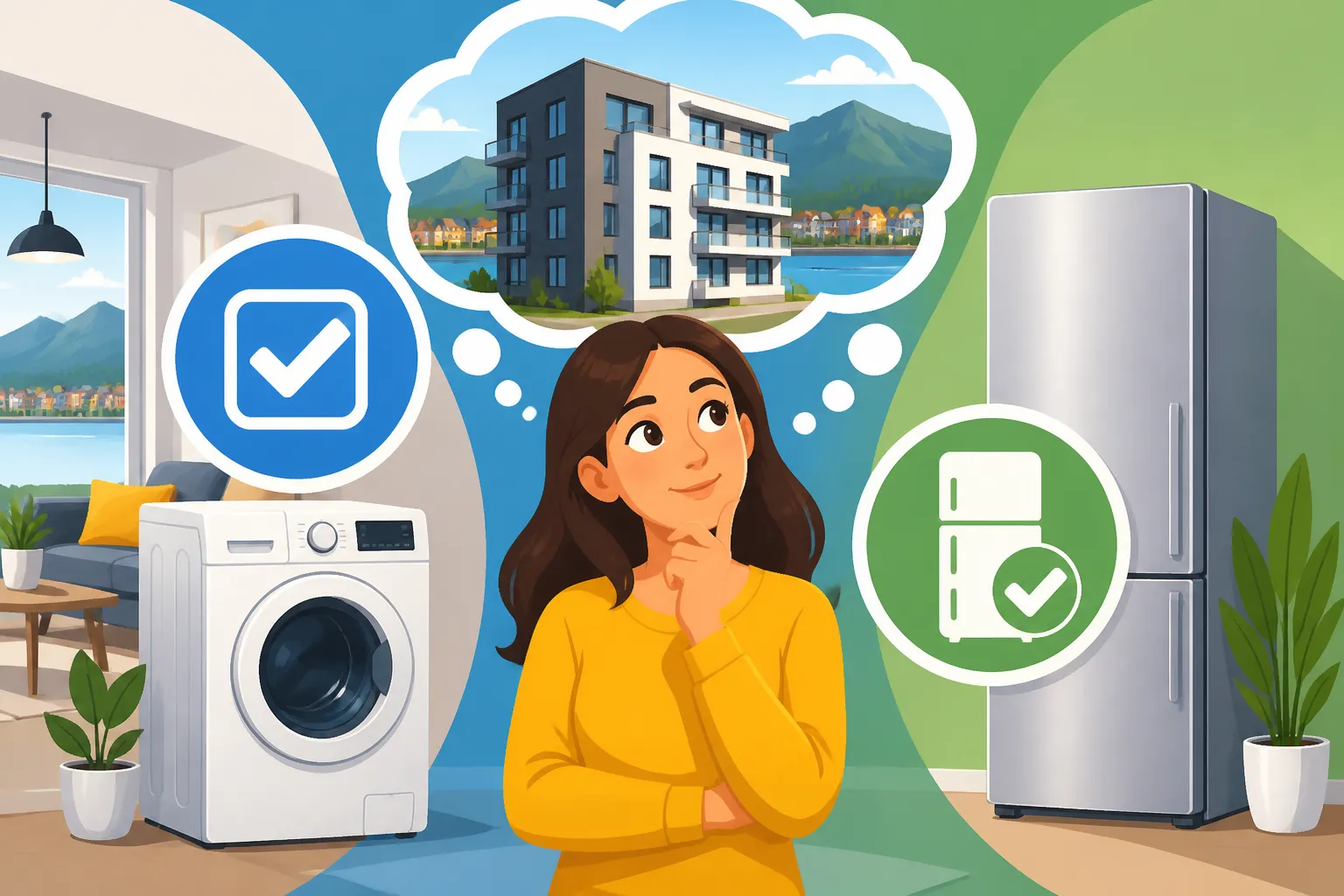
Moving to Norway is a whirlwind of bureaucracy and excitement, but nothing grounds that excitement faster than walking into your new apartment and realizing there is a gaping hole where the refrigerator should be. This guide explores the nuances of Norwegian appliance culture, helping you distinguish between different rental types so you aren't left washing socks in the bathtub or eating lukewarm milk while you wait for a delivery.
The Standard Expectations for White Goods in Norway
In the world of Norwegian real estate, appliances are collectively referred to as "hvitevarer" (literally: white goods). If you are coming from a country where every rental comes with a standard set of appliances, the Norwegian market might feel like a bit of a gamble. Generally, whether or not an apartment includes a fridge or washing machine depends heavily on the type of rental and the specific habits of the local market in cities like Oslo, Bergen, or Trondheim.
What is Unfurnished (Umøblert) Really Like
When you see the word "umøblert" on a listing, it generally means the previous tenant has cleared out their beds, sofas, and dining tables. However, in Norway, the kitchen is often a different story. Most modern apartments in Norway come with "integrated" appliances. This means the stove (komfyr) and the refrigerator (kjøleskap) are often built into the cabinetry. If you are Renting in Norway: Apartments, Contracts, and Tenant Rights, you should look specifically for the phrase "hvitevarer inkludert" (appliances included).
In older buildings, particularly those divided into smaller "hybel" units, you might find that the kitchen is bare. Some expats move into a beautiful 1920s flat in Frogner only to realize they needed to purchase their own freestanding fridge-freezer. It is a logistical nightmare to navigate narrow staircases with a heavy appliance on your first day. If the apartment is truly empty, you will need to budget not just for the purchase, but for the delivery and potential installation of these items.
The Dishwasher Debate
The dishwasher (oppvaskmaskin) is the most frequent "maybe" in Norwegian rentals. While almost every kitchen will have a space for one, they are not always included in the base rent for older or cheaper properties. If the listing does not explicitly state that a dishwasher is included, do not assume it is there just because you see a gap under the counter.
When you are doing your initial research, perhaps using a platform like Spotahome to find mid-term housing that is more likely to be fully equipped, pay close attention to the kitchen photos. If you see a wooden panel that matches the cabinets, it is likely an integrated dishwasher. If you see a gaping hole with a water hose sticking out, you’re on your own. For those who find themselves in this position, Buying Appliances in Norway: Elkjøp vs Power Warranties will be your next logical step to understand where to source a reliable replacement.
The Laundry Situation: In-unit vs. Shared Basement
This is perhaps the biggest cultural shock for many foreigners moving to the Nordics. The presence of a washing machine (vaskemaskin) is far from guaranteed inside the actual apartment. Norway has a long-standing tradition of "fellesvaskeri" or shared laundry rooms.
Understanding the Fellesvaskeri Culture
If you are renting in an older "borettslag" (housing cooperative) or an apartment block from the 1950s–1970s, there is a high probability you will be using a shared basement laundry. These rooms are usually equipped with heavy-duty professional machines and dryers. You will often find a booking board where you must pin your "vaskelapp" or sign up for a specific time slot.
The social rules here are strict. If you overstay your time by ten minutes, you might find your wet laundry sitting in a pile on top of the machine and a very sternly worded anonymous note left on the door. It sounds intimidating, but it is actually a great way to save on your Electricity Bills in Norway: Spot Prices, Grid Fees (Nettleie), and Support, as the cost of running these heavy-duty machines is often covered by the building's shared costs or managed through a small monthly fee.
In-Unit Laundry Connections
In newer developments, having a washing machine in the bathroom (yes, they are almost always in the bathroom, not the kitchen) is the standard. However, "hvitevarer" in a listing often refers only to the kitchen. You might find a bathroom with the necessary plumbing and a dedicated power outlet, but no actual machine.
If you have to buy your own, remember that Norwegian bathrooms often have a "våtromsinnredning" (wet room standard). This means the floor is sloped toward a drain. You will need to ensure your machine is leveled correctly, or it will "walk" across the bathroom floor during the spin cycle, potentially damaging the tiles. If you are struggling to communicate with a landlord about these specifics, using an eSIM from Airalo ensures you have the data needed to translate technical terms or look up plumbing diagrams on the fly while you are touring properties.
Decoding Rental Listings on Finn.no and Hybel.no
The vast majority of your housing search will take place on one specific site. To master it, you should read a Finn.no Masterclass: How to Navigate Norway’s Biggest Housing Site. When looking at the "Fasiliteter" (Facilities) section of a listing, you need to be eagle-eyed about the specific appliances listed.
Common Phrases for Appliances (Hvitevarer)
| Norwegian Term | English Meaning | Expat Context |
|---|---|---|
| Inkludert hvitevarer | Appliances included | Usually means fridge, stove, and sometimes dishwasher. |
| Delvis møblert | Partially furnished | May include the big kitchen items but rarely the washing machine. |
| Kun integrerte hvitevarer | Only integrated appliances | The fridge and stove are part of the kitchen, but no extras. |
| Opplegg for vaskemaskin | Hookup for washing machine | There is a pipe and a plug, but you must bring the machine. |
| Fellesvaskeri | Shared laundry | You must go to the basement or a separate building to wash clothes. |
Questions to Ask Your Landlord Before Signing
Never sign a contract without confirming the status of the "hvitevarer." I have heard stories of tenants who assumed the beautiful Smeg fridge in the photos stayed with the apartment, only to find the landlord took it with them because it was a "personal item."
Specific questions you should ask:
- Is the washing machine in the unit included in the monthly rent?
- If the dishwasher breaks, is the landlord responsible for the repair or replacement?
- Does the refrigerator have a freezer compartment (fryser), or is it just a "kjøleskap"?
- Are there any specific rules for using the shared laundry facility?
Checking these details is as important as verifying your Security Deposits (Depositumskonto): How to Protect Your Money in Norway, as an unexpected 10,000 NOK bill for a new washer-dryer combo can ruin your first month's budget.
Buying vs. Renting Your Appliances
If you find the perfect apartment but it’s missing a fridge or a washer, don't despair. You have several options that range from "cheap and cheerful" to "expensive but permanent."
Navigating the Second-hand Market
Norway has a massive culture of "gjenbruk" (reuse). Because people move frequently and apartments have different configurations, there is a constant flow of high-quality appliances on the "Torget" section of Finn.no. You can often find a perfectly functional washing machine for 500 to 1,500 NOK.
The challenge here is transport. Unless you have a car with a trailer or a very large van, getting a fridge across town is difficult and expensive. There are "man with a van" services advertised on Finn, but they can cost as much as the appliance itself. For smaller items, you might want to check out Used Furniture: Navigating the "Torget" Section on Finn.no to see how to handle the logistics of picking up second-hand goods.
Buying New and Installation Logistics
If you decide to buy new from a retailer like Elkjøp or Power, always pay for the "innbæring og montering" (delivery and installation). Norwegian plumbing can be finicky, and if you install a dishwasher yourself and it leaks, you could be liable for massive water damage to the floor below.
Furthermore, ensure your Setting Up Utilities: Electricity, Heating, Internet, and Mobile Plans is handled before the delivery. Modern smart appliances often require a Wi-Fi connection for full functionality, and having your Airalo connection active can help you set up these devices if your home fiber hasn't been activated yet.
Utilities and Technical Requirements
Before you go out and buy the biggest American-style fridge-freezer you can find, you need to consider the constraints of Norwegian architecture.
Power Outlets and Voltage
Norway uses the standard European Type F "Schuko" plugs and a 230V system. If you are moving from North America, do not try to bring your appliances with you. Not only is the voltage different, but the physical size of US appliances rarely fits into Norwegian kitchen slots. A standard Norwegian dishwasher or washing machine is usually 60cm wide. Anything larger will simply not fit in the "opplegg" (hookup) provided.
Water Pressure and Safety Valves
Norwegian law is very strict regarding water safety in apartments. Most modern kitchens require a "lekkasjesikring" (leak protection) valve, also known as a "Waterguard." This is a sensor placed under the dishwasher or fridge (if it has an ice maker) that automatically shuts off the water if a leak is detected. If you are bringing your own machine into a rental, the landlord might insist that a professional plumber performs the installation to ensure the Waterguard is correctly configured.
Dealing with Breakages and Repairs
Once you are settled in, the question of maintenance becomes paramount. If your fridge stops cooling in the middle of a Norwegian summer, who is on the hook for the repair bill?
Who Pays? Tenant vs. Landlord Rights
According to the Norwegian Tenancy Act (Husleieloven), the responsibility depends on what is written in your contract. If the appliances are explicitly included in the lease, the landlord is generally responsible for maintenance resulting from "ordinary wear and tear."
However, if you break the handle off the washing machine because you overloaded it, that’s on you. Many expats find it helpful to have an "innboforsikring" (home contents insurance) that covers accidental damage to appliances. If you find yourself in a dispute with your landlord over a broken stove, you may need to look into Patient Rights: How to File a Complaint with the Health Authority—though that's for medical issues, the principle of knowing your legal standing remains. For housing disputes, the Husleietvistutvalget (HTU) is the body that handles mediation.
Final Logistics Before You Move In
If you are currently abroad and trying to secure a place, using a service like Spotahome can mitigate the risk of "no-appliance surprises" because their listings are verified and often come with detailed video tours showing exactly what is in the kitchen.
If you are already on the ground, make sure your phone is charged and you have a local number or a reliable roaming solution like Airalo to coordinate with delivery drivers. Many delivery companies in Norway will call you 30 minutes before arrival, and if you don't answer, they will simply drive to the next job, leaving you without a fridge for another week.
Finally, don't forget to register your move with the Filing Your Tax Return (Skatteetaten) and update your address in the National Registry so that any warranties or service contracts for your new appliances are linked to the correct residence.
Disclaimer
The information provided in this guide is for general informational purposes only and does not constitute legal or professional advice. Rental standards and laws in Norway can change, and individual lease agreements may contain specific clauses that override general practices. Always read your rental contract thoroughly and consult with a legal professional or the Norwegian Tenants’ Association (Leieboerforeningen) if you have specific concerns about your housing situation.