Daycare (Barnehage) Application Process: Deadlines and Max Prices
Moving to Norway with a toddler can feel like a high-stakes puzzle, especially when you realize that securing a spot in a "barnehage" (daycare) is tied to strict annual deadlines. This guide breaks down the application timeline, explains the national "makspris" (maximum price) system, and offers veteran advice on how to navigate the municipal bureaucracy so your child can start their Norwegian journey on the right foot.
The Complexity of the Norwegian Barnehage System
The Norwegian daycare system, known as barnehage, is a cornerstone of the country's social model. Unlike many other countries where childcare is a private luxury, barnehage in Norway is considered the first stage of the education system. It is heavily subsidized by the government, ensuring that every child has the right to a high-quality environment regardless of their parents' income. However, the system is highly regulated, and understanding the nuances of how these centers operate is the first step toward a successful integration.
One of the first things you will notice is the distinction between public and private barnehages. While "public" means the municipality owns the building and employs the staff, and "private" means a foundation, company, or group of parents owns it, both types are funded by the same pool of taxpayer money. This means the cost to you, the parent, is essentially the same. Private barnehages might have specific pedagogical focuses—such as Steiner, Montessori, or an emphasis on outdoor life—but they must follow the same national curriculum as public ones. If you are transitioning from the Maternity and Paternity Leave (Foreldrepenger) Explained for Expats period, the jump into barnehage is the most significant milestone in your family's Norwegian life.
The system is designed to support the work-life balance that Norway is famous for. Most centers open around 07:30 and close between 16:30 and 17:00. This schedule is strictly adhered to; picking up your child late is not just frowned upon, it is often met with a fine or a very stern conversation. The culture inside the barnehage focuses heavily on social play, independence, and emotional development rather than rigid academic learning in the early years. It is a place where children learn how to be part of a community, and for expat children, it is the primary venue for learning the Norwegian language.
Navigating the High-Stakes Application Deadline
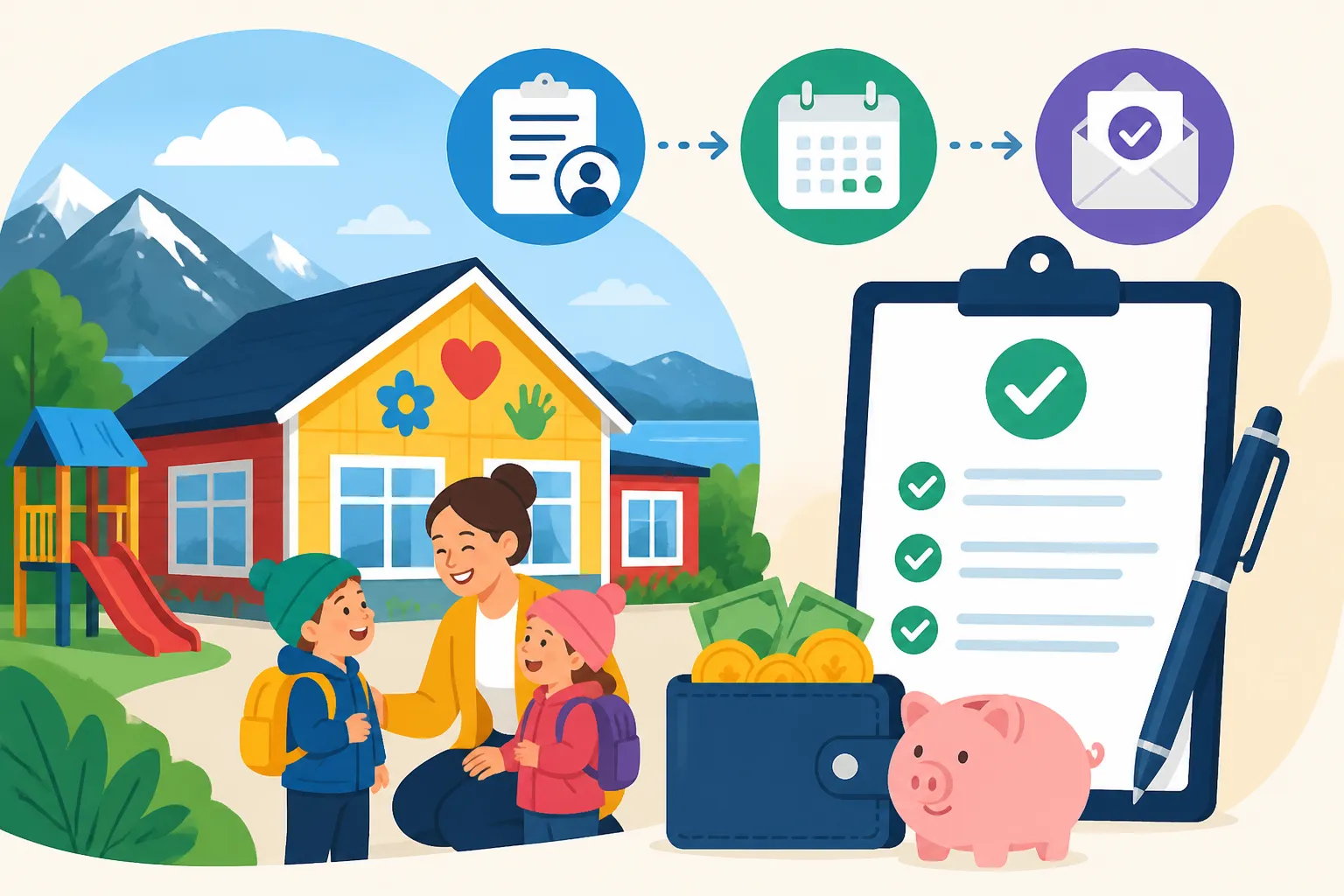
The most critical date in the Norwegian parenting calendar is March 1st. This is the deadline for the "hovedopptak" or main intake. If you want your child to start daycare in August, when the new school year begins, you must have your application submitted by this date. This applies to both public and private centers. Missing this deadline often means you are relegated to the "supplementary intake," where you only get a spot if someone else moves away or declines their offer. For many expats arriving in the middle of the year, this can be a source of immense stress.
To apply, you generally need to have a Norwegian personal identification number (fødselsnummer) or at least a D-number. This is where many newcomers get stuck. You cannot easily access the municipal application portals without BankID. If you are still waiting for your ID number, you may need to contact the municipality (kommune) directly to submit a manual application. In these early stages of relocation, staying connected is vital. Using a service like Airalo to ensure you have local data immediately upon arrival allows you to manage these urgent administrative tasks and stay on top of emails from the municipality while you are still setting up your home.
The "Right to a Place" (Rett til plass) is a legal guarantee, but it comes with conditions. To be guaranteed a spot in the August intake, your child must be at least one year old by the end of November of that year. If your child turns one in December, the municipality is technically not obligated to give you a spot until the following August, though many still try to accommodate. This gap is often filled by parents taking extra unpaid leave or using the Cash-for-Care Benefit (Kontantstøtte): Who Qualifies in Norway? to hire a private "dagmamma" (nanny). When you are looking for a permanent home through Spotahome, it is wise to research the barnehage coverage in that specific district, as some areas of Oslo or Bergen have much longer waiting lists than others.
Cost Analysis: Understanding Makspris and Subsidies
Norway has a "makspris" or maximum price policy for daycare, ensuring that costs never exceed a certain threshold set by the national government. For 2024 and 2025, the government has significantly lowered these prices to ease the cost of living for families. As of late 2024, the national maximum price is 2,000 NOK per month, though in some of the most rural municipalities, it has been lowered to 1,500 NOK. This is a staggering difference compared to the costs in the US, UK, or other parts of Europe, making Norway an incredibly attractive place for young families.
In addition to the base fee, you will also pay a "kostpenger" or food fee. This covers the meals provided by the barnehage. Some centers provide three hot meals a day, while others provide only milk and fruit, requiring you to pack a "matpakke" (lunch box). The food fee usually ranges from 200 NOK to 800 NOK depending on the level of service. If you have multiple children in barnehage at the same time, you are entitled to a sibling discount (søskenmoderasjon). The second child typically receives a 30% discount, and the third child and any subsequent children are often free.
For families with lower incomes, there are additional subsidies available. If the total household income is below a certain threshold, you can apply for a reduced parental fee so that the barnehage cost never exceeds 6% of your income. Furthermore, many children aged two to five are entitled to "gratis kjernetid" or free core hours, which amounts to 20 hours of free daycare per week. To manage these payments and ensure you are receiving the right benefits, having your financial identity sorted is essential. Understanding BankID Explained: Norway's Digital Identity System and Expat Challenges is crucial because all subsidy applications are processed through these digital portals.
| Feature | Public Barnehage | Private Barnehage |
|---|---|---|
| Monthly Base Cost | Max 2,000 NOK (set by law) | Max 2,000 NOK (set by law) |
| Admissions | Handled by Municipality | Handled by Municipality |
| Pedagogical Focus | Standard National Curriculum | Standard + Specialization (e.g., Steiner) |
| Sibling Discount | Mandatory (30% for 2nd child) | Mandatory (30% for 2nd child) |
| Operating Hours | Usually 07:30 – 17:00 | Varies (sometimes slightly longer) |
| Food Service | Varies by municipality | Varies (often more extensive) |
The Application Portal Step-by-Step
The application process is handled through a centralized portal for each municipality, known as "Samordnet opptak." This means you fill out one form and list your top choices in order of preference. In Oslo, for example, you can list up to five different barnehages. The ranking is critical; if you are offered a spot in your first choice, you are removed from all other lists. If you are offered a spot in your third choice, you can accept it but remain on the waiting list for your first and second choices.
Ranking your choices requires strategy. It is not just about which building looks the nicest. You should visit the centers during their "open day" events, usually held in January or February. Ask about their outdoor play policies and how they handle the integration of non-Norwegian speaking children. If you find a home through Spotahome in a neighborhood you love, walk around the local barnehages at pick-up time to see the vibe. Once you have your list, use your BankID to log in and submit the application before the March 1st deadline. If you are moving from abroad and don't have BankID yet, Airalo can help you stay in constant communication with the municipal "Opptakskontor" (admissions office) to ensure they receive your manual paperwork.
After submitting, you will receive an offer via the portal, usually between March and May. You will have a short window—often only five to eight days—to accept or decline. If you decline an offer of a spot in the municipality where you live, you technically lose your "Right to a Place" for that year, and you may end up without any childcare at all. It is almost always better to accept an offer and then apply for a transfer later if you are unhappy with the location.
Practical Realities for New Arrivals
For expats arriving in October or January, the "Right to a Place" feels like a distant dream. If you arrive mid-year, you are entering the "supplerende opptak" (supplementary intake). This is a much more difficult process. You must still apply through the portal, but your chances of getting a spot depend entirely on a child leaving a center. In popular areas of major cities, the wait can be several months. This is a common frustration that many veteran expats have faced, and it requires a mix of patience and proactivity.
During this waiting period, many parents utilize "Åpen Barnehage" (Open Daycare). These are drop-in centers where you stay with your child. They are often run by churches or the municipality and are a fantastic way to meet other parents and get your child accustomed to the Norwegian social environment. It is also the perfect time to ensure you have applied for Child Benefit (Barnetrygd): Applying via NAV as a Foreign Worker, which provides a monthly stipend that can help offset the costs of private childcare or the loss of income if you are staying home longer than planned.
Another reality is the "priority groups." Children with disabilities, those in the care of child protective services, or those with specific social needs are moved to the front of the line. Some private barnehages also have their own priority rules—for example, giving preference to children of employees of a certain company or members of a specific organization. Always read the "vedtekter" (bylaws) of the private centers on your list to see if you might qualify for priority.
Everyday Life in a Norwegian Barnehage
Once your child is in, the real cultural immersion begins. The most famous Norwegian saying, "There is no such thing as bad weather, only bad clothing," is the fundamental law of the barnehage. Your child will be outside for several hours every day, even in rain, snow, or sub-zero temperatures. This requires a significant investment in high-quality gear. You will need a "vogn" (stroller) for napping outside, as most Norwegian toddlers nap outdoors in their strollers until they are three years old.
The gear list can be overwhelming for a newcomer. You will need layers of wool, a waterproof rain suit (regntøy), a durable "parkdress" for dry but cold days, and a heavy winter suit. Don't forget the specialized boots for different seasons. Reading up on Surviving the Norwegian Winter: Clothing, Heating, and Mørketid (Dark Season) and Wool Underwear (Ullundertøy): Why Norwegians Insist You Wear It will save you from the embarrassment of a teacher telling you your child is under-dressed. Most barnehages have a "garderobe" where each child has their own cubby; you are responsible for keeping it stocked with dry spare clothes.
Food is another area of cultural significance. The "matpakke" usually consists of "brødskiver" (open-faced sandwiches) with simple toppings like brown cheese, ham, or liver pâté. Many barnehages have a policy against sugary foods, yogurt tubes, or elaborate lunches. It is about "kos" (coziness) and simplicity. If you are worried about the transition to school later, remember that the habits formed here will carry through to the SFO (Skolefritidsordning): After-School Care Costs and Sign-Up years.
Logistics and Transportation
How you get your child to barnehage is part of the daily rhythm. Most Norwegians prefer a center within walking distance of their home or on their route to work. In cities like Oslo, many parents use bike trailers or heavy-duty strollers. If the barnehage is further away, you will become very familiar with Public Transport in Oslo (Ruter): Zones, Tickets, and Monthly Passes. Note that strollers are usually free on buses and trams, but space is limited, so you may have to wait for the next one during rush hour.
Parking near barnehages in urban areas is notoriously difficult and expensive. If you are commuting by car, check the "henting og levering" (pick-up and drop-off) rules for the specific center. Some have a strict 15-minute limit. This logistics piece is why choosing the right neighborhood is so vital. Using Spotahome to find a residence that is centrally located to multiple childcare options can significantly reduce your daily stress levels.
The transition period, or "tilvenning," usually lasts three to five days. During this time, one parent is expected to be present with the child in the barnehage, gradually staying for shorter periods as the child becomes comfortable. Most Norwegian employers are very understanding of this and will give you paid or unpaid leave for these "tilvenning" days. It is a gentle start that respects the child's emotional needs, and it is a great way for you as a parent to see exactly how the daily routines work.
Disclaimer
The information provided in this guide is for informational purposes only and does not constitute legal or administrative advice. While every effort has been made to ensure the accuracy of the deadlines and prices for 2024–2026, municipal rules in Norway can change frequently. Always verify specific application requirements and dates with your local "kommune" or on the official Helsenorge and UDI websites. Your individual circumstances, such as visa status and residency history, may affect your eligibility for certain subsidies and placements.