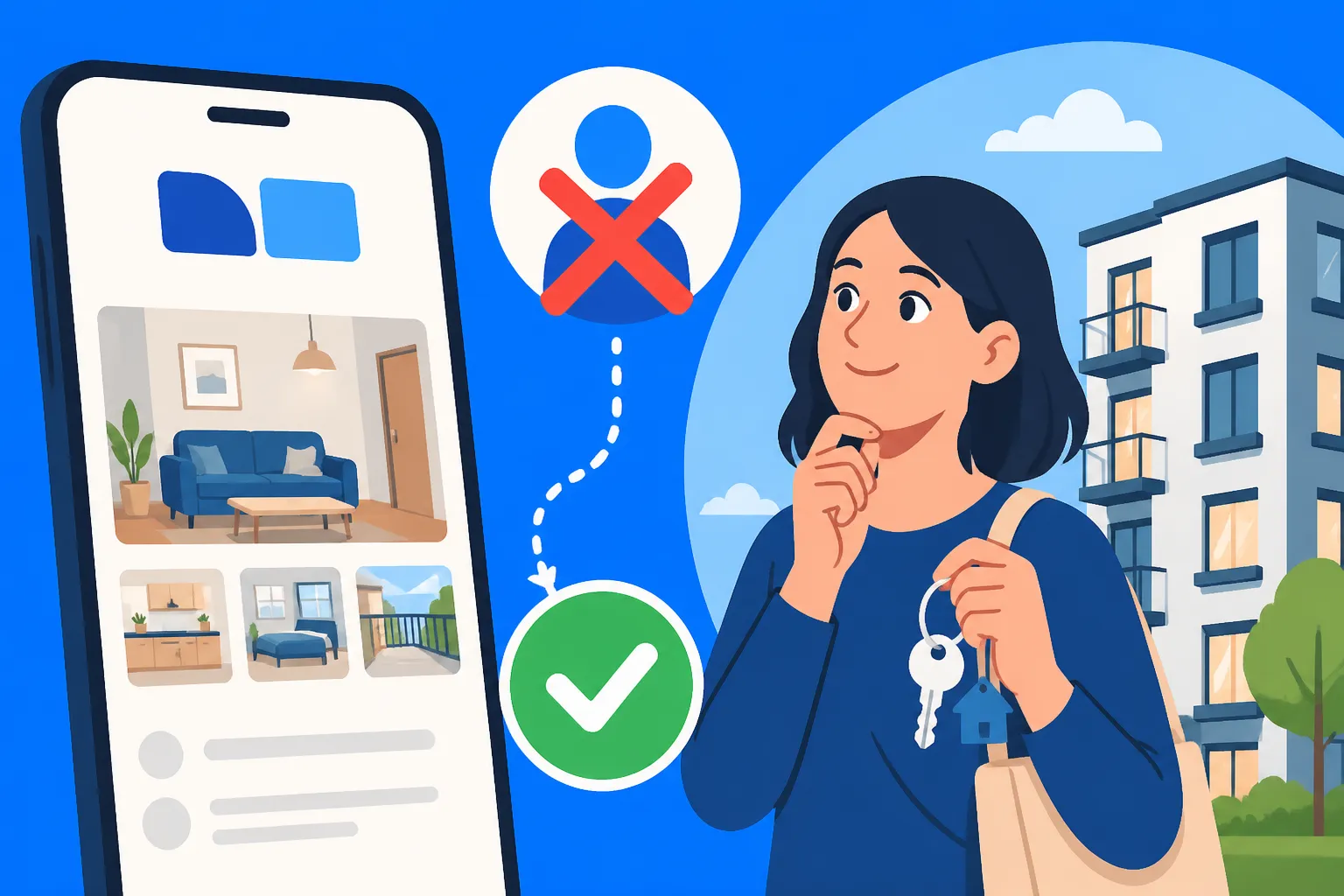
How to Rent an Apartment on Finn.no Without Having a BankID
Moving to Norway is an exhilarating adventure, but it often starts with a classic bureaucratic "Catch-22" that can leave you feeling stranded. You need an apartment to get your residence registered, but to rent that apartment on Finn.no, most landlords expect you to have BankID. This guide solves the riddle of securing housing before your digital identity is ready.
The BankID Catch-22: Why Newcomers Struggle with Finn.no
When you first land in Oslo, Bergen, or Stavanger, you are essentially a digital ghost. BankID is the backbone of Norwegian society, used for everything from logging into government portals to signing legally binding rental contracts. However, obtaining BankID requires a permanent national identity number (fødselsnummer), which can take several weeks or even months to process after your initial appointment at the Service Centre for Foreign Workers (SUA).
This creates a massive hurdle because Finn.no, the undisputed king of the Norwegian rental market, heavily integrates BankID for user verification. Landlords often filter their messages to prioritize "verified" users to avoid scams. If you don't have that little green checkmark next to your name, your inquiry might sit at the bottom of an inbox containing fifty other eager applicants. It is frustrating, and it feels like the system is designed to keep you out until you are already "in."
To navigate this, you must understand the distinction between your legal right to stay and your digital access. Even if you are here on a Skilled Worker Visa in Norway: Eligibility, Salary Thresholds, and Process, the lack of a digital signature doesn't mean you can't rent; it just means you have to work twice as hard to prove you are a legitimate, high-quality tenant. You are essentially asking a landlord to take a "manual" leap of faith in a country that has been almost entirely digital for a decade.
Understanding the Role of BankID in Norwegian Rentals
In the Norwegian rental market, BankID serves two primary purposes: identity verification and digital signing via platforms like Posten Signering or Scrive. When a landlord sees a verified profile, they know that the person’s name and national ID have been cross-referenced with a bank. For a local landlord, this is the ultimate peace of mind. Without it, they have no immediate way of knowing if "John Doe" is actually John Doe or a bot operating from another continent.
Furthermore, the standard rental process usually ends with a digital contract. If you cannot sign digitally, the landlord has to print a physical paper contract, meet you in person, and keep a hard copy. While this sounds normal in many countries, in Norway, it is seen as a tedious administrative burden. You aren't just fighting for an apartment; you are fighting against a culture that values extreme administrative efficiency. Understanding BankID Explained: Norway's Digital Identity System and Expat Challenges is the first step in realizing why landlords might seem hesitant when you tell them you don't have it yet.
The Waiting Game for the Fødselsnummer
The root of the problem lies in the timeline of the Norwegian Tax Administration (Skatteetaten). After you arrive, you must report your move to Norway. If you are an EU citizen, you follow the EU/EEA Citizens Moving to Norway: Registration Rules and Rights, whereas non-EU citizens must wait for their residence card. Only after these steps are finalized do you receive the 11-digit number required to open a bank account and, subsequently, get BankID.
During this gap—which can stretch to eight weeks during the busy summer months—you are in a state of "administrative limbo." You cannot easily set up a Depositumskonto (Security Deposit Account) because most banks require BankID to open one. This is the part that truly catches expats off guard. You might find a landlord willing to rent to you, but then you both hit a wall when trying to figure out where to put the deposit money safely.
Navigating Finn.no as a Digital Ghost
Despite the obstacles, Finn.no is still where 90% of the best apartments are listed. You cannot afford to ignore it. The trick is to treat your Finn.no profile like a professional CV rather than a social media account. Since you cannot verify your identity with a chip, you must verify it with transparency and documentation.
Start by filling out your profile completely. Upload a clear, professional photo—Norwegians value a clean-cut, reliable appearance. In your profile description, explicitly state your situation. Something like: "New professional recruit at [Company Name], currently awaiting final BankID activation but have full employment documentation and references." This immediately answers the "Why aren't they verified?" question before the landlord even asks it.
When browsing listings, look for the "BankID-verifisert" tag on the landlord's profile as well. It’s a two-way street; you want to ensure you aren't being scammed while you are in this vulnerable position. If you are struggling to even get a reply, check our Finn.no Masterclass: How to Navigate Norway’s Biggest Housing Site for deeper tips on how to use the "Saved Searches" and "Alerts" to be the first to message a listing.
Creating an Account and Messaging Landlords
You can create a Finn.no account using just an email address. You do not need a Norwegian phone number or BankID to browse or send messages. However, your message needs to be a "hook." Because you are unverified, your first message must be high-impact. Mention your job title, your duration of stay, and the fact that you are ready to pay the deposit and first month's rent immediately.
Avoid the "Is this still available?" trap. That message gets deleted instantly. Instead, provide a brief bio. Mention if you are a non-smoker, have no pets, and are a "quiet tenant." These are the magic words for Norwegian landlords. If you are moving for work, mention your employer. Landlords love the stability of a Skilled Worker Permit. If you can, offer to have a video call via WhatsApp or Zoom to "meet" them. Putting a face to the name builds the trust that BankID usually provides.
Proving Your Identity Without a Digital Key
Since you can't click a button to prove who you are, you need a "trust bundle." This should be a PDF or a cloud link (like Google Drive) that you can send to a landlord who shows interest. This bundle should include a scan of your passport, a copy of your signed employment contract (with the salary visible, as this proves you can afford the rent), and a copy of your Residence Permit approval from UDI.
If you have previous landlords from your home country who can provide a reference in English, include their contact details. While a Norwegian landlord might not call a number in New York or London, seeing that you have references available makes you look significantly more credible than the average "digital ghost." You are effectively building a manual verification system to bypass the digital requirement.
Communication Strategies to Win Over Landlords
In Norway, the "bidding war" isn't just for buying houses; it’s for renting them too, especially in cities like Oslo. When you don't have BankID, your communication must be flawless. You are fighting against the "Janteloven" culture—you need to be confident but humble. You want to appear as the "perfect neighbor" who will pay on time and never cause a noise complaint.
Landlords in Norway often manage their own properties, so they are looking for a personal connection. They aren't just looking for a tenant; they are looking for someone who will take care of their investment. If you are looking at Where to Live in Norway: Top Expat Neighborhoods in Oslo, Bergen, and Beyond, remember that in smaller, more residential areas, this personal touch is even more critical than in the high-turnover city centers.
The Perfect Introductory Message
Your first message should ideally be in Norwegian, but English is perfectly acceptable if it’s professional. Most Norwegians are fluent in English, but they appreciate the effort of a "Hei" and "Vennlig hilsen." Here is a breakdown of what to include:
- The Hook: "I am an engineer moving from Munich to work at Equinor."
- The Transparency: "I am currently in the final stages of my police registration and am happy to provide my employment contract and passport as ID since my BankID is still processing."
- The Reliability: "I am a non-smoker, don't have pets, and am looking for a long-term, stable home."
- The Call to Action: "I am available for a viewing (in person or via video) at your earliest convenience."
This structure covers all the bases and preemptively solves the landlord's concerns about your lack of BankID and your ability to pay.
Leveraging Your Employment Contract and References
Your employment contract is your most valuable asset during this transition. In the eyes of a Norwegian landlord, a contract from a reputable Norwegian company is almost as good as gold. It proves that you have passed a background check by a local firm and that you have a guaranteed income. If your company has an HR department, ask them if they can provide a "Letter of Intent" or a "Housing Guarantee."
Some larger companies in Norway actually provide a corporate guarantee for the deposit, which can bypass the need for a Depositumskonto entirely. This is a massive win for someone without BankID. Check with your employer to see if they offer this service for international recruits. If they do, mention this in your first sentence to the landlord—it removes 90% of the administrative friction.
| Verification Method | Without BankID (Expat) | With BankID (Local) |
|---|---|---|
| Identity Proof | Passport Scan + Employment Contract | Digital Verification Token |
| Contract Signing | Physical Paper / Ink Signature | Digital Signature (Posten/Scrive) |
| Security Deposit | Private Guarantee / Corporate Account | Standard Locked Depositumskonto |
| Background Check | International References / LinkedIn | National Credit Check (Bisnode) |
| Communication | Personal Outreach / Direct Email | Finn.no In-App Verified Messaging |
Alternative Housing Solutions for the BankID-less
If the "Finn.no grind" is proving too difficult, there are modern alternatives designed specifically for people in your situation. While Finn.no is the local favorite, international platforms have recognized the BankID hurdle and built systems to bypass it. This is often the smoothest route for your first 6 to 12 months in the country.
Using a platform like Spotahome can be a literal lifesaver. They act as the intermediary, verifying the properties themselves so you don't have to worry about scams. You can book and pay for your rental entirely online using a standard international credit card, and they don't require BankID or a Norwegian fødselsnummer to secure the lease. This allows you to have a confirmed address before you even step off the plane, which makes your First 30 Days Health Checklist: GP, Frikort, and Pharmacies much easier to manage.
International Rental Platforms
Platforms like Spotahome are becoming increasingly popular in Oslo and Bergen. They offer "mid-to-long term" rentals that are usually fully furnished, which is another bonus for new arrivals who don't want to deal with buying a bed and sofa in their first week. When you use these services, you are paying for the convenience of skipping the Norwegian bureaucratic queue.
The trade-off is often a slightly higher monthly rent or a booking fee, but when you factor in the cost of staying in an expensive hotel while hunting for a "BankID-compliant" landlord, the math usually favors the platform. It gives you a "base of operations" from which you can then apply for your BankID and eventually find a more permanent, long-term unfurnished flat on Finn.no a year later.
Facebook Groups and Local Networks
Facebook is surprisingly active for rentals in Norway. Groups like "Oslo Apartments/Rooms for Rent" or "Leilighet til leie i Bergen" are filled with people looking for sub-letters or roommates. Because these are often peer-to-peer interactions, the requirement for BankID is much less strict. A student or a young professional looking for a roommate is much more likely to accept a passport and a friendly face than a commercial property manager.
However, be extremely cautious. Facebook is also the primary breeding ground for Rental Scams in Norway: How to Spot Fake Listings on Hybel.no. Never send money via wire transfer before seeing the place or having a trusted friend visit it. If a deal looks too good to be true—like a 2-bedroom flat in Majorstuen for 8,000 NOK—it is 100% a scam.
Logistics of the Lease Without BankID
Once you’ve found a landlord willing to work with you, the next challenge is the paperwork. Since you cannot sign via the standard digital portals, you will have to go "old school." You must insist on a written contract. Never, under any circumstances, agree to a "handshake deal" in Norway. You need a contract to register your address with the National Registry (Folkeregisteret), which is essential for your tax card.
The contract should be based on the standard template from the Norwegian Renters' Association (Leieboerforeningen). Most landlords use this anyway. If they offer you a contract only in Norwegian, use a professional translation tool or ask a colleague to look it over. You need to understand the Tenant Protections: Notice Periods and Eviction Rules in Norway before you put pen to paper.
Physical Signatures and Paper Contracts
A physical signature is just as legally binding as a digital one in Norway; it’s just less common. You should meet the landlord in person at the property. This is your "Overtakelse" (handover) day. Walk through the apartment together and take photos of any existing damage—scratches on the floor, marks on the walls, or issues with appliances. This is vital for getting your deposit back later.
Ensure the contract clearly states the terms for the Security Deposits (Depositumskonto): How to Protect Your Money in Norway. Since you likely won't have the BankID to open a standard account yet, you may need to agree on a temporary solution. Some landlords will allow you to use a "Deposit Guarantee" (Depositumsgaranti) which you can purchase from an insurance company, though this is a non-refundable fee.
Managing the Deposit Hurdles
The biggest "illegal" request landlords make is asking you to transfer the deposit directly to their personal bank account. Never do this. In Norway, the law is very strict: the deposit must be in a separate, locked account in the tenant's name, but the landlord pays the setup fee. If the landlord insists on a private transfer, it’s a massive red flag.
If you don't have BankID yet, you can suggest a "triple-signed" paper agreement at a physical bank branch, though many banks are phasing this out. Alternatively, you can use your employer as an intermediary. Many expats find that by the time they've settled on a place, they are only a week or two away from getting their ID number. You can ask the landlord to sign the intent to lease, and you can move in after the deposit is properly secured once your BankID arrives.
Staying Connected and Settling In
While you are fighting the housing battle, you cannot afford to be offline. You need data to navigate Google Maps to viewings, to respond to Finn.no messages instantly, and to translate Norwegian rental terms on the fly. Getting a local SIM card also usually requires a D-number or BankID, which brings us back to our original problem.
This is where Airalo becomes an essential part of your expat toolkit. You can download an eSIM before you even land in Norway, giving you immediate access to local data networks like Telenor or Telia. Having a working data connection from the moment you land means you can be the first to reply to a new listing on Finn.no while you are still standing in the arrivals hall at Gardermoen. It removes the stress of hunting for public Wi-Fi just to check your inbox.
Mobile Connectivity for the New Arrival
Using Airalo allows you to keep your home country number active for 2FA (Two-Factor Authentication) texts—which you will need for your initial bank setups—while using cheap local data for your housing search. Once you finally get your Fødselsnummer, you can then switch to a permanent contract with a provider like Talkmore or Ice. But for those first critical weeks, an eSIM is the most efficient way to stay "digitally alive" without the paperwork.
Once you have your data sorted, make sure to download the Ruter app for Oslo public transport or the equivalent for your city. Being late to an apartment viewing is a surefire way to lose the place. Norwegians value punctuality above almost everything else. If a viewing is at 17:00, being there at 16:55 is "on time," and 17:05 is "late."
The First 30 Days Checklist
To keep your sanity, break your move down into a checklist. Your housing search is the priority, but it’s part of a larger ecosystem.
- Days 1-3: Land, activate your Airalo eSIM, and visit the SUA office for your ID check.
- Days 4-10: Send at least 5-10 tailored messages on Finn.no per day. Use the "trust bundle" PDF.
- Days 11-20: Attend viewings. If Finn.no fails, book a mid-term stay on Spotahome to bridge the gap.
- Days 21-30: Sign your lease (physical or digital), report your address to the Folkeregisteret, and begin the final wait for your BankID.
By following this structured approach, you turn an overwhelming bureaucratic mess into a series of manageable tasks. You can find a home in Norway without BankID; you just need the right tools and a bit of "is i magen" (ice in your stomach)—the Norwegian expression for staying cool under pressure.
Disclaimer
This guide is for informational purposes only and does not constitute legal or financial advice. The Norwegian rental market and immigration regulations are subject to change. Always verify the latest requirements on the official UDI and Skatteetaten websites. The author is an expat sharing personal experiences and research, not a licensed relocation agent or legal professional. While we strive for accuracy, we cannot guarantee that every landlord or bank will accept the workarounds mentioned. Use caution and due diligence when entering into any financial or housing agreement in a foreign country.