Pharmacies and Prescriptions in Norway: White vs Blue Slips
Standing at the pharmacy counter in Oslo or Bergen for the first time can feel like a test you didn't study for. I remember my first winter here, clutching a digital prescription and wondering why the pharmacist was asking me about "blue slips" when I hadn't seen a single piece of blue paper. This guide demystifies the Norwegian prescription system, helping you understand costs, subsidies, and how to navigate the "Apotek" like a local.
Navigating the Norwegian Apotek System
The first thing you will notice about pharmacies in Norway—known locally as an Apotek—is that they are everywhere, yet they operate under very strict regulations. Unlike in some countries where a pharmacy feels like a mini-supermarket, a Norwegian Apotek is a highly clinical environment. There are three major chains you will encounter: Apotek 1, Vitusapotek, and Boots Apotek. While they look different, they all access the same centralized electronic database for your prescriptions.
When you walk into an Apotek, you usually need to take a numbered ticket from a small kiosk near the entrance. Don't just stand in line; the pharmacists will ignore you until your number flashes on the screen. I learned this the hard way after standing awkwardly behind a shelf of orthopedic shoes for fifteen minutes. Once your number is called, you provide your birth number (fødselsnummer) or D-number and a form of ID. The pharmacist then pulls up your "e-resept" (electronic prescription) from the national system.
The role of the pharmacist in Norway is much more advisory than in many other nations. They are legally required to ensure you understand how to take your medication. They will often ask if you have used the drug before and may offer a generic version of the medication. This brings us to a crucial point: the Norwegian government heavily encourages the use of generic alternatives to keep costs down. If your doctor hasn't specifically ticked a box saying "no substitution," the pharmacist will offer you the cheapest version available.
Digital integration is the backbone of the system. Everything is linked to your BankID, which allows you to see your active prescriptions on the Helsenorge portal. If you are still waiting for your permanent ID number, the process is slightly more manual, and you may need to carry physical printouts provided by your doctor. For those who are just arriving and haven't yet integrated into the Folketrygden Basics: Who is Covered by the National Insurance Scheme, navigating these digital hurdles can be the most frustrating part of your first month.
Understanding Blue Prescriptions (Blå Resept)
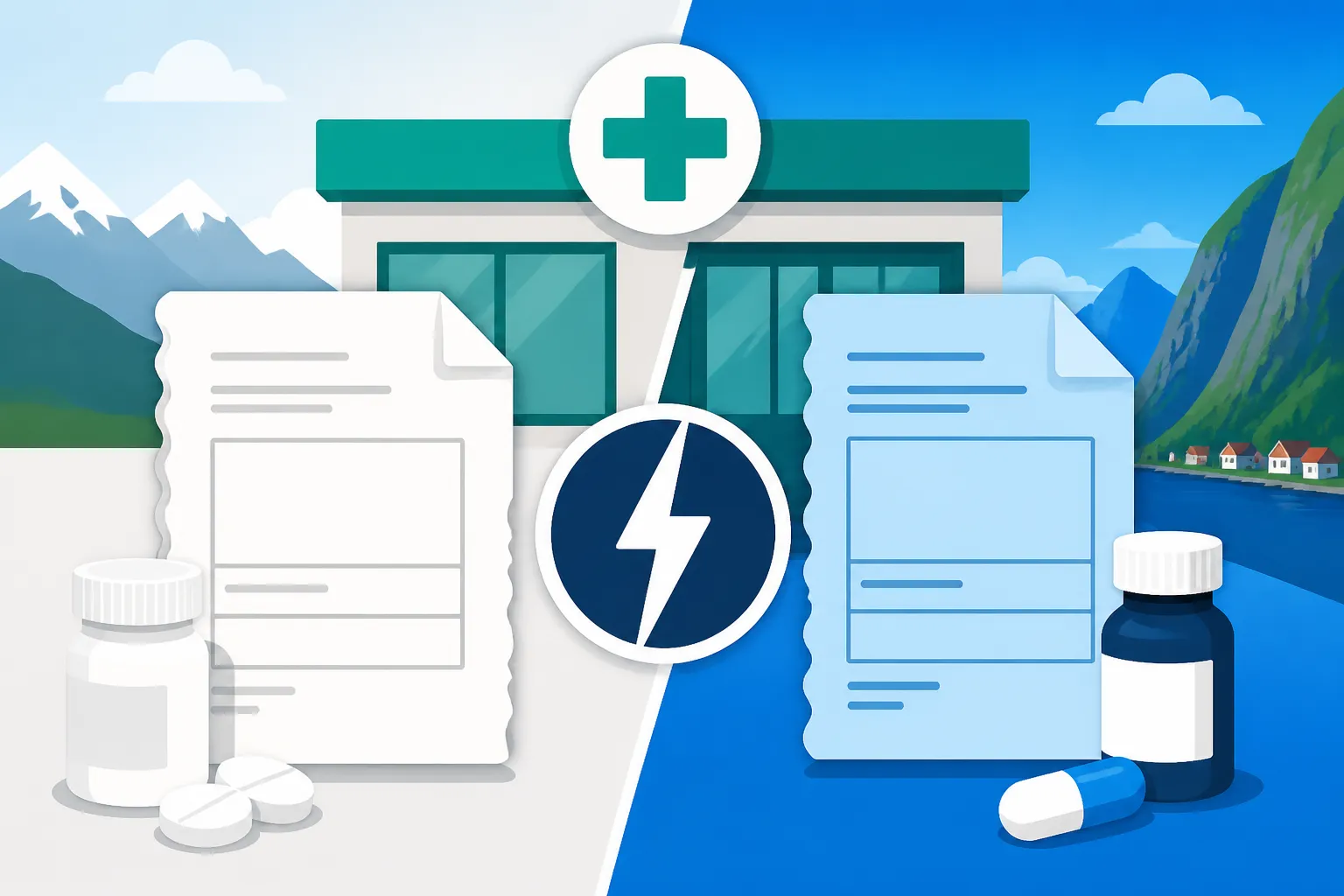
The "Blue Prescription" or blå resept is the holy grail of the Norwegian healthcare system for anyone with a long-term illness. It isn't actually a blue piece of paper anymore; it is a classification in the electronic system. A blue prescription means the government, through Helfo, covers a significant portion of the cost of your medication. This is reserved for chronic conditions where you need the medication for at least three months out of the year.
To get a blue prescription, your doctor must determine that your condition meets specific criteria set by the Norwegian Medicines Agency. Common conditions covered include asthma, diabetes, cardiovascular disease, and certain mental health conditions. I remember the relief I felt when my maintenance meds were moved to a blue slip; the cost dropped from several hundred kroner to a small fraction of that. You can read more about the specifics in our guide on Blue Prescriptions (Blå Resept): Subsidized Medication for Chronic Illness.
The way the subsidy works is based on a co-payment system. As of 2026, you generally pay 39% of the cost of the prescription, but there is a cap on how much you pay per prescription. This amount also counts toward your annual "frikort" limit. If you have reached your deductible limit for the year, the medication becomes completely free. This is why it is so important to ensure your The Fastlege Scheme: Navigating Norway’s GP System has correctly coded your prescription as "blue" in the system.
One nuance that often trips up expats is the "Paragraph 2" vs. "Paragraph 3" distinction. Paragraph 2 covers most chronic illnesses, while Paragraph 3 covers infectious diseases that are considered a threat to public health (like HIV or certain types of hepatitis). For Paragraph 3 medications, there is often no co-payment at all, making the medicine free from the first dose. If you find yourself confused by the billing, always ask the pharmacist to explain which "paragraph" your medicine falls under.
Understanding White Prescriptions (Hvit Resept)
A "White Prescription" or hvit resept is used for medications intended for short-term use or those that don't fall under the government's subsidy list. Think of antibiotics for a one-time infection, painkillers for a temporary injury, or lifestyle medications. On a white prescription, you are responsible for the full cost of the medication. There is no automatic subsidy, and these costs do not usually count toward your frikort limit.
There is a silver lining, however. If you find yourself spending a significant amount of money on white prescription drugs for a specific condition, you can sometimes apply for a retrospective refund from Helfo. This usually requires that your total expenses exceed a certain threshold (around 2,000 NOK in a calendar year) and that the medication is being used for a semi-chronic purpose. It is a bit of a paperwork battle, but it is worth it if you are managing a condition that doesn't quite meet the "blue" criteria.
Another common use for white prescriptions is for hormonal contraceptives for women between the ages of 16 and 22. While these are "white," the government provides a direct subsidy at the point of sale that often makes them free or very cheap for young adults. For those outside this age range, birth control remains a white prescription item. You can find more details on this in our article on White Prescriptions (Hvit Resept): Paying Out-of-Pocket for Medicine.
Expats often wonder why their doctor gave them a white slip for something that seems like it should be covered. Sometimes, it’s simply because the doctor needs to apply for a "special exemption" to get it covered on the blue scheme. This can take a few weeks to process. During that transition, you might have to pay for a white prescription. If you are using a provider like Cigna Global, you might be able to claim these out-of-pocket costs back through your private insurance, even if the Norwegian state won't cover them.
The Frikort and Healthcare Budgeting
The "Frikort" or exemption card is one of the best features of living in Norway, but it requires some initial spending to activate. In 2026, the limit is typically set around 3,100 to 3,200 NOK. Once you have spent this amount on "approved" medical expenses—which includes GP visits, lab tests, and co-payments for blue prescriptions—you receive an exemption card. From that moment until December 31st of that year, all further approved expenses are 100% covered by the state.
The beauty of the modern system is that you don't have to "apply" for the card anymore. It is all automated via your birth number. Once you hit the limit, Helsenorge sends you a digital notification, and your status is updated in the pharmacy's computer system. I remember the first year I hit my limit in July; for the rest of the year, walking into the pharmacy felt like I had a magic "get out of jail free" card. You can track your progress toward this limit by Understanding the Frikort: The 2026 Healthcare Exemption Card Limit.
It is vital to understand what does not count toward the frikort. White prescriptions, dental care for adults, and cosmetic treatments are excluded. This is a major reason why many expats choose to supplement their public coverage. If you are moving here and have pre-existing conditions that require expensive non-subsidized meds, looking into Private Health Insurance in Norway: Is It Worth the Extra Cost? might save you a significant amount of money in the long run.
Budgeting for your first few months in Norway is tricky because you are essentially "front-loading" your healthcare costs. You will pay full price for GP visits and co-payments for your meds until you hit that magic threshold. If you arrive in November, you'll likely pay the full amount only to have the clock reset on January 1st. It’s a quirk of the system that catches many newcomers off guard. Always keep a buffer in your Healthcare Budgeting: The Frikort Exemption Card and User Fees for these initial out-of-pocket months.
Over-the-Counter (OTC) Drugs and Supermarket Rules
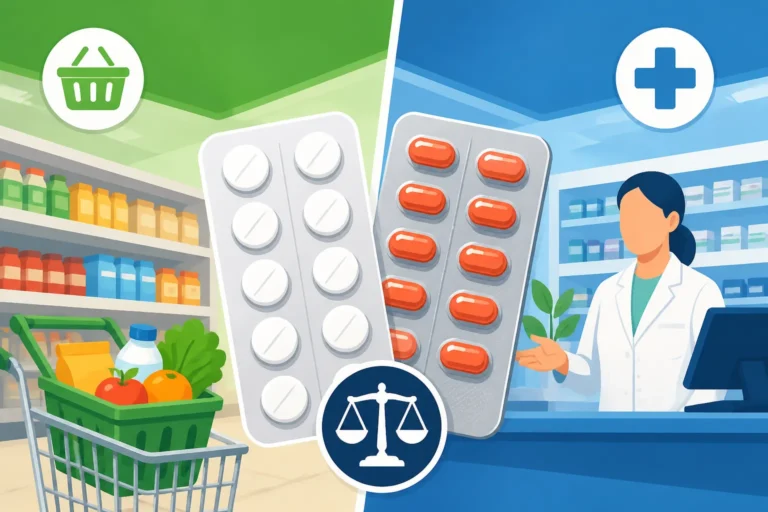
Norway has a very conservative approach to over-the-counter medications. You will not find massive bottles of 500-count Ibuprofen here. In fact, you can only buy small packs of Paracetamol (Paracet) or Ibuprofen (Ibux) in supermarkets, and even then, there is a strict "one pack per person" rule. If you look like you're trying to stock up, the cashier will politely but firmly tell you it's not allowed.
The range of drugs available in a grocery store (like Kiwi or Rema 1000) is limited to the absolute basics: nasal sprays, some cough syrups, and basic painkillers. For anything slightly more specialized, such as stronger allergy meds or certain digestive aids, you must go to an Apotek. The pharmacists there keep these "behind the counter," meaning you have to ask for them, even if they don't require a prescription. This allows the pharmacist to give you a quick "safety talk" before you buy.
One thing that surprises many expats is how hard it is to get things that are common in the US or UK. For instance, melatonin was prescription-only in Norway for a long time. While low doses are now available over-the-counter, they are significantly more expensive than abroad. Similarly, strong cold and flu "multi-symptom" meds (the kind that make you drowsy) are almost non-existent here. Norwegians generally believe in letting a cold run its course with rest and a little Paracet.
If you are a seasonal allergy sufferer, you will want to read up on Over-the-Counter (OTC) Drugs in Norway: What You Can Buy in Supermarkets. Birch pollen season in Norway is legendary, and the OTC options can be pricey. Many residents actually get a blue prescription for their allergy meds if their symptoms are severe enough to last more than three months of the year. It’s a great example of how the "Blue vs. White" system can apply even to things we usually think of as over-the-counter items.
Bringing Medication into Norway
If you are moving to Norway, you probably want to bring a supply of your current medications with you. This is where things get legally "spicy." Norway is very strict about importing drugs, especially those classified as narcotics or stimulants (which includes many ADHD medications). If you are coming from a Schengen country, you can generally bring a 30-day supply of controlled substances, provided you have a Schengen Certificate from your home country's health authorities.
For non-controlled medications from a Schengen country, you can usually bring up to a one-year supply for personal use. However, if you are coming from outside the Schengen area (like the US, Canada, or Australia), the rules are much tighter. You are typically limited to a 3-month supply, and you must be able to prove—with a doctor’s letter and the original packaging—that the medicine is for you. Some people have had perfectly legal heart medication confiscated because it was in one of those "days of the week" plastic pill organizers instead of the original box.
If you take ADHD medication, be prepared for a long road. Norwegian doctors are very hesitant to simply "take over" a foreign prescription for Ritalin or Adderall. You will likely need to be re-evaluated by a Norwegian specialist, which can take months. During this gap, a provider like SafetyWing or Cigna Global can be a lifesaver, helping you access private specialists who might be able to speed up the documentation process, though they still have to follow Norwegian law.
Always check the latest customs regulations before you fly. You can find a deep dive on the paperwork required in our guide on Bringing Medication into Norway: Customs Rules and Schengen Certificates. If you are caught with more than the allowed amount, even if it's for your own health, it can be treated as an illegal import, which is a terrible way to start your life in a new country.
Private Insurance and Specialized Support
While the public system is fantastic once you are "in," there are gaps. This is where private health insurance comes into play. Most Norwegians have some form of private insurance through their employer, not to replace the public system, but to bypass waiting lists for specialists. For an expat, private insurance can be even more critical during the "waiting period" for a D-number or birth number.
Companies like Cigna Global provide a level of continuity that the Norwegian system sometimes lacks for newcomers. If you have a specific brand of medication that isn't commonly stocked in Norway, private insurance might help cover the costs of importing it or seeing a private specialist who can write the necessary justifications for the Norwegian Medicines Agency. SafetyWing is another popular choice, particularly for digital nomads or those on shorter contracts who aren't yet fully integrated into the Folketrygden Basics: Who is Covered by the National Insurance Scheme.
It is also worth noting that private clinics like Dr. Dropin or Volvat have their own pharmacies or work closely with nearby ones. While they cannot give you "blue" prescriptions (only doctors with a public agreement can do that), they can provide white prescriptions quickly if you can't wait the two weeks it might take to see your regular Fastlege. For many of us, paying the 1,000 NOK for a private consultation to get a necessary prescription is a small price to pay for the convenience.
Ultimately, the goal of the Norwegian system is equity, not necessarily speed or "consumer choice." You might find that the specific brand of antidepressant or blood pressure medication you've used for years isn't available, and you'll be switched to a Norwegian-approved equivalent. Having a robust insurance plan and a good relationship with your Fastlege is the best way to navigate these transitions smoothly.
Comparison Table: Blue vs. White Prescriptions
To help you visualize the differences, I've put together this quick reference table. This is based on the 2026 regulations and should help you budget your medical expenses.
| Feature | Blue Prescription (Blå Resept) | White Prescription (Hvit Resept) |
|---|---|---|
| Duration of Use | Chronic (3+ months per year) | Short-term or "Lifestyle" |
| Primary Cost | 39% co-payment (capped per fill) | 100% of the retail price |
| Frikort Eligibility | Yes, co-payments count toward limit | No (usually) |
| Generic Substitution | Mandatory unless medically exempt | Encouraged but optional |
| Common Examples | Insulin, Asthma Inhalers, Statins | Antibiotics, Sleep Aids, Viagra |
| Helfo Refundable | Automatic at point of sale | Only if total annual costs exceed ~2,000 NOK |
| Birth Control | Rare (only for specific conditions) | Standard (subsidized for ages 16-22) |
Managing Your Prescriptions Long-Term
Once you are settled, managing your health in Norway becomes much easier. The Helsenorge app will become your best friend. You can see exactly how many refills you have left on your "e-resept" and when they expire (usually one year from the date of issue). You can also use the app to request renewals from your Fastlege without having to book a full appointment. Most doctors charge a small "administration fee" for this, but it’s much cheaper than a consultation.
If you are traveling within Norway, you don't need to worry about bringing your physical prescriptions. Any Apotek from Kirkenes to Kristiansand can access your digital files using your birth number and ID. This level of connectivity is something I’ve grown to truly appreciate. Just remember that if you are traveling outside of Norway, the digital system won't work. You’ll need to ask your doctor for a physical "paper" printout of your prescriptions and potentially a Schengen certificate if you are carrying controlled substances.
For those of us living here long-term, the transition from being a "confused foreigner" to a "system pro" happens the first time you walk into a pharmacy, hit your frikort limit, and walk out with your medication without opening your wallet. It takes a little while to get the paperwork in order, but the peace of mind that comes with knowing your healthcare costs are capped is one of the greatest perks of the Norwegian lifestyle.
If you're still in your first few weeks, don't be afraid to ask the pharmacists questions. They speak excellent English and are used to helping expats navigate the "Blue vs. White" confusion. And if you're ever in doubt about your rights or how the system should be working for you, check out our guide on Patient Rights: How to File a Complaint with the Health Authority. Welcome to Norway—stay healthy and don't forget to take your Vitamin D!
Disclaimer
The information provided in this article is for educational and informational purposes only and does not constitute professional medical or legal advice. Regulations regarding healthcare, insurance, and prescription medication in Norway are subject to change. Always consult with a qualified healthcare provider or the Norwegian Health Economics Administration (Helfo) for specific advice regarding your medical needs and coverage. The author is not responsible for any actions taken based on the content of this guide.